


TL;DR:
- Effective recovery routines focus on hydration, nutrition, movement, mindfulness, and social connection. Building lasting habits requires patience, starting small, and consistency over time. Basic practices like sleep, hydration, and gentle movement yield greater long-term benefits than expensive gadgets.
Daily recovery rituals are intentional habits designed to repair your body and reset your mind every single day. This guide to daily recovery rituals covers the research-backed fundamentals: hydration, movement, mindfulness, and nutrition, along with practical strategies for making them stick. Recovering naturally does not require expensive equipment or complicated protocols. The right daily wellness practices, applied consistently, produce results that no single supplement or gadget can replicate on its own.
What key elements make an effective daily recovery ritual?
Effective recovery rituals share five core components: hydration, nutrition, movement, mindfulness, and social connection. Miss one consistently and the others lose some of their power. Think of them as legs on a table.

Hydration is the fastest lever you can pull. Mild dehydration of 1–2% body weight loss significantly impairs physical performance and slows recovery. Drinking 16–20 oz of water within 30 minutes of waking primes your cells before you eat, exercise, or check your phone. For a deeper look at why fluid intake matters so much, hydration in recovery is worth reading in full.
Nutrition shapes how fast your tissues rebuild. Anti-inflammatory foods like leafy greens, berries, and fatty fish reduce systemic inflammation after physical stress. Protein-rich meals, ideally spread across three eating windows, give your muscles the amino acids they need to repair overnight damage.
Movement does not mean a hard workout on your rest day. Active recovery sessions of 20–30 minutes of light movement can accelerate muscle repair by 40% compared to sedentary rest. A walk, gentle yoga, or a slow bike ride all count.
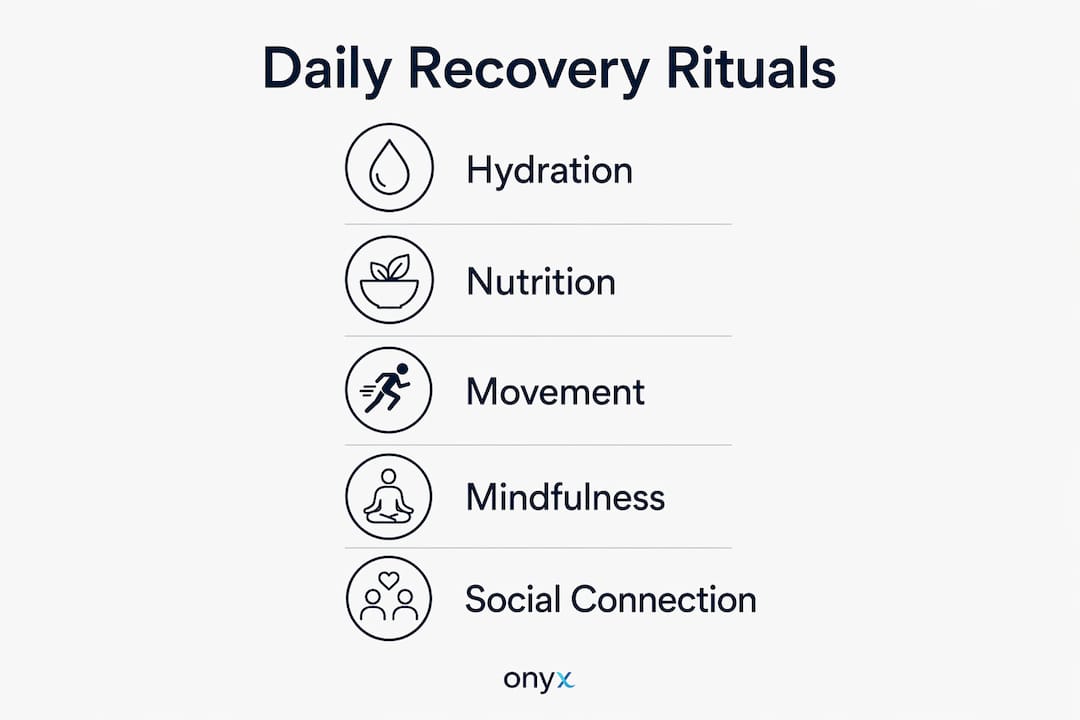
Mindfulness closes the stress loop your body opens during hard training or a demanding workday. Box breathing, a technique where you inhale for 4 counts, hold for 4, exhale for 4, and hold again for 4, lowers cortisol and heart rate when repeated for 8–10 cycles. Journaling for five minutes at day’s end serves the same purpose for mental recovery.
Social connection rounds out the picture. Talking with a friend, training partner, or support group after a hard stretch reduces perceived stress and improves adherence to any wellness routine.
- Drink 16–20 oz of water immediately after waking
- Eat at least one protein-rich meal within two hours of waking
- Complete 20–30 minutes of light movement on recovery days
- Practice box breathing or another breathwork technique daily
- Spend at least 10 minutes in genuine social connection each day
Pro Tip: Master the five fundamentals above before spending money on massage guns, saunas, or ice baths. Fundamentals like sleep and hydration have a bigger impact on recovery than any premium tool.
How do you build a sustainable daily recovery routine?
Sustainability is the only metric that matters in habit building. A perfect routine you abandon in two weeks beats nothing. A simple routine you follow for six months changes your life.
Research shows it takes an average of 66 days to form a new habit. That number matters because most people quit around day 10 when the novelty wears off. Knowing the timeline in advance helps you stay patient.
Here is a practical four-step method for building lasting recovery habits:
- Start with one habit. Pick the single recovery practice that would make the biggest difference right now. For most people, that is consistent sleep or morning hydration. Add a second habit only after the first feels automatic.
- Use habit stacking. Linking new recovery habits to established behaviors reduces decision fatigue and keeps your routine from feeling like extra work. Drink your morning water while the coffee brews. Do your box breathing while the shower warms up.
- Track without obsessing. A simple paper calendar with an X on each completed day works as well as any app. Seeing a streak builds momentum. Missing one day does not break the streak; missing two in a row is the real warning sign.
- Protect against burnout. Consistent moderate activity outperforms sporadic intense efforts every time. If your routine feels like a chore after week two, it is too complicated. Cut it in half and rebuild from there.
Pro Tip: Avoid the “optimization culture” trap. Many people spend on expensive gear before mastering basics like a consistent wake time and balanced meals. Get the basics right first, then layer in tools.
A step-by-step recovery guide can help you map out exactly which habits to add and in what order, especially if you are starting from scratch.
What are the best morning and evening recovery rituals?
The bookends of your day do the most work. A strong morning ritual sets your physiology up for repair and focus. A deliberate evening wind-down tells your nervous system it is safe to rest.
Morning recovery habits that work
- Wake at the same time every day, within 30 minutes. Consistent wake time supports circadian alignment and improves both sleep quality and daytime energy. This single habit costs nothing and pays dividends faster than most supplements.
- Drink 16–20 oz of water before coffee or food. Your body loses fluid overnight through breathing and light sweating. Replacing it first thing restores blood volume and mental clarity.
- Spend five minutes on light movement: a short walk outside, a few sun salutations, or gentle stretching. This signals your muscles to shift from repair mode into active mode without shocking your system.
- Practice two to three minutes of box breathing or simple breath awareness before checking your phone. Starting the day with a calm nervous system changes how you respond to stress for the next several hours.
Evening mindfulness techniques for better sleep
- Stop screen use 60 minutes before bed. Blue light from phones and laptops suppresses melatonin production and delays sleep onset.
- Keep your bedroom cool and dark. A cooler room temperature supports the drop in core body temperature your body needs to fall into deep sleep.
- Write three sentences in a journal: one thing that went well, one thing you want to do differently tomorrow, and one thing you are grateful for. This brief reflection closes the mental loops that otherwise replay at 2:00 AM.
- Avoid intense exercise within two hours of sleep. Light stretching or yoga is fine; a hard run at 9:00 PM is not.
Personalizing these rituals matters. If you are not a morning person, compress the morning sequence to just water and one minute of breathing. Build from there as the habit solidifies.
What common challenges arise when starting recovery rituals?
Starting a recovery routine feels manageable on day one. By day five, real life shows up. Knowing the obstacles in advance puts you in a much better position.
- Early burnout. Adding five new habits at once is the most common mistake. Your willpower is finite. Stack too much too soon and the whole routine collapses. Start with one or two practices and hold that line for three weeks.
- Inconsistent schedules. Shift work, travel, and family demands make rigid routines unrealistic. The fix is to identify the minimum viable version of your routine: just water and breathing, for example, and commit to that on hard days.
- Motivation dips. Motivation follows action, not the other way around. On low-energy days, do the smallest possible version of your habit. Two minutes of stretching still counts. Doing something keeps the identity of “someone who recovers intentionally” intact.
- Midday energy crashes. The afternoon slump is biological, not a sign of weakness. Short movement breaks of about 12 minutes reset cortisol and sustain energy better than caffeine. A brisk walk around the block or a set of bodyweight squats works.
- Over-reliance on gadgets. Wearables, apps, and recovery tools are useful once your fundamentals are stable. Using them as a substitute for sleep, hydration, and nutrition is the scenic path to frustration.
“The goal of a recovery ritual is not perfection. It is showing up consistently enough that your body and mind get the signal: rest and repair are a priority here. That signal, repeated daily, is what produces lasting change.”
For more evidence-based wellness routines that address these challenges directly, Onyxwellness has a detailed breakdown worth bookmarking.
Key Takeaways
A sustainable guide to daily recovery rituals works because it prioritizes consistent fundamentals like hydration, sleep, and movement over complex or expensive protocols.
| Point | Details |
|---|---|
| Hydration comes first | Drink 16–20 oz of water on waking before coffee or food to restore blood volume and mental clarity. |
| Habit formation takes 66 days | Expect a two-month runway before new recovery habits feel automatic; consistency beats perfection. |
| Morning and evening bookends matter most | A consistent wake time and a screen-free wind-down produce the biggest gains in sleep quality and daily energy. |
| Start small to avoid burnout | Add one habit at a time and use habit stacking to attach new practices to existing behaviors. |
| Fundamentals outperform premium tools | Solid sleep, nutrition, and hydration deliver more recovery benefit than saunas, massage guns, or ice baths. |
What I have learned about building recovery rituals that actually last
I have watched a lot of people build recovery routines that look great on paper and fall apart within a month. The pattern is almost always the same: they try to fix everything at once.
The most durable routines I have seen share one trait. They are boring. Drink water, sleep at the same time, move a little, breathe on purpose. That is it. The people who stick with recovery practices long enough to see real results are not the ones with the fanciest protocols. They are the ones who made peace with doing simple things repeatedly.
What I find genuinely underrated is the evening journal. Three sentences before bed sounds trivial. In practice, it is one of the most effective tools for reducing the mental noise that wrecks sleep quality. You are not processing trauma or writing literature. You are just emptying the mental cache so your brain can run its overnight maintenance without interruption.
The other thing worth saying plainly: self-care rituals need to fit your actual life, not the life you wish you had. A 90-minute morning routine is not realistic for most people with jobs and families. A 10-minute version that you do every day is worth ten times more than the elaborate version you do twice a week.
Be patient with yourself. The 66-day habit formation window is not a deadline. It is a reminder that your brain needs repetition, not willpower, to change.
— Chris
How Onyxwellness products support your recovery rituals
Building a recovery routine is easier when your supplements work as hard as you do.

Onyxwellness offers a range of Ayurvedic-inspired strips designed to fit directly into the rituals covered here. The Sleep Strips support the deep, consistent rest that is the foundation of every recovery protocol. The Digestive + Gut Health Strips complement the nutrition side of your routine, supporting the gut environment where so much of your recovery actually happens. For physical wellness, the Bone Support Strips provide targeted nutrients that pair well with daily movement habits. All strips dissolve without water, making them easy to add to any morning or evening ritual without disrupting your flow. Browse the full Onyxwellness collection to find the right fit for your routine.
FAQ
What is a daily recovery ritual?
A daily recovery ritual is an intentional habit or set of habits practiced consistently to support physical repair and mental wellness. Common examples include morning hydration, light movement, breathwork, and a structured evening wind-down.
How long does it take to build a recovery routine?
Research shows it takes an average of 66 days to form a new habit. Starting with one or two practices and adding more gradually gives you the best chance of long-term success.
What should a morning recovery routine include?
A morning recovery routine should include 16–20 oz of water on waking, five to ten minutes of light movement, and two to three minutes of breathwork or mindfulness before engaging with screens or work demands.
Why does the midday slump happen and how do you fix it?
The midday energy dip is a natural biological rhythm, not a caffeine deficiency. Brief movement breaks of around 12 minutes reset cortisol levels and restore energy more effectively than coffee or energy drinks.
Do I need expensive tools to recover effectively?
No. Fundamentals like consistent sleep and hydration deliver more recovery benefit than premium tools like saunas or massage devices. Add tools only after your core habits are stable and automatic.