


TL;DR:
- Sustainable wellness combines personal health habits with actions that reduce environmental impact. It emphasizes consistency and small changes to improve both individual well-being and ecological health.
Sustainable wellness is defined as the practice of caring for your physical, mental, and emotional health in ways that also protect the environment around you. The term used in integrative health circles is “eco-holistic living,” and it treats personal well-being and ecological health as one inseparable system. Spending at least 2 hours a week in green spaces is linked with significantly greater health and well-being, based on a study involving 20,000 people. That single finding captures the whole idea: your health and the health of your environment move together. Practices like mindful eating, walking instead of driving, and choosing natural products all count. Onyxwellness was built on exactly this philosophy, fusing Ayurvedic tradition with modern convenience to support the kind of wellness that lasts.
What is sustainable wellness and why does it matter?
Sustainable wellness is the integration of personal health habits with choices that reduce your environmental footprint. It is not a trend. It is a framework for living that recognizes your body and the planet share the same fate.
Personal well-being and environmental health are inseparable. Reducing your exposure to pollutants and toxins directly lowers chronic inflammation and stress levels. That means choosing cleaner air, cleaner food, and cleaner products is not just good for the Earth. It is good medicine.
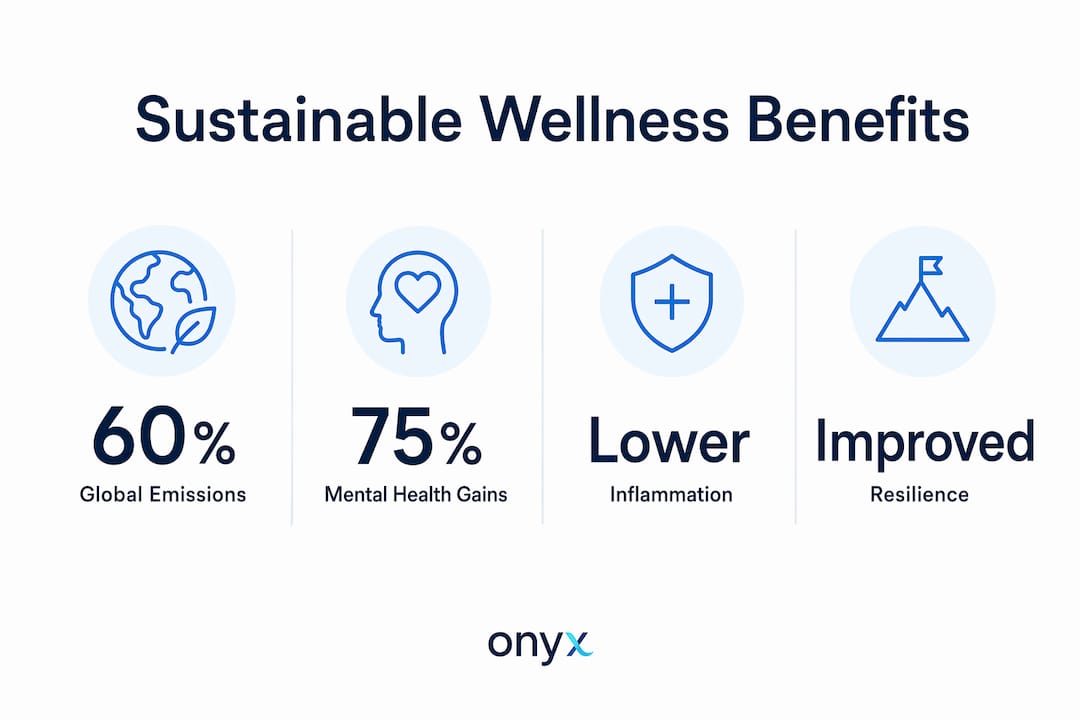
The importance of sustainable wellness also shows up in the numbers. 60% of global greenhouse gas emissions are tied to individual and household behavior patterns. That figure means your daily choices carry real weight. Switching to a plant-based meal a few times a week, walking to the store, or cutting single-use plastics are not small gestures. They are meaningful contributions to both your health and the planet’s.
How does sustainable wellness benefit your health and the environment?
The benefits of sustainable wellness operate on two levels at once: your body and the world outside it.
Physical health gains from eco-connected habits
Outdoor movement, clean eating, and reduced chemical exposure all lower inflammation markers in the body. Shifting from hyper-convenience to intentional living yields better health and environmental outcomes simultaneously. Cooking at home instead of ordering out reduces sodium intake, packaging waste, and stress. Walking or cycling instead of driving builds cardiovascular fitness while cutting emissions.

Plant-based diets are one of the clearest examples of this dual benefit. They lower the risk of heart disease and type 2 diabetes while requiring significantly less land and water than meat-heavy diets. You get healthier. The planet gets a break.
Mental health benefits of sustainable living
75% of individuals with consistent self-care routines report improved mental health outcomes. Sustainable self-care is not about expensive spa days. It is about building reliable, low-pressure habits that your nervous system can count on.
Sustainable wellness emphasizes value-aligned living over chasing aesthetic goals, which leads to reduced mental clutter and improved digestion. When your actions match your values, the background noise in your head quiets down. That quiet is worth more than most supplements.
Pro Tip: Start tracking one eco-friendly habit each week, like swapping a plastic bottle for a reusable one. The small win builds momentum without overwhelming your routine.
| Traditional wellness habits | Sustainable wellness habits |
|---|---|
| Gym membership, indoor treadmill | Walking or cycling outdoors in green spaces |
| Packaged protein shakes | Whole food, plant-based meals cooked at home |
| Single-use supplement packaging | Refillable or minimal-packaging natural products |
| Synthetic skincare products | DIY or plant-based skincare with fewer chemicals |
| Convenience food delivery | Home cooking with seasonal, local ingredients |
What are the best sustainable wellness practices to start today?
Starting with one manageable habit increases long-term adherence and reduces burnout risk. The goal is not a complete life overhaul. It is one good choice that sticks, then another.
Here are seven sustainable wellness practices you can build into your life right now:
- Spend time outdoors daily. Even a 20-minute walk in a park counts toward the two-hour weekly threshold linked to improved well-being.
- Eat one plant-based meal per day. You do not need to go fully vegan. One meal shift reduces your environmental footprint and improves gut health.
- Switch to natural personal care products. Look for products with short ingredient lists and no synthetic fragrances. Onyxwellness offers Ayurvedic-inspired strips with clean, recognizable ingredients.
- Reduce single-use plastics. Carry a reusable water bottle, coffee cup, and shopping bag. These three swaps eliminate a significant share of daily plastic waste.
- Cook at home more often. Home cooking reduces processed food intake, packaging waste, and the stress of decision fatigue around meals.
- Walk or cycle for short trips. Any trip under two miles is faster by bike than by car in most American cities when you factor in parking.
- Practice mindful consumption. Before buying a wellness product, ask whether you actually need it. Sustainability in wellness is less about purchasing eco-products and more about reducing overall consumption and waste.
For people with packed schedules, the sustainable wellness workflow for busy professionals guide from Onyxwellness breaks these habits into realistic daily blocks.
Pro Tip: Pair a new sustainable habit with something you already do. If you make coffee every morning, that is the perfect moment to take your Onyxwellness strips. Habit stacking removes the friction of remembering.
How does environmental health connect to your body’s biology?
The science behind sustainable wellness is grounded in inflammation research and stress physiology. Environmental toxins, including air pollutants, pesticide residues, and synthetic chemicals in personal care products, trigger chronic low-grade inflammation. That inflammation is the root driver of conditions like anxiety, fatigue, joint pain, and digestive issues.
True sustainable wellness requires seeing well-being and ecological health as inseparable to build long-term vitality. Holistic health practitioners who work within the Ayurvedic tradition have understood this for centuries. The body is not separate from its environment. It is a direct expression of it.
The mind-body-environment connection
Aligning with natural rhythms, like sleeping when it gets dark and eating seasonally, reduces cortisol dysregulation. Cortisol is your primary stress hormone, and chronic elevation of it accelerates aging, disrupts digestion, and impairs immune function. Natural light exposure, time in green spaces, and reduced screen time all bring cortisol back into a healthy range without a prescription.
Intentional living reduces mental overload and environmental impacts, improving overall resilience. Resilience here means your ability to recover from stress, illness, and disruption. That is the real goal of any wellness practice worth your time.
For a deeper look at how Ayurvedic principles support this mind-body-environment framework, the holistic recovery guide from Onyxwellness covers natural strategies rooted in this tradition.
How do you avoid greenwashing in sustainable wellness?
Greenwashing is when a brand markets a product as eco-friendly or natural without meaningful evidence to back that claim. The wellness industry is full of it. A product labeled “green” or “clean” may still contain synthetic preservatives, come in non-recyclable packaging, or be manufactured in ways that harm ecosystems.
Authentic sustainable wellness does not require buying anything. Effective sustainable practices often reduce consumption, such as making DIY skincare and spending time in nature, rather than buying more eco-branded products. The most powerful sustainable wellness choices are often free.
Use these criteria to evaluate any wellness product or routine:
- Ingredient transparency. Can you read and recognize every ingredient on the label?
- Packaging reality. Is the packaging actually recyclable in your city, or just labeled with a recycling symbol?
- Consumption reduction. Does this product replace something you already use, or does it add to your consumption?
- Brand accountability. Does the brand publish sourcing and manufacturing information publicly?
Pro Tip: Search a brand’s name alongside “greenwashing” or “ingredient safety” before buying. Honest brands welcome scrutiny. Greenwashers avoid it.
Sustainable wellness success is based on consistency and adaptability rather than perfection. You will make imperfect choices. That is not failure. It is the normal texture of a real life. What matters is the direction you are moving, not whether every single decision is optimal.
A holistic wellness program guide can help you build a framework that accounts for your real constraints rather than an idealized version of your life.
Key Takeaways
Sustainable wellness works because it treats personal health and environmental responsibility as a single, inseparable practice rather than two competing priorities.
| Point | Details |
|---|---|
| Definition is clear | Sustainable wellness integrates physical, mental, and ecological health into one daily practice. |
| Science supports it | Reducing pollutant exposure lowers chronic inflammation, which drives most common health complaints. |
| Start small | One manageable habit increases long-term adherence far more than a complete lifestyle overhaul. |
| Greenwashing is real | Evaluate products by ingredient transparency and consumption reduction, not marketing language. |
| Consistency beats perfection | Adaptable routines that evolve with your life produce better outcomes than rigid, all-or-nothing approaches. |
What I have learned from living this way
I spent years treating wellness and environmental concern as two separate projects. I had my supplement stack on one shelf and my reusable bags by the door, and I never connected them. The shift happened when I stopped asking “what should I take?” and started asking “what does my body actually need, and where does that need come from?”
That question changed everything. I realized that most of my fatigue was not a magnesium deficiency. It was too much artificial light, too little outdoor time, and a diet that leaned heavily on convenience packaging. Fixing those things cost almost nothing. The results were better than any supplement protocol I had tried.
What I tell people now is this: sustainable wellness is not the scenic path to the same destination. It is a different destination entirely. You are not just trying to feel better. You are trying to build a life that does not require constant repair. That means fewer inputs, more consistency, and a willingness to let your habits evolve as your life does.
Measuring success by adaptability rather than perfection is the single most useful reframe I have found. Some seasons you cook every meal at home. Other seasons you are traveling and doing your best. Both count. The practice does not stop when life gets complicated. It just looks different.
The quiet pride that comes from living in alignment with your values is real. It is not dramatic. But it builds, and after a while it becomes the foundation everything else rests on.
— Chris
Support your sustainable wellness routine with Onyxwellness
Building a sustainable wellness practice means choosing products that work with your body, not against it. Onyxwellness designs Ayurvedic-inspired strips with clean, recognizable ingredients and no unnecessary additives, so you know exactly what you are putting in your body.
The Digestive + Gut Health Strips support the digestive foundation that sustainable eating habits depend on. For recovery and rest, the Sleep Strips help your body reset overnight without synthetic sleep aids. And if bone strength is part of your long-term health picture, the Bone Support Strips deliver targeted nutrients in a fast-absorbing, water-free format. Browse the full Onyxwellness collection to find the right fit for where you are in your wellness practice.
FAQ
What does sustainable wellness mean?
Sustainable wellness means caring for your physical, mental, and emotional health in ways that also protect the environment. It treats personal well-being and ecological health as one connected system rather than separate concerns.
How do I start sustainable wellness practices?
Start with one manageable habit, such as spending 20 minutes outdoors daily or swapping one meal for a plant-based option. Starting small reduces burnout and builds the consistency that makes habits stick long-term.
What are the main benefits of sustainable wellness?
The benefits include lower chronic inflammation, improved mental health, reduced environmental impact, and greater resilience. Research links consistent eco-connected self-care routines to significantly better mental health outcomes across diverse populations.
Is sustainable wellness expensive?
Sustainable wellness is often less expensive than conventional wellness approaches. The most impactful practices, including outdoor time, home cooking, and reducing consumption, cost little to nothing. Greenwashing makes eco-wellness seem expensive, but the core practice is about doing less, not buying more.
How is sustainable wellness different from regular wellness?
Regular wellness focuses primarily on individual health outcomes. Sustainable wellness adds the dimension of environmental responsibility, recognizing that your long-term health depends on the health of the environment you live in.