


TL;DR:
- Sugar-free labels mean less than 0.5g of sugar per serving, not zero sugar. Natural sugars in whole foods and “no sugar added” products still contain sugars that affect health. Focusing on reducing added sugars and rebuilding taste for less sweetness offers sustainable wellness benefits.
You’ve seen the labels: “sugar-free,” “no sugar added,” “zero sugar.” They sound like the same thing, but they’re not, and that gap is exactly where most people’s wellness goals go sideways. What is sugar-free wellness, really? It’s not about swearing off every gram of natural sugar in an apple or a cup of yogurt. It’s about understanding which sugars are working against you, reading labels with confidence, and making choices that genuinely support your energy, weight, and long-term health. This guide cuts through the confusion and gives you a practical, grounded path forward.
Table of Contents
- Key takeaways
- What “sugar-free” actually means
- Why added sugars are the main problem
- The truth about sugar substitutes
- How to adopt a sugar-free lifestyle step by step
- My honest take on sugar-free wellness
- How Onyxwellness supports your sugar-free path
- FAQ
Key takeaways
| Point | Details |
|---|---|
| “Sugar-free” has a legal definition | The FDA requires fewer than 0.5g of sugar per serving for a product to carry the sugar-free label. |
| “No sugar added” is not the same | Products with this label can still contain natural sugars from fruit, dairy, or other whole ingredients. |
| Added sugars are the real target | Health organizations recommend capping added sugars at under 10% of daily calories, not eliminating all sugars. |
| Sugar substitutes carry trade-offs | Artificial and plant-derived sweeteners can affect gut health and metabolism in ways that are still being studied. |
| Whole foods beat processed “free” foods | A sustainable sugar-free lifestyle is built on real food, not just swapping one processed product for another. |
What “sugar-free” actually means
Here’s something that surprises most people. The word “sugar-free” on a food package is a regulated claim with a specific legal definition. According to FDA guidelines, a product must contain less than 0.5g of sugar per serving to use that label. That’s not zero. It’s just very small. And if you eat two or three servings in a sitting, those fractions add up faster than you’d expect.
Then there’s “no sugar added,” which is an entirely different claim. It means no sugars were added during processing, but the food can still contain naturally occurring sugars from ingredients like fruit, milk, or vegetables. A carton of orange juice labeled “no sugar added” still delivers a significant amount of fructose. That’s natural sugar, not added, but your body processes it the same way.
The third term you’ll see is “zero sugar,” which sounds absolute but isn’t always. Checking total sugars alongside added sugars on the nutrition facts panel, and scanning the ingredient list for sugar alcohols or sweeteners, gives you the complete picture that the front-of-package claim never will.
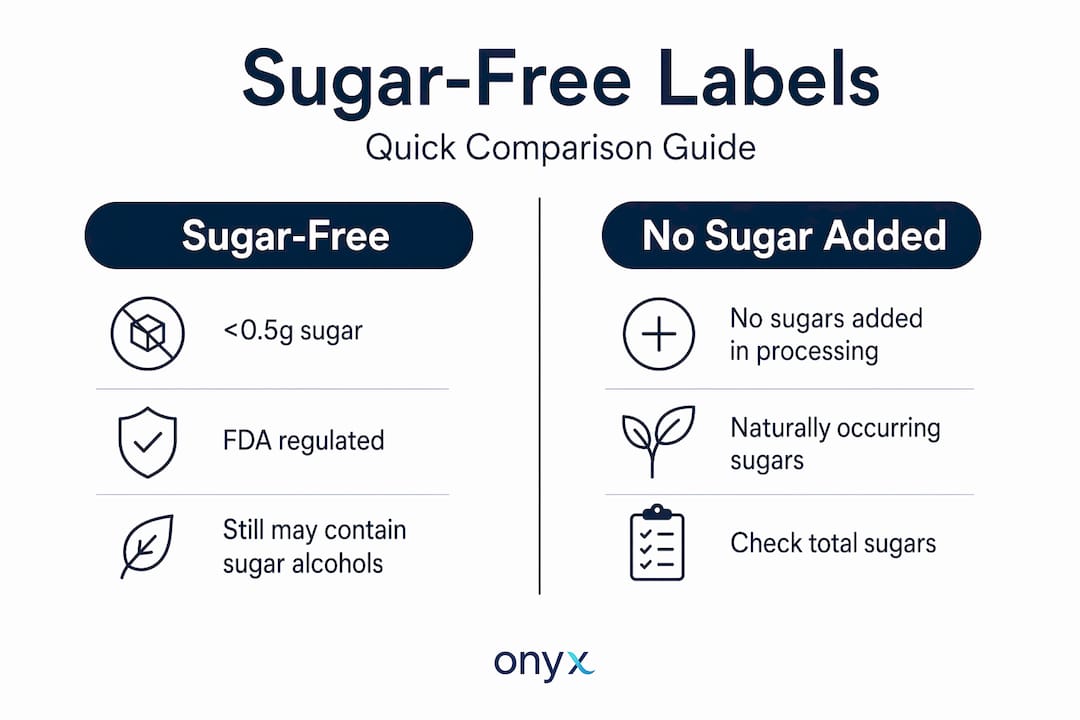
How these labels compare side by side
| Label | What it means | Still contains sugar? |
|---|---|---|
| Sugar-free | Less than 0.5g sugar per serving | Possibly (trace amounts) |
| No sugar added | No sugars added during processing | Yes, naturally occurring sugars |
| Zero sugar | Typically less than 0.5g per serving | Sometimes, plus sugar alcohols |
| Naturally sweetened | Sweetened with whole food sources | Yes, natural sugars present |
Understanding these distinctions is the foundation of any real sugar-free wellness practice. Without them, you’re making decisions based on marketing, not nutrition.
Why added sugars are the main problem
The importance of reducing sugar intake specifically means added sugars, not the sugars naturally present in whole foods. That distinction matters because the physiological effects are meaningfully different. When you eat a piece of fruit, the fiber slows down sugar absorption and your body gets vitamins and antioxidants in the same package. When you drink a sweetened beverage, you get a spike with no fiber, no protein, and no nutritional payoff.

The consequences of chronic high added sugar intake go well beyond weight. Added sugars drive inflammation throughout the body, and research has found links to worsened symptoms in conditions like osteoarthritis. Energy crashes, mood fluctuations, and poor sleep are also common complaints tied to high sugar diets. And the effects on metabolism can compound over time, making it progressively harder for your body to regulate blood glucose on its own.
Here’s what the data says about recommended limits:
- The Dietary Guidelines for Americans recommend keeping added sugars under 10% of total daily caloric intake.
- The American Heart Association goes further, suggesting no more than 24 grams per day for women and 36 grams for men.
- The FDA also advises that no more than 10g of added sugars come from any single meal.
- Most Americans consume two to three times the recommended limit daily, largely from beverages and packaged snacks.
The good news is that even modest reductions in added sugar produce measurable benefits. People who cut back on added sugars often report steadier energy within days, and longer-term, the benefits include reduced inflammation, better weight management, and improved metabolic health. These are the core benefits of a sugar-free diet, and none of them require you to give up the natural sugars in fruit, dairy, or vegetables.
The truth about sugar substitutes
Sugar alternatives for wellness sound appealing, and in some contexts they genuinely help. But this is where the picture gets more complicated, and you deserve an honest look.
Common sugar substitutes fall into a few categories. Artificial sweeteners like aspartame and sucralose provide sweetness with near-zero calories. Sugar alcohols like xylitol, erythritol, and sorbitol occur naturally in some plants but are also manufactured for use in packaged goods. Plant-derived sweeteners like stevia and monk fruit are often marketed as the most “natural” option. Each of these shows up in products labeled sugar-free.
The challenge is that sweeteners affect physiology beyond just replacing sweetness. Studies have found potential impacts on gut microbiome composition, appetite regulation, and insulin response, though isolating which sweetener causes which effect is difficult because research often tests them as a group. Sugar alcohols in particular can cause bloating and digestive discomfort when consumed in large amounts, something worth knowing if you’re reaching for sugar-free candy thinking it’s a free pass.
One less-discussed reality: sugar-free candy can legally contain up to 0.5g of sugar per serving and still use sugar alcohols that affect digestion. The product is lower in sugar, yes, but it’s not physiologically neutral.
Pro Tip: If you’re exploring sugar alternatives, start with small amounts of plant-based sweeteners like stevia or monk fruit. These tend to have the least documented downside, though even they work best when you’re simultaneously reducing your overall preference for sweet flavors, not just finding a different way to satisfy it.
The most sustainable sugar-free eating habit is one that gradually recalibrates your palate toward less sweetness overall, rather than just replacing added sugars with substitutes. That’s where natural wellness strategies and whole-food approaches deliver results that stick.
How to adopt a sugar-free lifestyle step by step
Knowing what sugar-free wellness means is one thing. Living it is another. Here’s how to move from understanding to actual change, without white-knuckling through cravings or overhauling everything at once.
-
Audit your biggest sugar sources first. Before changing anything, track your food for three days and look up the added sugar content in your top five foods or drinks. Most people find that two or three items account for the majority of their added sugar intake. Sweetened coffee drinks, flavored yogurts, sauces, and packaged snacks are common culprits. Tackling these first creates the biggest impact with the least effort.
-
Read the full label, not just the front. Check the nutrition facts panel for total sugars and added sugars separately. Then scan the ingredient list for any of the 60-plus names sugar goes by: cane syrup, dextrose, maltose, brown rice syrup, fruit juice concentrate. If sugar appears in the first three or four ingredients, the product is likely high in added sugar regardless of what the front label says.
-
Swap packaged snacks for whole food alternatives. An apple with almond butter, a handful of walnuts, or plain Greek yogurt with berries provides natural sweetness without added sugars and comes with fiber, protein, and micronutrients. These swaps also support appetite balance naturally, which makes reducing sugar feel less like deprivation and more like a preference shift.
-
Rebuild your beverages. Drinks are the fastest way to reduce added sugar intake. Sparkling water with a splash of citrus, unsweetened herbal teas, and black coffee are all genuinely satisfying once your palate adjusts. If you’re used to sweetened drinks, taper down gradually rather than going cold turkey. Mixing half sweetened and half unsweetened for a week or two makes the transition much easier.
-
Plan meals around protein, fat, and fiber. When your meals include adequate protein and healthy fats, cravings for sugar drop significantly. Blood glucose stays more stable, and you’re less likely to reach for something sweet out of energy desperation. For practical ideas and natural supplements that support this process, pairing good nutrition with targeted wellness products can fill the gaps.
-
Give it at least three weeks. The first week of significantly reducing added sugars can feel rough. Cravings spike, energy may dip, and sweet things taste more appealing than ever. By week three, most people notice that their preferences have genuinely shifted. Fruit tastes sweeter. Very sugary things taste almost too sweet. That recalibration is real, and it makes the lifestyle feel natural rather than restrictive.
My honest take on sugar-free wellness
I’ve worked with health-conscious people at many stages of this process, and I’ll be direct: the ones who obsess over eliminating every trace of sugar rarely do as well long-term as the ones who focus on cutting added sugars from processed foods.
The all-or-nothing approach turns every meal into a test of willpower. That’s exhausting, and eventually, it breaks. What I’ve seen actually work is the mindset shift from “I can’t have sugar” to “I don’t need added sugar in this specific food.” That framing is empowering rather than restrictive.
What I find most interesting, and what I think gets overlooked, is that sugar-free wellness is fundamentally about rebuilding your relationship with sweetness. It’s not a detox sprint. It’s a slow recalibration. The people who get there aren’t white-knuckling through cravings forever. They’ve genuinely stopped finding ultra-sweet foods appealing.
If you’re just starting out, don’t try to do everything at once. Pick one category, beverages or snacks, and get that right before moving to the next. Small wins build momentum. And if you slip up, that’s not failure. It’s just information about where you need more support.
— Chris
How Onyxwellness supports your sugar-free path
Building a sugar-free lifestyle is easier when you have the right tools in your corner. At Onyxwellness, every product is designed to work with your natural wellness goals, not against them.
The Probiotic + Metabolism Strips are a particularly good fit for anyone reducing added sugars, since gut health and metabolic function are directly tied to how your body manages blood glucose and appetite. The Digestive + Gut Health Strips support the digestive balance that naturally processed foods depend on, especially during a dietary transition. Both products are sugar-free themselves, using fast-absorbing dissolvable strip technology inspired by Ayurvedic principles, no water needed, no artificial fillers. Explore the full range at Onyxwellness and find the products that fit where you are right now.
FAQ
What does “sugar-free wellness” mean?
Sugar-free wellness is a health approach centered on reducing or eliminating added sugars from your diet while focusing on whole, natural foods that support energy, weight management, and long-term health. It emphasizes informed food choices over blanket restrictions.
Is “no sugar added” the same as sugar-free?
No. “No sugar added” means no sugars were introduced during processing, but the product can still contain naturally occurring sugars from ingredients like fruit or dairy. “Sugar-free” means less than 0.5g of sugar per serving under FDA rules.
Are sugar substitutes safe for a sugar-free lifestyle?
Sugar substitutes can reduce caloric sugar intake, but research shows they affect gut health and metabolism in ways that aren’t fully understood yet. Plant-based options like stevia and monk fruit are generally preferred for a holistic, natural approach.
How much added sugar is too much per day?
Major health guidelines recommend keeping added sugars under 10% of total daily calories. For most adults, that translates to roughly 24 to 36 grams per day depending on overall calorie needs.
Can you lose weight by going sugar-free?
Reducing added sugars supports weight loss by stabilizing blood glucose, reducing calorie-dense but nutrient-poor foods, and improving appetite regulation. Results depend on overall diet quality, not just one change, but cutting added sugars is consistently one of the highest-impact starting points.