


TL;DR:
- Recovery-focused nutrition uses targeted diets to promote healing from injuries, surgery, or illness. It emphasizes high protein, hydration, and micronutrients, supporting tissue repair and mood stabilization. Proper timing and avoiding common misconceptions enhance recovery outcomes.
Recovery-focused nutrition is the purposeful use of diet to promote physical healing and mental restoration during recovery from injury, surgery, illness, or substance use treatment. Unlike general healthy eating, this approach is clinically targeted. It addresses specific physiological demands like tissue repair, inflammation control, and immune support, while also stabilizing mood and reducing cravings during mental health or addiction recovery. The core pillars are increased protein intake, strategic hydration, balanced macronutrients, and whole foods that deliver the micronutrients your body needs most when it is under stress.
What is recovery-focused nutrition built on? Key nutritional components
The foundation of recovery nutrition rests on getting the right nutrients in the right amounts at the right time. Miss any one of these, and your body compensates by pulling resources from somewhere else, usually muscle tissue.

Protein is the most critical macronutrient during recovery. Protein needs increase to approximately 1.5–2.0 grams per kilogram of body weight daily after injury or surgery. That means a 180-pound person needs roughly 122–163 grams of protein per day. That is nearly double the standard recommendation for a healthy adult, and the reason is simple: your body is rebuilding tissue around the clock.
Carbohydrates fuel that rebuilding process. They replenish glycogen stores depleted by physical stress and spare protein from being burned as energy. Without adequate carbohydrate intake, your body raids its own muscle for fuel, which is the opposite of what recovery requires.
Healthy fats control inflammation. Omega-3 fatty acids found in fatty fish like salmon, walnuts, and flaxseed actively reduce the inflammatory response that slows healing. This is not optional background nutrition. It is a direct lever on recovery speed.
Micronutrients do the precision work. Vitamin C supports collagen formation and immune function, while zinc aids bacterial defense and new skin cell growth. Citrus fruits, berries, and peppers deliver vitamin C. Seafood, nuts, and whole grains cover zinc. Vitamin A and omega-3 fatty acids round out the micronutrient priorities for tissue regeneration.
- Protein: 1.5–2.0 g/kg body weight daily
- Carbohydrates: prioritize complex sources like oats, sweet potatoes, and brown rice
- Healthy fats: salmon, walnuts, avocado, flaxseed
- Vitamin C: citrus fruits, bell peppers, strawberries
- Zinc: oysters, pumpkin seeds, whole grains
- Hydration: men should target 96–144 ounces of fluids daily; women should target 64–96 ounces
Pro Tip: If plain water feels hard to drink in volume, add electrolytes or eat high-water foods like cucumber, watermelon, and broth-based soups. Hydration is not just about the glass in your hand.
Adequate hydration transports oxygen and nutrients directly to wound sites, actively speeding cellular repair. Dehydration can delay healing of surgical wounds and burns. That makes water one of the most underrated recovery tools available.
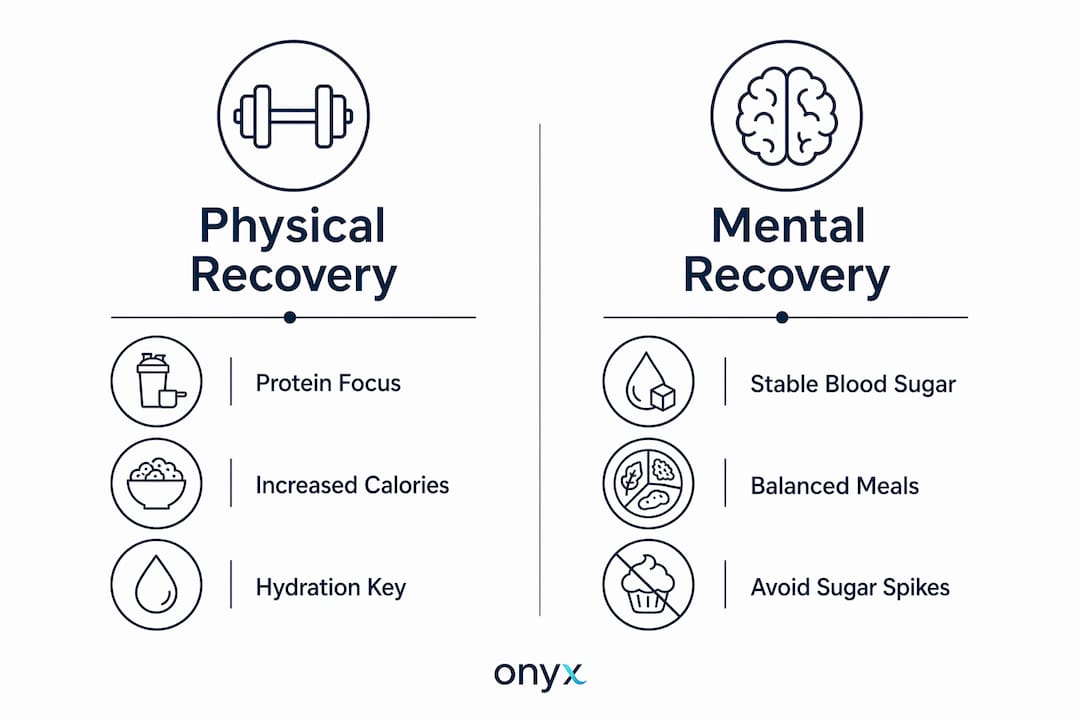
How does recovery nutrition differ for physical vs. mental health recovery?
The goals of nutrition in recovery shift depending on what your body and mind are healing from. Understanding those differences helps you eat with real purpose.
| Recovery Type | Primary Nutritional Focus | Key Foods | What to Avoid |
|---|---|---|---|
| Physical injury or surgery | Protein for tissue repair, calories to prevent muscle loss, anti-inflammatory fats | Lean meats, eggs, fatty fish, sweet potatoes, leafy greens | Ultra-processed foods, alcohol, excess sugar |
| Mental health or addiction recovery | Blood sugar stabilization, mood support, gut-brain axis nutrition | Whole grains, legumes, fermented foods, omega-3 rich fish | Refined carbohydrates, caffeine excess, alcohol |
| Both recovery types | Micronutrient density, hydration, whole food quality | Colorful vegetables, nuts, seeds, lean proteins | Skipping meals, relying solely on supplements |
Physical recovery nutrition centers on preventing muscle catabolism. Caloric needs may increase after trauma or surgery even when activity drops sharply. Your body is running an internal construction project, and that project burns energy. Cutting calories too aggressively during this phase is one of the most common and costly mistakes people make.
Mental health and addiction recovery require a different lens. Blood sugar fluctuations aggravate anxiety, fatigue, and cravings during mental health and addiction recovery. Clinicians at organizations like Hazelden Betty Ford treat nutrition as therapeutic, not just supplementary. Stabilizing blood sugar through regular meals with protein, fiber, and complex carbohydrates directly reduces the intensity of cravings and mood swings.
Nutrition therapy is increasingly viewed as a clinical tool, not an afterthought. Whether you are recovering from a torn ACL or navigating early sobriety, the whole-food emphasis is the same. The difference is in the specific targets and the timing of meals.
What practical guidelines optimize nutrition for recovery?
Knowing what to eat is only half the equation. When and how you eat shapes how well those nutrients actually work.
-
Eat protein at every meal. Distribute protein intake across three to five meals rather than loading it all at dinner. Your body can only use so much protein at once for muscle synthesis. Spreading it out keeps the repair process running continuously.
-
Time carbohydrates and protein together after physical stress. Co-ingesting carbohydrates and protein in a 3:1 or 4:1 ratio post-training maximizes glycogen replenishment and muscle synthesis. A practical example: a smoothie with Greek yogurt, banana, and oats hits this ratio naturally.
-
Do not skip meals during recovery. Even when appetite drops, which is common after surgery or during mental health treatment, your body still needs fuel. Smaller, more frequent meals are easier to manage and prevent the blood sugar crashes that worsen fatigue and mood.
-
Adjust calories up, not down, after trauma. This surprises most people. Reduced physical activity does not mean reduced caloric need during active healing. Your body is working hard internally, and it needs the raw materials to do so.
-
Hydrate before you feel thirsty. Thirst is a late signal. By the time you notice it, mild dehydration has already begun to slow nutrient transport and cellular repair. Sip consistently throughout the day rather than drinking large amounts at once.
Pro Tip: Build a simple recovery plate template: half the plate filled with colorful vegetables, one quarter with a lean protein source, and one quarter with a complex carbohydrate. This structure covers your macronutrient bases without requiring calorie counting.
For short recovery windows between training sessions, carbohydrate replenishment is prioritized for performance restoration, while protein takes priority for tissue regeneration over longer recovery periods. Knowing which phase you are in helps you weight your plate accordingly. You can also explore natural sports nutrition supplements to understand where targeted support fits alongside whole-food strategies.
What common misconceptions make recovery nutrition harder than it needs to be?
Several persistent myths trip people up and slow their progress. Knowing them in advance puts you ahead.
- “I should eat less because I’m less active.” This is the most damaging myth in physical recovery. Healing tissue demands calories. Cutting intake too aggressively leads to muscle catabolism and delayed repair.
- “Supplements can replace real food.” Whole foods with nutrient density should be prioritized over supplement reliance. Supplements are corrective tools for specific gaps, not a foundation. A multivitamin does not replace the fiber, phytonutrients, and synergistic compounds in a bowl of lentil soup.
- “Hydration is just about drinking water.” Electrolyte balance matters too. Sodium, potassium, and magnesium all play roles in muscle function and fluid retention. Athletes and post-surgical patients often need electrolyte-rich foods alongside plain water.
- “Nutrition only matters for physical recovery.” Ignoring nutrition quality during recovery increases risk of inflammation, mood instability, and delayed healing. This applies equally to mental health and addiction recovery, where blood sugar swings directly fuel cravings and anxiety.
- “I can figure this out on my own.” A registered dietitian who specializes in recovery nutrition can identify gaps you would never spot yourself. Working with a professional is not a sign of struggle. It is the most direct path to a plan that actually fits your situation.
The importance of recovery nutrition is often underestimated precisely because its effects are gradual. You do not feel a wound healing. You do not notice mood stabilizing day by day. But the cumulative impact of consistent, targeted eating is measurable and real.
Key Takeaways
Recovery-focused nutrition is the most direct dietary tool for accelerating physical healing, stabilizing mood, and reducing cravings during any type of recovery.
| Point | Details |
|---|---|
| Protein needs nearly double | Target 1.5–2.0 g/kg body weight daily to prevent muscle loss and support tissue repair. |
| Hydration is non-negotiable | Men need 96–144 oz and women need 64–96 oz of fluids daily to transport nutrients to healing tissue. |
| Calories often need to increase | Even with reduced activity, trauma and surgery raise your body’s caloric demand for repair. |
| Blood sugar stability matters | Regular meals with protein and fiber reduce cravings and mood swings in mental health and addiction recovery. |
| Whole foods outperform supplements | Supplements fill gaps but cannot replicate the full nutritional complexity of whole, nutrient-dense foods. |
What I have learned about recovery nutrition that most articles miss
Recovery nutrition is one of those topics where the gap between what people know and what they actually do is enormous. Most people understand they should eat more protein after an injury. Very few actually hit the target. And almost nobody accounts for the mental side of eating during recovery.
What I find most striking in clinical research and real-world practice is how nutrition is still treated as a side note in recovery programs. Physical therapy gets scheduled. Medications get managed. And then someone hands you a generic pamphlet about eating vegetables. That disconnect is where recoveries stall.
The insight that changed how I think about this: nutrition is not just fuel during recovery. It is therapy. Hazelden Betty Ford’s approach to treating blood sugar stabilization as a clinical intervention in addiction recovery is a perfect example. When you stop treating food as background noise and start treating it as a lever, the results shift noticeably.
My honest advice is to resist the supplement shortcut. Reaching for a protein shake instead of cooking a meal feels efficient, but whole foods carry compounds that no powder replicates. Use supplements to fill documented gaps, not as your primary strategy. And please, drink more water than you think you need. Hydration is the most overlooked and most fixable gap in most people’s recovery plans.
Work with a registered dietitian if you can access one. Not because you cannot figure this out alone, but because a personalized plan closes the gap between general guidelines and what your specific body actually needs right now.
— Chris
Onyxwellness products that support your recovery nutrition plan
Recovery nutrition works best when your sleep, digestion, and micronutrient intake are all pulling in the same direction. Onyxwellness offers a range of Ayurvedic-inspired strips designed to complement the whole-food foundation you are building.
The Sleep Strips support the deep rest your body needs to carry out overnight tissue repair, the phase where most physical healing actually happens. The Iron Strips address one of the most common micronutrient gaps in recovery, particularly for people dealing with fatigue. The Digestive + Gut Health Strips support the nutrient absorption that makes everything else in your recovery diet actually work. These strips are not replacements for whole foods. They are targeted support for the gaps that diet alone sometimes cannot close quickly enough.
FAQ
What is recovery-focused nutrition in simple terms?
Recovery-focused nutrition is a targeted eating approach that gives your body the specific nutrients it needs to heal after injury, surgery, illness, or addiction treatment. It prioritizes protein, hydration, anti-inflammatory fats, and micronutrients over general healthy eating guidelines.
How much protein do I need during physical recovery?
Protein needs increase to approximately 1.5–2.0 grams per kilogram of body weight daily after injury or surgery. A 180-pound person needs roughly 122–163 grams of protein per day during active recovery.
Does recovery nutrition apply to mental health and addiction recovery too?
Yes. Blood sugar stabilization through regular, balanced meals directly reduces anxiety, fatigue, and cravings during mental health and addiction recovery. Clinicians increasingly treat nutrition as a therapeutic tool alongside other treatments.
Should I take supplements instead of eating whole foods during recovery?
Supplements serve a corrective role for specific nutrient gaps, but whole foods remain the foundation of effective recovery nutrition. No supplement replicates the full range of compounds found in nutrient-dense whole foods like vegetables, legumes, and lean proteins.
How does hydration affect recovery speed?
Adequate hydration transports oxygen and nutrients directly to wound sites, actively accelerating cellular repair. Dehydration can delay healing of surgical wounds and burns, making consistent fluid intake one of the most practical recovery tools available.