


Nootropics are substances claimed to enhance memory, focus, and mental clarity. In the U.S., they fall into three regulatory categories: prescription drugs (like Adderall or modafinil), synthetic over-the-counter compounds, and dietary supplements. The FDA and FTC both play oversight roles, and both agencies have issued consumer alerts about adulterated products and misleading advertising. Before you try anything new, talking to a healthcare professional is the smartest first move.
Here’s the quick-reference breakdown:
- Prescription nootropics: FDA-approved medications for conditions like ADHD or narcolepsy
- Synthetic compounds: Over-the-counter cognitive compounds not classified as supplements or drugs
- Dietary supplements: Herbal, botanical, and nutrient-based products (the category most natural wellness consumers encounter)
Table of Contents
- What are the three U.S. categories of nootropics?
- What does the research actually say about common ingredients?
- How safe are nootropics, and what red flags should you watch for?
- How do you choose a safer, evidence-backed nootropic?
- What lifestyle habits support cognition before you reach for a supplement?
- Key Takeaways
- A perspective worth considering
- Onyxwellness strips: natural cognitive support without the guesswork
- FAQ
What are the three U.S. categories of nootropics?
The word “nootropic” traces back to pharmacologist Corneliu Giurgea, who coined it in 1972 with strict criteria: a substance had to enhance learning, protect the brain from harm, and carry minimal side effects. Most modern products marketed under that label don’t come close to meeting those standards. The term has since become a broad marketing category, which is exactly why understanding the three U.S. categories matters.
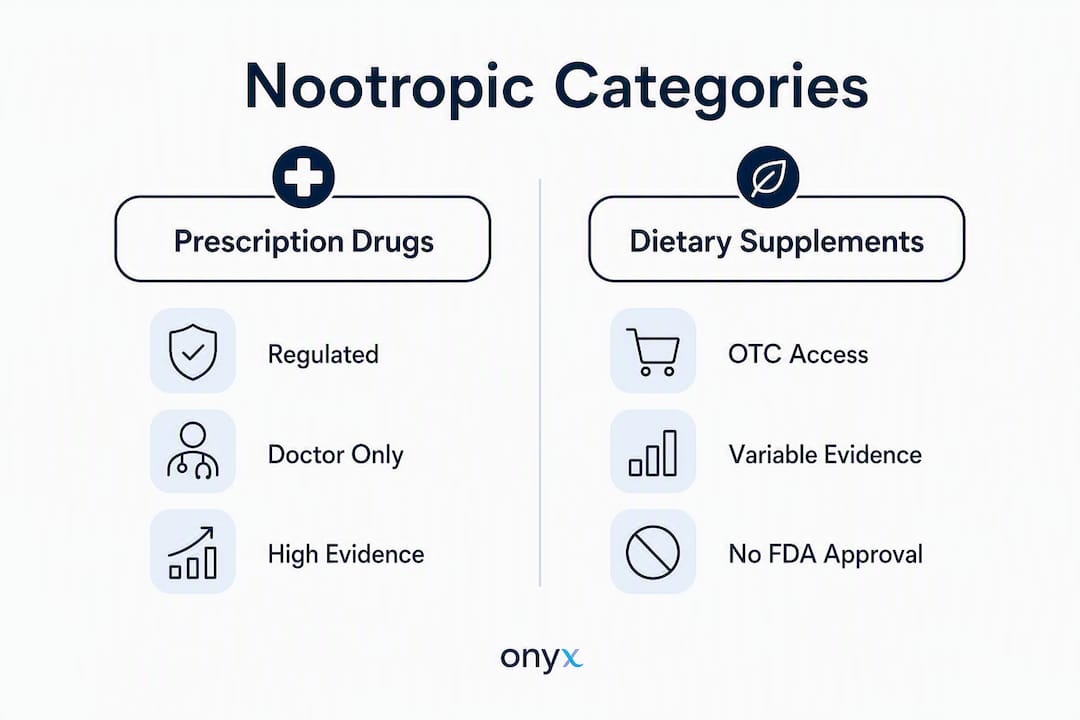
| Category | Typical Access | Oversight Body | Evidence Standard |
|---|---|---|---|
| Prescription drugs | Doctor’s prescription | FDA (full approval) | Randomized clinical trials |
| Synthetic compounds | OTC or online | FDA (limited) / FTC | Variable; often minimal |
| Dietary supplements | OTC, online, retail | FDA (post-market) / FTC | Self-reported; third-party optional |
Prescription nootropics like Adderall and Ritalin are tightly regulated. They treat diagnosed conditions and carry well-documented risk profiles. Using them without a prescription is both illegal and genuinely risky.
Synthetic compounds occupy a gray zone. Some, like certain racetams, are sold online but aren’t classified as dietary supplements under U.S. law, meaning they receive almost no pre-market scrutiny.
Dietary supplements are the category you’ll encounter most often in wellness spaces. The FDA does not approve them before they hit shelves. Instead, it acts after the fact if problems arise. The FTC handles advertising claims, and both agencies have flagged products containing hidden stimulants or making unproven efficacy claims.
Pro Tip: When you see a supplement marketed as “clinically proven,” check whether that claim links to an actual peer-reviewed study, not just an in-house trial or a testimonial.
What does the research actually say about common ingredients?
Evidence quality varies widely across nootropic ingredients. Caffeine and creatine have good evidence for short-term cognitive effects. Many other popular ingredients show moderate or limited support depending on dose and study quality.
| Ingredient | Typical Effect | Evidence Strength | Onset / Timeline |
|---|---|---|---|
| Caffeine | Alertness, reaction time | Strong | 30–60 minutes |
| L-Theanine | Calm focus, reduced jitter | Strong (with caffeine) | ~45 minutes |
| Bacopa monnieri | Memory, learning | Moderate | 8–12 weeks |
| Creatine | Short-term cognition | Moderate–Strong | Days to weeks |
| Lion’s Mane | Neuroprotection, focus | Moderate (limited long-term) | Weeks |
| Phosphatidylserine | Memory support | Moderate | 4–8 weeks |
| Omega-3 (DHA/EPA) | Brain structure, mood | Moderate | Weeks to months |
| Citicoline (CDP-choline) | Attention, memory | Moderate | 4–6 weeks |

A few things stand out. L-theanine increases alpha brain wave activity within about an hour and pairs well with caffeine to smooth out the jittery edge. That combination is one of the most reliably studied acute nootropic pairings available without a prescription.
For longer-term support, Bacopa monnieri shows consistent results for memory and learning with regular use over a prolonged period at standardized bacoside concentrations. Patience is part of the deal with Bacopa. You won’t feel it on day one.
One consistent problem: many over-the-counter products use proprietary blends that list ingredients without disclosing doses. If you can’t verify that a product contains a clinically relevant amount of Bacopa or any other botanical, you’re essentially guessing. That’s a problem worth taking seriously, especially with herbal supplements for clarity where standardization makes a real difference.
How safe are nootropics, and what red flags should you watch for?
The FDA and FTC have both issued warnings about cognitive supplements containing undisclosed stimulants, unapproved pharmaceutical ingredients, and exaggerated claims. The supplement marketplace is largely self-regulated before products reach shelves, which puts the burden of scrutiny on you.
The core safety reality: Dietary supplements do not require FDA approval before sale. Manufacturers are responsible for safety, but enforcement only happens after harm is reported. Consulting a healthcare professional before starting any nootropic regimen is the single most reliable safety check available to you.
Top risks to know:
- Adulteration: Some products contain hidden stimulants or prescription drug analogs not listed on the label
- Drug interactions: Nootropic herbs can interact with blood thinners, antidepressants, and other medications
- Stimulant dependency: High-caffeine or stimulant-heavy products carry tolerance and withdrawal risks
- Pregnancy and medical conditions: Many botanicals are contraindicated during pregnancy or with certain diagnoses
- Misleading claims: FTC enforcement targets supplements making disease-treatment claims without evidence
Red flags on a label or product page:
- Proprietary blends with no individual doses listed
- Claims like “clinically proven” without a linked, peer-reviewed study
- No third-party testing seal (USP, NSF International, or Informed Sport)
- Unfamiliar ingredient names that don’t appear in any clinical literature
- Pressure tactics or “limited time” urgency around a health product
If you encounter a suspicious product, you can report it to the FDA’s MedWatch program or the FTC’s complaint portal. And if you’re managing any existing health condition, provider continuity in mental health research consistently shows that coordinated clinical guidance leads to better outcomes than self-directed supplementation alone.
Pro Tip: Search any supplement’s brand name plus “FDA warning letter” before you buy. It takes 30 seconds and can save you from a genuinely risky product.
How do you choose a safer, evidence-backed nootropic?
A practical checklist for evaluating any cognitive supplement:
- Confirm individual ingredient doses are listed. No proprietary blends.
- Look for a third-party testing seal: USP, NSF International, or Informed Sport are the most credible in the U.S.
- Match the dose to clinical research. If a study used 300 mg of Bacopa and your product contains 50 mg, the evidence doesn’t transfer.
- Check the delivery method. Bioavailability matters: standardized extracts and fast-absorbing delivery formats produce more reliable results than non-standardized powders.
- Ask about interactions. If you take any prescription medication, run the ingredient list by your pharmacist or physician.
- Set a realistic timeline. Acute ingredients (caffeine, L-theanine) work within an hour. Adaptogens and botanicals like Bacopa need weeks of consistent use.
- Favor transparent sourcing. Brands that disclose where ingredients come from and how they’re tested are worth more of your trust.
For readers drawn to Ayurvedic traditions, look for properly standardized adaptogens like Bacopa, Ashwagandha, and Rhodiola. These have the most clinical backing among traditional herbs and fit naturally into a cognitive support strategy built around natural ingredients.
On delivery: dissolvable strips offer a meaningful advantage for some people. They bypass the digestive breakdown that can reduce absorption from capsules, which means faster onset and easier tolerability, especially for those with sensitive stomachs.
What lifestyle habits support cognition before you reach for a supplement?
Supplements work best as adjuncts, not replacements. These lifestyle strategies have stronger and more consistent evidence than most nootropic products:
- Sleep (7–9 hours): Memory consolidation happens during sleep. No supplement compensates for chronic deprivation.
- Aerobic and resistance exercise: Both improve cerebral blood flow and support neuroplasticity.
- Mediterranean-style nutrition: Rich in omega-3s (oily fish, walnuts, algae-based DHA), antioxidants, and whole foods.
- Stress management: Chronic cortisol impairs memory and focus. Mindfulness, breathwork, and nature exposure all show measurable effects.
- Consistent hydration: Even mild dehydration measurably reduces attention and working memory.
Start here before adding anything to your routine:
- Set a consistent sleep window and protect it.
- Add 20–30 minutes of moderate exercise most days.
- Include oily fish or an algae-based omega-3 supplement three times per week.
- Practice 10 minutes of mindfulness or focused breathing daily.
- Drink water consistently throughout the day, not just when thirsty.
Once those habits are stable, a well-chosen, transparently dosed supplement can add a meaningful layer of support. For more on natural strategies for mental clarity rooted in Ayurvedic principles, the foundation always comes first.
Key Takeaways
Nootropics range from FDA-approved prescription drugs to dietary supplements with variable evidence, and choosing safely means prioritizing transparent dosing, third-party testing, and clinician guidance over marketing claims.
| Point | Details |
|---|---|
| Three U.S. categories | Prescription drugs, synthetic compounds, and dietary supplements each carry different oversight and evidence standards. |
| Evidence varies by ingredient | Caffeine and creatine have strong short-term support; Bacopa shows moderate memory benefits after 8–12 weeks. |
| Safety checks matter | Look for third-party testing seals, individual ingredient doses, and no proprietary blends before buying. |
| Lifestyle comes first | Sleep, exercise, nutrition, and stress management provide more reliable cognitive benefit than most supplements. |
| Onyxwellness approach | Onyxwellness offers Ayurvedic-inspired dissolvable strips with transparent ingredients as a natural delivery option. |
A perspective worth considering
The nootropics conversation tends to get pulled in two directions: breathless enthusiasm from marketers and flat dismissal from skeptics. Neither is useful. The honest middle ground is that some ingredients genuinely work at the right dose, for the right person, over the right timeframe. The problem isn’t the category. It’s the gap between what a label claims and what a product actually delivers.
What I find consistently underestimated is the delivery question. Most people focus entirely on which ingredient to take and almost never ask how it gets absorbed. A Bacopa product with 50 mg of non-standardized powder is a different thing entirely from one delivering 300 mg at 50% bacosides in a format designed for bioavailability. That distinction changes outcomes. Consulting a clinician before starting any regimen isn’t just a legal disclaimer. It’s genuinely the fastest path to figuring out what will actually work for your specific situation.
Onyxwellness strips: natural cognitive support without the guesswork
Fast absorption without capsules or water is the real differentiator Onyxwellness brings to natural cognitive support. The brand’s dissolvable strip format delivers Ayurvedic-inspired ingredients directly through the oral mucosa, bypassing the digestive breakdown that can blunt the effect of traditional capsules.
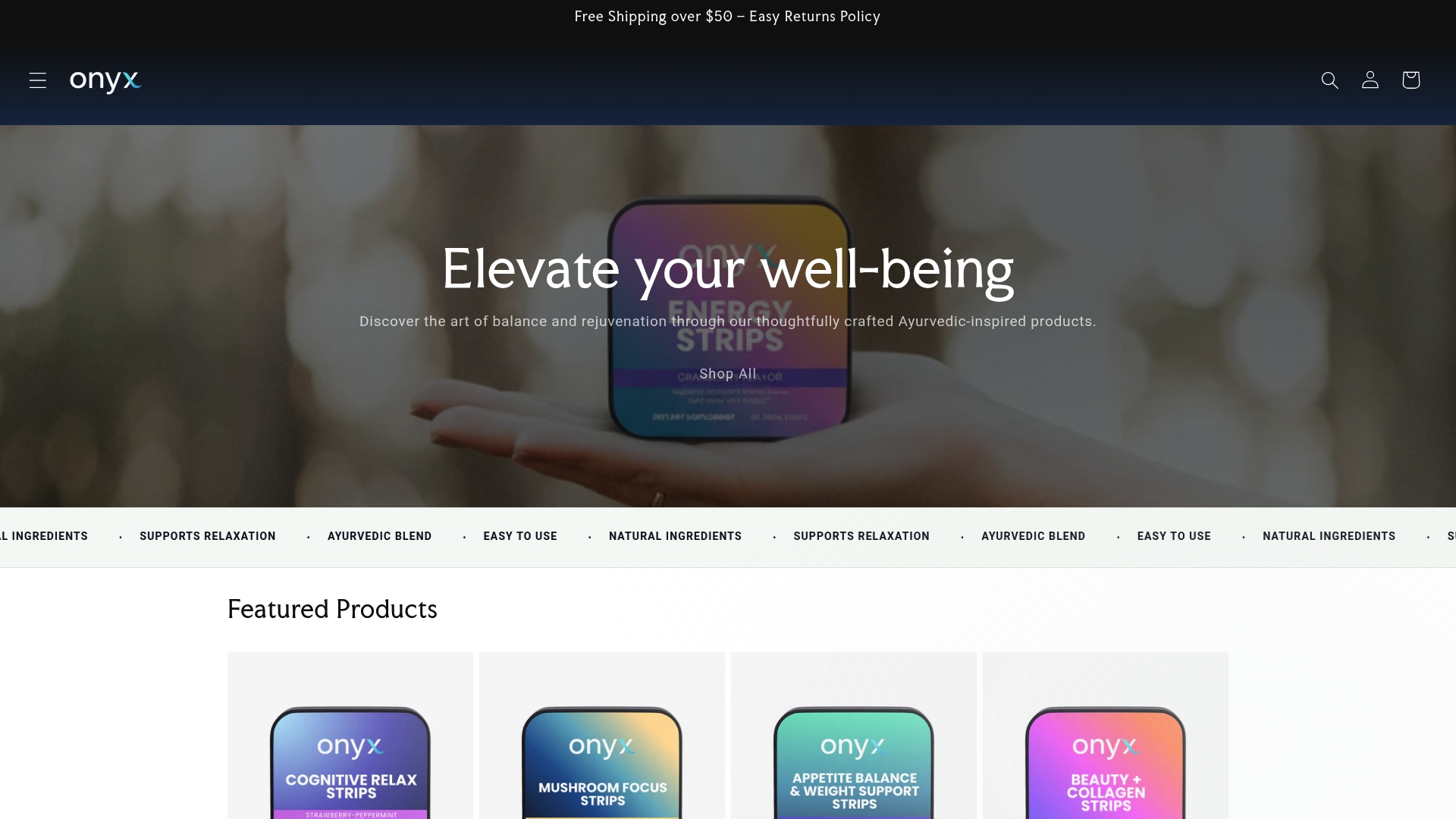
Three products worth knowing about: the Sleep Strips support restful sleep with natural botanicals, addressing one of the most overlooked drivers of daytime cognitive performance. The Hangover Strips focus on recovery support, helping your system bounce back faster. And the Libido Support Strips round out the catalog with a formula built around natural adaptogens and transparent ingredient labeling. All three reflect the same commitment: named ingredients, clear doses, and a delivery format designed for real-world use. Browse the full collection at Onyxwellness to find the strip that fits your wellness goals.
FAQ
What is the simple definition of nootropics?
Nootropics are substances that may enhance memory, focus, and cognitive function. In the U.S., they include prescription medications, synthetic compounds, and dietary supplements.
Are nootropics safe to take every day?
Safety depends on the specific ingredient, dose, and your health profile. Experts consistently recommend consulting a healthcare professional before starting any daily nootropic regimen, particularly if you take prescription medications.
Which nootropic ingredients have the strongest evidence?
Caffeine and creatine have strong short-term evidence for cognitive effects. L-theanine pairs well with caffeine for calm focus, while Bacopa monnieri shows moderate memory benefits after 8–12 weeks at standardized doses.
How do nootropics work in the brain?
Different ingredients work through different mechanisms: caffeine blocks adenosine receptors to reduce fatigue, L-theanine increases alpha brain wave activity, and Bacopa supports neurotransmitter signaling over time. No single mechanism applies to the whole category.
Does Onyxwellness offer nootropic supplements?
Yes. Onyxwellness offers Ayurvedic-inspired dissolvable strips, including Sleep Strips and other wellness formulas, designed for fast absorption and transparent ingredient labeling without proprietary blends.
This article is for general informational purposes only and does not constitute medical advice. Consult a qualified healthcare professional before starting any new supplement, especially if you have a preexisting condition, are pregnant, or take prescription medications.