


TL;DR:
- Ayurveda is a personalized health system emphasizing prevention through diet, herbs, and routines to support balance in mind and body. Supplements like dissolvable strips can enhance wellness when integrated into a lifestyle aligned with individual doshas and natural rhythms. Scientific evidence supports herbal support for stress, sleep, and digestion, but it does not validate claims to cure diseases or replace medical treatment.
Ayurveda is a personalized, prevention-first system of health that combines diet, daily routines, herbs, and lifestyle practices to support balance in the mind and body. The word itself comes from Sanskrit: āyus (“life”) and veda (“knowledge”), making it literally the “knowledge of life.” As Johns Hopkins Medicine describes it, Ayurveda emphasizes personalized approaches to support the body’s natural ability to maintain health, and works best alongside, not instead of, standard medical care.
Here is the short version of what you need to know:
- Ayurveda is one of the world’s oldest whole-body health systems, originating in India thousands of years ago.
- Its core goal is prevention: keeping healthy people healthy, not just treating disease after it appears.
- Supplements, including modern formats like dissolvable strips, can support an Ayurvedic-inspired routine, but they work best as part of a broader lifestyle approach.
- Onyxwellness translates these principles into convenient, sugar-free strips designed for everyday use.
Table of Contents
- What is Ayurveda built on? The core principles explained
- What does an Ayurvedic practice actually include?
- What does the science actually support, and where does it stop?
- Safety, drug interactions, and U.S. regulation you should know
- Practical steps for adding Ayurvedic principles to your routine
- How to choose a safe, high-quality Ayurvedic supplement in the U.S.
- How Onyxwellness applies Ayurvedic principles to modern supplements
- Key Takeaways
- Why the convenience argument for Ayurveda is actually the point
- Onyxwellness makes starting simple
- Useful sources and further reading
- FAQ
What is Ayurveda built on? The core principles explained
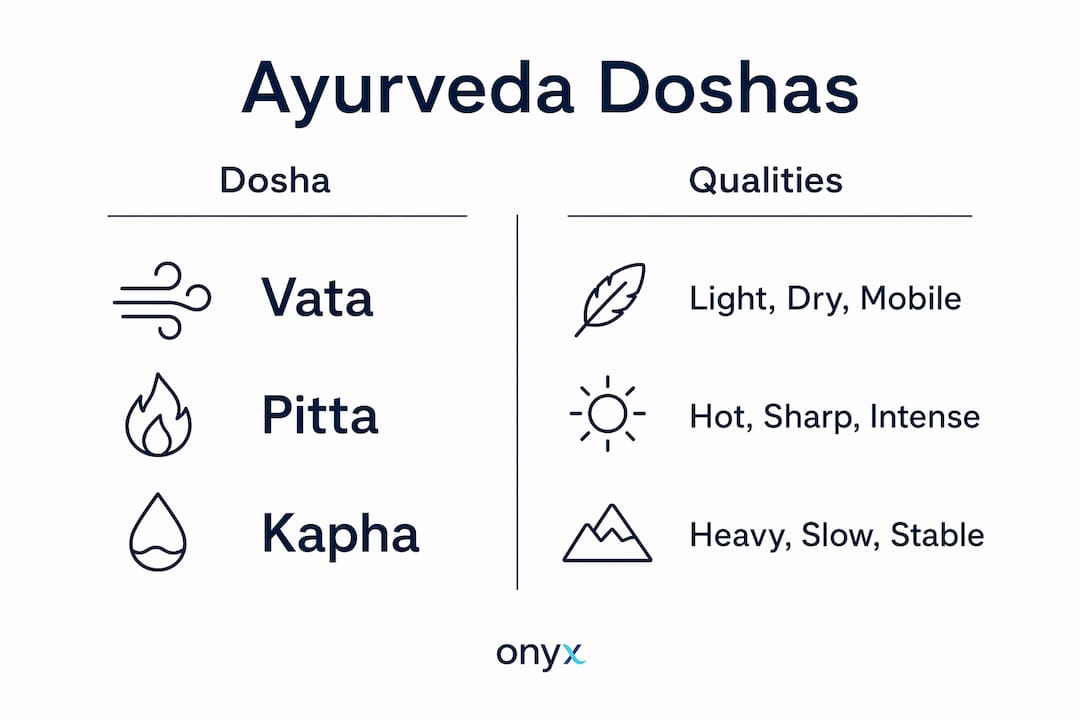
Ayurveda’s entire framework rests on the idea that every person has a unique constitution, called prakriti, shaped by three fundamental energies known as doshas: vata, pitta, and kapha. The Merck Manual describes doshas as bodily qualities that determine temperament and disease tendencies, with treatments tailored after a dosha assessment.
| Dosha | Primary Qualities | Common Imbalance Signs |
|---|---|---|
| Vata (space + air) | Light, dry, mobile | Anxiety, poor sleep, irregular digestion |
| Pitta (fire + water) | Sharp, hot, intense | Inflammation, irritability, acid reflux |
| Kapha (water + earth) | Heavy, stable, slow | Sluggishness, weight gain, congestion |
Two other concepts matter just as much. Agni is your digestive and metabolic fire, the force that processes food, emotions, and sensory input. When agni is strong, nutrients absorb well and energy stays steady. Ama refers to undigested residues that accumulate when agni is weak, and Ayurveda links ama buildup to fatigue, brain fog, and susceptibility to illness.

The classical text Caraka Samhita captures the system’s entire purpose in one phrase: Swasthyas Swasthya Rakshanam, protecting the health of the healthy. That prevention-first mindset is what makes Ayurveda feel so relevant to modern wellness consumers who want to stay well, not just recover.
Pro Tip: Before trying any Ayurvedic supplement, take a free dosha quiz (The Ayurvedic Institute offers one) to get a rough sense of your constitution. A vata-dominant person and a kapha-dominant person may need very different herbal support, and a one-size-fits-all approach often misses the mark.
What does an Ayurvedic practice actually include?
NCCIH describes Ayurveda as a whole medical system that uses diet, herbs, exercise, and lifestyle, practiced alongside modern medicine in many regions. In practice, that covers a wide toolkit:
- Diet: Foods chosen by dosha type and season to support agni and reduce ama.
- Dinacharya (daily routine): Morning practices like warm water, tongue scraping, and oil pulling that prime the body before food or supplements.
- Seasonal routines: Adjusting diet and activity as the seasons shift to stay in balance.
- Yoga and meditation: Movement and breathwork (pranayama) to calm the nervous system.
- Herbal medicines: Plant-based formulations targeting specific imbalances.
- Panchakarma therapies: Deeper cleansing treatments, typically supervised by a practitioner.
Supplements fit into this system as daily maintenance tools, targeted support for a specific concern, or an adjunct to lifestyle changes you are already making. The format matters more than most people realize. Dissolvable strips absorb sublingually, bypassing the digestive step that can slow down capsules or powders, which makes them a practical fit for anyone whose agni is already compromised. Gummies are convenient but often contain added sugar. Powders offer flexibility in dosing but require preparation. Research suggests that fast-absorbing formats combined with simple lifestyle alignment increase perceived benefits for stress and sleep.
Pro Tip: Try taking a dissolvable strip 20–30 minutes after your morning dinacharya routine, once you have had warm water and done a brief tongue scrape. Agni tends to be more receptive at that point, and the sublingual absorption means you are not competing with a heavy meal.
What does the science actually support, and where does it stop?
Ayurveda has a long track record of traditional use, but the clinical evidence base is still developing. Johns Hopkins Medicine is clear: some Ayurvedic approaches may offer benefits when used alongside standard care, but they should not replace evidence-based treatments. That is an honest framing worth holding onto.
A peer-reviewed synthesis published in Springer found that modern application of Ayurvedic principles, particularly herbal remedies for stress and focus, is most effective when integrated with natural rhythms and lifestyle alignment. Ashwagandha for stress, triphala for digestion, and brahmi for cognitive support have each attracted meaningful research attention. The challenge is that many trials are small, formulations vary widely between studies, and standardization is inconsistent.
“Ayurveda emphasizes personalized approaches to support the body’s ability to heal; some approaches may help when used alongside standard care but should not replace evidence-based treatments.” — Johns Hopkins Medicine
The honest takeaway: Ayurvedic-inspired supplements can be a real, useful part of a wellness routine, especially for stress, sleep, and digestive support. Claims about curing chronic disease or replacing medication are not supported by current evidence, and you should be skeptical of any product that makes those promises.
Safety, drug interactions, and U.S. regulation you should know
“Natural” does not automatically mean safe for every person in every situation. Johns Hopkins Medicine and other healthcare professionals consistently stress the importance of talking with a provider before combining Ayurvedic supplements with prescription medications, particularly anticoagulants, immunosuppressants, or thyroid drugs.
In the U.S., the FDA regulates dietary supplements as supplements, not drugs. That means manufacturers do not need pre-market FDA approval, so product safety depends heavily on good manufacturing practices (GMP) and third-party testing. Historically, some Ayurvedic preparations have included metal and mineral compounds that carry contamination risks. U.S. consumers should prioritize clearly labeled, plant-based formulations with documented third-party testing.
Stop use and consult a clinician if you are pregnant, managing a chronic disease, immunocompromised, or taking anticoagulants before starting any new herbal supplement.
Practical steps for adding Ayurvedic principles to your routine
Getting started does not require a complete lifestyle overhaul. A measured, step-by-step approach gives you the best chance of noticing real changes without overwhelming your system.
- Review your medications first. Talk with your doctor or pharmacist about any supplements you plan to add, especially if you take prescription drugs.
- Stabilize sleep and meal timing. Consistent sleep and eating windows support agni before any supplement can do its job.
- Start with one product. Introduce a single supplement, track how you feel for two weeks, then decide whether to continue or adjust.
- Add a simple morning routine. Warm water on waking, a brief morning oral care ritual like tongue scraping, and five minutes of calm before screens sets a strong foundation.
- Track changes in a notes app. Sleep quality, energy, and digestion are the three easiest metrics to observe.
Timeline to expect: Sleep and relaxation support often shows a subjective difference within days to a few weeks. Metabolic or digestive shifts typically take four to eight weeks of consistent use. No supplement produces overnight results, and anyone promising otherwise is overselling.
| Format | Estimated Monthly Cost | Notes |
|---|---|---|
| Dissolvable strips | — | Fast absorption, sugar-free, no water needed |
| Gummies | $20 | Convenient but often contain added sugar |
| Powders | $20 | Flexible dosing, requires preparation |
How to choose a safe, high-quality Ayurvedic supplement in the U.S.
The supplement aisle, physical or digital, rewards skeptical shoppers. Here is what to look for and what to avoid.
Quality markers to prioritize:
- Third-party testing certificates (NSF International, USP, or Informed Sport)
- GMP certification on the label
- Full ingredient list with botanical names, not just proprietary blend totals
- Transparent sourcing information from the manufacturer
Red flags to avoid:
- “Miracle cure” language or disease-treatment claims
- Undisclosed proprietary blends with no ingredient quantities
- Imported products with no third-party testing documentation
- Heavy metal contamination history (check FDA recall databases at fda.gov)
To verify authenticity beyond the label, contact the company directly and ask for a Certificate of Analysis (COA) from an independent lab. Reputable brands share these without hesitation. You can also check the FDA’s dietary supplement resources and the NCCIH database for safety alerts on specific herbs.
Pro Tip: Search the FDA’s MedWatch database and the NCCIH herb fact sheets before buying any new herbal product. Five minutes of research can tell you whether a specific herb has known interactions with common medications.
How Onyxwellness applies Ayurvedic principles to modern supplements
Onyxwellness takes the core logic of Ayurveda, personalized support, prevention-first thinking, and herbal tradition, and delivers it through sugar-free, dissolvable strips that fit a modern schedule. No water, no capsules to choke down, no added sugar. The sublingual format means active ingredients reach your system faster than most traditional delivery methods.
The three must-try products for anyone starting an Ayurvedic-inspired routine:
- Digestive + Gut Health Strips: Designed to support agni and gut balance. Take one after a meal when digestion feels sluggish or heavy.
- Sleep Strips: Formulated for relaxation and sleep onset. Place one under your tongue 20–30 minutes before bed as part of a wind-down routine.
- Probiotic + Metabolism Strips: Combines probiotic support with metabolism-friendly ingredients. Best taken in the morning alongside your dinacharya routine.
If you are on any medication, check with your clinician before adding any of these to your routine. Onyxwellness publishes product information transparently, and you can request sourcing and testing details directly through the site.
Key Takeaways
Ayurveda is a personalized, prevention-first health system, and Ayurvedic-inspired supplements work best as part of a consistent lifestyle routine, not as a standalone fix.
| Point | Details |
|---|---|
| Prevention is the core goal | Ayurveda prioritizes keeping healthy people healthy, not just treating illness after it appears. |
| Doshas drive personalization | Your vata, pitta, or kapha constitution shapes which herbs and routines will actually help you. |
| Science supports some uses | Research backs herbal support for stress, sleep, and digestion, but disease-cure claims are not supported. |
| U.S. regulation requires your diligence | The FDA does not pre-approve supplements, so third-party testing and GMP certification are your safety net. |
| Onyxwellness offers a practical starting point | Dissolvable strips for gut health, sleep, and metabolism translate Ayurvedic principles into a format that fits daily life. |
Why the convenience argument for Ayurveda is actually the point
Most wellness writing treats convenience as a compromise, as if the “real” version of Ayurveda requires hours of ritual and a dedicated practitioner. That framing misses something. Ayurveda’s classical texts were written for people living full lives, not for monks with unlimited time. The dinacharya tradition was designed to be done in minutes each morning, not hours. The herbs were taken daily because consistency, not intensity, is what produces results.
What Onyxwellness is doing with dissolvable strips is not a watered-down version of Ayurveda. It is a format that removes the friction that stops most people from being consistent. A strip you can take in ten seconds before bed is more likely to become a real habit than a powder you have to measure, mix, and drink. And in Ayurveda, habit is everything. The system only works when it is actually practiced. For more on building an Ayurvedic daily routine that fits your life, the Onyxwellness blog is a genuinely useful resource.
Onyxwellness makes starting simple
If you have been curious about Ayurvedic-inspired supplements but unsure where to begin, the Onyxwellness collection gives you a clear, low-friction entry point. The strips are sugar-free, fast-absorbing, and built around herbal ingredients with transparent sourcing, so you are not guessing about what you are putting in your body.
Start with the Sleep Strips if rest is your priority, or the Digestive + Gut Health Strips if digestion is where you want to begin. Browse the full Onyxwellness collection to find the right fit for your routine, and check product pages for ingredient details and testing information before you buy.
Useful sources and further reading
- NCCIH — Ayurvedic Medicine In Depth: The U.S. government’s most thorough overview of Ayurveda’s scope, safety, and evidence base. Start here for an unbiased summary.
- Johns Hopkins Medicine — Ayurveda: Covers personalization, safety considerations, and when to involve a clinician. Particularly useful for understanding drug interactions.
- FDA — Dietary Supplements: Explains how supplements are regulated in the U.S. and how to check for recalls or safety alerts.
- Merck Manual — Ayurveda: Clinical-level overview of doshas, treatments, and evidence, written for healthcare professionals but accessible to informed readers.
- Springer — Exploring Ayurveda: Peer-reviewed synthesis on modern Ayurvedic applications, especially for stress and cognitive support.
FAQ
What does Ayurveda mean?
Ayurveda comes from two Sanskrit words: āyus (“life”) and veda (“knowledge”), translating roughly as “knowledge of life” or “science of life.”
How do doshas affect which supplements you should take?
Your dominant dosha, vata, pitta, or kapha, shapes your constitution and imbalance tendencies, so the herbs and routines that help a vata person may not suit a kapha person. A dosha assessment helps you choose more precisely.
Are Ayurvedic supplements safe to take with prescription medications?
Not always. Healthcare professionals, including those at Johns Hopkins Medicine, recommend talking with your doctor before combining Ayurvedic herbs with prescriptions, particularly anticoagulants or immunosuppressants.
How long before you notice results from Ayurvedic-inspired supplements?
Sleep and relaxation support can show a subjective difference within days to a few weeks. Digestive and metabolic changes typically take four to eight weeks of consistent daily use.
What makes Onyxwellness strips different from standard capsules or gummies?
Onyxwellness uses sugar-free, dissolvable strips that absorb sublingually, bypassing the digestive delay that slows capsules, and without the added sugar common in gummies.
This article is general wellness information, not medical advice. Confirm current guidelines with a qualified healthcare professional before making changes to your supplement or medication routine.