


Tulsi has the strongest human-trial support for stress reduction, working as an adaptogen that measurably lowers cortisol and perceived stress within weeks. It also shows real, though smaller, signals for blood sugar and lipid control. Immune and skin benefits look promising in lab and animal research but rest on thinner human data. A 2017 systematic review of multiple human studies found favorable outcomes but flagged small, short trials, and tulsi can interact with diabetes and blood-thinning medications, so check with a doctor before daily use.
TL;DR:
- Standardized tulsi extract in capsule form offers the most reliable dose for stress reduction, requiring consistent daily intake for 6 to 8 weeks to see effects.
- Blood sugar and lipid improvements have been consistently observed in human trials, but combining tulsi with antidiabetic drugs warrants monitoring to avoid hypoglycemia.
- Immune and cardiovascular benefits are promising but remain based on small, short-term studies, requiring larger research to confirm clinical significance.
- People on blood thinners, pregnant women, or those planning surgery should consult a doctor before using tulsi due to potential interactions.
- Tea and fresh leaves deliver lower, variable doses and are less likely to replicate clinical trial results, making standardized extracts the preferred format for proven benefits.
Table of Contents
- What Is Tulsi, and How Is It Different From the Basil in Your Kitchen?
- What Metabolic, Mood, Immune, and Heart Benefits Does Tulsi Actually Have?
- Can Tulsi Help With Acne, Skin Inflammation, and Wound Healing?
- Which Form of Tulsi Actually Works: Tea, Powder, or Extract?
- What Does the Clinical Evidence for Tulsi Actually Show?
- Who Should Avoid Tulsi, and What Are the Side Effects?
- How Do You Actually Start Using Tulsi Safely?
- Onyx Wellness’s Approach to Ayurvedic Ingredients Like Tulsi
- Our Take: Tulsi Deserves More Respect Than It Gets, With One Caveat
- Which Onyx Wellness Products Pair Well With Tulsi’s Benefits?
- Primary Sources and Further Reading
- Sources
- FAQ
What Is Tulsi, and How Is It Different From the Basil in Your Kitchen?
Tulsi is not the basil you’re tossing into pasta sauce. Botanically, it’s Ocimum tenuiflorum (also called Ocimum sanctum), a distinct species from Ocimum basilicum, the sweet basil that lives in your spice rack. Three varieties show up most often in Ayurvedic practice and in the supplement aisle: Rama tulsi (green leaves, milder taste), Krishna tulsi (purple leaves, sharper flavor), and Vana tulsi (a wild variety with its own aromatic profile). Each carries a slightly different concentration of active compounds, but all three fall under the “holy basil” umbrella.
What actually separates tulsi from culinary basil isn’t just taxonomy. It’s chemistry. Tulsi’s essential oil profile is loaded with compounds that don’t show up in the same ratios in sweet basil, and those compounds are doing real work in the body.
- Eugenol — a phenolic compound with anti-inflammatory and antimicrobial activity, also found in cloves.
- Ursolic acid — a triterpenoid linked to antioxidant and metabolic effects in preclinical research.
- Rosmarinic acid — a polyphenol associated with anti-inflammatory and antioxidant activity across multiple plant species.
- Ocimumosides A and B — compounds unique to tulsi that researchers believe interact with the hypothalamic-pituitary-adrenal (HPA) axis, the system that governs your stress response.
That HPA-axis interaction is the mechanistic thread connecting tulsi to its reputation as an adaptogen: a substance thought to help the body normalize its stress response rather than simply sedate or stimulate it, as explained in The Best Adaptogenic Drinks for Stress, Energy, and Calm – Emberk. In Ayurvedic tradition, tulsi has been used for thousands of years as fresh chewed leaves, brewed tea, dried powder, and, more recently, as standardized extract in capsule form. The preparation matters more than people assume: a cup of tea delivers a variable, generally low dose of active compounds, while a standardized extract is manufactured to hit a specific milligram target of the same compounds every time.
What Metabolic, Mood, Immune, and Heart Benefits Does Tulsi Actually Have?
This is where the evidence gets genuinely interesting, and where it also gets genuinely mixed. Not every benefit attributed to tulsi carries the same weight of proof, and knowing the difference matters if you’re deciding whether to add it to your routine.
Metabolic effects: blood sugar and lipids
Several human trials have tested tulsi’s effect on glucose control, and the pattern is consistent enough to take seriously. Studies cited in clinical summaries report improvements in both fasting and postprandial (after-meal) blood glucose, along with favorable shifts in lipid profiles, including modest reductions in total cholesterol and triglycerides in some trial populations.
For someone managing insulin resistance or working with a doctor on prediabetes, this makes tulsi a plausible adjunct, not a replacement for medication or dietary change. If you’re on an antidiabetic drug, this is also exactly where monitoring becomes non-negotiable, since stacking a glucose-lowering herb on top of a glucose-lowering medication can push blood sugar lower than intended.
Neurocognitive and mood effects: the strongest evidence tulsi has
If tulsi has one claim to fame backed by rigorous trial design, it’s stress reduction. Randomized, placebo-controlled trials using standardized holy basil extracts have measured both subjective outcomes (perceived stress questionnaires) and objective ones (salivary and hair cortisol levels), and found meaningful reductions in both.
By the Numbers: A 2017 systematic review covering 24 human studies found favorable effects across metabolic, neurocognitive, and immune domains, with no significant adverse events reported. Higher-quality RCTs using standardized extracts showed measurable stress and cortisol improvements after roughly 6 to 8 weeks of consistent daily use.
That timeline is worth sitting with. Tulsi is not a same-day anxiety fix. It behaves the way most adaptogens do: slow, cumulative, and dependent on daily consistency rather than as-needed dosing. If you’re comparing it to other options, our evidence review of adaptogens for stress walks through how tulsi stacks up against ashwagandha, rhodiola, and other herbs in the same category. Sleep quality tends to improve alongside stress markers in these trials too, though sleep-specific data is thinner than the cortisol data.
Immunity and respiratory support
Small human trials and a larger body of preclinical work point to tulsi supporting immune markers and offering some relief for respiratory symptoms, an application with deep roots in traditional Ayurvedic use for coughs and colds. The catch is trial length. Most immune-focused studies run short, and few have tracked outcomes over months or years, so the immune case is coherent but not conclusive.
Cardiovascular signals
Small studies have looked at tulsi’s effect on blood pressure and platelet activity, with some showing modest reductions in blood pressure and changes in markers tied to clotting behavior. These findings are real, but they come from limited sample sizes, and no large-scale trial has confirmed clinical significance for heart health outcomes. Treat this as an emerging signal, not a settled fact.
Across all four domains, the honest summary looks like this:
- Stress and mood: strongest evidence, RCT-backed, objective and subjective markers agree.
- Metabolic health: solid signal for glucose and lipids, useful as an adjunct.
- Immunity: promising but built on smaller, shorter trials.
- Cardiovascular: early-stage evidence that needs larger studies before it’s conclusive.
Can Tulsi Help With Acne, Skin Inflammation, and Wound Healing?
Tulsi’s antimicrobial and anti-inflammatory compounds, particularly eugenol and rosmarinic acid, are the same ones responsible for its traditional use as a topical remedy for cuts, insect bites, and inflamed skin. Ursolic acid also shows antioxidant activity that may help protect skin cells from oxidative stress, a contributor to premature aging and inflammatory skin conditions.
Here’s the honest caveat: most of the strong evidence for tulsi’s skin benefits comes from lab and animal studies, not large human trials. That doesn’t mean the effects aren’t real. It means the confidence level is lower than it is for, say, tulsi’s stress benefits, where human RCTs exist in numbers.
Practically, that gap shapes how you should use it. Topical application (diluted tulsi extract, tulsi-infused compresses, or skincare products formulated with tulsi extract) is generally considered lower-risk than oral use for localized skin concerns, since you’re not introducing systemic exposure. Oral tulsi, by contrast, is where the metabolic and stress benefits live, but it’s also where drug interactions become relevant.
- Antiseptic compress: steep fresh or dried tulsi leaves in hot water, cool, and apply the cloth to minor skin irritation.
- Skincare formulations: look for products listing tulsi extract or Ocimum sanctum leaf extract, ideally with a stated concentration.
- Patch test first: apply a small amount to your inner forearm and wait 24 hours before using on your face, especially if you have sensitive skin.
Pro Tip: If you’re trying tulsi for skin support, pair a topical product with an internal supplement rather than relying on one or the other. The antioxidant load compounds when you’re addressing inflammation from both directions.
Readers looking for a more direct skin-support option alongside tulsi might consider Hair, Skin and Nails Strips or Beauty + Collagen Strips, both formulated for that goal specifically rather than relying solely on tulsi’s topical antioxidant activity.
Which Form of Tulsi Actually Works: Tea, Powder, or Extract?
Not all tulsi is created equal, and the format you choose has a real effect on whether you get the benefits described in clinical trials or just a pleasant herbal beverage.
- Standardized extract capsules carry the clinical trial dosing, typically in the 300 to 2,000 milligram range depending on the specific study and the concentration of active compounds like ursolic acid or eugenol. This is the format most closely tied to the stress and metabolic results discussed earlier.
- Tulsi tea delivers a much lower and more variable dose. A cup or two daily supports general wellness and hydration, but it’s unlikely to replicate the cortisol reductions seen in RCTs using concentrated extracts.
- Fresh leaves or dried powder sit somewhere in between, with potency depending heavily on plant part, growing conditions, and how the leaf was dried and stored.
- Modern delivery formats, including dissolvable strips and gummies, offer convenience and consistent dosing per unit, though bioavailability can vary by formulation and it’s worth checking that the product states its extract concentration rather than just “tulsi leaf” with no standardization noted.
Extraction method and plant part determine how much of a given compound actually ends up in the final product, which is why two “tulsi supplements” on a shelf can have wildly different potency. Before buying, check for third-party testing, a certificate of analysis (COA), and Good Manufacturing Practice (GMP) certification on the label. Products that skip all three are more likely to be inconsistent or adulterated. Our step-by-step herbal supplement guide breaks down how to read a supplement label for exactly these signals.
What Does the Clinical Evidence for Tulsi Actually Show?
The single most useful piece of evidence in this entire conversation is the 2017 systematic review published in PMC, which pooled 24 human studies spanning metabolic, neurocognitive, and immune outcomes. The review’s authors found consistently favorable results across those domains and reported no significant adverse events across the trials they examined.
That’s a genuinely encouraging finding. It’s also not the same as proof at the level of, say, a decade-long cardiovascular drug trial.
By the Numbers: The review covered 24 human studies total, a reasonable body of evidence for a botanical supplement, but small relative to what regulators typically require before approving a pharmaceutical claim. No trial in the review ran long enough to establish long-term safety or effect durability beyond several months.
Sitting alongside that review are the higher-quality randomized, placebo-controlled trials focused specifically on stress. These trials measured cortisol directly, rather than relying only on self-reported stress questionnaires, which is a meaningfully stronger design. The pattern across these trials: measurable improvement in perceived stress by around week 6, with clearer cortisol differences emerging by week 8 of consistent standardized-extract use.
What holds the overall evidence base back isn’t the direction of the findings. It’s the shape of the studies. Recurring limitations show up across the literature:
- Sample sizes tend to run small, often in the dozens rather than hundreds of participants.
- Trial durations cluster around 6 to 12 weeks, rarely longer.
- Standardization varies wildly between studies, meaning a “500mg tulsi extract” in one trial may not match the potency of the same label in another.
- Few trials compare tulsi head-to-head against standard-of-care treatments rather than placebo alone.
So where does that leave you? The stress-reduction claim is the one with the most rigorous human backing, RCT design, objective biomarkers, consistent timelines across multiple trials. The metabolic claims are supported but need larger confirmatory trials. The immune and cardiovascular claims are real signals worth watching, not settled science yet. That’s not a knock against tulsi. It’s an honest map of where the confidence lines actually sit.
Who Should Avoid Tulsi, and What Are the Side Effects?
The safety profile that emerges from human trials is reassuring on the whole. Across the studies reviewed in the 2017 systematic review, adverse events were uncommon and generally mild when they occurred, most often minor gastrointestinal upset like nausea or stomach discomfort.
The interactions are where you need to pay closer attention, particularly if you’re already managing a health condition with medication.
- Antidiabetic medications: tulsi’s blood-sugar-lowering effect can stack with drugs like metformin or insulin, raising the risk of hypoglycemia. Clinical guidance consistently flags this combination for monitoring.
- Blood thinners: tulsi may affect platelet activity, so combining it with anticoagulants or antiplatelet drugs (including regular aspirin use) warrants a conversation with your doctor first.
- Pregnancy and conception: animal studies have raised reproductive-toxicity signals at high doses. Human safety data during pregnancy is too limited to give reassurance, so a conservative approach, avoiding tulsi supplements while pregnant or actively trying to conceive, is the responsible one.
- Upcoming surgery: because of the platelet and blood-sugar effects, stop tulsi supplementation at least two weeks before any scheduled procedure, following the same general precaution used for other blood-thinning herbs.
Stop and call your doctor if you notice symptoms of low blood sugar (shakiness, confusion, cold sweats), any sign of allergic reaction, or unusual bleeding or bruising after starting tulsi.
How Do You Actually Start Using Tulsi Safely?
Getting tulsi’s benefits without unnecessary risk comes down to picking the right product and giving it enough time to work before judging results.
- Match the form to your goal. For stress and cortisol support, a standardized extract with a stated milligram dose is your best bet, since that’s what the RCTs actually tested. For general wellness, tea is a gentler entry point.
- Check the label before you buy. Look for a certificate of analysis, GMP certification, and a clearly stated extract concentration rather than a vague “proprietary blend.”
- Start with a baseline. Before your first dose, jot down your perceived stress level, and if metabolic health is your goal, note your fasting blood glucose or blood pressure with your doctor’s guidance.
- Take it daily and consistently. Adaptogen effects build over time. Give it a full 6 to 8 weeks before deciding whether it’s working, matching the timeline seen in the strongest trials.
- Reassess at the 6 to 8 week mark. Compare your stress scores, sleep quality, or metabolic markers to baseline. If nothing has shifted, it’s reasonable to stop rather than escalate the dose without medical input.
Pro Tip: Pair tulsi with the basics that already support its likely mechanisms, consistent sleep, regular movement, and a lower-sugar diet. An adaptogen works alongside your habits, not instead of them.
For readers building out a broader routine, our guide to Ayurvedic mental clarity practices covers lifestyle pairings that complement tulsi’s stress and focus effects.
Onyx Wellness’s Approach to Ayurvedic Ingredients Like Tulsi
Onyxwellness builds its product line around the same principle this article is built on: Ayurvedic ingredients deserve modern scrutiny, not just tradition as justification. Our dissolvable, sugar-free strip format exists because absorption and consistency are two of the biggest variables separating a supplement that works from one that doesn’t, the same variable that separates a standardized tulsi extract from a random cup of tea.
We treat every product, tulsi-adjacent or otherwise, as an adjunct to good habits and clinical care, never a replacement for either. If you’re managing diabetes, are pregnant, or take blood-thinning medication, that guidance applies to any tulsi product, including ours. Our formulations aim to map to specific goals, stress, sleep, metabolic support, skin health, rather than promising to do everything at once.
Our Take: Tulsi Deserves More Respect Than It Gets, With One Caveat
Most wellness content treats tulsi as either a miracle herb or dismisses it entirely as unproven folklore. The stress-reduction evidence, with RCTs measuring real cortisol changes over 6 to 8 weeks, is more rigorous than what backs half the supplements marketed as “clinically proven.” That deserves more credit than it usually gets.
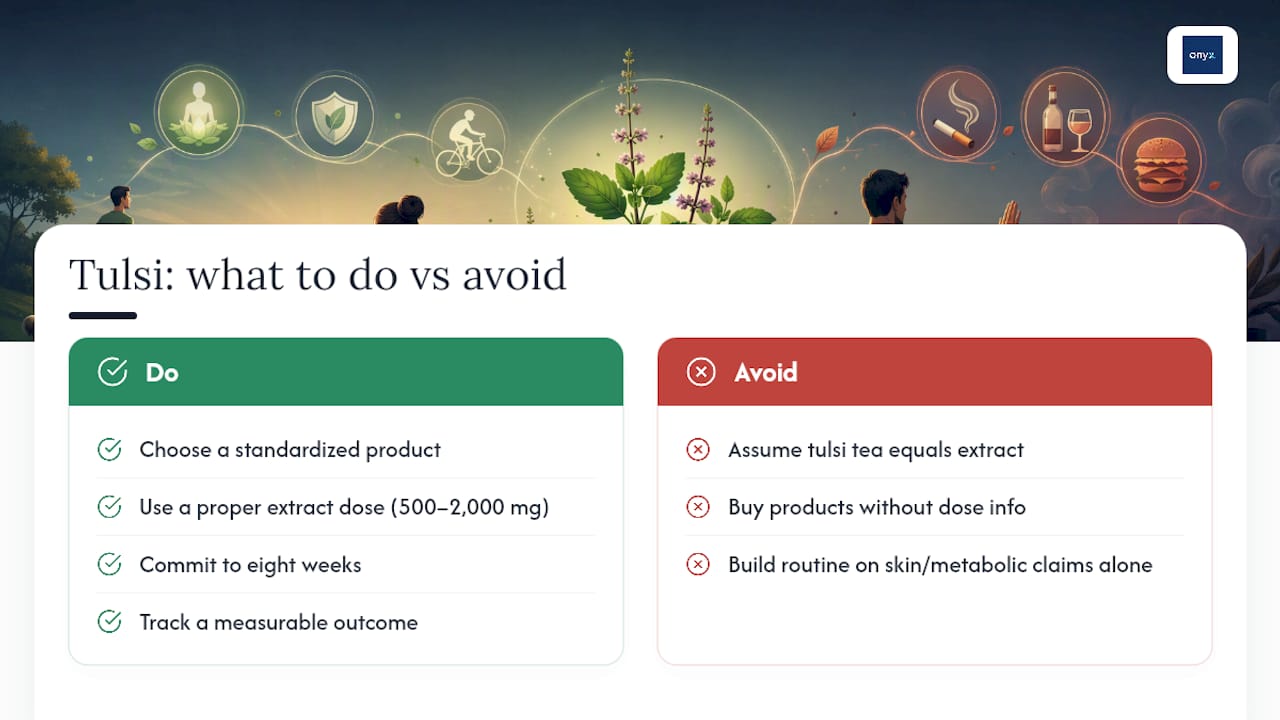
Where conventional advice falls short is dosing honesty. Too many product pages imply a cup of tulsi tea delivers the same benefit as the 500 to 2,000 milligram standardized extracts used in trials. It doesn’t. If stress relief is your goal, a properly dosed extract matters more than the format it comes in.
Prioritize this: pick a standardized product, commit to eight weeks, and track something measurable. Everything else, the skin benefits, the metabolic support, is real enough to explore but not yet proven enough to build your entire routine around.
— Chris
Which Onyx Wellness Products Pair Well With Tulsi’s Benefits?
If tulsi’s benefits map to something specific you’re chasing, whether that’s calmer evenings, clearer skin, or steadier metabolic health, Onyxwellness builds toward those same goals with formats designed for how people actually live, no water, no pills to choke down, no waiting.
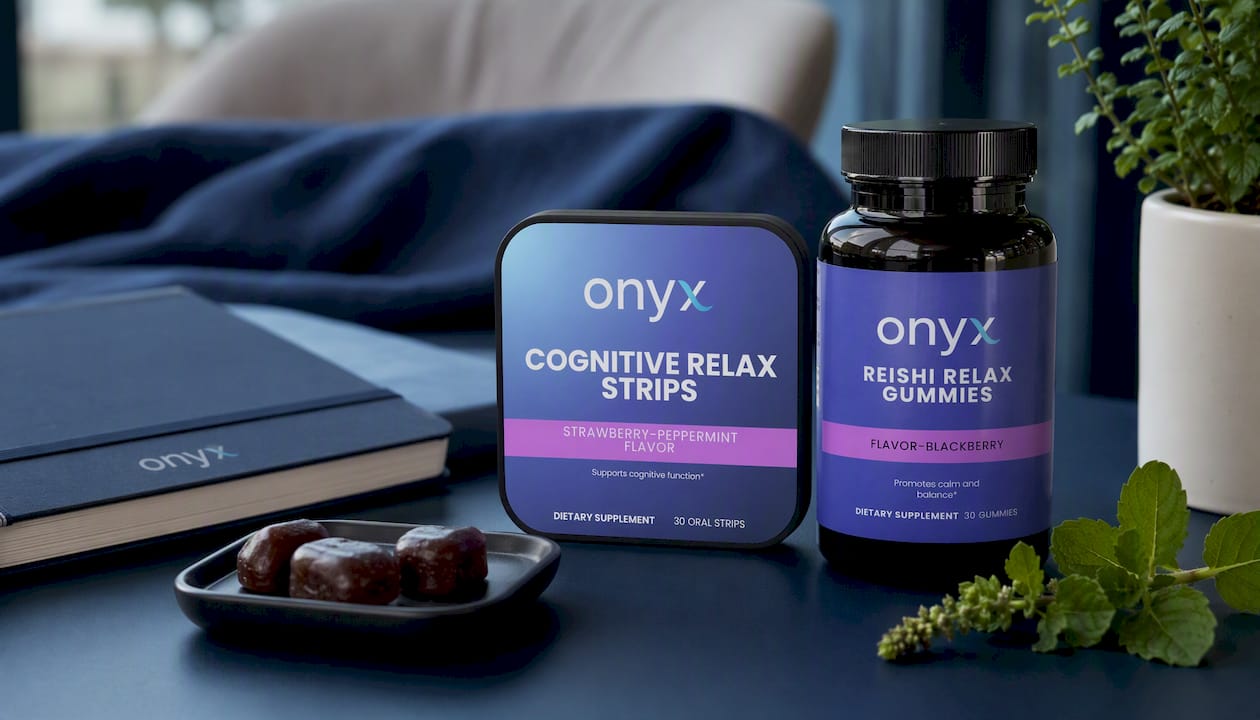
For sleep and stress support, our Sleep Strips are worth pairing with a tulsi routine, since both target the same downstream outcome: a calmer nervous system heading into bedtime. If skin health is the priority, Beauty + Collagen Strips and Hair, Skin and Nails Strips support the antioxidant and structural side of skin health that tulsi’s topical use only partially addresses. Readers exploring tulsi for metabolic reasons might look at Probiotic + Metabolism Strips as a complementary gut-and-metabolism adjunct, and anyone building a broader mushroom-adaptogen stack alongside tulsi can check out our Mushroom Focus Strips or Reishi Relax Gummies.
None of these replace medical care, and none replace tulsi itself if that’s specifically what you’re after. They’re built to work alongside it. Browse the full Onyx Wellness collection to find the format and goal combination that fits your routine, and start with one product rather than stacking five at once.
Primary Sources and Further Reading
- The Clinical Efficacy and Safety of Tulsi in Humans: A Systematic Review — the core review of 24 human trials referenced throughout this article.
- Cleveland Clinic: The Benefits of Holy Basil (Tulsi) — clinician-facing summary of benefits and interaction warnings.
- Ohio State Health & Discovery: Is Holy Basil Good for Your Health? — phytochemical breakdown and safety notes.
- PMC trial reviews on standardized extract RCTs — detail on cortisol and stress-marker trial timelines.
This article is general information, not a substitute for advice from a qualified doctor. Consult a qualified healthcare professional about your own circumstances before acting on anything here.
Sources
- The Clinical Efficacy and Safety of Tulsi in Humans: A Systematic Review of the Literature
- The Benefits of Holy Basil (Tulsi) — Cleveland Clinic
- Is holy basil good for your health? | Ohio State Health & Discovery
- ncbi PMC trial reviews and related clinical trials
FAQ
What Are the Main Benefits of Tulsi?
Tulsi’s best-supported benefits are stress reduction (backed by RCTs measuring cortisol and perceived stress) and metabolic support for blood sugar and lipids, with promising but less-proven effects on immunity, skin health, and cardiovascular markers.
Who Should Not Drink Tulsi Tea?
People taking antidiabetic medications or blood thinners, those who are pregnant or trying to conceive, and anyone scheduled for surgery within two weeks should avoid tulsi without first talking to a doctor.
Can Tulsi Be Taken Daily?
Yes, tulsi is generally taken daily in clinical trials, since adaptogen effects build over time and typically become measurable after 6 to 8 weeks of consistent use.
What Are the Side Effects of Tulsi?
Reported side effects are generally mild, most commonly gastrointestinal upset, with no significant adverse events reported across the human trials reviewed in the 2017 systematic review.
How Long Does It Take to See Benefits From Tulsi?
Stress-related improvements typically appear within 6 weeks, with more measurable cortisol changes showing up by week 8 in trials using standardized extracts, so give it a full two months before judging results.