


TL;DR:
- Adaptogens are plant compounds that help restore biological balance and support recovery from stress. They modulate the body’s stress-response system, improving physical and mental resilience through consistent use. Benefits are most evident after 42 to 60 days of regular intake.
Adaptogens are natural plant compounds that help your body recover from stress by restoring biological balance rather than simply masking fatigue. The role of adaptogens in recovery spans both physical and mental dimensions, making them uniquely useful for athletes and wellness-focused individuals alike. Unlike caffeine or stimulants, adaptogens work by modulating the hypothalamic-pituitary-adrenal (HPA) axis, the body’s central stress-response system. This means they can raise your energy when you’re depleted and calm your system when you’re overactivated. That two-way action is what sets them apart from most supplements on the market.
How do adaptogens support physical recovery?
Adaptogens improve physical recovery by working on multiple biological systems at once. This pleiotropic therapeutic activity means they affect several signaling pathways simultaneously, including PI3K/Akt and AMPK/SIRT1, rather than hitting a single target like most drugs. That broad action translates into real, measurable benefits for athletes and active people.

The HPA axis and hormonal balance
The HPA axis controls your cortisol output, and cortisol is the hormone most directly tied to recovery speed. Adaptogens normalize cortisol levels rather than suppress or spike them. If you’re chronically fatigued, they raise cortisol to restore energy. If you’re overtraining and running hot, they bring it down. This bidirectional regulation is what makes adaptogens genuinely different from single-action supplements.
Ashwagandha and Cordyceps in the gym
The clinical evidence on ashwagandha is strong. Daily supplementation at 600 mg over 42 days improved recovery perception in female athletes and increased lower-body power output in males during pre-season training. That’s not a marginal effect. It’s the kind of result that shows up in performance metrics coaches actually track.
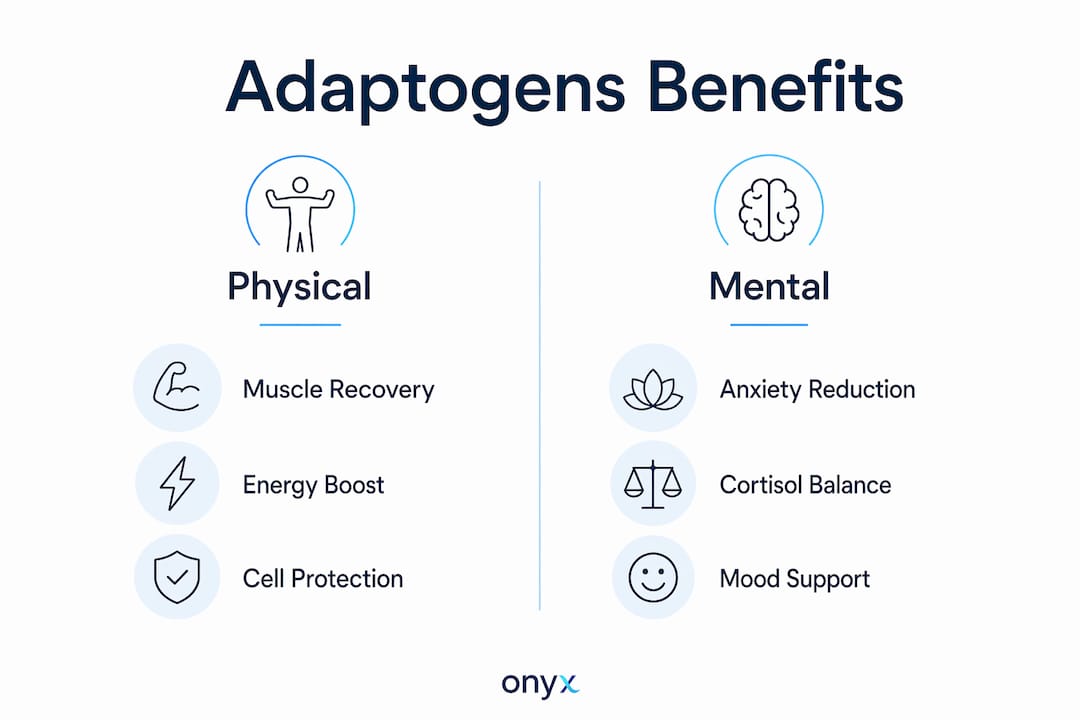
Cordyceps militaris adds a different layer. A review of 321 individuals found that Cordyceps improves VO2max and power output while reducing creatine kinase and blood urea nitrogen, two key markers of muscle damage after hard training. Lower creatine kinase means your muscles are recovering faster between sessions.
Adaptogens also induce heat shock proteins, which protect cells from damage during intense exercise. They provide antioxidant support and improve mitochondrial function, giving your cells more capacity to produce energy and repair tissue. For a deeper look at how these compounds fit into a broader recovery plan, the natural sports nutrition guide from Onyxwellness covers the clinical research in detail.
| Adaptogen | Primary physical benefit | Key mechanism | Evidence base |
|---|---|---|---|
| Ashwagandha | Muscle recovery, power output | HPA axis regulation, cortisol normalization | 600 mg/day RCT, 42 days |
| Cordyceps militaris | Endurance, reduced muscle damage | VO2max improvement, lower CK/BUN | Review of 321 individuals |
| Rhodiola rosea | Fatigue resistance, stamina | Cortisol modulation, AMPK activation | Multiple clinical trials |
| Reishi | Immune support, anti-inflammatory | Antioxidant activity, immune modulation | Preclinical and clinical data |
Pro Tip: Take ashwagandha with a meal containing healthy fats. Fat-soluble compounds in the root absorb better with dietary fat, and consistency at the same time each day helps your body build a stable hormonal baseline.
What role do adaptogens play in mental and emotional recovery?
Adaptogens reduce anxiety and lower cortisol through the same HPA axis regulation that supports physical recovery. A meta-analysis of 779 participants found that ashwagandha produced an anxiety reduction effect size of Hedges’ g = -1.18 and a cortisol reduction of Hedges’ g = -0.74. Both are clinically meaningful numbers. An effect size above 0.8 is considered large in psychological research.
The mental recovery benefits go beyond cortisol. Adaptogens modulate neurotransmitter systems including serotonin and dopamine pathways, supporting mood stability and reducing the mental fog that follows periods of chronic stress. This is why people often report feeling “clearer” after a few weeks of consistent use, not just calmer.
Clinical RCT data on ashwagandha show stress reduction of 28–44% and sleep quality improvements of 41–72% at doses of 240–600 mg/day over 8–12 weeks. Better sleep is itself the most powerful recovery tool available. Adaptogens that improve sleep quality are therefore compounding their own benefits.
Key mental and emotional recovery benefits supported by clinical evidence:
- Anxiety reduction: Ashwagandha consistently lowers self-reported anxiety scores across multiple randomized controlled trials.
- Cortisol normalization: Adaptogens restore homeostatic balance by re-regulating the HPA axis, not by suppressing the stress response entirely.
- Sleep quality: Improved sleep onset and duration at standard clinical doses over 8–12 weeks.
- Mood stability: Neurotransmitter modulation supports steadier emotional baseline during high-demand periods.
- Mental clarity: Reduced cognitive fatigue reported after sustained use, particularly relevant for people recovering from burnout.
One honest caveat: methodological heterogeneity and small sample sizes in some studies limit how definitive the conclusions can be. Adaptogens work best as adjuncts to solid sleep, nutrition, and stress management practices. They are not a substitute for those foundations.
Pro Tip: If you’re using adaptogens primarily for stress relief and mental recovery, pair them with a consistent wind-down routine at night. The combination of reduced cortisol from the adaptogen and a predictable sleep cue amplifies both effects.
What are best practices for using adaptogens to optimize recovery?
Getting the most from adaptogens requires consistency, not just the right product. Here’s what the clinical evidence actually supports:
-
Commit to 42–60 days of consistent use. Clinical benefits emerge after sustained intake, not from taking an adaptogen once or twice. Stress and sleep improvements in trials only appeared after this window. Plan your protocol accordingly.
-
Use evidence-based doses. Ashwagandha is well-studied at 240–600 mg/day. Cordyceps militaris shows benefits in the range used in reviewed trials. Avoid megadosing. More is not always better, and the clinical data supports moderate, consistent doses.
-
Cycle your use. Short-term use during high-demand periods, followed by a break, prevents down-regulation of your body’s own stress-response systems. A common approach is 6–8 weeks on, followed by 2–4 weeks off. This maintains efficacy and avoids dependency.
-
Check for interactions. Adaptogens affect hormonal and immune pathways. If you take thyroid medication, immunosuppressants, or sedatives, consult a healthcare provider before adding adaptogens to your routine. This is not a theoretical concern. It’s a practical one.
-
Treat adaptogens as support, not solutions. Sleep, nutrition, and training load management are the foundation of recovery. Adaptogens amplify those foundations. They do not replace them. If your sleep is poor and your diet is off, no adaptogen will close that gap.
For a practical framework on building a full recovery routine, the natural recovery steps guide from Onyxwellness walks through the full picture.
Comparing key adaptogens for recovery
Not all adaptogens work the same way, and choosing the right one depends on what you’re recovering from.
| Adaptogen | Physical recovery | Mental recovery | Typical dose | Safety profile |
|---|---|---|---|---|
| Ashwagandha | Strong: power, muscle repair | Strong: anxiety, cortisol, sleep | 240–600 mg/day | Well-tolerated; avoid in pregnancy |
| Cordyceps militaris | Strong: endurance, VO2max, CK reduction | Moderate: fatigue reduction | Varies by extract | Generally safe; limited long-term data |
| Rhodiola rosea | Moderate: stamina, fatigue resistance | Strong: mood, mental performance | 200–600 mg/day | Well-tolerated; mild stimulant effect |
| Reishi | Moderate: immune support, inflammation | Moderate: relaxation, sleep | 1–2 g/day (extract) | Safe long-term; mild GI effects possible |
Ashwagandha is the most clinically studied adaptogen for recovery and the best starting point for most people. Cordyceps is the stronger choice if endurance and post-exercise muscle repair are the priority. Rhodiola rosea suits people dealing with mental fatigue and burnout more than physical overtraining. Reishi sits at the intersection of immune support and relaxation, making it a strong option for recovery from illness or chronic stress.
Individual responses vary. Factors like baseline cortisol levels, training volume, and stress load all influence which adaptogen will have the most noticeable effect. For a thorough breakdown of ashwagandha’s clinical profile, the ashwagandha evidence guide at RankOfSupplements covers dosing and side effects in depth. The role of adaptogens in wellness guide there also provides useful context on how these compounds fit into broader health protocols.
Key Takeaways
Adaptogens support recovery by modulating the HPA axis, reducing cortisol, and improving both physical performance and mental resilience through consistent, sustained use over 42–60 days.
| Point | Details |
|---|---|
| HPA axis modulation | Adaptogens normalize cortisol bidirectionally, raising it in fatigue and lowering it in overactivation. |
| Physical recovery evidence | Ashwagandha at 600 mg/day and Cordyceps militaris both show measurable improvements in muscle recovery and endurance. |
| Mental recovery evidence | Ashwagandha reduces anxiety with an effect size of Hedges’ g = -1.18 and improves sleep quality by up to 72% in clinical trials. |
| Consistency is required | Benefits emerge after 42–60 days of sustained use; sporadic dosing does not produce the same hormonal modulation. |
| Cycle for safety | Use adaptogens during high-demand periods and take breaks to preserve your body’s own stress-response capacity. |
What I’ve learned from years of watching people use adaptogens
Most people come to adaptogens expecting a quick fix. They take ashwagandha for a week, feel nothing dramatic, and move on. That’s the wrong approach, and it’s the most common mistake I see.
The clinical data is clear: benefits build over weeks, not days. The people who get the most out of adaptogens are the ones who treat them like a training block, not a one-off experiment. They pick one or two adaptogens suited to their specific recovery needs, stay consistent for 6–8 weeks, and then assess honestly.
What I find genuinely underappreciated is the bidirectional cortisol effect. Most people think of adaptogens as calming herbs. But for an athlete in the middle of a hard training block, ashwagandha can actually support energy and power output by raising cortisol that’s been suppressed by overtraining. That’s a very different use case than stress relief, and it’s backed by solid RCT data.
The other thing worth saying plainly: adaptogens are not magic. I’ve seen wellness enthusiasts use them to justify poor sleep and skipped recovery days. That’s the wrong frame. Think of adaptogens as the support crew in your corner, not the main event. Get your sleep, manage your training load, and eat well. Then add adaptogens during the periods when demand is highest, cycle off, and repeat.
— Chris
Onyxwellness products formulated for recovery support
If you’re ready to put the research into practice, Onyxwellness has done the formulation work for you.
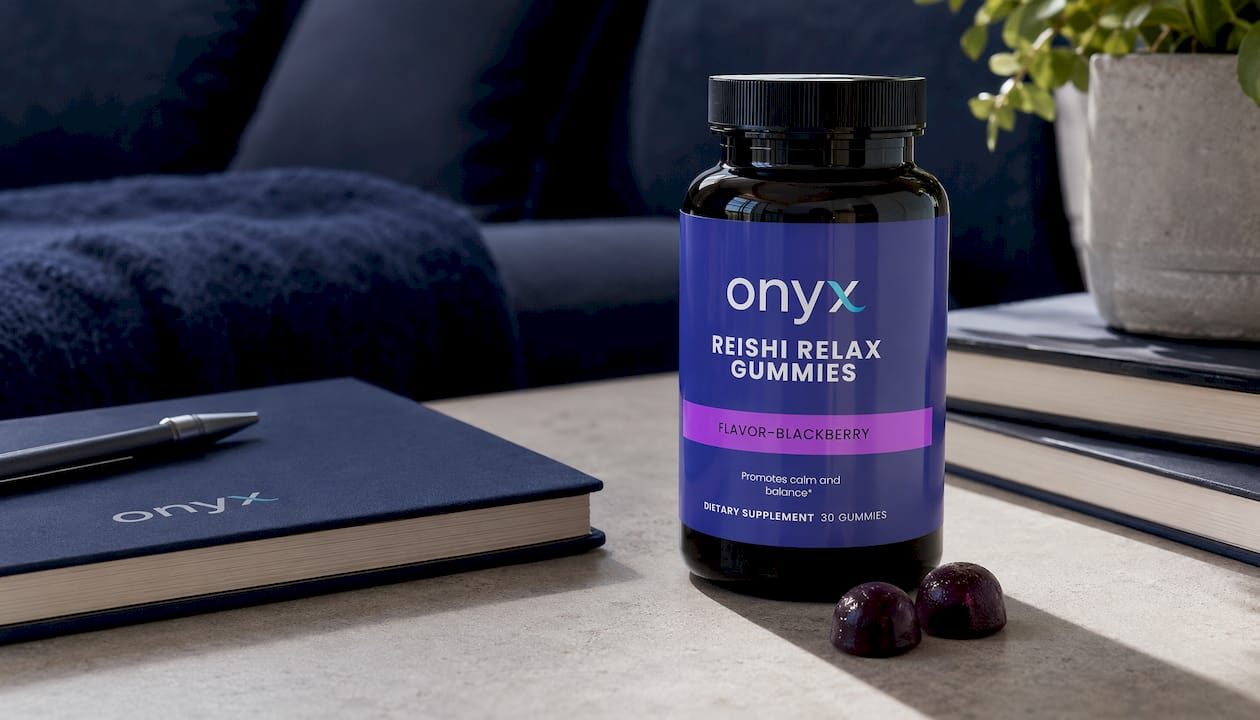
The Reishi Relax Gummies from Onyxwellness are built around reishi mushroom, one of the most studied adaptogens for immune support and relaxation-based recovery. They’re a practical option for anyone dealing with chronic stress, poor sleep, or recovery from illness. Onyxwellness fuses Ayurvedic principles with modern delivery formats, so you get the benefits of traditional herbal compounds in a form that fits a busy schedule. Browse the full wellness product collection to find the right adaptogen support for your recovery goals.
FAQ
What is the role of adaptogens in recovery?
Adaptogens support recovery by modulating the HPA axis to normalize cortisol, reduce inflammation, and improve both physical performance and mental resilience. They work across multiple biological pathways simultaneously, making them effective for both physical and stress-related recovery.
How long does it take for adaptogens to work?
Clinical trials show meaningful benefits after 42–60 days of consistent daily use. Sporadic or short-term dosing does not produce the same hormonal modulation needed for sustained recovery improvements.
Which adaptogen is best for muscle recovery?
Ashwagandha and Cordyceps militaris have the strongest clinical evidence for muscle recovery. Ashwagandha at 600 mg/day improved power output and recovery perception in athletes over 42 days, while Cordyceps reduced creatine kinase and improved VO2max in a review of 321 individuals.
Can adaptogens reduce stress and anxiety?
Yes. A meta-analysis of 779 participants found ashwagandha reduced anxiety with an effect size of Hedges’ g = -1.18 and lowered serum cortisol with an effect size of Hedges’ g = -0.74, both considered large effects in clinical research.
Are adaptogens safe to take every day?
Adaptogens are generally well-tolerated at clinical doses, but cycling is recommended. Use them consistently during high-demand periods of 6–8 weeks, then take a 2–4 week break to prevent down-regulation of your body’s natural stress-response systems.