


Most sugar alcohol side effects show up in your gut, not your bloodstream: gas, bloating, cramping, and a laxative effect that catches people off guard when they eat too much sugar-free candy or protein bars. A newer, smaller body of research also links erythritol and xylitol to platelet activation and a higher risk of major cardiovascular events, though that evidence is still preliminary. The practical response is simple: moderate your intake, read labels closely, avoid stacking multiple “sugar-free” products in one sitting, keep xylitol far away from pets, and talk to your doctor first if you have heart disease or a sensitive gut.
TL;DR:
- Sugar alcohols like maltitol and sorbitol often cause gastrointestinal symptoms at lower doses, especially in liquids, typically within the first sitting.
- Emerging evidence suggests erythritol and xylitol may activate platelets and increase the risk of cardiovascular events, particularly with high blood levels.
- People with heart disease or stroke history should consider limiting erythritol intake and consult their doctor due to potential clotting concerns.
- Xylitol poses a significant toxicity risk to dogs even in small amounts, requiring pet owners to keep it away from animals.
- Tolerance generally maxes out around 10 to 15 grams daily for most, but individual sensitivity, gut health, and product form influence symptoms.
Table of Contents
- What Are Sugar Alcohols and What Side Effects Do They Cause?
- Why Do Sugar Alcohols Cause Digestive Issues?
- Are Erythritol and Xylitol Linked to Heart Problems?
- What Other Safety Risks Should You Know About?
- How Much Sugar Alcohol Is Too Much?
- How Do You Spot Sugar Alcohols on a Label?
- Can Sugar Alcohols Cause Allergic Reactions?
- What Happens With Long-Term Sugar Alcohol Use?
- Do Sugar Alcohols Interact With Medications or Health Conditions?
- Choosing Sugar-Free Products the Cautious Way
- Find Sugar-Free Wellness Products Without the Guesswork
- Sources
- FAQ
What Are Sugar Alcohols and What Side Effects Do They Cause?
Sugar alcohols, technically called polyols, are carbohydrates that taste sweet but aren’t fully absorbed in your small intestine. That’s the whole story in one sentence, and it’s also the reason for nearly every side effect on this list. Common ones include erythritol, xylitol, sorbitol, maltitol, and mannitol, each showing up in everything from protein bars to sugar-free gum to “keto” ice cream.
Because your body can’t break these molecules down the way it processes table sugar, a portion travels undigested into your colon, where gut bacteria ferment it. That fermentation produces gas, and the unabsorbed sugar alcohol itself pulls water into your intestines by osmosis. The result is a side effect profile that’s fairly predictable across the category, even though intensity varies quite a bit by type and dose.
The known and suspected effects include:
- Digestive symptoms: gas, bloating, cramping, and diarrhea, sometimes called the laxative effect
- Emerging cardiovascular signal: erythritol and xylitol have been associated with platelet activation and cardiovascular events in recent research, though this connection isn’t fully established
- Blood sugar impact: minimal for most polyols, but not zero, and worth tracking if you have diabetes
- Dental effects: xylitol in particular appears to reduce cavity-causing bacteria, a genuine upside
- Pet toxicity: xylitol is dangerous for dogs even in small amounts
There’s also a nutritional trade-off worth knowing about. Sugar alcohols aren’t calorie-free. Most provide somewhere between zero and three calories per gram, less than sugar’s four, but enough that a daily habit of “sugar-free” treats can still add up. Harvard Health notes that the primary downside at high intake is gastrointestinal distress, while acknowledging real dental benefits and recommending moderation over avoidance.
Why Do Sugar Alcohols Cause Digestive Issues?
Here’s the mechanism in plain terms: what your gut can’t absorb, it has to deal with somehow. Unabsorbed polyols draw water into the intestine through osmosis, which speeds transit time. Meanwhile, bacteria in your colon ferment the leftover sugar alcohol, producing gas as a byproduct. Combine those two processes and you get the classic trio of bloating, cramping, and diarrhea that gives sugar alcohols their reputation.
A 2016 peer-reviewed review examining sugar alcohol tolerance found that excessive consumption of maltitol and isomalt in particular triggers osmotic diarrhea, and that feeding trials show symptoms appearing early, often within a single sitting at higher doses. The same review found a silver lining: subjects in longer trials showed some adaptation over several weeks, meaning your gut microbiome may partially adjust to regular exposure. That’s not a guarantee, but it does explain why some people who eat sugar-free products daily report fewer symptoms than first-time users.
Not all polyols behave the same way. Roughly ranked from most to least likely to cause GI distress in typical serving sizes:
- Mannitol and sorbitol tend to cause symptoms at the lowest doses and show up often in sugar-free gum and mints
- Maltitol and isomalt cause issues at moderate doses, common culprits in sugar-free chocolate and baked goods
- Xylitol falls in the middle, tolerated reasonably well by many people at typical doses
- Erythritol is generally the best tolerated of the common polyols, since your body absorbs more of it in the small intestine before it reaches the colon
Form matters too. Sugar alcohols dissolved in a beverage tend to cause symptoms at lower doses than the same amount eaten in a solid food, likely because liquid moves through your digestive tract faster and hits your colon in a more concentrated dose.
Pro Tip: If you’re testing a new sugar-free product, eat it with a meal that contains some fiber rather than on an empty stomach. The combination appears to slow the osmotic effect and gives your gut more time to adjust.
Are Erythritol and Xylitol Linked to Heart Problems?
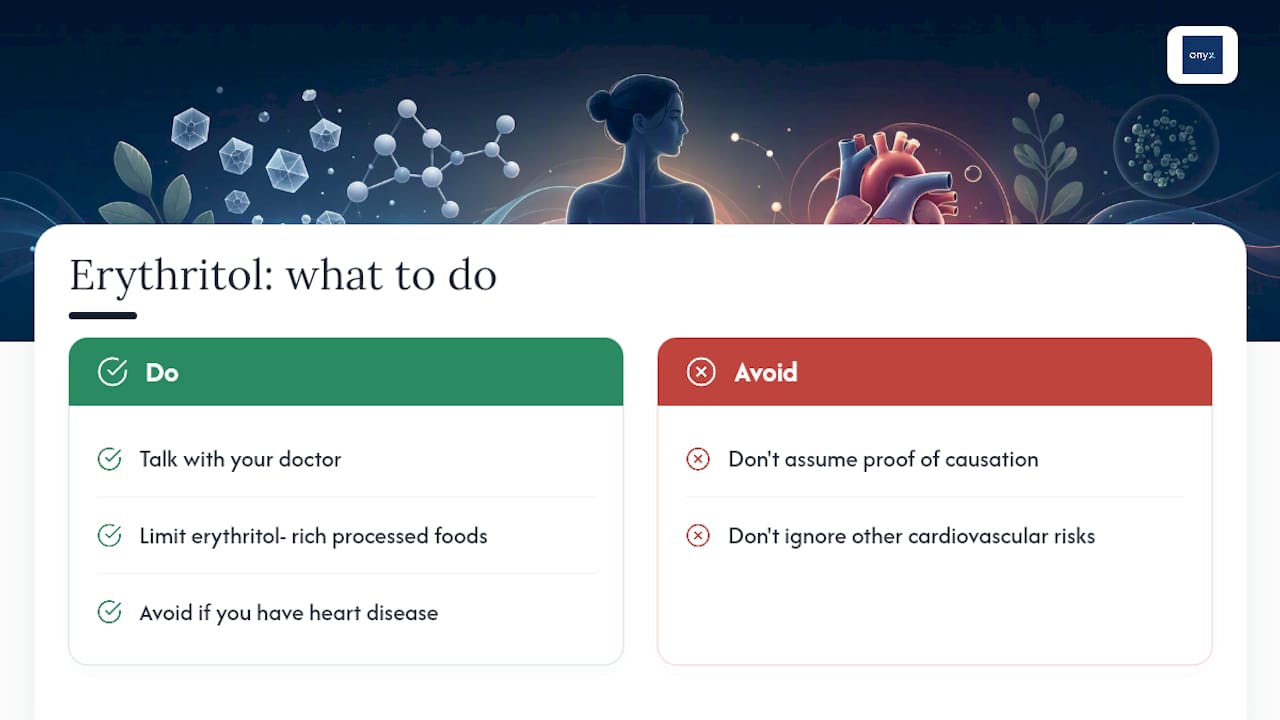
Yes, according to emerging research, though the findings are preliminary rather than conclusive. A Cleveland Clinic–led study published in 2024 found that people with higher circulating levels of erythritol in their blood faced an increased risk of major adverse cardiovascular events, including heart attack and stroke. The same research team ran mechanistic experiments showing that erythritol activated platelets in the lab, the type of cellular behavior that contributes to blood clot formation.
The Cleveland Clinic research team observed that erythritol appeared to promote clot formation in laboratory platelet studies, and separately found that study participants with the highest circulating erythritol levels faced meaningfully greater risk of heart attack, stroke, or death within a few years compared to those with the lowest levels.
That combination, an observed association in people plus a plausible biological mechanism in the lab, is what makes this finding worth taking seriously rather than dismissing as another sweetener scare. Still, there’s an important distinction to keep in mind: your body naturally produces small amounts of erythritol as a byproduct of glucose metabolism, so everyone has some baseline level circulating. The concern is less about that natural baseline and more about the much larger spikes that come from consuming manufactured erythritol in processed foods, since dietary intake can push blood levels far higher than the body produces on its own.
Mayo Clinic’s coverage of the topic is appropriately cautious here, noting that while the clotting connection is concerning, the research so far is observational and mechanistic rather than a randomized trial proving cause and effect. Confounding factors, like the fact that people who eat a lot of processed “diet” foods may have other cardiovascular risk factors, remain a real limitation of this body of work.
If you already have heart disease, a history of stroke, or multiple cardiovascular risk factors, this is a case where waiting for more research isn’t necessarily the smart move. Consider limiting high-dose erythritol-containing processed foods and bring it up with your doctor, especially if you consume sugar-free products daily.
What Other Safety Risks Should You Know About?
Beyond digestion and heart health, a handful of other issues deserve a place on your radar, particularly if you share your home with a dog or manage a chronic condition.
- Xylitol is highly toxic to dogs. Even small amounts can trigger a rapid, dangerous drop in blood sugar and, in higher doses, liver failure. If your dog eats anything containing xylitol, including sugar-free gum or peanut butter, call your veterinarian or an animal poison control line immediately. Don’t wait for symptoms to appear.
- Blood sugar impact is usually small but not zero. Most sugar alcohols cause a much smaller glucose rise than table sugar, which is why they show up in “diabetic-friendly” products. Still, if you’re counting carbohydrates closely, check the label rather than assuming “sugar-free” means “carb-free.”
- Calories still count. Sugar-free doesn’t mean calorie-free, and a daily habit of sugar-free desserts, bars, and drinks can contribute to weight gain the same way any calorie surplus does.
- Dental benefits are real, at least for xylitol, which appears to reduce the bacteria responsible for cavities, a genuine advantage over regular sugar.
- Medication interactions are uncommon but possible, mostly related to how polyols affect gut transit time, which can occasionally alter how other oral medications are absorbed. If you take a medication with a narrow therapeutic window, mention your sugar alcohol intake to your pharmacist.
How Much Sugar Alcohol Is Too Much?
Tolerance varies enough from person to person that a single universal number doesn’t exist, but a reasonable starting point is that many people tolerate somewhere around 10 to 15 grams per day without noticeable symptoms, with digestive issues becoming more likely as intake climbs beyond that. Body size, gut microbiome composition, and which specific polyol you’re eating all shift that threshold in either direction.
A simple way to find your own limit:
- Pick one product and test it alone rather than combining several sugar-free items in the same day
- Start with half a serving and wait 24 to 48 hours before trying more
- Track what you eat and how you feel, noting bloating, gas, or bathroom changes
- Increase gradually if you tolerate the smaller amount, and stop entirely if symptoms show up
If you live with irritable bowel syndrome or follow a low-FODMAP diet, sorbitol and mannitol are worth avoiding altogether, since they’re recognized FODMAP triggers even at modest doses. Children tend to have lower tolerance thresholds relative to body weight, so sugar-free gum and candy deserve the same moderation you’d apply to any concentrated sweet. Older adults with slower gut transit may also notice symptoms at lower doses than they did years earlier.
Pro Tip: If sugar alcohols consistently bother you, stevia, monk fruit, or small servings of real sugar or honey are worth trying as swaps. None of them carry the same osmotic laxative risk, though they come with their own trade-offs worth researching separately.
How Do You Spot Sugar Alcohols on a Label?
Ingredient lists use specific names, and recognizing them takes the guesswork out of shopping. Look for erythritol, xylitol, sorbitol, maltitol, mannitol, isomalt, and lactitol, usually listed by name rather than grouped under a vague sweetener category.
Marketing claims are a useful clue too. “Keto-friendly,” “sugar-free,” “no added sugar,” and “diabetic-friendly” labels almost always signal a polyol somewhere in the ingredient list, even when the front of the package doesn’t spell it out. When an ingredient list feels ambiguous or uses an unfamiliar sweetener name, checking the manufacturer’s website or contacting customer service directly beats guessing.
A few practical shopping habits lower your overall exposure without requiring you to give up sugar-free products entirely:
- Favor whole foods over heavily processed “diet” versions of familiar snacks
- Choose small-dose formats, like single-serving strips or one gummy rather than a whole bag, which naturally caps how much polyol you consume at once
- Sample before committing, trying a new product once before making it a regular habit
Onyxwellness’s gut health strip and other sugar-free formats are formulated around this exact principle: small, controlled servings rather than the concentrated polyol doses found in many processed diet snacks. You can browse the full lineup in the sugar-free supplements guide for more on how these formats compare to traditional sugar-free products.
Can Sugar Alcohols Cause Allergic Reactions?
True allergic reactions to sugar alcohols are rare, and most of what people describe as a sugar alcohol “reaction” is actually the digestive response covered earlier, not an immune response. That said, sensitivities beyond the gut do occur in a smaller subset of people.
Some individuals report headaches after consuming sugar alcohols, particularly sorbitol and mannitol, though the mechanism behind this isn’t well established and may relate more to the digestive fermentation process than a direct neurological effect. Skin reactions, including hives or itching, have been reported anecdotally in rare cases, though these appear to be uncommon compared to the near-universal potential for GI symptoms at high doses.
If you notice a reaction that doesn’t fit the typical bloating-and-gas pattern, things like facial swelling, difficulty breathing, or widespread hives, treat it as a possible allergic response rather than ordinary intolerance and seek medical attention. True food allergies involve your immune system producing antibodies against a substance, which is mechanistically different from the osmotic and fermentation processes that cause most sugar alcohol complaints.
People with existing sensitivities to fermentable carbohydrates, including those diagnosed with small intestinal bacterial overgrowth, sometimes report a lower threshold for symptoms across multiple sugar alcohol types, not just one. If you’ve noticed that several different “sugar-free” products all bother you similarly, that pattern points more toward a general fermentable carbohydrate sensitivity than an allergy to any single polyol, and it’s worth discussing with a doctor or dietitian familiar with FODMAP sensitivities.
What Happens With Long-Term Sugar Alcohol Use?
Most of the research on sugar alcohols focuses on short-term tolerance, so the long-term picture is less complete than health-conscious readers might want. What does exist points to a few consistent patterns worth understanding.
Gut adaptation appears to be real but partial. Feeding trials referenced in the PMC review on GI tolerance show that symptoms often lessen over weeks of regular exposure, suggesting your gut microbiome shifts to handle fermentable polyols more efficiently over time. That doesn’t mean symptoms disappear entirely, and it doesn’t mean everyone adapts at the same rate.
The cardiovascular question is the bigger unknown for long-term users. Because the erythritol and MACE research is observational, it can’t yet tell us whether years of regular erythritol consumption meaningfully raises individual risk, or whether the association reflects something else about the dietary patterns of people who eat a lot of processed sugar-free foods. Researchers involved in that work have called for further study, which is a reasonable and honest limitation rather than a reason to panic.
For calorie and metabolic effects, chronic consumption of sugar-free products doesn’t automatically prevent weight gain, since polyols still carry some calories and often appear in products people eat because they feel like a “free pass.” The FDA’s Generally Recognized as Safe designation for erythritol and several other polyols reflects an assessment of safety at expected consumption levels, not a guarantee against every possible long-term outcome, particularly as new research like the cardiovascular findings continues to emerge after approval.
Do Sugar Alcohols Interact With Medications or Health Conditions?
Direct pharmaceutical interactions with sugar alcohols are uncommon, but a few overlaps with existing health conditions are worth flagging before you make sugar-free products a daily habit.
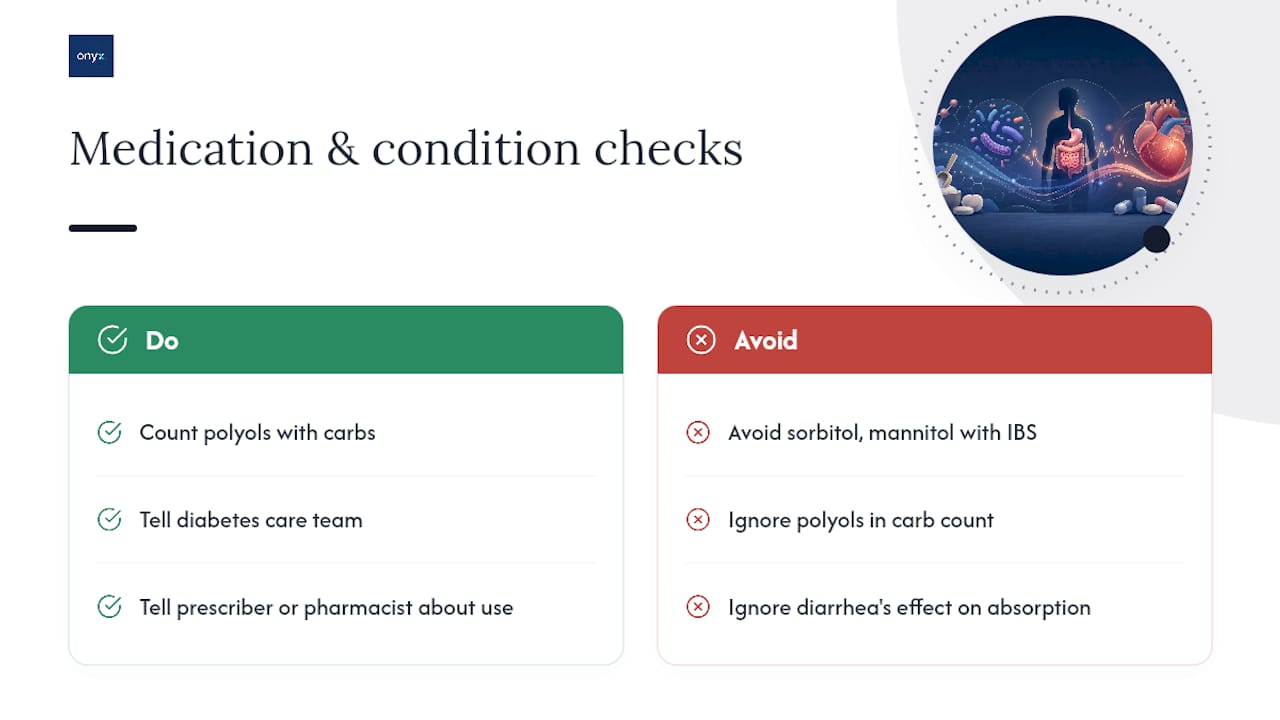
If you have diabetes, sugar alcohols generally produce a smaller blood glucose response than table sugar, but “smaller” isn’t “none.” Carbohydrate counting that ignores sugar alcohols entirely can lead to underestimating your actual carb intake, so check labels and talk to your diabetes care team about how to count polyols in your specific meal plan.
If you have irritable bowel syndrome or another condition involving visceral hypersensitivity, sugar alcohols can worsen symptoms at doses that wouldn’t bother someone without a diagnosed gut condition, which is why sorbitol and mannitol are commonly restricted on low-FODMAP eating plans.
If you’re on medications that depend on consistent gut transit time for proper absorption, a sudden bout of polyol-induced diarrhea could theoretically speed a medication through your system before it’s fully absorbed, though this effect hasn’t been extensively studied for most common drugs. If you take a medication with a narrow therapeutic window, a blood thinner, a thyroid medication, or an anticonvulsant, mention regular sugar alcohol consumption to your prescribing physician or pharmacist as a routine safety check.
Finally, if you already have cardiovascular disease or multiple risk factors, the emerging erythritol and xylitol research covered earlier is the most relevant interaction to discuss with your cardiologist, since it involves a biological mechanism, platelet activation, that could theoretically compound with existing clotting risk from other conditions or medications like antiplatelet drugs.
Choosing Sugar-Free Products the Cautious Way
Reading all this evidence can leave you wondering whether sugar-free products are worth the risk at all. We’d argue they still are, just with more intention than “sugar-free” labeling alone provides. Some supplement brands build their products around small, controlled servings rather than the concentrated polyol loads found in many mainstream diet snacks; for guidance on choosing low-irritation snacks and products, consider resources like SoBear.
If GI sensitivity is your main concern, the Digestive + Gut Health Strips make a sensible first product to test, since starting with a single strip lets you gauge your own tolerance before committing to regular use. For readers who want a low-sugar wellness routine without adding to their daily polyol load, Sleep Strips, Cognitive Relax Strips, and Mushroom Extract Complex Gummies are worth a look, though it’s still smart to check each ingredient list for polyols rather than assuming “sugar-free” always means the same thing across products. You can browse the full sugar-free collection to compare formats directly.
— Chris
Find Sugar-Free Wellness Products Without the Guesswork
Some wellness brands offer sugar-free support products in formats like dissolvable strips and low-dose gummies designed around Ayurvedic-inspired ingredients and controlled, single-serving formats instead of tablets, powders, or gummies packed with concentrated sugar alcohols.
That format matters more than it might seem. A strip dissolves on your tongue in seconds, with no water needed and no oversized serving that pushes you toward the digestive thresholds covered earlier in this article. If a rough night calls for support, the Hangover Strips offer a fast-absorbing option without a sugar-heavy delivery vehicle. If sleep or stress is the bigger issue, Sleep Strips and the Reishi Relax Gummies are worth exploring as low-dose alternatives to conventional sugar-free sleep aids. Browse the Onyxwellness catalog and pick a single product to try first, the same tolerance-testing approach recommended throughout this article, before building out a full routine.
This article is general information, not a substitute for advice from a qualified doctor. Consult a qualified healthcare professional about your own circumstances before acting on anything here.
Sources
- Cleveland Clinic newsroom: Cleveland Clinic–led study links sugar substitute to increased risk of heart attack and stroke
- Gastrointestinal disturbances associated with the consumption of sugar alcohols — PMC review (2016)
- How healthy is sugar alcohol? - Harvard Health Publishing
- Mayo Clinic Q&A: Is erythritol a safe and healthy sugar substitute?
FAQ
Are sugar alcohols worse than sugar for your health?
Not universally. Sugar alcohols cause fewer blood sugar spikes and less dental damage than table sugar, but they carry a higher risk of GI symptoms at moderate to high doses, and emerging research raises separate cardiovascular questions about erythritol and xylitol specifically that plain sugar doesn’t share.
What are the symptoms of sugar alcohol intolerance?
The main symptoms are gas, bloating, abdominal cramping, and diarrhea, typically appearing within a few hours of eating a sugar alcohol-containing product, especially at doses above roughly 10 to 15 grams.
How many sugar alcohols can you have per day?
Many people tolerate somewhere around 10 to 15 grams daily without symptoms, though this threshold varies by the specific sugar alcohol, individual gut sensitivity, and whether you’re consuming it in liquid or solid form.
What is the healthiest sugar alcohol?
Erythritol is generally the best tolerated for digestion since your body absorbs more of it before it reaches your colon, but the emerging cardiovascular research means it’s no longer a clear-cut winner, especially for people with existing heart disease risk.