


TL;DR:
- Effective hangover prevention relies on pacing alcohol intake, hydrating well, and eating nutrient-rich foods beforehand. Implementing these strategies reduces severity by limiting acetaldehyde buildup, dehydration, and blood sugar disruption, leading to better recovery. Consistent preparation and moderation are key to feeling your best after social drinking occasions.
You planned a fun night out, drank responsibly by most measures, and still woke up with a pounding head and a ruined morning. Sound familiar? Step by step hangover prevention is not about avoiding alcohol entirely. It is about giving your body what it needs before, during, and after drinking so that tomorrow feels like a real day. This guide breaks down the science and practical strategies behind preventing hangovers naturally, covering everything from what you eat at dinner to what you drink before bed.
Table of Contents
- Key takeaways
- What a hangover actually is and why prevention beats cures
- Preparation before drinking: food, hydration, and mindset
- During drinking: pacing, choices, and hydration tactics
- The critical window before bed
- Morning after: recovery steps that actually help
- My honest take on hangover prevention
- Support your recovery with Onyxwellness
- FAQ
Key takeaways
| Point | Details |
|---|---|
| Prevention beats cures | Time is the only true cure, so limiting severity through hydration and pacing is your best bet. |
| Food timing matters | Eating protein, healthy fats, and complex carbs before drinking slows alcohol absorption significantly. |
| Pace to one drink per hour | Matching your drinking speed to your liver’s processing rate reduces acetaldehyde buildup and hangover severity. |
| The pre-bed window is critical | Drinking 16 to 20 ounces of water before sleep and stopping alcohol two hours before bed protects your recovery. |
| Morning nutrition aids recovery | Bland, carb-rich foods like toast, eggs, and bananas stabilize blood sugar and ease lingering symptoms. |
What a hangover actually is and why prevention beats cures
Before you can use any hangover prevention tips effectively, it helps to understand what your body is actually going through. When you drink alcohol, your liver breaks it down into a compound called acetaldehyde. That substance is significantly more toxic than alcohol itself, and it accumulates when your liver cannot process it fast enough. The result is that familiar mix of headache, nausea, fatigue, and brain fog.
Alcohol is also a diuretic, meaning it signals your kidneys to release more fluid than you take in. That dehydration drives many of the worst symptoms, including headaches and muscle cramps. On top of the physical effects, alcohol triggers anxiety the following day in many people. This phenomenon, called hangxiety, can leave you feeling uneasy, low-grade anxious, or emotionally flat even when the physical symptoms fade.
Here is the honest truth that most hangover articles sidestep. Symptoms typically resolve within 8 to 24 hours, but no supplement or food is going to speed that clock dramatically. What prevention actually does is limit how severe those hours feel. That is a worthwhile goal, and the steps below are built around it.
Key physiological factors that make hangovers worse:
- Acetaldehyde accumulation from drinking faster than your liver can process
- Dehydration from alcohol’s diuretic effect on the kidneys
- Blood sugar disruption from skipping food or drinking on an empty stomach
- Sleep disruption from alcohol’s impact on REM cycles
- Hangxiety from the nervous system rebound after alcohol’s sedative effect
Preparation before drinking: food, hydration, and mindset
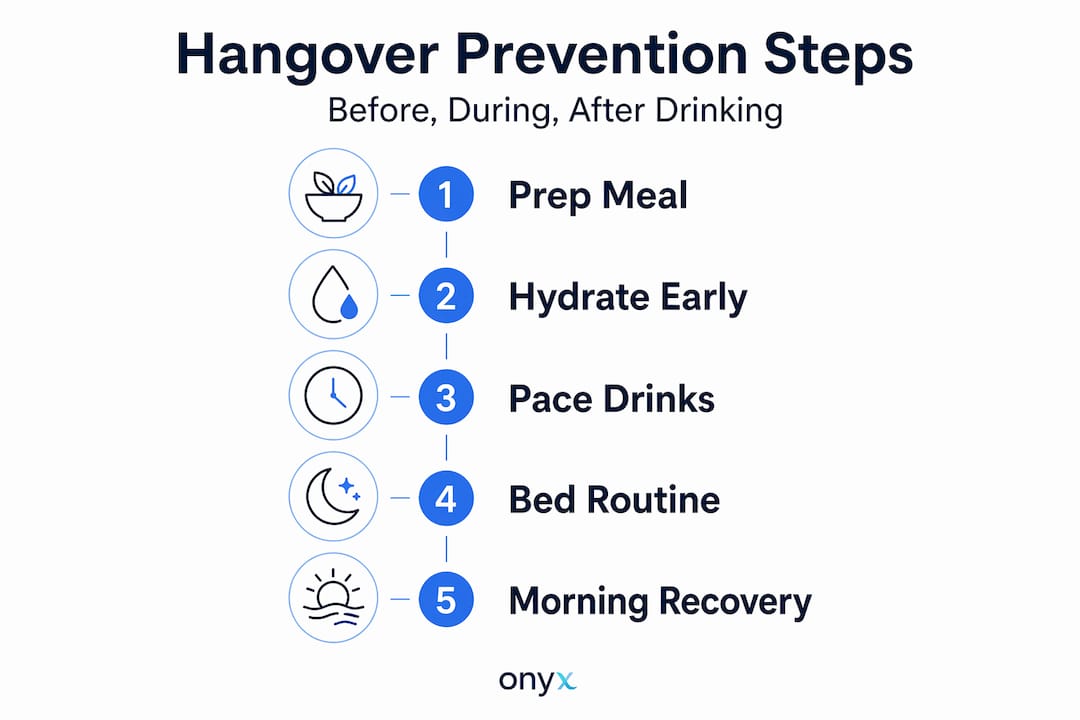
The most overlooked phase of hangover prevention happens before you take your first sip. What you eat and drink in the two to four hours before going out has a direct impact on how your body handles alcohol that evening.
A multi-nutrient meal with protein, healthy fats, and complex carbohydrates is more effective than trying to load up on any single type of food. Think grilled salmon with roasted sweet potatoes, or chicken with brown rice and avocado. These combinations slow gastric emptying, which means alcohol enters your bloodstream more gradually and your peak blood alcohol concentration stays lower.
Avoid salty snacks in the hours before drinking. Salty foods increase thirst, which often translates into drinking faster and more than intended. That is the opposite of where you want to start your evening.
Pre-hydration is equally important. Most people head out mildly dehydrated already, especially if they have been active during the day, consumed a lot of caffeine, or skipped water. Starting well-hydrated buffers the dehydration that alcohol will cause over the next few hours. Aim for at least 16 ounces of water in the hour before your first drink.
The mental side of preparation is underrated. Setting a loose pace goal before you arrive, deciding how many drinks feel right for the evening and roughly when you want to stop, removes a lot of in-the-moment decision fatigue. It is not about restriction. It is about having a plan so your choices reflect your actual preferences rather than social momentum.
Pro Tip: Eat a spoonful of olive oil or a handful of nuts 30 minutes before your first drink. Both are high in healthy fat and create a protective coating in your stomach that slows alcohol absorption without making you feel overly full.
During drinking: pacing, choices, and hydration tactics
This is where most stepwise hangover strategies fall apart. People start well but lose track as the evening gets going. These practical steps keep you on track without making you feel like the cautious one at the table.
-
Pace to one drink per hour. Your liver can metabolize roughly one standard drink per hour. Front-loading drinks causes more severe symptoms the next day than spreading the same number of drinks across the evening. This single rule does more for hangover prevention than almost anything else.
-
Alternate alcoholic drinks with water. Order a glass of water alongside every alcoholic drink and finish it before ordering another round. This is not just about hydration. It also naturally slows your pace and gives your liver time to catch up.
-
Choose lighter-colored spirits. Darker liquors like bourbon, whiskey, and dark rum contain higher levels of compounds called congeners, which are byproducts of fermentation that worsen hangover symptoms. Vodka, gin, and white wine tend to produce less severe hangovers at equivalent alcohol amounts.
-
Keep eating through the evening. High-fat, high-fiber foods slow absorption and help stabilize blood sugar throughout the night. A shared appetizer, some cheese, or a late snack keeps your stomach working in your favor.
-
Use soda water as a mixer or buffer. Diluting your drink with soda water reduces the amount of alcohol per serving while also helping with hydration. Making water and mixers part of your drinking ritual enforces hydration without feeling like a chore.
Pro Tip: If you are at a bar where you cannot easily track your pace, order drinks one at a time rather than in rounds. Rounds create social pressure to drink faster than you actually want to.
The critical window before bed
What you do in the 30 to 60 minutes before sleep has an outsized effect on how you feel the next morning. Most people skip this window entirely, which is a missed opportunity.

Stopping alcohol two hours before bed gives your body meaningful time to metabolize alcohol before sleep begins. Alcohol disrupts REM sleep, which is the restorative stage your brain relies on for memory and mood regulation. The less alcohol in your system when your head hits the pillow, the better your sleep quality will be, which directly affects how you feel the next morning.
Before bed, drink 16 to 20 ounces of water or an electrolyte-infused beverage. Plain water works, but electrolytes help your cells actually absorb and retain that fluid rather than just passing it through. Look for options low in sugar, since sugar-heavy recovery drinks are less effective for rehydration than plain water or balanced electrolyte formulas.
One safety point that cannot be skipped. Acetaminophen after drinking is dangerous due to the risk of liver damage. Alcohol depletes the antioxidants your liver uses to safely process acetaminophen, creating a toxic combination. If you need something for a headache before bed, consult your pharmacist and avoid acetaminophen entirely.
Getting a good night of sleep after drinking is one of the most protective things you can do for your next-day well-being. The steps that help your body before bed are not complicated. They are just easy to skip when you are tired. Do not skip them.
A few additional tips for better sleep after drinking:
- Keep your room cool and dark to offset alcohol’s tendency to raise body temperature
- Avoid your phone for 15 to 20 minutes before sleep to let your nervous system wind down
- Place a glass of water on your nightstand so you can hydrate if you wake up during the night
Morning after: recovery steps that actually help
You followed most of the steps above and still woke up feeling rough around the edges. Here is what to do in the first few hours of the morning to feel better faster.
Hydration comes first. Drink a full glass of water before doing anything else. Follow it with an electrolyte drink, coconut water, or a low-sugar sports drink within the first hour. Consistent sipping throughout the morning is more effective than trying to drink a large volume all at once.
For food, a bland breakfast with complex carbs and easy protein is the right move. Toast, eggs, and bananas are genuinely effective because they stabilize blood sugar, replenish potassium, and give your digestive system something simple to process. Spicy, greasy, or very rich foods are harder on a sensitive stomach and can prolong nausea.
Some things to do and avoid in the morning:
- Drink water and electrolytes before reaching for coffee
- Eat a small bland meal even if your appetite is low
- Try a short, gentle walk to support circulation and mood without stressing your system
- Avoid the “hair of the dog” strategy. A morning drink delays recovery rather than accelerating it
- Limit caffeine to one cup of coffee or tea. Excess caffeine increases dehydration and anxiety
- Give your body time. Prevention limits severity, but your body still needs hours to complete its natural recovery process
Gentle movement is worth mentioning specifically. A 15 to 20 minute walk outside, if you can manage it, supports mood by releasing endorphins and helps with the lingering fogginess many people feel. Strenuous exercise is counterproductive when you are already dehydrated and depleted.
My honest take on hangover prevention
I have tried the shortcuts. The B-vitamin cocktails before bed, the greasy breakfast that somehow feels like a cure, the extra coffee to muscle through the morning. None of them move the needle the way consistent hydration and pacing do. That is the uncomfortable reality of hangover prevention: the most effective strategies are boring and require doing them before you feel like you need to.
What genuinely changed my experience with social drinking was treating water as part of the evening rather than an afterthought. Alternating drinks, pre-hydrating, and stopping an hour earlier than I felt like I needed to meant I woke up the next day functional instead of written off.
The hangxiety piece surprised me most. Once I started pacing and eating consistently through the night, the anxious, low mood the day after almost disappeared. The same habits that protect your physical recovery also protect your mental state the next day. That felt like a significant payoff for relatively small changes.
My honest suggestion: do not try to overhaul everything at once. Pick one or two steps from this guide, practice them consistently for a few nights out, and notice the difference. You will find the approach that fits your lifestyle. That is worth more than any hangover cure on the market.
— Chris
Support your recovery with Onyxwellness
Prevention and recovery work best when your body has the right support tools in place. At Onyxwellness, we created hangover recovery strips specifically to complement your hydration and nutrition steps, using fast-absorbing, sugar-free formulas rooted in Ayurvedic tradition. If digestion support is part of your wellness routine, the digestive and gut health strips can also help your body process and recover more comfortably. Explore the full range of natural wellness products at Onyxwellness and find what fits your approach to feeling your best.
FAQ
What is hangover prevention?
Hangover prevention refers to the habits and strategies used before, during, and after drinking to reduce the severity of hangover symptoms. It focuses on hydration, pacing, nutrition, and sleep rather than last-minute cures.
Can you actually prevent a hangover completely?
You cannot always prevent a hangover entirely, since time is the only true cure. However, consistent prevention habits like pacing, pre-hydrating, and eating before drinking can significantly reduce how severe symptoms become.
How many drinks per hour limits hangover severity?
Pacing to roughly one standard drink per hour matches your liver’s natural processing capacity, reduces acetaldehyde buildup, and is one of the most effective single strategies for limiting hangover severity.
What should you eat before drinking to prevent a hangover?
A meal combining protein, healthy fats, and complex carbohydrates eaten two to four hours before drinking slows alcohol absorption and helps stabilize blood sugar throughout the evening.
Is it safe to take pain relief medication before bed after drinking?
Avoid acetaminophen after drinking entirely, as alcohol depletes the antioxidants needed to process it safely and increases the risk of liver damage. Speak with a pharmacist if you need guidance on safer options for hangover-related discomfort.
Recommended
- Step-by-step recovery guide for natural wellness success – Onyx Wellness
- How to recover naturally: steps & tools for better wellness – Onyx Wellness
- Holistic recovery guide: Ayurvedic and natural strategies – Onyx Wellness
- Natural sports nutrition supplements for recovery: 2026 guide – Onyx Wellness