


TL;DR:
- Ayurveda’s daily routines, or Dinacharya, focus on consistent practices aligned with natural body rhythms. Starting with three simple anchors—fixed wake time, warm water, and tongue scraping—builds a sustainable wellness foundation. Layer additional practices gradually to support long-term health without overwhelm.
Step by step ayurveda wellness is a practical system of daily rituals that supports balanced health through consistent practices aligned with your body’s natural rhythms. Known formally as Dinacharya, this ancient Ayurvedic framework organizes your day around timing, not complexity. You do not need a two-hour morning routine or a pantry full of herbs to start. Three simple anchor practices, done at the right time each day, create the foundation everything else builds on. Consistency beats perfection here, and that shift in mindset changes everything.
What are the essential Ayurvedic daily wellness practices to start with?
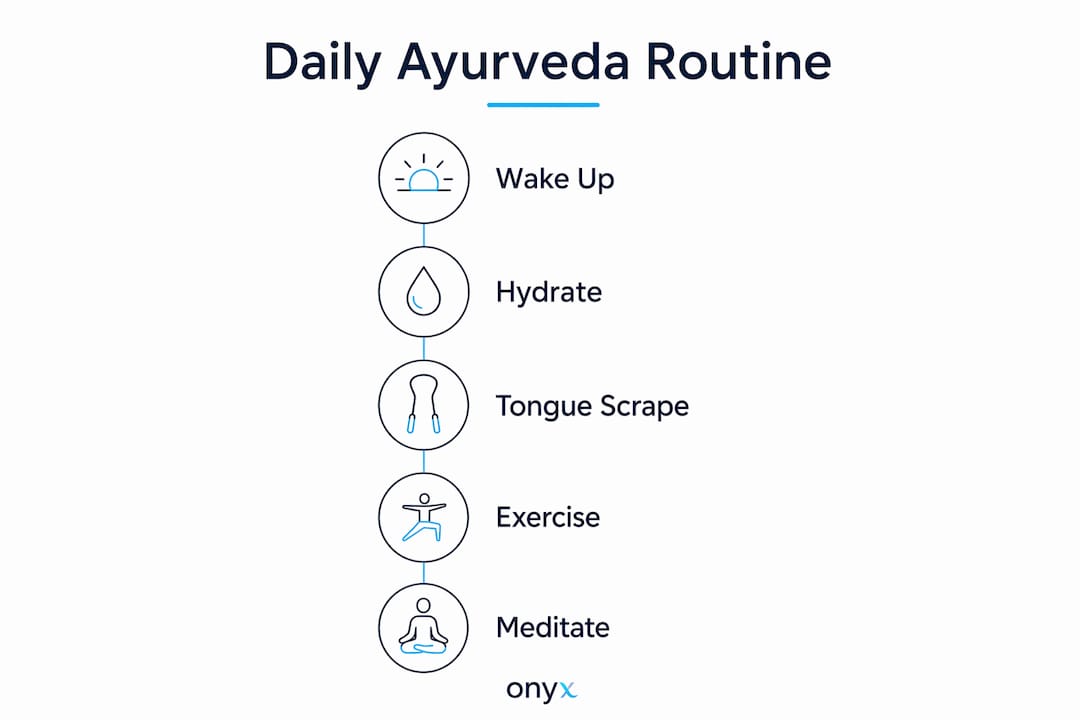
Dinacharya is Ayurveda’s daily routine system, and its core principle is that when you do something matters as much as what you do. A traditional full Dinacharya can take 30–90 minutes, but starting with just 10–15 minutes focused on three anchor practices creates sustainable benefits without overwhelming you.
The three anchors are:
- Fixed wake time. Waking at the same time each day, ideally before 6 AM, synchronizes your body’s internal clock with natural light cycles. This single habit stabilizes energy, mood, and digestion more reliably than almost any supplement.
- Warm water upon waking. Drinking a glass of warm water first thing activates the gastrocolic reflex, which stimulates bowel movements and digestive secretions. No preparation, no cost, immediate physiological benefit.
- Tongue scraping. Using a copper or stainless steel scraper removes the metabolic residue that builds up overnight. Tongue scraping stimulates amylase, a saliva enzyme that primes your digestive system before your first meal.
These three practices take under five minutes combined. They work because they signal your body that the day has begun in an organized, intentional way. Your nervous system responds to routine the same way it responds to light: with predictability and calm.
The most common beginner mistake is adding too much too soon. Stick with just these three anchors for the first two to three weeks. Build the habit groove before you add anything else.

Pro Tip: Set your tongue scraper and a glass of water on your nightstand the night before. Removing the friction of finding them in the morning makes the habit almost automatic.
How to structure your meals and nutrition following Ayurvedic principles
Ayurveda organizes digestion around Agni, your digestive fire, which burns strongest at midday and weakest at night. Meal timing is not a preference in this system. It is the mechanism.
The Ayurvedic meal structure looks like this:
- Light breakfast between 7 AM and 9 AM. Keep it warm and easy to digest: cooked oats, warm fruit, or herbal tea with a small amount of food.
- Largest meal between 10 AM and 2 PM. This is Pitta time, when Agni is at peak strength. Your body processes proteins, fats, and complex carbohydrates most efficiently during this window.
- Light dinner between 6 PM and 7 PM. Eating dinner at least three hours before sleep prevents Ama buildup. Ama is the Ayurvedic term for undigested metabolic waste that accumulates when food sits in a sluggish digestive system overnight.
| Meal | Timing | Composition |
|---|---|---|
| Breakfast | 7 AM – 9 AM | Warm, light, easy to digest |
| Lunch | 10 AM – 2 PM | Largest meal, full nutrition |
| Dinner | 6 PM – 7 PM | Light, warm, simple |
Heavy late dinners are the single biggest dietary mistake in modern life, from an Ayurvedic perspective. Eating heavy dinners late undermines digestion and increases Ama, which shows up as morning sluggishness, brain fog, and low energy. Shifting your largest meal to midday is the highest-leverage nutritional change you can make.
Mindful eating matters as much as timing. Sit down, avoid screens, and chew thoroughly. Ayurveda treats distracted eating as a direct cause of poor digestion, regardless of what you eat.
Pro Tip: If a midday main meal is not realistic on workdays, pack a substantial lunch from home. Even shifting 30% of your dinner calories to lunch produces noticeable digestive improvement within a week.
How to gradually build a full Ayurveda wellness routine step by step
A stepwise ayurveda approach prevents the burnout that kills most wellness routines. The goal is habit layering, not habit stacking all at once. Think of it like adding floors to a building. You do not pour the third floor before the foundation is solid.
Here is a realistic weekly progression:
- Weeks 1–2: Lock in the three anchors. Fixed wake time, warm water, tongue scraping. Nothing else.
- Week 3: Add oil pulling. Swish one tablespoon of sesame or coconut oil for 5–10 minutes after tongue scraping, then spit it out. This practice supports oral health and is one of the most beneficial add-on rituals after the core anchors are established.
- Week 4: Add light morning movement. Ayurveda uses the concept of Ardha Shakti, which means half of your maximum effort. Stopping exercise when you first start sweating keeps Vata dosha balanced and prevents the exhaustion that comes from overexertion. A 15-minute walk or gentle yoga session fits this perfectly.
- Week 5 and beyond: Introduce Abhyanga, which is self-massage with warm oil applied before your shower. Start with just your feet and scalp if a full-body massage feels like too much. Then layer in five minutes of pranayama (breathing exercises) and a short seated meditation.
A few principles make this progression work:
- Adjust practices for seasons. Heavier oils and warmer routines suit winter. Lighter, cooling practices suit summer.
- Personalize based on your prakriti, your individual body constitution. No two people need the identical routine.
- If a week feels overwhelming, pause the progression and consolidate what you have before moving forward.
Pro Tip: Track your routine in a simple notes app for the first month. Seeing a streak of consistent days is surprisingly motivating, and it helps you spot which practices you are skipping most often.
For more ideas on weaving these rituals into everyday life, the Ayurveda-inspired daily vitality guide from Onyxwellness covers practical approaches worth reading alongside this progression.
What are common challenges and practical tips for maintaining Ayurveda wellness routines?
The biggest obstacle most people hit is treating Dinacharya like a task list. Treating it as a rigid checklist leads to frustration and burnout within weeks. Ayurveda is a timing system first. The rhythm matters more than the ritual.
Here is what actually helps when life gets in the way:
- Prioritize timing over completeness. If you only have five minutes, do the warm water and wake at your usual time. Maintaining timing rhythms outweighs catching up on skipped practices.
- Drop the all-or-nothing mindset. Missing one day does not break a habit. Missing a week without a plan to restart does.
- Anchor new habits to existing ones. Tongue scraping after brushing your teeth requires zero extra thought. Warm water while the coffee brews takes no additional time.
- Use the weekend to reset. If your weekday routine gets compressed, use Saturday morning to do the full version. It reminds your body what the complete rhythm feels like.
“Consistency means maintaining timing patterns even if rituals are imperfectly executed. It is better to do less at the right time than more irregularly.” — Dinacharya: Ayurvedic Daily Routine for Modern Life
Balancing Ayurveda with a busy modern schedule is genuinely possible, but it requires accepting that your routine will look different on a Tuesday than on a Sunday. That is not failure. That is personalization, which Ayurveda has always encouraged. For relaxation-focused practices that complement a busy lifestyle, the Ayurveda tips for relaxation checklist from Onyxwellness offers a useful companion resource.
My honest take on building an Ayurveda routine that actually sticks
The part nobody tells you upfront: the first two weeks feel almost too simple. You wake up, drink warm water, scrape your tongue, and think, “That’s it?” Yes. That is exactly it.
What I have seen, both personally and watching others adopt these practices, is that the simplicity is the point. Ayurveda does not ask you to overhaul your life on day one. It asks you to show up at the same time, in the same way, with enough consistency that your body starts to trust the rhythm. That trust is what produces the results people notice after 30 or 60 days.
The hardest part is not the practices themselves. It is resisting the urge to add more before the foundation is solid. I have watched people add oil pulling, Abhyanga, pranayama, and meditation all in week one, feel exhausted by week two, and abandon everything by week three. The stepwise approach is not a compromise. It is the actual method.
Personalization matters enormously here. Your prakriti, your season, your work schedule, and your stress load all shape what a sustainable routine looks like for you. Someone working night shifts needs a different anchor time than someone with a 9-to-5. Ayurveda has always accounted for this. The tradition is more flexible than its reputation suggests.
Start small. Stay consistent. Adjust without guilt. The ancient wisdom behind modern wellness has survived thousands of years precisely because it works with human nature, not against it.
— Chris
Onyxwellness products that support your Ayurvedic wellness routine
Ayurvedic routines work best when your body has the nutritional support to match. Onyxwellness bridges ancient principles with modern convenience through fast-absorbing, dissolvable strips designed for people who take their wellness seriously.

If digestion is your starting point, the Digestive + Gut Health Strips from Onyxwellness are worth adding to your morning ritual. They support Agni, your digestive fire, with natural ingredients that complement the warm water and tongue scraping practices you are already building. For evenings, the Sleep Strips align with Ayurveda’s emphasis on restorative rest as a non-negotiable pillar of wellness. Browse the full range at Onyxwellness to find what fits your routine.
Key takeaways
Step by step ayurveda wellness works because it builds sustainable habits through consistent timing, not through complexity or perfection.
| Point | Details |
|---|---|
| Start with three anchors | Fixed wake time, warm water, and tongue scraping form the non-negotiable foundation. |
| Timing beats perfection | Maintaining daily rhythms matters more than executing every ritual flawlessly. |
| Largest meal at midday | Eating your biggest meal between 10 AM and 2 PM maximizes Agni and reduces Ama. |
| Layer habits gradually | Add oil pulling, movement, and Abhyanga one week at a time after anchors are solid. |
| Personalize without guilt | Adjust practices for your season, schedule, and body type to sustain the routine long-term. |
FAQ
What is Dinacharya in Ayurveda?
Dinacharya is Ayurveda’s daily routine framework that organizes self-care practices around specific times of day to align with natural body rhythms. It covers everything from wake time and oral hygiene to meal timing and evening wind-down.
How long does an Ayurvedic morning routine take?
A full Dinacharya can take 30–90 minutes, but beginners can start with just 10–15 minutes by focusing on the three anchor practices: fixed wake time, warm water, and tongue scraping.
What is Ama in Ayurveda?
Ama is the Ayurvedic term for undigested metabolic waste that accumulates when digestion is weak or meal timing is poor. Eating a heavy dinner late at night is one of the primary causes of Ama buildup.
Can I practice Ayurveda wellness with a busy schedule?
Yes. Ayurveda prioritizes timing and rhythm over the number of rituals completed. Even maintaining a consistent wake time and eating lunch as your largest meal produces measurable benefits on a tight schedule.
How does Ardha Shakti apply to exercise in Ayurveda?
Ardha Shakti means exercising at half your maximum effort, stopping when you first begin to sweat. This level of activity promotes vitality and keeps the nervous system balanced without raising Vata dosha through overexertion.