


Cut sugar cravings right now by pairing a protein-rich mini-snack with a 10-minute delay, which calms the blood-sugar dip driving the urge. Long term, retrain your palate gradually through regular balanced meals, better sleep, and stress management rather than an abrupt ban. Supplements like magnesium or gymnema can support the process, but they’re optional add-ons, not the plan itself. If cravings feel constant or intense, talk to a doctor before assuming it’s just willpower.
TL;DR:
- Pairing a protein-rich snack with a 10-minute delay can effectively calm blood sugar dips and reduce immediate cravings.
- Regularly eating balanced meals, ensuring sufficient sleep, and managing stress are crucial for lowering baseline sugar cravings.
- Supplements like magnesium and gymnema may support cravings reduction but are not essential; focus on foundational habits first.
- Fixing common triggers such as poor meal timing, dehydration, and emotional stress can prevent constant cravings and reduce reliance on supplements.
- Gradual palate retraining through meal planning and lifestyle adjustments outperforms abrupt bans or sole dependence on supplements for long-term success.
Table of Contents
- Fast Ways to Reduce Sugar Cravings in the Moment
- Daily Habits That Lower Your Baseline Cravings
- Why Blood Sugar Swings and Hidden Sugar Drive Cravings
- Do Supplements Like Gymnema Actually Reduce Sugar Cravings?
- Spotting the Triggers Behind Emotional Sugar Eating
- What to Expect: Timeline and Common Setbacks
- How Onyxwellness Strips Fit Into a Sugar-Craving Plan
- Why Most Sugar Craving Advice Sets People Up to Fail
- Try an Adjunct Built for Sugar-Craving Moments
- Sources
- FAQ
Fast Ways to Reduce Sugar Cravings in the Moment
A craving usually peaks and fades within 10 to 20 minutes, so your first job is to outlast it, not fight it forever. Start with a glass of water and wait. Dehydration mimics hunger and sugar hunger specifically, and plenty of “cravings” are your body asking for fluid, not fructose.
If the urge holds after that, reach for something that combines protein and fiber. That combination slows digestion and blunts the blood-sugar spike-and-crash pattern that fuels the next craving an hour later.
- A handful of almonds with a piece of string cheese
- Plain Greek yogurt with a few berries
- Hummus with carrot or celery sticks
- A hard-boiled egg with a small apple
Chewing sugar-free gum is another underused tool. Research on gum-chewing and food cravings has found it can reduce the intensity and frequency of snack cravings in the short term, likely because the act of chewing and the mint flavor both signal “meal over” to your brain. Brushing your teeth works on the same principle.
Give yourself a real 10 to 20 minute buffer before deciding. If you still want the treat after that window, have it, but eat it slowly and actually taste it. A rushed, guilt-eaten cookie satisfies nothing. If you’re tracking portions, a rough 150-calorie guideline keeps an occasional indulgence from becoming a second meal.
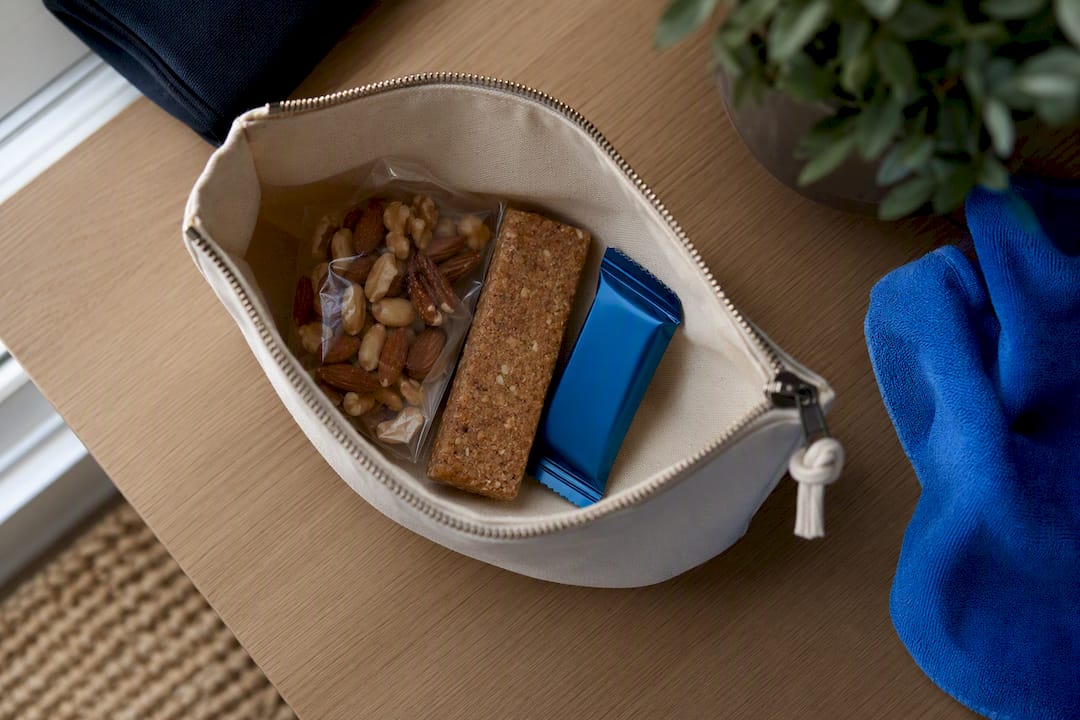
Pro Tip: Keep a “craving kit” at your desk or in your bag, nuts, a protein bar with under 5 grams of sugar and gum. Decision fatigue is often what turns a craving into a vending machine trip.
Daily Habits That Lower Your Baseline Cravings
Cravings that show up every afternoon like clockwork usually trace back to a handful of daily patterns, and fixing those patterns does more than any single snack swap.
- Eat balanced meals every three to five hours. Protein, fiber, and a source of fat in each meal keeps blood glucose steadier, and regular meals reduce both the frequency and intensity of sugar cravings compared to skipping meals and grazing later.
- Protect seven to nine hours of sleep. Short sleep raises ghrelin, the hormone that drives hunger, and disrupts cortisol regulation, a combination that reliably increases next-day sugar seeking.
- Build in short stress resets. A five-minute walk, a few slow breaths, or stepping outside between meetings lowers cortisol before it triggers a stress-driven craving.
- Watch low-fat, high-sugar swaps. Products marketed as “light” or “fat-free” often replace fat with added sugar to preserve flavor, which can leave you hungrier an hour later.
- Plan your snacks ahead of time. Afternoon protein-rich snacks specifically counter the mid-day energy dip that tends to send people toward the candy bowl.
Why Blood Sugar Swings and Hidden Sugar Drive Cravings
A sugar craving is often your body correcting for a crash it just went through. Eating something high in refined sugar spikes blood glucose quickly, insulin follows to bring it back down, and that drop can overshoot, leaving you hungry and specifically wanting more sugar within an hour or two. Regular meals with protein and fiber smooth out that curve so the crash, and the craving, never gets as sharp.
Added sugar hides under names most people don’t recognize on a label: high-fructose corn syrup, dextrose, maltodextrin, cane juice, and fruit juice concentrate all count. Reading ingredient lists for these terms is a skill worth building deliberately.
Roughly 70% of added sugar in the average diet comes from just five categories: sweetened beverages, desserts, flavored coffee drinks, candy, and sweetened cereals or breakfast bars. Fixing those five areas first delivers the biggest drop for the least effort.
Practical swaps that hit those categories directly:
- Sparkling water with citrus instead of soda
- Whole fruit instead of fruit juice
- Plain yogurt with fresh berries instead of flavored yogurt
- Unsweetened oatmeal with cinnamon instead of sweetened cereal
Do Supplements Like Gymnema Actually Reduce Sugar Cravings?
Some supplements have real, if modest, research behind them. Magnesium is the strongest case: it plays a role in normal glucose metabolism, and many adults fall short of recommended intake, which is one reason clinicians sometimes suggest supplementing alongside dietary changes.
Gymnema sylvestre benefits are more preliminary but genuinely interesting. The herb has traditionally been used to blunt sweet taste perception, and some early studies suggest gymnema benefits may extend to reduced sweet preference and better metabolic markers, though the evidence base is still mixed and trials remain small. Inositol shows a similar pattern: promising signals, not proof.
Other options worth knowing about:
- L-glutamine is sometimes used to steady blood sugar between meals, with limited but ongoing research.
- Certain probiotics may influence gut bacteria linked to sugar cravings, an area still early in study.
- Low- and no-calorie sweeteners aren’t a supplement, but the American Diabetes Association frames them as a reasonable short-term bridge while you transition away from very sweet foods, provided you have an actual plan to reduce reliance on sweetness overall. Our guide to sugar-free sweeteners walks through the safety side of that transition.
Pro Tip: Skip megadosing any single supplement. If you’re pregnant, managing diabetes, or on blood-sugar medication, run any new supplement past your doctor first, since magnesium and inositol can interact with certain prescriptions.
Spotting the Triggers Behind Emotional Sugar Eating
Not every craving is physical. Stress, boredom, and habit account for plenty of “sugar cravings” that have nothing to do with blood glucose. Try journaling for a few days: note the time, what you felt right before wanting sugar, and what happened an hour earlier. Patterns show up fast.
- Keep sweets out of immediate sight, or out of the house entirely, and put fruit or nuts at eye level instead
- Pre-portion any treats you do keep so grabbing “just one” doesn’t quietly become the whole bag
- Build simple if-then plans (“if I feel the 3 p.m. slump, then I take a walk first”)
- Tell a friend or partner about your goal so there’s some social accountability built in
- If sugar eating is tied to anxiety, sadness, or a cycle you can’t seem to break on your own, that’s worth raising with a therapist or counselor, not just a diet fix
What to Expect: Timeline and Common Setbacks
The roughest stretch is usually the first 48 to 72 hours after cutting back sharply. Clinical guidance consistently points to this early window as the peak withdrawal period, and tapering gradually rather than quitting cold turkey tends to produce fewer symptoms and better long-term adherence.
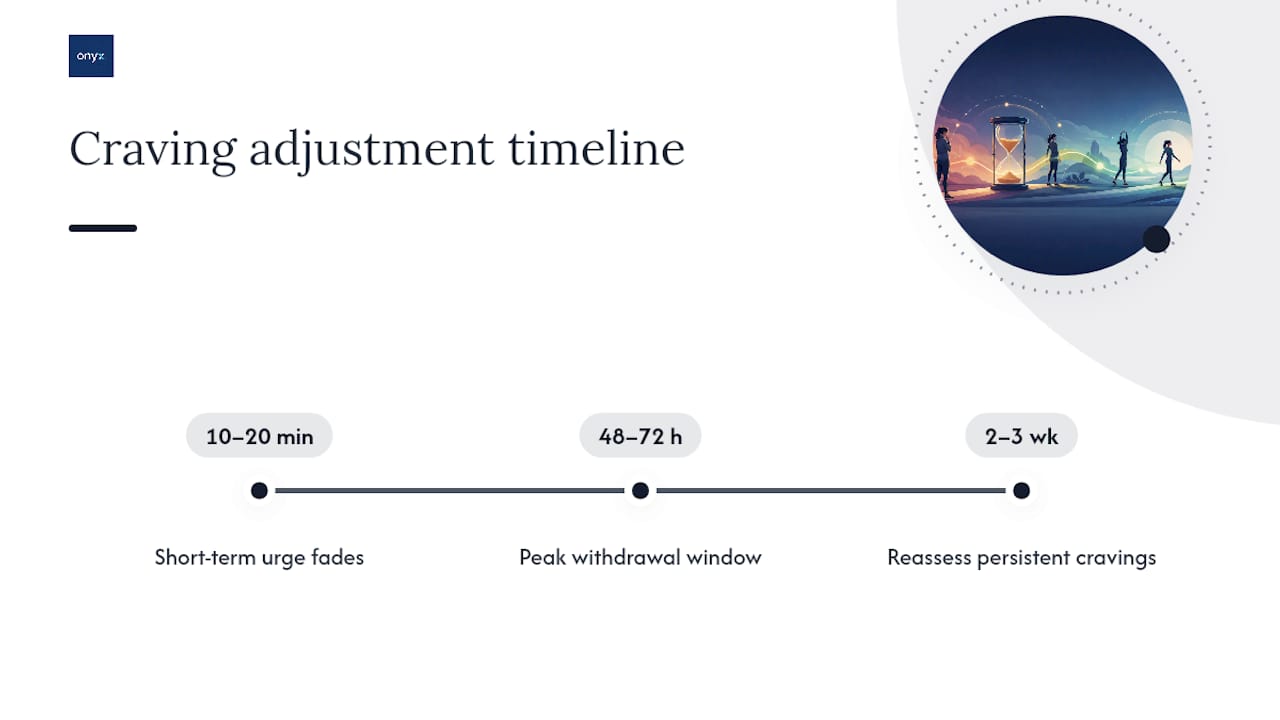
If cravings haven’t eased after two to three weeks, check the basics before assuming something’s wrong: Are you getting enough protein and fiber at each meal? Is sleep still consistent? Alcohol counts as sugar too and quietly derails progress. Magnesium is worth a look if you haven’t tried it. If cravings stay intense and frequent despite these fixes, ask a doctor to check your blood sugar. Persistent, severe cravings can sometimes point to an underlying metabolic issue worth ruling out.
How Onyxwellness Strips Fit Into a Sugar-Craving Plan
Certain brands make sugar-free, dissolvable strips designed to support specific moments in a cravings plan, not replace the plan itself. The Appetite Balance & Weight Support Strips are formulated for use before a meal or during a craving window, when a fast-absorbing option beats waiting on a capsule to kick in. Energy Strips can stand in for the sugar-spike snack you’d otherwise reach for during a mid-afternoon slump, and Sleep Strips support the sleep quality that keeps ghrelin and cortisol in check overnight. None of these substitute for balanced meals or medical care. If you’re managing a condition like diabetes, check with your doctor before adding any new supplement to your routine.
Why Most Sugar Craving Advice Sets People Up to Fail
Most advice on cutting sugar treats it as a willpower test: quit cold turkey, white-knuckle the first week, and hope discipline carries you through year two. It rarely does. The research points somewhere more useful: gradual palate retraining beats bans, and the biggest wins come from fixing meal timing and sleep before you ever touch a supplement bottle.
What gets underrated is how much of a “sugar craving” is actually a blood-sugar or sleep problem wearing a sugar costume. Fix the protein at breakfast and the bedtime routine, and a surprising number of 3 p.m. cravings just quietly disappear. What gets overrated is the idea that any single supplement, gymnema included, will do that work for you. The evidence for these ingredients is real but modest, which makes them reasonable adjuncts and poor centerpieces.
If you’re starting somewhere, start with the meal spacing and the sleep, not the supplement aisle. Add tools like magnesium or a sugar-free strip once the foundation is already working, so they’re supporting a plan instead of substituting for one.
— Chris
Try an Adjunct Built for Sugar-Craving Moments
Skipping meals and white-knuckling through a 3 p.m. craving works about as well as it sounds, which is why an adjunct built for that exact moment can help. The Appetite Balance & Weight Support Strips dissolve in seconds with no water needed, so you can use one right when a craving hits instead of waiting on a capsule or mixing a shake.
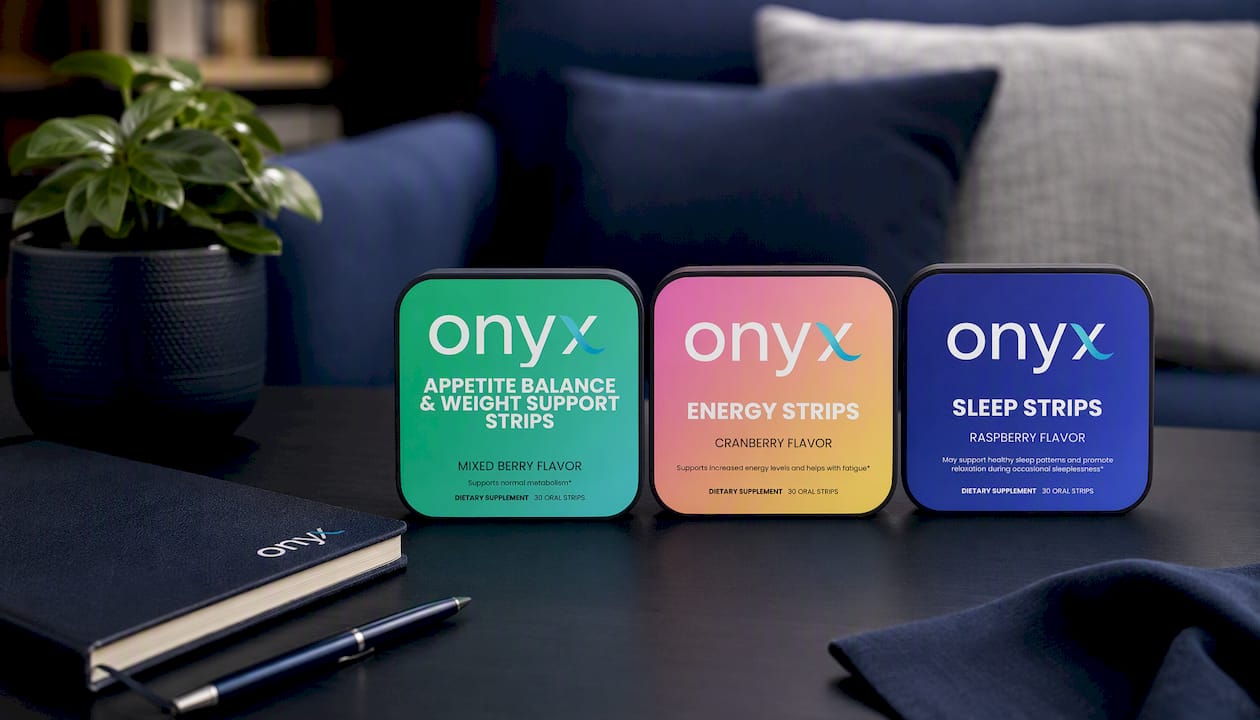
They’re formulated for people already doing the harder work, eating regular meals, sleeping enough, managing stress, who want one more practical layer of support during the toughest windows of the day. They’re not a replacement for any of that work. Browse the full lineup, including Energy Strips and Sleep Strips, in the Onyxwellness collection, and pick up a pack of Appetite Balance strips to keep in your bag or desk drawer for the next craving that catches you off guard.
Sources
For deeper reading, Harvard Health and the Cleveland Clinic cover added sugars and craving management in detail, while the NIH magnesium factsheet and PMC nutraceutical review cover supplement evidence. Talk to a doctor or registered dietitian about anything specific to your health.
This article is general information, not a substitute for advice from a qualified doctor. Consult a qualified healthcare professional about your own circumstances before acting on anything here.
- What are added sugars, and how can you reduce them in your diet? - Harvard Health
- How to stop sugar cravings - Cleveland Clinic
- Magnesium - NIH ODS
- PMC review on nutraceuticals and metabolic outcomes
FAQ
What happens after 7 days of no sugar?
Most people notice fewer intense cravings and more stable energy by day seven, though the roughest withdrawal symptoms typically hit in the first 48 to 72 hours and ease from there.
How long does it take to get over sugar cravings?
Acute withdrawal symptoms usually fade within a few days, but fully retraining your palate to want less sweetness generally takes several weeks of consistent, gradual reduction rather than an abrupt cutoff.
What am I lacking if I crave sugar?
Frequent sugar cravings often point to inconsistent meals, poor sleep, or high stress rather than a single nutrient deficiency, though inadequate magnesium intake is common and worth addressing with a doctor’s guidance.
How do you stop eating sugar?
Reduce gradually instead of quitting cold turkey: cut back on the top sources like sweetened drinks and desserts first, replace them with protein and fiber-rich alternatives, and give your palate several weeks to adjust.