


Yes. Controlled trials show psyllium husk satiety effects are real but modest, and they scale with dose. The strongest data point to 6.8 grams taken before meals as a sweet spot for cutting inter-meal hunger and boosting fullness. Don’t expect dramatic appetite shutdown. Expect a gentler hand on your hunger signals, backed by dose-specific trial evidence starting around 3 to 7 grams and building from there.
TL;DR:
- Psyllium’s strongest appetite effects occur at around 6.8 grams taken before meals, with smaller doses like 3.4 grams providing milder benefits.
- The gel-forming mechanism stretches the stomach and may slow nutrient absorption, contributing to feelings of fullness, but hormonal effects are inconsistent across studies.
- Side effects like bloating and gas are common in the first two weeks, and proper hydration is essential to prevent choking or esophageal blockages.
- For best results, introduce psyllium gradually over two weeks, pairing it with protein-rich meals, and track hunger ratings rather than relying solely on weight change.
- Psyllium offers modest weight and appetite benefits over months but should be part of a broader healthy eating strategy rather than a standalone solution.
Table of Contents
- What Do Clinical Trials Show About Psyllium and Fullness?
- Why Does Psyllium Make You Feel Full?
- How Should You Take Psyllium for Appetite Control?
- Is Psyllium Husk Safe? Side Effects to Know
- Getting the Most Out of Psyllium: Practical Adjustments
- Where Psyllium Fits Next to GLP-1 Drugs and Other Options
- Onyxwellness’s Take on Fiber, Fullness, and Realistic Expectations
- Where to Find Onyxwellness’s Appetite Support Strips
- Primary Studies and Reviews Cited
- Sources
- FAQ
What Do Clinical Trials Show About Psyllium and Fullness?
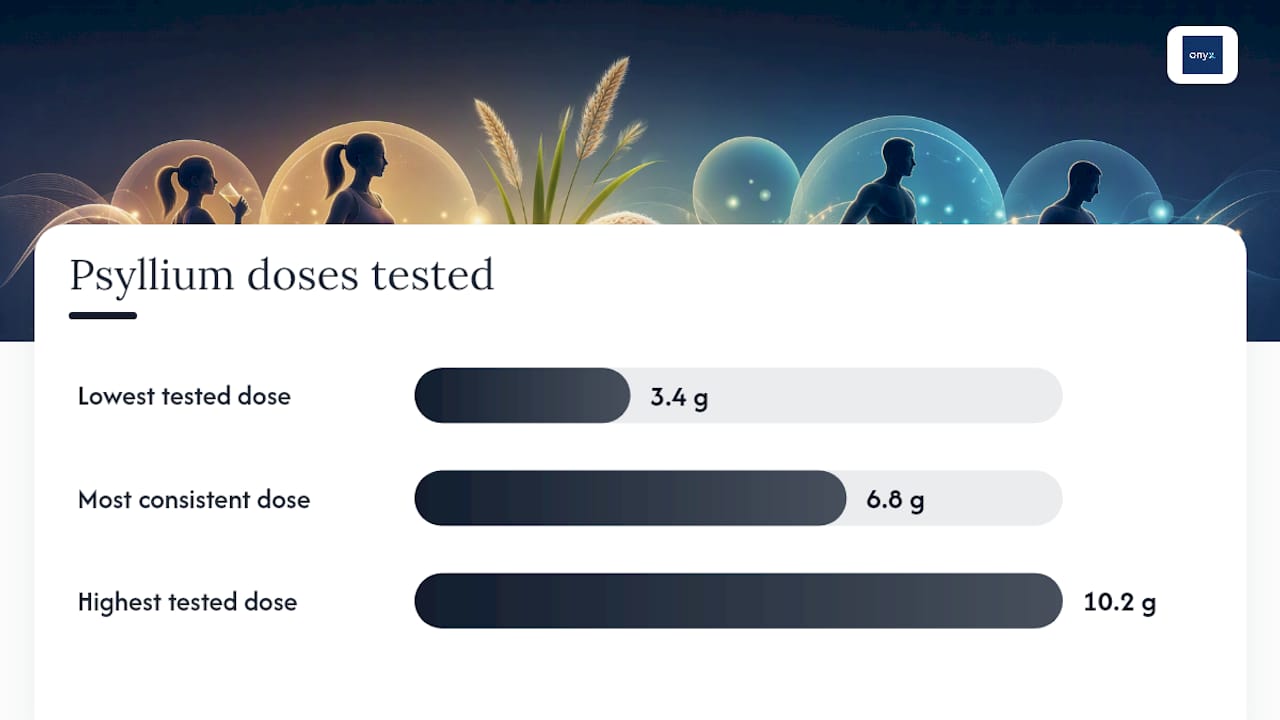
The best evidence on psyllium husk satiety comes from a randomized, double-blind, placebo-controlled crossover trial published in Appetite in 2016. Researchers tested three doses, 3.4 grams, 6.8 grams, and 10.2 grams, against a placebo in healthy adults. The middle dose, 6.8 grams, delivered the most consistent results.
Across two separate studies within that trial, the 6.8 gram dose reduced inter-meal hunger and increased fullness compared to placebo, with statistical significance holding at p ≤ 0.013 in one arm and p ≤ 0.004 when researchers tracked hunger and desire to eat over three days. The 10.2 gram dose showed similarly strong or slightly stronger effects. The lowest dose worked too, just less reliably.
That dose-response pattern matters. It tells you psyllium isn’t an all-or-nothing switch. More fiber, within reason, tends to mean more fullness, at least up to the doses tested.
An older double-blind study adds a layer of nuance worth knowing. When researchers gave volunteers a 7.4 gram dose of psyllium, they found hunger feelings dropped by 13% and energy intake fell by 17% compared to control, without meaningfully delaying gastric emptying in every meal tested. That’s a strange result if you assumed psyllium worked purely by physically slowing your stomach down. It suggests something else is happening, too, which the mechanism section below untangles.
Longer-term data reinforces the short-term trial findings. A 180-day randomized, placebo-controlled trial testing a combined fiber blend that included psyllium, alongside glucomannan and inulin, found participants reported significantly greater appetite suppression and fullness after a standardized breakfast. The postprandial appetite suppression score gap between groups hit 17.2 points, with p < 0.01. That’s not a fluke result from a single meal test. It held up over six months.
Where does this leave you on weight outcomes specifically? A comprehensive 2023 review and meta-analysis concluded psyllium is associated with modest but statistically real reductions in body weight, BMI, and waist circumference when used consistently. Pooled data across multiple trials put average weight loss somewhere in the range of 0.33 to 0.89 kilograms, depending on which studies and fiber types got included. That’s not a transformation. It’s a nudge, and a nudge that compounds when paired with other habits.
A few numbers worth flagging from this body of research:
- 6.8 g is the psyllium dose with the most consistent, reproducible hunger-reduction data across separate trial arms.
- 17.2-point gap in postprandial appetite suppression scores after 180 days of combined fiber supplementation versus placebo.
- 13% to 17% reduction in hunger ratings and energy intake observed in an earlier double-blind study using a 7.4 gram dose.
- 0.33 to 0.89 kg average weight reduction reported across meta-analyzed trials of viscous fibers including psyllium.
Pro Tip: If you’re evaluating whether a fiber supplement “worked” for you, don’t just watch the scale. Track hunger ratings on a simple 1 to 10 scale before and after meals for two weeks. That’s closer to what the actual trials measured.
None of this evidence is perfect. Most trials run for weeks, not years. Sample sizes in the foundational Appetite study were in the dozens, not thousands, which is typical for satiety research but still limits how confidently you can generalize results to every body type or health condition. Populations tested were largely healthy adults, not people managing diabetes or significant obesity, so your mileage may vary depending on your starting point. The heterogeneity across studies, different doses, different fiber blends, different measurement tools, means psyllium’s satiety effect is well-documented but not perfectly uniform from trial to trial.
Why Does Psyllium Make You Feel Full?
Psyllium’s fullness effect starts with basic physics. Once psyllium hits water in your stomach, it swells into a thick, viscous gel. That gel takes up physical space, stretching your stomach wall slightly and triggering the stretch receptors that tell your brain “there’s food in here.”
That mechanical bulking effect is the most intuitive explanation, but it’s not the whole story. The gel also slows how fast nutrients move from your gut into your bloodstream, which can blunt the sharp glucose and insulin spikes that typically follow a carbohydrate-heavy meal. Flatter blood sugar curves are linked to steadier energy and, for some people, fewer hunger crashes an hour or two after eating.
Then there’s the hormonal layer, which is where the research gets messier. Dietary fiber intake, psyllium included, has been tied to shifts in gut hormones like GLP-1, PYY, and CCK, all of which signal fullness to your brain. A 2022 review of appetite-regulating mechanisms confirmed fiber can influence these hormone pathways, but the same review flagged real inconsistency across studies. Some trials show clear hormone shifts. Others show minimal change despite people reporting they feel fuller. Researchers still don’t have a single unified mechanism that explains every result.
One detail that surprises a lot of people: psyllium doesn’t need to be mixed directly into your meal to work. Some trials dosed psyllium separately from food and still saw reduced hunger and lower intake at the next meal, which suggests the gel-forming and hormonal effects don’t depend on physical contact with your dinner plate.
Fermentability is the last piece worth understanding, mostly because it explains why psyllium tends to sit easier in your gut than some other fiber supplements. Compared to highly fermentable fibers like glucomannan, psyllium ferments much less in the colon. Less fermentation means less gas production from gut bacteria breaking the fiber down, which usually translates to less bloating.
A quick rundown of the mechanism landscape:
- Mechanical bulking: gel formation stretches the stomach, signaling fullness.
- Delayed nutrient absorption: slower glucose entry into the bloodstream, flatter post-meal spikes.
- Hormonal signaling: possible but inconsistent shifts in GLP-1, PYY, and CCK across studies.
- Low fermentability: less gas and bloating compared to highly fermentable fibers.
How Should You Take Psyllium for Appetite Control?
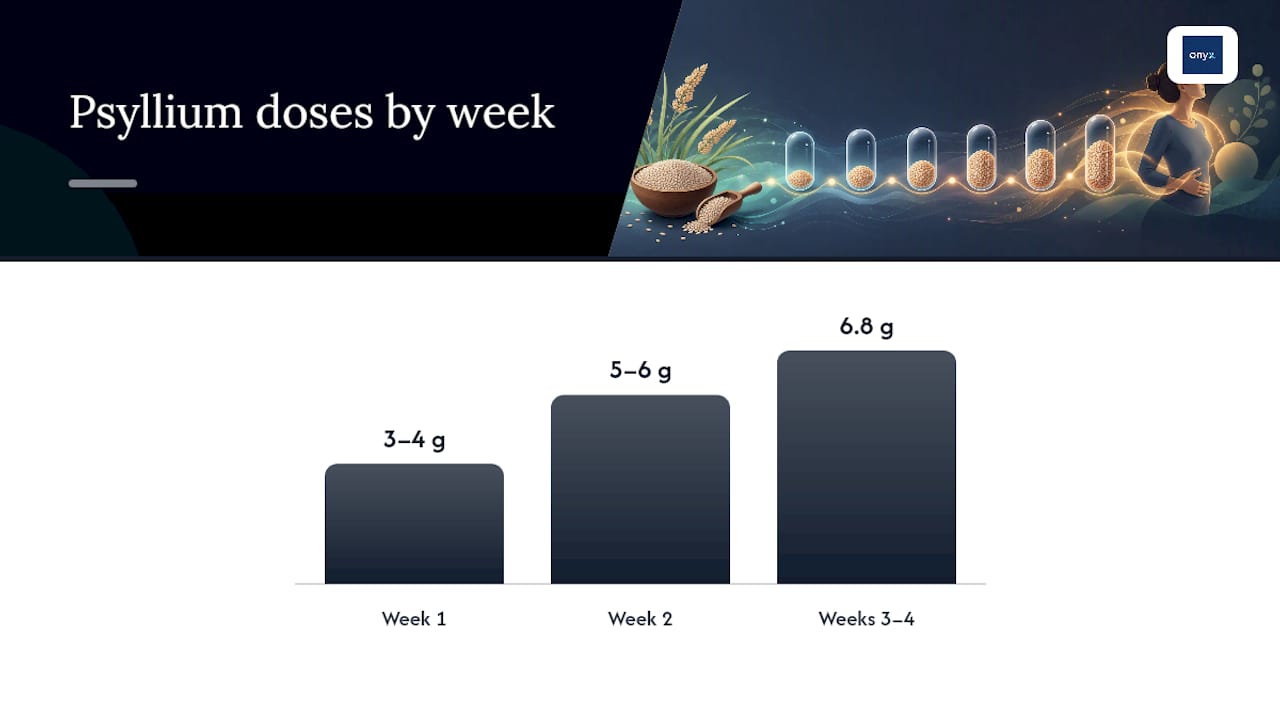
Start with 3 to 5 grams and work up toward the trial-backed 6.8 gram dose over one to two weeks. That ramp matters more than most people assume. Jumping straight to a high dose is the fastest route to bloating, cramping, and abandoning the whole experiment before it has a chance to work.
Here’s a practical protocol based on how the actual research dosed it:
- Week 1: Take 3 to 4 grams of psyllium husk powder mixed into a full glass of water (at least 8 ounces), once daily, 15 to 30 minutes before your largest meal.
- Week 2: If tolerated well, increase to 5 to 6 grams, still with a full glass of water, timed the same way before meals.
- Weeks 3 to 4: Move toward the 6.8 gram dose that showed the most consistent hunger reduction in trials, and consider a second dose before another meal if your main goal is all-day appetite control rather than just one meal.
- Throughout: Log a simple hunger rating before eating each time you take psyllium, so you can compare how you feel on days you use it versus days you don’t.
Timing is not a minor detail here. The trial data specifically tested pre-meal dosing, generally 15 to 30 minutes ahead of eating, which gives the fiber time to start absorbing water and swelling before food arrives. Taking it with your meal or after probably won’t replicate the tested effect as reliably.
Format is a matter of convenience more than potency. Loose psyllium husk powder mixed into water is the closest match to how most trials dosed it, and it’s usually the cheapest option. Capsules are more portable but often require swallowing several to hit 6.8 grams, and they still need to be taken with plenty of water to work safely. Premixed drink packets split the difference, offering measured doses without the mess of scooping powder, though they can cost more per serving.
Hydration isn’t optional with psyllium. As a rough guide, aim for at least 8 ounces of fluid per dose, and more if you’re taking a higher amount like 10 grams. Psyllium works by absorbing water, so shortchanging the water shortchanges the gel formation that produces the fullness effect in the first place, and it raises the risk of the fiber clumping in your throat or gut instead of moving through smoothly.
Give the full protocol two to four weeks before deciding whether it’s doing anything for you. Appetite responses to fiber tend to build gradually as your gut adjusts, and a single day’s trial rarely tells you much.
Is Psyllium Husk Safe? Side Effects to Know
Most people tolerate psyllium well, but it isn’t side-effect-free. Trial data consistently reports mild gastrointestinal symptoms, bloating, gas, and occasional stomach discomfort, as the most common complaints, and these tend to show up most in the first week or two before your gut adjusts.
The more serious risk is mechanical, not digestive: choking or esophageal blockage if psyllium is taken without enough liquid. This isn’t a rare warning label footnote. It’s a documented risk specific to bulk-forming fibers that swell on contact with water, and it’s exactly why every reputable product label insists on a full glass of water per dose.
Steps to avoid it:
- Always mix psyllium into liquid immediately before drinking, never let it sit and thicken first.
- Drink at least 8 ounces of water or another fluid with every dose, more at higher doses.
- Follow each dose with an additional sip of plain water to help clear your throat and esophagus.
- Never take psyllium dry, straight from a spoon, without liquid on hand.
Medication timing deserves its own line of caution. Because psyllium can slow or reduce absorption of some oral medications, it’s generally smart to separate psyllium dosing from prescription drugs by at least one to two hours. If you’re on medication for diabetes, thyroid conditions, or anything with a narrow therapeutic window, talk to your prescribing clinician before adding psyllium to your routine, not after.
Certain people should check with a doctor before trying psyllium at all: anyone with a history of bowel obstruction, esophageal narrowing, or swallowing difficulties. For these groups, the same bulking action that helps healthy adults feel full can pose a real mechanical risk.
Pro Tip: Keep your psyllium dose and your coffee or tea separate by at least 30 minutes. Both compete for water in your gut, and taking them back to back can make the fiber feel thicker and harder to get down comfortably.
Getting the Most Out of Psyllium: Practical Adjustments
Psyllium works best as one piece of a meal, not a substitute for one. Pairing your dose with a protein-forward meal, think eggs, chicken, beans, tends to stack two different fullness signals: the mechanical bulk from the fiber and the hormonal satiety response protein reliably triggers. Whole-food meals with real volume, vegetables, intact grains, also seem to amplify the fullness effect compared to pairing psyllium with something ultra-processed and calorie-dense.
Track results the right way. Daily bathroom-scale numbers are a poor way to judge whether psyllium is working, partly because early water retention in your gut can nudge the scale up slightly in week one, which has nothing to do with fat gain. A better approach: rate your hunger before and after meals on a simple scale, and notice whether your portion sizes are naturally shrinking over two to four weeks.
If bloating or gas shows up and doesn’t fade after the first week, drop back to your previous dose for a few more days before trying to increase again. Switching formats, from powder to capsules, for instance, sometimes helps if the issue seems tied to how quickly you’re drinking the mixed dose.
And know when to recalibrate expectations. If four weeks of consistent, well-timed dosing produces no noticeable change in hunger or portions, psyllium may simply not be your strongest lever. That’s useful information, not failure. Reviewing broader natural appetite control strategies can help you figure out what else might be worth trying alongside or instead.
- Pair psyllium with protein and whole-food meals for a stronger fullness signal.
- Judge results by hunger ratings and portion size, not daily scale weight.
- Adjust dose or format, not your whole strategy, if mild side effects appear.
- Give it four weeks before deciding it isn’t working for you.
Where Psyllium Fits Next to GLP-1 Drugs and Other Options
Comparing psyllium to GLP-1 medications is where a lot of hype gets ahead of the evidence. GLP-1 drugs work pharmacologically, directly activating GLP-1 receptors to produce strong, sustained appetite suppression. Psyllium’s effect, by contrast, is mechanical and modest, built on gel formation and possible, inconsistent shifts in the same hormone pathway rather than a direct pharmaceutical push on it.
That distinction matters for anyone weighing options. Psyllium isn’t a weaker version of a GLP-1 drug. It’s a different category of tool entirely, one you can use daily with mild side effects and no prescription, but also one that won’t replicate the dramatic appetite shutdown some people experience on medication. If you’re exploring natural appetite balance without GLP-1 drugs, psyllium belongs in that conversation as a modest, evidence-backed contributor, not a stand-in for medical therapy.
Compared to glucomannan, another popular viscous fiber, psyllium’s lower fermentability tends to make it gentler on the gut over the long haul, even if glucomannan sometimes edges it out in raw viscosity. For readers deciding between the two, tolerability, not just theoretical potency, often ends up being the deciding factor day to day.
Realistic framing matters most here. Fiber like psyllium works best as a supporting habit inside a broader approach to eating, not a stand-alone fix. That’s consistent with how the combined fiber trial framed its own results, describing psyllium’s appetite effects as part of a longer-term nutritional pattern rather than a quick standalone intervention.
Onyxwellness’s Take on Fiber, Fullness, and Realistic Expectations
The wellness industry loves an easy win, and psyllium doesn’t quite offer one, which is exactly why the honest data on it deserves more attention than it gets. A supplement that produces a genuine, dose-dependent drop in inter-meal hunger without a prescription is worth knowing about, even if the effect size sits closer to “helpful nudge” than “appetite off-switch.”
Where Onyxwellness sees psyllium fitting best is as one tool in a rotation, not the only one. Fiber-based satiety and convenience-driven formats solve different problems. Psyllium needs water, planning, and a ramp-up period before it pays off. That’s real friction for a lot of busy people, which is exactly the gap fast-absorbing formats like dissolvable strips are built to close, offering a no-water, no-prep option for days when mixing powder into a glass isn’t realistic.
It is best not to treat any single fiber as a substitute for the basics: protein at meals, consistent sleep, and honest tracking of hunger over weeks, not days. The trials back psyllium’s modest satiety effect, not magic.
— Chris
Where to Find Onyxwellness’s Appetite Support Strips
Onyxwellness makes the fiber-adjacent side of appetite control easier to fit into a real schedule. Where psyllium asks you to measure, mix, and drink a full glass of water before every meal, the Appetite Balance & Weight Support Strips dissolve on your tongue in seconds, no water, no prep, no clumping powder to deal with on a rushed morning.
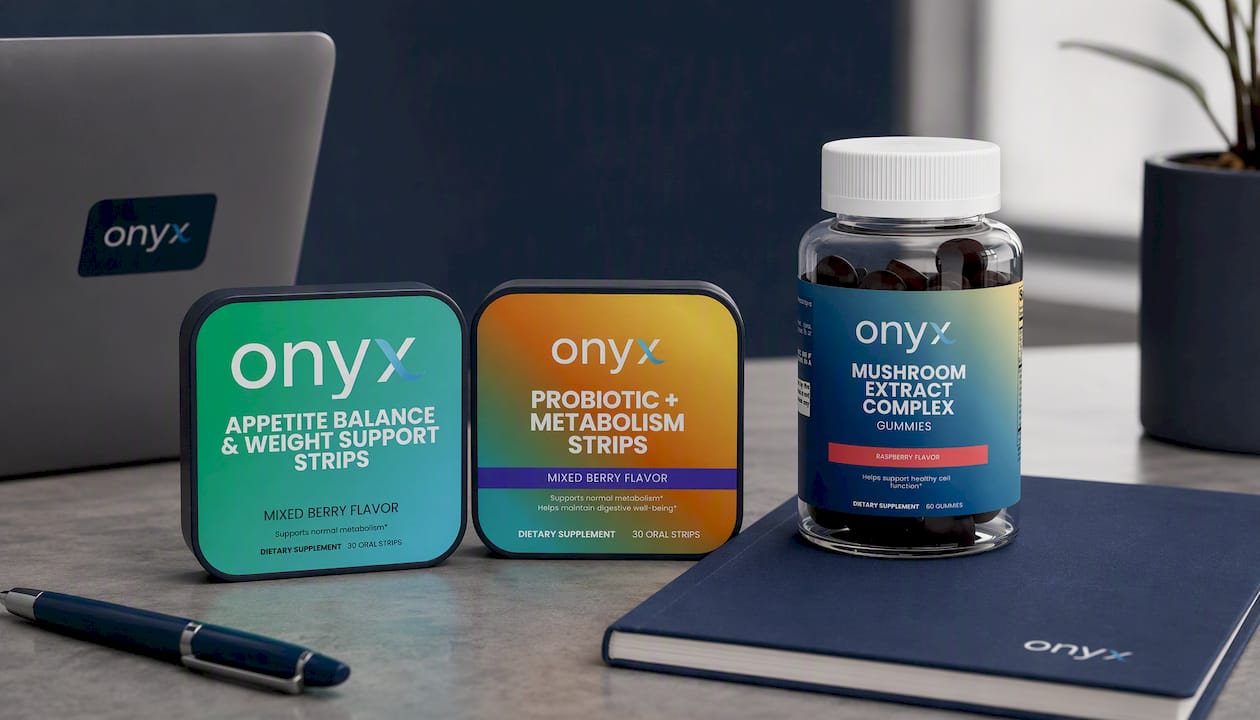
They’re built as a sugar-free, quick-dissolve complement to habits like pre-meal fiber dosing, not a replacement for the clinical evidence behind psyllium itself. If gut support is also on your radar, the Probiotic + Metabolism Strips target that angle directly, and the Mushroom Extract Complex Gummies offer an alternative format for readers who prefer chewing over dissolving. Browse the full strips collection or gummies lineup to see what fits your routine, and check the creatine and muscle building products if strength training is part of your broader plan.
If you take prescription medication or manage a chronic health condition, talk to your clinician before adding any new supplement, psyllium included, to your routine.
Primary Studies and Reviews Cited
The clinical backbone of this article rests on a handful of peer-reviewed sources. The foundational dose-response data comes from the Brum et al. 2016 crossover trial in Appetite, testing 3.4, 6.8, and 10.2 gram doses. Weight and tolerability context comes from a 2023 comprehensive review and meta-analysis. Longer-term appetite suppression data comes from a 180-day randomized combined-fiber trial, and mechanism context draws from a 2022 review of dietary fiber and appetite regulation plus an earlier double-blind gastric emptying study.
Sources
- Satiety effects of psyllium in healthy volunteers
- Randomized trial of glucomannan, inulin, and psyllium on appetite and metabolic outcomes
- The role of dietary fibers in regulating appetite, an overview of mechanisms and weight consequences
FAQ
Does Psyllium Increase Satiety?
Yes, controlled trials show psyllium increases fullness and reduces hunger in a dose-dependent way, with 6.8 grams taken before meals producing the most consistent results in randomized crossover research.
How Long Does Psyllium Husk Make You Feel Full?
Individual doses tend to support fullness for the few hours around a meal, while trials tracking hunger over multiple days found reduced hunger and desire to eat persisted with consistent daily use over the study period.
How Is Psyllium Husk Like Ozempic?
They aren’t equivalent. GLP-1 drugs like Ozempic work pharmacologically on GLP-1 receptors for strong appetite suppression, while psyllium works mechanically through gel formation and possible, inconsistent hormone shifts, producing a much more modest effect.
Does Psyllium Husk Suppress Appetite?
It reduces hunger and increases fullness rather than fully suppressing appetite. Trial data shows measurable, modest reductions in hunger ratings and energy intake, particularly at the 6.8 gram dose taken before meals.
What Is a Good Starting Dose of Psyllium for Appetite Control?
Start with 3 to 4 grams mixed in a full glass of water before your largest meal, then ramp toward the trial-tested 6.8 grams over one to two weeks as your gut adjusts.