


TL;DR:
- Potassium magnesium aspartate is a combined mineral supplement that enhances cellular absorption and supports muscle, nerve, and heart functions. The aspartate carrier actively participates in the Krebs cycle, making this form more metabolically active than standard mineral salts. Clinical evidence shows its effectiveness in relieving fatigue and improving metabolic health, but regular monitoring of serum potassium levels is necessary to ensure safety.
Potassium magnesium aspartate is a combined mineral supplement that delivers both potassium and magnesium in an aspartate salt form, designed to improve cellular absorption and support muscle function, nerve signaling, and heart health. The aspartate carrier is not just a delivery vehicle. It actively participates in the Krebs cycle, the body’s core energy production process, making this form more metabolically active than standard mineral salts like chloride. If you’ve been researching potassium supplement types or trying to understand why your body might need both minerals together, this guide covers the science, the evidence, and the practical details you need to make an informed decision.
What is potassium magnesium aspartate and how does it work?
Potassium magnesium aspartate is the combined salt form of two essential electrolytes bound to aspartic acid. The formal chemistry term is magnesium potassium aspartate, and you’ll see both names used interchangeably on supplement labels. What separates this form from basic mineral supplements is the biochemical role the aspartate molecule plays once it enters your cells.

Magnesium acts as a catalyst that facilitates potassium’s entry into cells. Without adequate magnesium, potassium cannot move efficiently across cell membranes, which means supplementing potassium alone often fails to correct intracellular deficits. Delivering both minerals together solves this problem at the source.
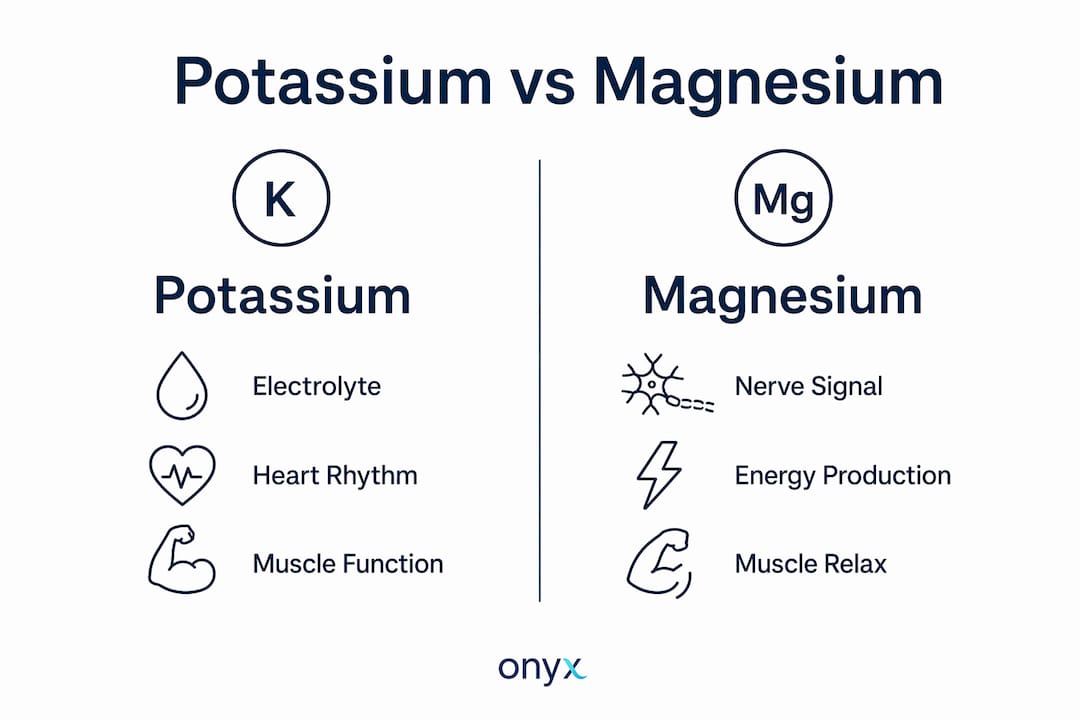
Here is what each component contributes once absorbed:
- Potassium regulates electrical gradients across nerve and muscle cell membranes, enabling proper contraction and relaxation.
- Magnesium supports cardiovascular function, acid/base balance, carbohydrate metabolism, and potassium utilization simultaneously.
- Aspartate participates in the Krebs cycle and helps clear ammonia from the blood, which directly reduces the “crash” feeling associated with physical or mental fatigue.
Together, these three components stabilize heart rhythm, ease muscle cramps, support nerve impulse transmission, and maintain electrolyte balance. That is a meaningful combination of effects from a single supplement.
Pro Tip: When reading a supplement label, look for the “elemental” mineral content, not the total compound weight. A 450 mg potassium aspartate capsule contains roughly 99 mg elemental potassium. The elemental figure is what actually reaches your cells.
What does the clinical evidence say?
The research on magnesium aspartate benefits and the combined salt form spans several decades, with both early and recent studies worth knowing about.
The earliest controlled data comes from the 1960s. Those clinical studies reported that 1g doses of both potassium and magnesium aspartate relieved fatigue symptoms in 75–91% of nearly 3,000 patients over 4–10 days, compared to just 9–26% in the placebo group. That is a striking gap, though the methodology of 1960s trials does not meet current standards for blinding and reporting.
More recent evidence is more rigorous. A 6-month double-blind placebo-controlled trial showed magnesium aspartate improved insulin sensitivity in metabolically compromised patients. This finding is particularly relevant for people managing Long COVID or ME/CFS, where metabolic disruption and persistent fatigue are central complaints.
| Study Era | Design | Key Finding | Population |
|---|---|---|---|
| 1960s | Multiple clinical trials | 75–91% fatigue relief vs. 9–26% placebo | ~3,000 patients |
| Recent (6-month) | Double-blind, placebo-controlled | Improved insulin sensitivity | Metabolically compromised adults |
| Ongoing research | Observational and clinical | Symptom support in Long COVID and ME/CFS | Chronic fatigue populations |
One safety note that the evidence consistently flags: you need to monitor serum potassium levels during supplementation. Excess potassium in the blood, a condition called hyperkalemia, carries real cardiac risk. This is not a reason to avoid the supplement, but it is a reason to use it with medical oversight, especially if you have kidney disease or take medications that affect potassium.
Pro Tip: If you are exploring this supplement for fatigue support related to Long COVID or ME/CFS, look for practitioners familiar with exhaustion-focused supplement protocols. They can help you track the right blood markers before and during use.
Aspartate vs. other supplement forms: which is better?
Not all potassium and magnesium supplements are created equal. The form of the mineral salt determines how well your body absorbs it and what secondary effects it produces. Here is how aspartate compares to the most common alternatives.
Potassium aspartate is preferable to potassium chloride in cases of hypokalemia because of its alkalinizing properties. Potassium chloride can worsen metabolic acidosis, while the aspartate form helps correct it. That distinction matters if your low potassium is tied to an acid/base imbalance, which is common in people with chronic fatigue or metabolic conditions.
| Supplement Form | Bioavailability | Secondary Effect | Best For |
|---|---|---|---|
| Potassium/Magnesium Aspartate | High | Supports Krebs cycle, alkalinizing | Fatigue, metabolic support, heart rhythm |
| Potassium Chloride | Moderate | Can worsen acidosis | Basic electrolyte replacement |
| Magnesium Oxide | Low | Laxative effect at higher doses | Constipation relief, not mineral repletion |
| Magnesium Citrate | Moderate to high | Mild laxative effect | General magnesium supplementation |
| Magnesium Glycinate | High | Calming, well-tolerated | Sleep, anxiety, sensitive digestion |
The aspartate form’s advantage is its dual role. The mineral delivers electrolytes, and the aspartate carrier improves mitochondrial energy production by influencing the Krebs cycle and reducing blood ammonia. No other common mineral salt form does both.
Dietary sources of potassium and magnesium include bananas, avocados, leafy greens, nuts, seeds, and legumes. These foods provide meaningful amounts, but people with chronic fatigue, metabolic conditions, or high physical output often cannot get enough through diet alone. Supplementation fills that gap more reliably than trying to eat your way to therapeutic mineral levels.
For those interested in natural recovery supplements, the aspartate form is worth prioritizing over oxide or chloride forms when the goal is energy and muscle recovery rather than simple electrolyte replacement.
Potassium magnesium dosage, safety, and how to use it
Practical guidance on potassium magnesium dosage matters as much as understanding the science. Here is what you need to know before starting.
Typical dosing ranges:
- Potassium aspartate capsules commonly come in 450 mg doses, delivering approximately 99 mg of elemental potassium per capsule.
- Magnesium aspartate doses typically range from 300–500 mg of the compound, delivering 30–50 mg of elemental magnesium.
- The 1960s clinical studies used 1g of each salt daily, split across doses.
Safety considerations to keep in mind:
- Always consult a healthcare provider before starting, especially if you have kidney disease, heart conditions, or take ACE inhibitors, potassium-sparing diuretics, or other medications that affect electrolyte levels.
- Serum potassium monitoring is not optional for people at risk of metabolic imbalances. Hyperkalemia can develop without obvious symptoms until it becomes dangerous.
- Common side effects at standard doses are mild and include nausea or digestive discomfort, usually resolved by taking the supplement with food.
How to incorporate it into your routine:
- Take with meals to reduce the chance of stomach upset.
- Avoid taking it at the same time as calcium supplements, since calcium and magnesium compete for absorption.
- If you are also using energy-supporting supplements, stagger your doses to avoid overloading your digestive system at once.
- Give the supplement at least four weeks before evaluating results. Cellular mineral repletion takes time.
Pro Tip: The label on your supplement will list the compound weight (e.g., 450 mg potassium aspartate) and the elemental content (e.g., 99 mg potassium). Always dose based on the elemental number. Comparing supplements by compound weight alone will mislead your dosing decisions every time.
Key takeaways
Potassium magnesium aspartate works because magnesium enables potassium uptake into cells, and the aspartate carrier directly fuels mitochondrial energy production, making this combination more effective than either mineral alone.
| Point | Details |
|---|---|
| Aspartate form improves absorption | The aspartate carrier supports the Krebs cycle and reduces blood ammonia, unlike chloride or oxide forms. |
| Magnesium unlocks potassium uptake | Without magnesium, potassium cannot enter cells efficiently, so both minerals must be delivered together. |
| Clinical evidence spans decades | Studies from the 1960s and recent trials show benefits for fatigue, insulin sensitivity, and metabolic health. |
| Elemental content drives dosing | A 450 mg potassium aspartate capsule delivers only ~99 mg elemental potassium. Always read the elemental figure. |
| Medical oversight is required | Serum potassium monitoring prevents hyperkalemia, especially for those with kidney disease or on certain medications. |
Why i think most people are using the wrong potassium supplement
After spending years reading the research on mineral supplementation, one pattern stands out clearly. Most people who take potassium supplements reach for potassium chloride because it is cheap and widely available. They get minimal results and conclude that potassium supplementation does not work for them. The real problem is the form, not the mineral.
The magnesium connection is the piece that almost nobody talks about in mainstream supplement discussions. Delivering potassium without magnesium is like trying to unlock a door without the key. The potassium is there, but it cannot get where it needs to go. That is not a metaphor I invented. It is the actual cellular mechanism, and it explains why so many people feel no difference after weeks of standard potassium supplementation.
The aspartate form adds another layer that I find genuinely underappreciated. Most people think of mineral supplements as passive delivery systems. Aspartate is not passive. It participates in energy metabolism directly. For anyone dealing with persistent fatigue, that distinction is worth understanding before you spend money on a supplement that does half the job.
My honest recommendation: if you are considering this supplement for energy, muscle recovery, or heart rhythm support, do not go it alone. Get a baseline blood panel that includes serum potassium and magnesium before you start. Recheck it after 6–8 weeks. The data will tell you whether the supplement is working and whether your levels are staying in a safe range. That approach removes the guesswork and keeps you in control of your own health decisions.
— Chris
Support your mineral wellness with Onyxwellness
If you are building a supplement routine around energy, recovery, and overall mineral balance, Onyxwellness has products designed to complement that goal. The brand fuses Ayurvedic principles with modern delivery formats, including fast-absorbing dissolvable strips that skip the water and the wait.

For gut health support that works alongside mineral supplementation, the Digestive + Gut Health Strips from Onyxwellness are worth exploring. A well-functioning digestive system improves mineral absorption across the board. You can also browse the full Onyxwellness supplement collection to find products that align with your wellness priorities. As always, consult your healthcare provider before adding any new supplement to your routine.
FAQ
What is potassium magnesium aspartate used for?
Potassium magnesium aspartate is used to support energy production, muscle function, nerve signaling, and heart rhythm stability. Clinical studies also show benefits for fatigue relief and insulin sensitivity in metabolically compromised individuals.
How does aspartate improve mineral absorption?
Aspartate acts as a carrier that participates in the Krebs cycle and helps clear ammonia from the blood, improving mitochondrial energy output and making both potassium and magnesium more bioavailable than chloride or oxide forms.
What are the main potassium magnesium side effects?
The most common side effects are mild nausea and digestive discomfort, typically resolved by taking the supplement with food. The more serious risk is hyperkalemia, or elevated blood potassium, which requires monitoring through regular blood tests.
How much elemental potassium is in a standard capsule?
A typical 450 mg potassium aspartate capsule contains approximately 99 mg of elemental potassium. Always check the elemental content on the label rather than the total compound weight when calculating your dose.
Is potassium aspartate better than potassium chloride?
Potassium aspartate is preferable to potassium chloride for people with metabolic acidosis because it has alkalinizing properties, whereas potassium chloride can worsen acid/base imbalances. For general electrolyte support, the aspartate form also offers the added benefit of Krebs cycle participation.