


Yes, peppermint helps with bloating, but the form you take matters more than most people realize. Enteric-coated peppermint oil capsules have consistently reduced abdominal pain and bloating in randomized controlled trials, while peppermint tea offers milder, less predictable relief. This works as symptomatic support, not a cure, and anyone with GERD, hiatal hernia, or ongoing symptoms should check with a clinician before relying on it.
TL;DR:
- Enteric-coated peppermint oil capsules are the only reliable form for treating bloating and abdominal pain, as they deliver menthol directly to the small intestine.
- The typical effective dose from clinical studies ranges between 187 and 225 milligrams, taken multiple times daily for several weeks.
- Peppermint tea provides milder, less predictable relief due to its lower menthol concentration and lack of targeted delivery.
- People with GERD, hiatal hernia, or gallbladder issues should consult a clinician before using peppermint oil, as it may relax the lower esophageal sphincter or affect bile flow.
- Over-the-counter enzyme products and movement tactics can provide quick symptom relief, but peppermint oil is best for ongoing IBS-related bloating when used consistently.
Table of Contents
- How Peppermint Works in the Gut
- What the Clinical Evidence Actually Says
- How to Take Peppermint Oil Safely for Bloating
- Fast Relief Tactics and How Peppermint Compares
- How Onyxwellness Approaches Digestive Support
- The Gap Between Peppermint’s Reputation and Its Real Role
- Where Onyxwellness Fits Into Your Digestive Routine
- Sources
- FAQ
How Peppermint Works in the Gut
Menthol, the active compound in peppermint oil, calms the smooth muscle lining your digestive tract by blocking calcium channels in those muscle cells. When calcium can’t flow in the way it normally does, the muscle relaxes instead of contracting, which is exactly what happens during a bloating episode when your gut is cramping and pushing against trapped gas. This antispasmodic action is the primary mechanism behind peppermint oil’s effect on IBS symptoms, and it explains why the relief tends to feel almost immediate once the oil reaches the right part of your intestine.
Menthol’s effects extend beyond simple muscle relaxation. Research on the physiologic effects of peppermint oil points to a few overlapping actions:
- Motility regulation: Menthol can normalize gut movement that’s running too fast or too slow, rather than just slowing everything down.
- Visceral sensitivity reduction: It appears to dull the nerve signals that make normal gas and stretching feel painful, which matters for people whose bloating comes with cramping rather than just distension.
- Antimicrobial activity: Peppermint oil shows mild antibacterial properties that may shift the gas-producing microbial balance in the gut.
- Anti-inflammatory action: Lower-grade inflammation in the gut lining may ease slightly, though this effect is less studied than the antispasmodic one.
Here’s the part that trips people up: menthol only works where it lands. If the oil releases in your stomach, most of it gets absorbed or breaks down before it ever reaches the small intestine and colon, where the actual spasms and gas buildup happen. That’s why formulation isn’t a minor detail. It’s the difference between a product doing its job and one that just gives you heartburn on the way down.
Pro Tip: If you’ve tried peppermint tea for bloating and felt underwhelmed, the issue probably isn’t the herb. It’s that hot water delivers a much smaller, less targeted dose of menthol than a concentrated oil capsule built to survive stomach acid.
The enteric coating on medical-grade peppermint oil capsules is designed specifically to resist dissolving until it hits the small intestine. Without that coating, menthol released too early in the stomach can relax the lower esophageal sphincter, the muscle that’s supposed to keep stomach acid where it belongs. That single design choice is why enteric-coated formulations are the standard in clinical trials, not an incidental feature.
What the Clinical Evidence Actually Says
The evidence for peppermint oil and bloating is stronger than for most herbal digestive remedies, but it’s not unlimited. A systematic review published in PMC found that enteric-coated peppermint oil significantly improved abdominal pain and global IBS symptoms compared with placebo, with relatively low heterogeneity across the pooled trials, meaning the studies largely agreed with each other rather than pulling in different directions.
That consistency matters. A lot of natural remedies get “positive” results in one small trial and then fail to replicate. Peppermint oil’s track record across multiple placebo-controlled studies looks more like a genuine physiological effect than a fluke.
Here’s what the research pattern actually looks like when you line up the trials:
- Symptom improvement: Multiple RCTs report meaningful reductions in bloating, abdominal pain, and flatulence with enteric-coated peppermint oil versus placebo.
- Consistency across trials: Reviewers note relatively low heterogeneity, a sign the benefit isn’t dependent on one unusual study population or protocol.
- Adverse events: Trials report mostly mild side effects, with heartburn being the most common complaint, particularly in participants using non-coated formulations.
- Symptom domains: Benefits appear across abdominal pain, global IBS symptom scores, and bloating specifically, not just one narrow measure.
Quick fact: Systematic review data on peppermint oil’s physiologic effects and safety shows it improving both abdominal pain and overall IBS symptom scores in adults, with adverse events skewing mild and infrequent across the pooled trials.
What the reviews are careful to flag, though, is trial heterogeneity in study design. Sample sizes vary considerably, treatment durations range from a few weeks to a couple of months, and dosing protocols aren’t identical across studies. That doesn’t erase the signal. It does mean you shouldn’t expect the exact same percentage improvement you’d read about in a headline, because “improvement” was measured differently depending on which trial you’re looking at.
A separate review of peppermint’s physiologic effects and efficacy reinforces the spasmolytic properties across the GI tract, not just in the colon, which helps explain why peppermint oil shows benefit in both IBS and functional dyspepsia, two conditions with different symptom patterns but a shared thread of smooth-muscle dysfunction.
Where does peppermint fall short of a slam dunk? The research doesn’t support it as a treatment for structural problems like ulcers, gallstones, or inflammatory bowel disease. It’s also worth being honest that most trials studied peppermint oil in the context of diagnosed IBS, not generic occasional bloating from a big meal. If your bloating is a once-in-a-while thing after eating too fast, you’re extrapolating from IBS data, which is a reasonable bet given the shared mechanism, but it’s an extrapolation nonetheless.
Adverse events across the trials cluster into a short, predictable list: heartburn, mouth or throat irritation from oral capsules, and occasional mild nausea. Serious adverse events are rare in the trial literature, which is part of why peppermint oil has earned a reputation as one of the gentler options in the natural digestive support category.
How to Take Peppermint Oil Safely for Bloating
If you’re going to try peppermint for bloating, the formulation you pick determines whether you get relief or a fresh case of heartburn.
- Choose enteric-coated capsules first. These are the formulation used in almost every clinical trial showing benefit, and the coating is what gets the oil past your stomach intact.
- Follow trial-derived dosing as a starting point, not a prescription. Studies have used capsule doses in the range of roughly 187 to 225 milligrams, taken multiple times daily, though regimens varied across trials. This is a research reference point, not personalized medical advice, so check the label and talk to a pharmacist or doctor about what’s appropriate for you.
- Take capsules on an empty stomach when directed. Some products specify timing to reduce the odds of the coating breaking down too early.
- Give it two to four weeks before judging results. Trial protocols commonly ran several weeks, and symptom tracking rarely showed dramatic day-one changes.
- Reassess if nothing improves. Peppermint offers symptomatic relief, not a fix for an underlying cause. If bloating persists, that’s a signal to look at FODMAP sensitivity, SIBO, or chronic constipation with a clinician rather than increasing the dose on your own.
Peppermint tea sits in a different category entirely. It delivers a much smaller, less concentrated dose of menthol, and none of it is protected by an enteric coating, so it’s gentler but far less reliable for anyone dealing with more than mild, occasional bloating. It’s a pleasant after-dinner habit. It is not the clinical intervention studied in the trials above.
Never swallow undiluted essential oil peppermint sold for aromatherapy or topical use. That’s a fundamentally different product from a pharmaceutical-grade, enteric-coated capsule, and ingesting concentrated raw oil can irritate your mouth, throat, and esophagus. Clinical studies exclusively use standardized, coated capsules for a reason.
Pro Tip: Keep your peppermint oil capsules away from antacids and don’t take them immediately after a proton pump inhibitor. Neutralizing stomach acid too aggressively can cause the enteric coating to dissolve earlier than intended, defeating the entire point of the coating.
A few groups should be cautious or avoid peppermint oil altogether. If you have active GERD or a hiatal hernia, peppermint can relax the lower esophageal sphincter and make reflux worse, according to NHS guidance on peppermint oil. People with gallbladder disease or gallstones should also check with a doctor first, since menthol’s effects on bile flow haven’t been well studied in that population. Pregnant women, breastfeeding mothers, and young children should avoid self-directed use without medical guidance, and anyone on medication that interacts with liver metabolism should ask a pharmacist about timing, since menthol is processed through similar pathways.
Fast Relief Tactics and How Peppermint Compares
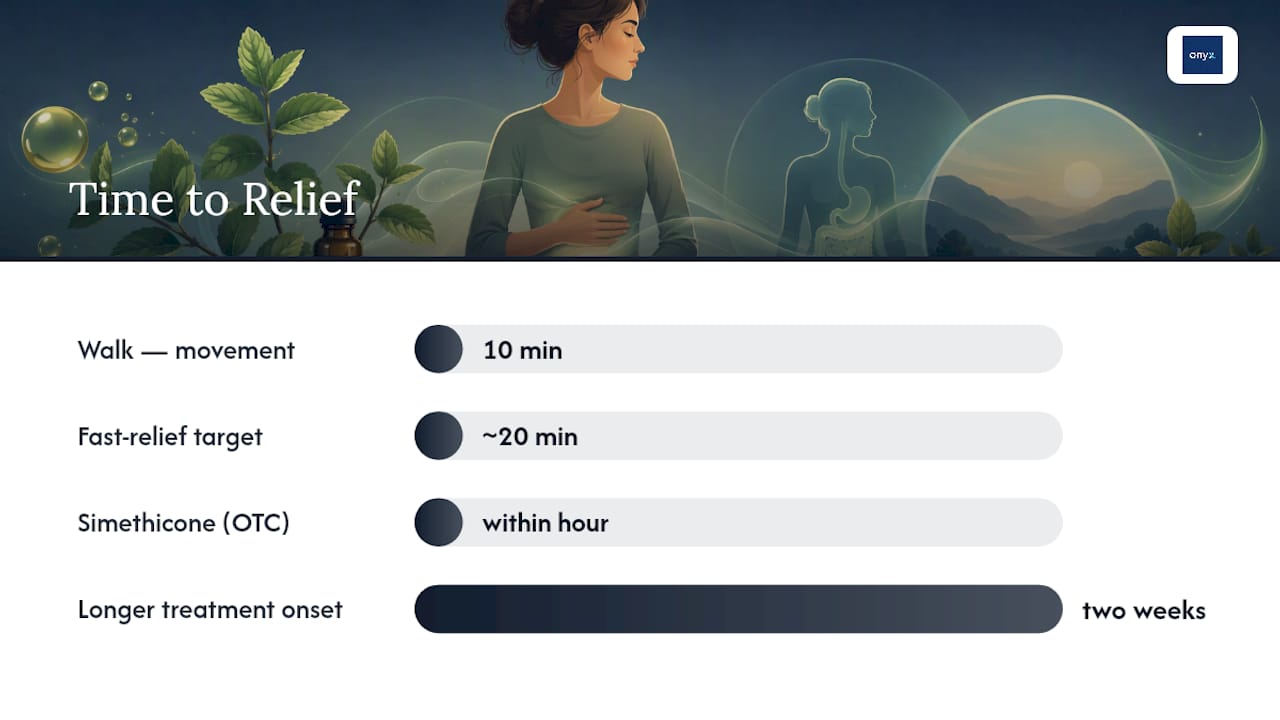
Sometimes you need relief in the next twenty minutes, not the next two weeks. A few low-risk moves can ease bloating while you wait for anything else to kick in:
- Walk for ten minutes. Movement helps trapped gas travel through your intestines faster than staying still.
- Try gentle abdominal massage. Circular motion in a clockwise direction, roughly following your colon’s path, can nudge gas along.
- Change your posture. Sitting hunched over compresses your abdomen; standing or lying on your left side often eases pressure.
- Skip carbonated drinks for the rest of the day. The bubbles you swallow are bubbles you’ll feel later.
Over-the-counter options fill a different niche than peppermint. Simethicone breaks up gas bubbles mechanically and works within the hour for many people, though it does nothing for the underlying spasm or sensitivity peppermint targets. Alpha-galactosidase products, taken before meals heavy in beans or cruciferous vegetables, can reduce gas production from those specific foods. Digestive enzyme supplements marketed broadly for bloating are popular, but it’s worth knowing that the FDA doesn’t guarantee dosage consistency or ingredient concentration for over-the-counter enzyme products the way it does for regulated drugs, so quality varies by brand.
Peppermint tea versus enteric-coated capsules comes down to speed and reliability. Tea is comforting and low-risk, appropriate for mild, occasional bloating after a meal. Capsules are the better-studied, more consistent option when symptoms are frequent or tied to a diagnosed condition like IBS, because that’s the formulation the trial evidence actually backs.
How Onyxwellness Approaches Digestive Support
The digestive lineup includes Ayurvedic-inspired ingredient blends delivered through fast-dissolving oral strips, a format built for people who want support without measuring liquids or swallowing another capsule. The Digestive + Gut Health Strips reflect that approach: sugar-free, quick-absorbing, and formulated with transparent labeling so you know exactly what you’re taking.
It’s worth being direct about what strips are and aren’t. They’re a different delivery format from an enteric-coated capsule, not a substitute for one. Strips fit best as a convenient, everyday layer of digestive support, particularly for people who want an Ayurvedic-inspired routine that travels well and skips the water glass. For broader lifestyle context on building sustainable digestive habits, Onyxwellness’s guide to natural digestive health walks through habits that complement any supplement choice.
The Gap Between Peppermint’s Reputation and Its Real Role
The biggest misunderstanding about peppermint and bloating isn’t whether it works. It’s the assumption that any peppermint product will do. The trial evidence is specific: enteric-coated capsules, not tea, not raw oil, not a peppermint candy after dinner. Conventional wellness advice tends to flatten that distinction, treating “peppermint” as a single interchangeable remedy when the format is doing most of the work.
What the research actually supports is a layered approach. Use enteric-coated peppermint oil when bloating is frequent, painful, or tied to a diagnosed condition. Treat tea and lighter formats as maintenance, not treatment. And don’t let symptomatic relief become a substitute for asking why the bloating keeps showing up in the first place, whether that’s FODMAP sensitivity, stress, or something that needs a doctor’s attention rather than another supplement.
Readers should prioritize formulation and consistency over chasing the strongest possible dose. A steady, enteric-coated regimen taken for several weeks will teach you more about whether peppermint helps you than any single dramatic dose ever will.
— Chris
Where Onyxwellness Fits Into Your Digestive Routine
If capsules and tea have left you wanting something simpler for daily support, there are Ayurvedic-inspired, water-free alternatives built for people who want digestive support without adding another pill bottle to the counter.
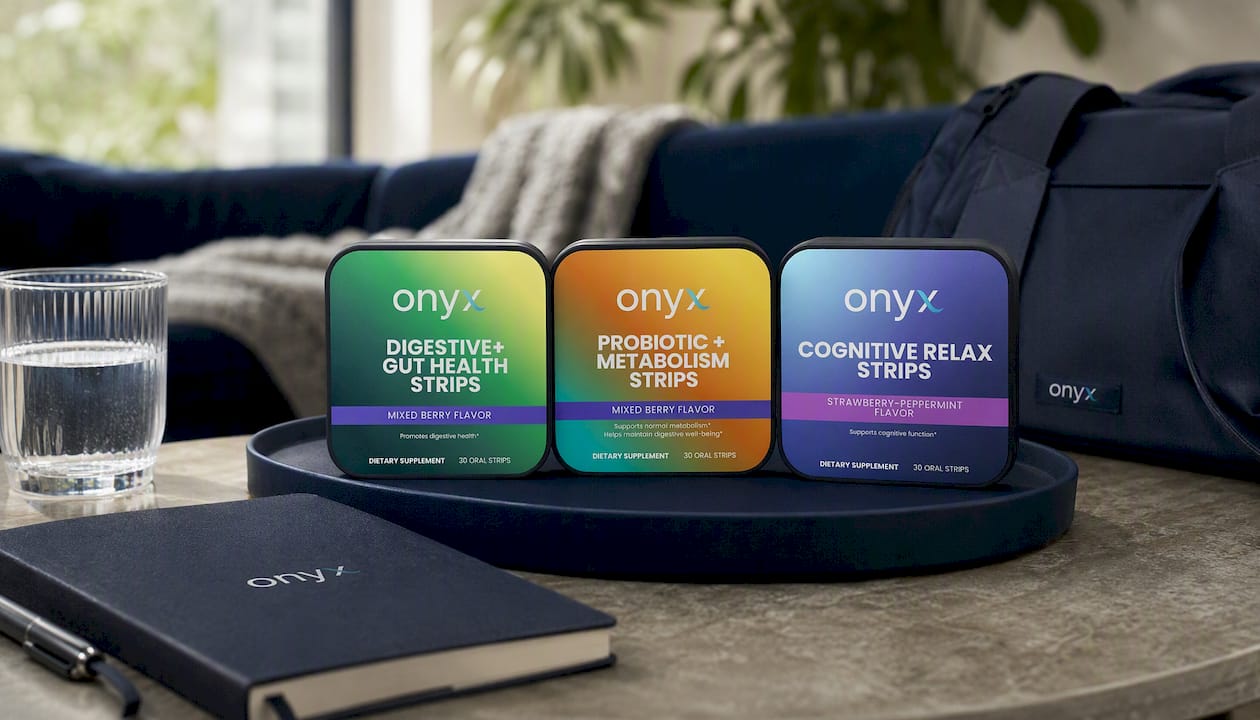
The Digestive + Gut Health Strips dissolve in seconds and are formulated with transparent, sugar-free ingredients, so you always know what’s going into your routine. Because gut health rarely operates in isolation, the Probiotic + Metabolism Strips pair well alongside it for readers managing both digestion and metabolic balance, and the Cognitive Relax Strips address the stress side of the gut-brain connection that often shows up alongside chronic bloating. Browse the full strips collection or the broader collection of wellness products to build a routine around your specific symptoms, backed by a 30-day money-back guarantee if a product doesn’t fit your routine.
Sources
- Peppermint oil for IBS: Is it effective? — Medical News Today
- Review article: The physiologic effects and safety of Peppermint Oil and its efficacy in irritable bowel syndrome and other functional disorders — PMC
- Peppermint oil - Brand names: Apercap, Colomint, ColoPep, Colpermin, Mintec, PepperMinn — NHS
FAQ
Does peppermint really help with bloating?
Yes, particularly in the form of enteric-coated peppermint oil capsules, which have shown consistent improvement in abdominal pain and bloating across multiple randomized trials. Peppermint tea can offer mild relief but delivers a much smaller, less targeted dose of menthol.
What relieves bloating fast?
Walking, gentle abdominal massage, and avoiding carbonated drinks can ease bloating within minutes to an hour. Simethicone works mechanically to break up gas bubbles quickly, while enteric-coated peppermint oil typically needs several days to weeks of consistent use to show its full effect.
Which is better for bloating, mint or peppermint?
Peppermint, specifically peppermint oil in enteric-coated capsule form, has the strongest research backing for bloating relief. Generic mint or spearmint products haven’t been studied the same way and lack the menthol concentration that drives peppermint’s antispasmodic effect.
Does peppermint tea flatten your stomach?
Peppermint tea may ease mild gas and cramping by relaxing gut muscle slightly, but it won’t “flatten” a bloated stomach the way targeted treatment of the underlying cause would. For more persistent or painful bloating, enteric-coated peppermint oil capsules are the better-studied option, according to NHS guidance.
How much does the Digestive + Gut Health Strips product cost?
Current pricing for the Digestive + Gut Health Strips is available directly on the Onyxwellness product page. Pricing isn’t published elsewhere, so check the site for the most accurate figure.