


Short answer: current clinical trials do not show that NAC reliably prevents or reduces hangover symptoms. Two randomized, placebo-controlled studies found no statistically significant improvement in overall hangover severity, though one noted a possible benefit for nausea and weakness in women. If you’re going to drink, the best-supported moves are still hydration, sleep, and food, not a supplement with mixed data behind it.
TL;DR:
- Current studies with small sample sizes show no significant reduction in overall hangover severity from NAC, though a subgroup suggests women may experience less nausea and weakness.
- NAC’s proposed mechanism relies on boosting glutathione to detoxify acetaldehyde, but its efficacy is limited by timing, absorption, and the rapid progression of a hangover.
- Typical trial doses range from 600 to 1,800 milligrams, but no evidence supports higher doses or specific timing to improve next-day symptoms reliably.
- NAC is generally safe at studied doses, but mild side effects like gastrointestinal discomfort and rare bronchospasm concern individuals with asthma or airway sensitivities.
- Hydration, food, and rest remain the most effective, well-supported strategies to prevent or lessen hangover symptoms.
Table of Contents
- Does NAC Help With a Hangover? What the Trials Found
- How Is NAC Supposed to Work Against a Hangover?
- What NAC Dosage Do Studies Use for Hangovers?
- Is NAC Safe to Take Before or After Drinking?
- Where Does NAC Rank Against Hydration, Sleep, and Other Supplements?
- Onyx Wellness’s Take on NAC and Hangover Support
- If You’re Going to Try NAC Anyway, Here’s How I’d Approach It
- Try Onyx Wellness Hangover Strips and Cognitive Relax Strips
- Sources
- FAQ
Does NAC Help With a Hangover? What the Trials Found
Both were randomized and placebo-controlled, which is the gold standard for testing whether a supplement actually does what it claims, and both came back with disappointing results for NAC as a stand-alone hangover fix.
The most cited study is a 2021 crossover trial published in Scientific Reports involving 49 participants. Each person served as their own control, drinking on separate occasions with either NAC or a placebo, which is a smart design because it cancels out individual differences in tolerance and metabolism. Researchers found no significant difference in total hangover scores between NAC and placebo, with a P value of .45, meaning the result was well within the range you’d expect from chance alone. The median hangover score was 10 for the NAC group versus 13 for placebo, a gap that looks meaningful on paper but didn’t clear the bar for statistical significance.
There was one interesting wrinkle. A subgroup analysis suggested female participants reported less nausea and weakness when taking NAC, with a gender difference in total hangover score reaching a P value of .04. That’s a real signal worth flagging, but subgroup findings inside an already small trial are notoriously unreliable. They’re the kind of result that generates a hypothesis for a future study, not a conclusion you should build a routine around.
A second study, published in 2024 and involving roughly 40 binge-drinking volunteers, tested a split-dosing approach: 1.2 grams of NAC before drinking and another 1.2 grams after. This trial went a step further and measured not just self-reported symptoms but an actual oxidative stress marker called 8-OHdG. If NAC were doing what its biochemistry suggests it should, you’d expect to see lower oxidative stress the next morning.
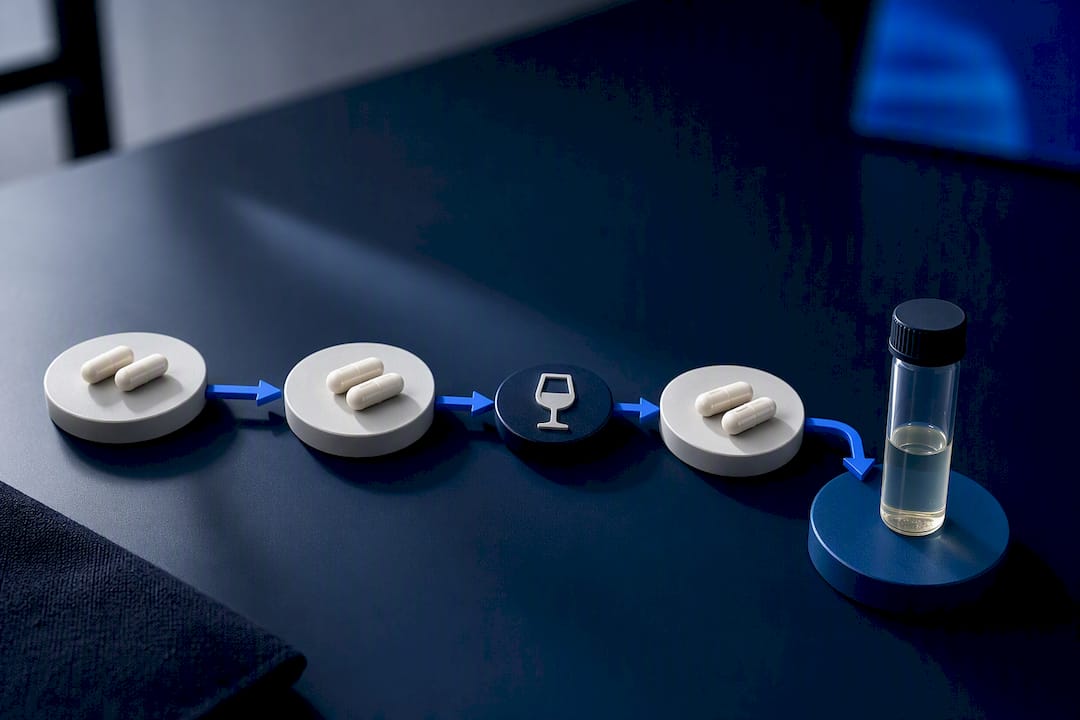
Statistic Callout: Across both major trials, sample sizes ranged from 40 to 49 participants, and neither found a statistically significant reduction in overall hangover severity. The one notable subgroup signal, reduced nausea and weakness in women, reached significance at P = .04, but has not been replicated in a larger trial.
A few methodological issues limit how much confidence you can place in either study’s null result:
- Both trials used small samples, which means they may simply lack the statistical power to detect a modest but real benefit.
- Controlled drinking protocols in a lab setting don’t always mirror how people actually drink at a party or dinner out.
- Neither study included a broad or highly diverse participant pool, so how NAC performs across different ages, body compositions, or drinking patterns remains unclear.
Put together, the practical takeaway is straightforward. The evidence right now does not support NAC as a reliable hangover cure. That doesn’t mean it does nothing for anyone, but it means you shouldn’t count on it the way you might count on drinking water or eating before bed.
How Is NAC Supposed to Work Against a Hangover?
The theory behind NAC is actually pretty elegant, even if the clinical results haven’t caught up yet. When your body breaks down alcohol, it converts ethanol into a compound called acetaldehyde, which is significantly more toxic than alcohol itself and is a major driver of that next-morning misery. Your liver then has to neutralize acetaldehyde, and one of its key tools for doing that is glutathione, a natural antioxidant your cells produce.
Heavy drinking can burn through your glutathione supply faster than your body can replace it, leaving oxidative stress unchecked. This is where NAC enters the picture. NAC is a precursor to cysteine, one of the building blocks your body uses to manufacture glutathione. In theory, more cysteine availability means more glutathione production, which means better acetaldehyde clearance and less oxidative damage.
This isn’t just theoretical hand-waving. NAC’s ability to restore glutathione is well established in emergency medicine, where it’s the standard antidote for acetaminophen overdose, and animal studies back up the glutathione-boosting mechanism too. The problem is translating a proven mechanism in a controlled lab or emergency setting into a real-world hangover benefit.
- Glutathione synthesis takes time, and a hangover unfolds over just a few hours.
- Oral NAC has to survive digestion and reach the liver in a form your cells can actually use, and that pathway is slower and less predictable than an IV dose given for acetaminophen poisoning.
- The amount of acetaldehyde generated during a night of heavier drinking may simply outpace what a modest oral dose of NAC can meaningfully offset.
Pro Tip: A biological mechanism that works in a lab or an overdose scenario doesn’t automatically scale down to a supplement you take before happy hour. Timing, dose, and delivery method all matter, and hangover trials suggest the gap between “plausible” and “proven” is still wide open.
What NAC Dosage Do Studies Use for Hangovers?
There’s no agreed-upon dose for hangover prevention, and that’s part of why the research picture is so murky. Different trials have tested different amounts, at different times, with different results, and none of them have landed on a protocol strong enough to become a standard.
Here’s what has actually been studied:
- Single oral doses ranging from 600 to 1,800 milligrams, taken before drinking began, in the 2021 crossover trial.
- A split-dosing approach of 1.2 grams before drinking and another 1.2 grams afterward, totaling about 2.4 grams, in the 2024 study.
- No trial has tested a dose-escalation design, meaning researchers haven’t yet compared low, medium, and high doses head-to-head to see if a bigger dose might work where smaller ones failed.
Outside the lab, a lot of consumer guidance suggests taking NAC somewhere between 30 and 120 minutes before drinking, often at doses in the 500 to 1,200 milligram range. That advice is grounded in the glutathione mechanism discussed earlier, not in any trial showing it improves next-day symptoms. It’s a reasonable-sounding habit built on plausible biochemistry, but it’s not the same as evidence-backed dosing.
If you decide to try NAC anyway, resist the urge to self-experiment with high doses in hopes of a bigger effect. There is no research suggesting more NAC produces a better hangover outcome, and pushing well past label recommendations only raises your risk of side effects without any documented upside. Stick to what’s printed on the product label, and treat any timing strategy as a personal experiment, not a proven protocol.
Is NAC Safe to Take Before or After Drinking?
At the doses used in hangover trials, NAC has a reasonably clean safety profile, but “reasonably clean” isn’t the same as “risk-free,” and a few specific concerns deserve attention before you pair it with alcohol.
The most commonly reported side effects at oral doses used in these studies were mild: gastrointestinal upset like nausea or stomach discomfort, and in some cases, unusually foul-smelling stool. Neither is dangerous, but both are worth knowing about before you try NAC on a night you actually care about feeling normal the next morning.
Less common but more serious reactions can include hypersensitivity responses and, notably, bronchospasm, which shows up more often when NAC is administered as an inhaled or nebulized treatment rather than swallowed as a pill or dissolved as a strip. Still, anyone with asthma or a history of airway sensitivity should treat that possibility seriously and talk to a doctor before adding NAC to a routine.
Statistic Callout: No large-scale safety trial has specifically quantified adverse event rates for oral NAC used around alcohol consumption. The side effect profile referenced here comes from the same hangover-focused trials that tested effectiveness, where sample sizes were limited to 40 to 49 participants.
A few groups should be extra cautious:
- Anyone taking prescription medications regularly, since NAC can interact with certain drugs and altering your body’s oxidative stress handling isn’t always neutral when other substances are in the mix.
- People with asthma or a known history of bronchospasm.
- Pregnant individuals, who should check with a clinician before adding any new supplement, NAC included.
- Anyone already taking acetaminophen regularly, since NAC’s role as the clinical antidote for acetaminophen overdose means combining the two outside a medical context deserves a conversation with a pharmacist or doctor first.
Beyond the biology, buy from a source that discloses exactly what’s in the product and at what dose. Contaminated or mislabeled supplements are a real problem across the industry, and NAC is no exception. When in doubt about how it might interact with something you’re already taking, a quick call to your pharmacist costs you nothing and can save you a bad night.
Where Does NAC Rank Against Hydration, Sleep, and Other Supplements?
If you ranked every hangover strategy by how much solid evidence backs it, NAC would land somewhere in the middle of the pack, better supported than pure folklore, weaker than the basics your grandmother probably already told you.
Clinical guidance consistently points back to symptomatic care: rehydrating with water or an electrolyte solution, resting, eating something before and during drinking, and using an over-the-counter analgesic like ibuprofen for headache and body aches. None of these require a leap of faith. They address the actual physiological drivers of hangover misery, dehydration, low blood sugar, and inflammation, directly and predictably.
Other popular supplements land in roughly the same evidence tier as NAC. L-cysteine, DHM (dihydromyricetin), and milk thistle all have some mechanistic rationale and scattered small studies behind them, but none has strong, replicated human trial data proving a meaningful hangover benefit. If you’ve looked into DHM specifically, you’ve probably noticed the same pattern: plausible biology, thin clinical proof, and a lot of marketing that outpaces the science.
Here’s a practical sequence worth following regardless of which supplements you choose to layer on top:
- Eat a real meal before you start drinking, ideally one with protein and fat to slow alcohol absorption.
- Alternate alcoholic drinks with water throughout the night.
- Take any supplement you’re trying, NAC included, according to its label instructions, not an improvised higher dose.
- Drink a full glass of water before bed, along with an electrolyte source if you have one.
- In the morning, prioritize more water, a balanced breakfast, and an OTC analgesic if you’re dealing with a headache.
Pro Tip: Think of NAC as a possible accessory to a hangover routine, not the routine itself. If you build your night around hydration and food first, you’ve already covered the two variables with the strongest evidence behind them. For a fuller walkthrough of what actually helps the next morning, our hangover recovery guide breaks down the full sequence step by step.
Onyx Wellness’s Take on NAC and Hangover Support
At Onyxwellness, we build our products around Ayurvedic-inspired ingredient blends delivered through sugar-free, dissolvable strips, designed for people who want convenience without sacrificing transparency about what’s actually in the formula. That philosophy shapes how we talk about something like NAC.
We’re not going to tell you a strip is a cure, because the clinical trial data doesn’t support that claim for any product on the market right now, ours included. What a fast-dissolving format can realistically offer is convenience: something you can use without water or prep, alongside the habits that actually move the needle, hydration, food, and rest. Think of it as one small piece of a night, handled thoughtfully, not a substitute for the fundamentals.
If You’re Going to Try NAC Anyway, Here’s How I’d Approach It
Personally, I’d take a modest dose roughly an hour before drinking, then treat hydration and food as non-negotiable, not optional extras. NAC is not a permission slip to drink more than you normally would, and it’s never a substitute for medical care if you’re a heavy or frequent drinker. If that’s your situation, talk to a clinician before building a routine around any supplement.
— Chris
Try Onyx Wellness Hangover Strips and Cognitive Relax Strips
Onyxwellness built its Hangover Strips around exactly the convenience gap the research above points to: you can layer support into your routine without pills, water, or guesswork about what’s inside the formula.
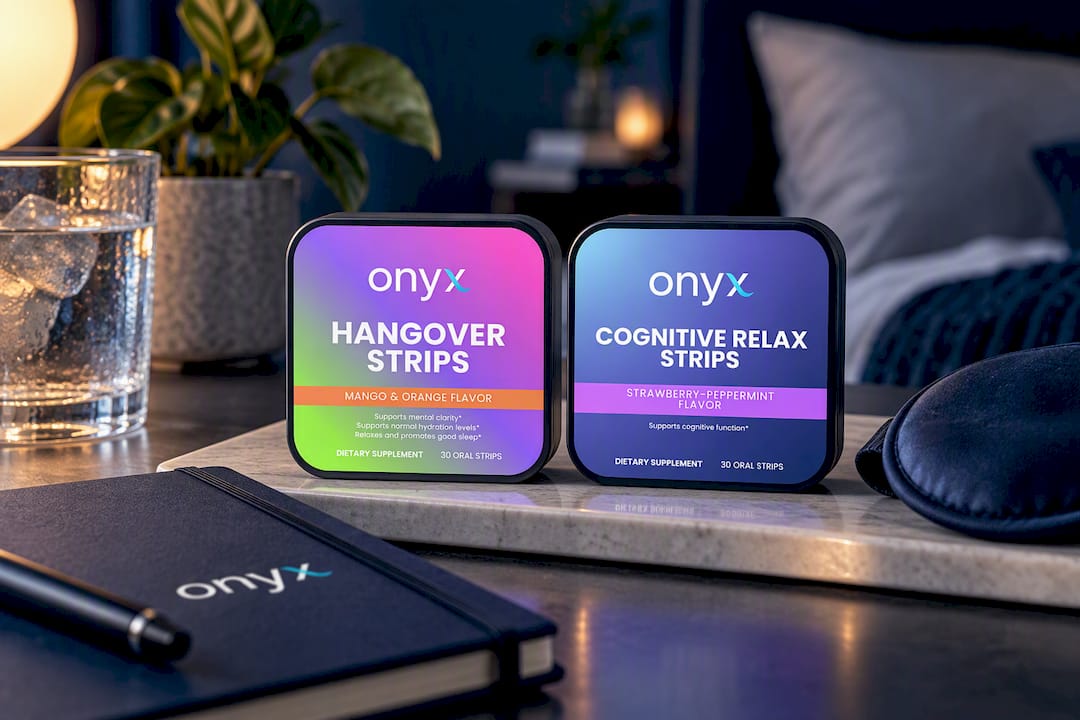
Both the Hangover Strips and the Cognitive Relax Strips use a sugar-free, fast-dissolve format so you can take them without needing a glass of water in hand, which matters when you’re already juggling drinks, food, and a night out. The right way to use either is as a companion to what the evidence actually supports: drink water alongside your alcohol, eat before you start, and follow the dosing printed on the label rather than doubling up in hopes of a bigger effect. Some companies back orders with a money-back guarantee to reduce commitment concerns when trying a new product. If you want to browse the full range of formats, from focus-oriented strips to gummies and even creatine and muscle-building products, the complete strips collection and gummies collection are both worth a look before your next night out.
Sources
- The use of N-acetylcysteine in the prevention of hangover: a randomized trial
- N-Acetylcysteine Ineffective in Alleviating Hangover from Binge Drinking: A Clinical Study
- The use of N-acetylcysteine in the prevention of hangover: a randomized trial (Scientific Reports DOI record)
FAQ
Does taking NAC actually help with a hangover?
Not reliably. The two best randomized, placebo-controlled trials on NAC and hangovers found no significant difference in overall symptom severity compared to placebo, though one study noted a possible benefit for nausea and weakness specifically in women.
Can I take NAC after a night of drinking instead of before?
Trial designs have tested both timing strategies, including a split approach of 1.2 grams before drinking and 1.2 grams after, and neither timing produced a measurable improvement in symptoms or oxidative stress markers. There’s no evidence that taking it after drinking works better or worse than taking it beforehand.
What do Koreans drink to prevent hangovers?
Traditional Korean hangover remedies often center on haejangguk, a hearty soup, and various herbal teas, rather than an isolated supplement like NAC. These approaches lean on food, hydration, and warmth, the same categories of intervention that clinical guidance still considers the most dependable for hangover relief.
Why do I feel so good after taking NAC?
Any subjective improvement you notice is more likely tied to the hydration, food, or rest you paired it with than to NAC itself, since controlled trials haven’t found a measurable symptom benefit at the group level. A placebo effect is also common with any supplement taken with intention and expectation, and it’s a real experience even without a proven biochemical mechanism behind it.
Is there a standard NAC dose for hangover prevention?
No. Trials have tested single doses between 600 and 1,800 milligrams and split-dosing approaches totaling about 2.4 grams, but no consensus protocol has emerged from the research. If you choose to try it, follow the dose printed on your product’s label rather than an unverified online recommendation.