


If you’re deficient in magnesium, dealing with stress-related sleeplessness, or you’re a midlife woman navigating menopause-related sleep disruption, magnesium glycinate can offer a modest, evidence-supported improvement in sleep quality. It’s not a sedative and it won’t knock you out like a sleeping pill. A 2025 randomized controlled trial of 155 adults found that 250 mg of elemental magnesium as bisglycinate, taken nightly before bed, produced a statistically significant reduction in insomnia symptoms over placebo after four weeks.
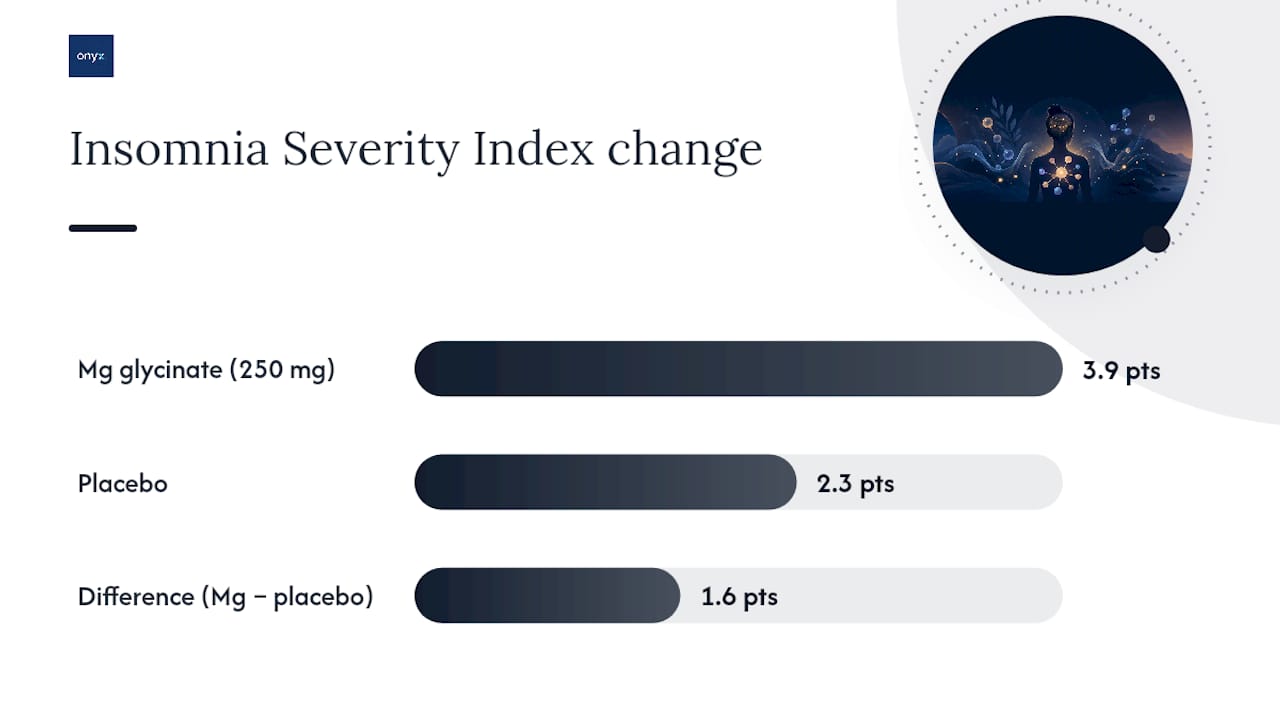
The effect was real but modest. Insomnia Severity Index scores dropped by 3.9 points in the magnesium group versus 2.3 points with placebo. That’s the kind of difference you’d notice as “sleeping a bit easier,” not “sleeping like you’re sedated.”
Who tends to benefit most? People with low baseline magnesium, those under chronic stress, and midlife women contending with hormonal shifts that disrupt sleep architecture. If you deal with restless legs or nighttime muscle cramping, you’re also a reasonable candidate.
One safety note before you go further: health authorities cap supplemental magnesium at 350 mg per day, and anyone with kidney disease or who takes certain medications should talk to a clinician first before using magnesium supplements.
- Bottom line: Modest, real benefit for specific groups, not a universal fix
- Evidence base: One well-designed RCT plus supporting clinical guidance from Mayo Clinic and Sleep Foundation
- Who benefits most: Deficient individuals, midlife women, stress-driven poor sleepers
- Safety check: Stay under 350 mg supplemental elemental magnesium daily unless a clinician says otherwise
Key Takeaways
Magnesium glycinate produces a modest, statistically supported improvement in sleep quality for people with low magnesium status, stress-related poor sleep, or menopause-related disruption, when dosed correctly and used consistently for several weeks.
| Point | Details |
|---|---|
| Modest, real effect | A 2025 RCT found a significant ISI improvement over placebo after four weeks of nightly 250 mg elemental magnesium. |
| Read the elemental number | Compound weight on the label overstates actual magnesium; check the supplement facts panel for the elemental figure. |
| Stay under 350 mg supplemental | Health authorities cap daily supplemental elemental magnesium at 350 mg unless a clinician advises otherwise. |
| Give it real time | Plan for at least four weeks, ideally up to three months, before judging whether it’s working. |
| Midlife women see added benefit | Higher deficiency risk and menopause-related sleep disruption make this group more likely to notice a difference. |
| Onyxwellness Sleep Strips | A dissolvable, fast-absorbing magnesium glycinate option for people who prefer to skip pills and powders. |
Table of Contents
- How Magnesium Glycinate Works to Support Sleep
- What the Research Actually Shows on Trials and Effect Sizes
- Dosage, Label-Reading, and When to Take It
- Side Effects, Interactions, and Guidance for Midlife Women
- Choosing a Form and Building It Into Your Routine
- Behind This Guide: Evidence, Standards, and Product Transparency
- Where the Common Advice on Magnesium Falls Short
- A Practical Option If Pills Aren’t Your Thing
- Sources
- FAQ
How Magnesium Glycinate Works to Support Sleep
Magnesium isn’t a sleep drug. It’s a mineral your nervous system needs to downshift properly, and when you’re running low, that downshift gets harder to reach.
Here’s the mechanism worth understanding: magnesium helps regulate the balance between GABA, your brain’s primary calming neurotransmitter, and glutamate, which does the opposite. Low magnesium tilts that balance toward overexcitation, which can look like a racing mind at 11 p.m. or waking up at 3 a.m. with your thoughts already running. Magnesium also plays a role in melatonin synthesis, the hormone that signals your body it’s time to wind down.
Then there’s the glycine half of magnesium glycinate. Glycine is its own inhibitory neurotransmitter, and it has a documented calming effect independent of the magnesium it’s bonded to. When you take magnesium glycinate, you’re getting two calming pathways working together rather than one.
That bonding matters for a second, more practical reason. Magnesium in its raw form pulls water into the intestines, which is why forms like magnesium oxide or magnesium citrate are common laxatives. Bonding magnesium to glycine changes how it’s absorbed, making it gentler on the gastrointestinal tract than citrate or oxide. If you’ve tried a magnesium supplement before and ended up making more nighttime trips to the bathroom than trips to actual sleep, glycinate is likely why people recommend switching.
It’s worth being precise about what this mechanism does and doesn’t do. Magnesium glycinate isn’t sedating you. Clinicians who study sleep supplementation describe its effect as reducing nervous-system arousal rather than forcing sedation, closer to easing your foot off the gas than hitting the brakes. That distinction explains why some people feel a gentle difference within days while others need weeks to notice anything.
Pro Tip: If you’ve tried melatonin and felt groggy the next morning, magnesium glycinate works through a different pathway entirely; it calms the nervous system rather than forcing sleep onset, so a “hangover” feeling the next day is far less common.
- Magnesium helps balance GABA and glutamate, the brain’s calming and excitatory signals
- Glycine adds a second, independent calming effect on its own
- The glycinate bond reduces gut irritation compared with citrate or oxide
- Expect gradual nervous-system calming, not sedation
What the Research Actually Shows on Trials and Effect Sizes
The strongest evidence for magnesium glycinate and sleep comes from a single, well-designed 2025 trial, and it’s worth understanding exactly what it found and what it didn’t.
Researchers gave 155 healthy adults reporting poor sleep either 250 mg of elemental magnesium as bisglycinate or a placebo, nightly, 30 to 60 minutes before bed, for 28 days. The magnesium group’s Insomnia Severity Index score dropped by 3.9 points; the placebo group dropped by 2.3 points. The difference reached statistical significance at p=0.049, just under the conventional 0.05 threshold.
What p=0.049 actually means: the improvement was unlikely to be due to chance, but it sat right at the edge of statistical significance. That’s a real signal, not a dramatic one. Think of it as evidence that magnesium glycinate helps some people sleep somewhat better, not proof it cures insomnia.
That single number needs company to make sense. Mayo Clinic’s clinical guidance aligns with the trial, suggesting magnesium may help people whose sleep is disrupted by leg cramps or restless legs, typically in the 250 to 500 mg range depending on the person. Sleep Foundation’s guidance leans the same direction, favoring glycinate specifically for its tolerability, and notes that consistency matters more than precise timing.
Cleveland Clinic offers the necessary counterweight. Its clinicians describe the overall evidence for magnesium and sleep as limited and mixed, noting that while small studies show promise, magnesium is not a substitute for treating underlying sleep disorders or practicing good sleep hygiene. That’s not a dismissal, it’s a calibration. One RCT with a modest, borderline-significant effect is meaningful evidence, but it’s not the same as a slam-dunk finding replicated across dozens of large trials.
Part of the reason results vary between studies comes down to who’s in them. People who start out with low magnesium levels tend to see a bigger response than people whose levels were already adequate; this baseline-dependency is a common thread in nutrient-supplementation research generally, and it likely explains why some magnesium trials show strong effects while others show barely any.
How long before you notice something?
- Some people report subtle improvements within a few days
- Most who respond notice a clearer difference somewhere in the two to four week range, matching the trial’s timeline
- Clinicians who specialize in integrative sleep care generally recommend giving it a full three months before deciding it isn’t working, since correcting an underlying deficiency takes longer than symptom relief alone
If you’re going to try magnesium glycinate for sleep, plan for at least a month before judging results, and treat three months as the real test.
Dosage, Label-Reading, and When to Take It
The single biggest mistake people make with magnesium glycinate isn’t the timing. It’s misreading the label.
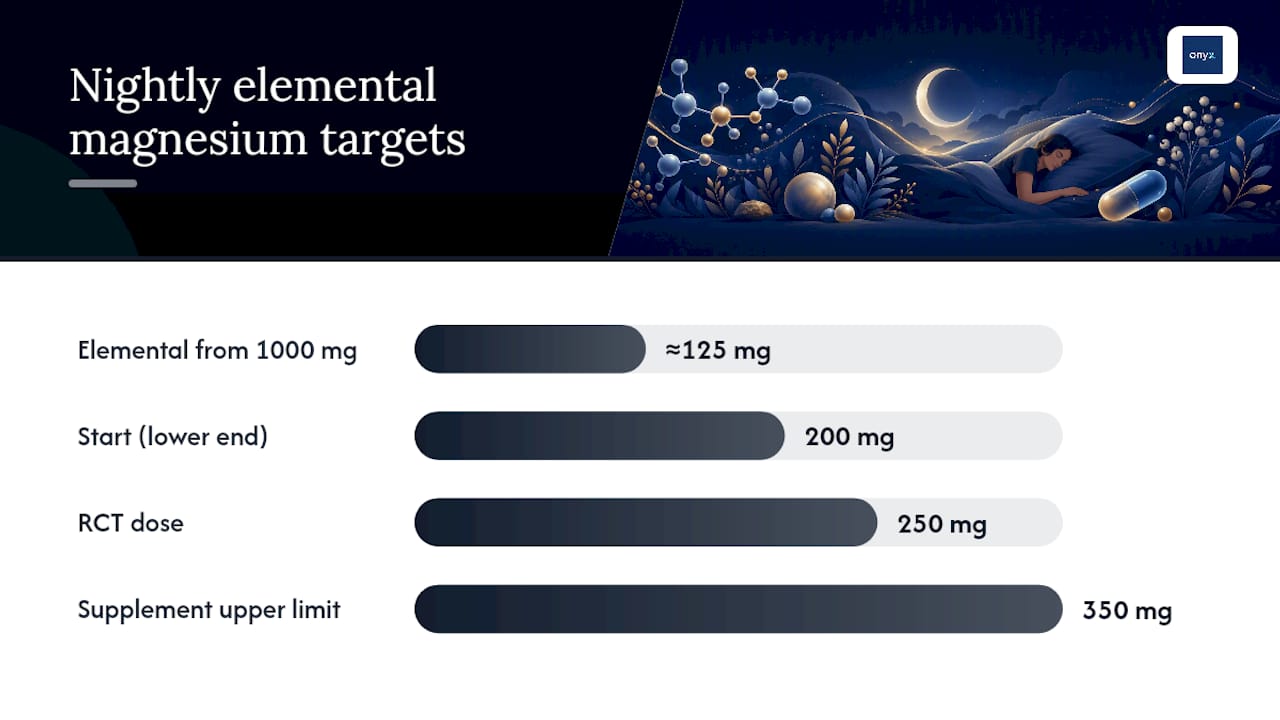
Supplement bottles often list two different numbers: the total weight of the magnesium glycinate compound, and the “elemental magnesium” content, which is the actual magnesium your body absorbs and uses. A capsule labeled “1000 mg magnesium bisglycinate” might only deliver around 100 to 150 mg of elemental magnesium, because glycine itself has weight that doesn’t count toward your magnesium intake. If you’re trying to match the dose used in the 2025 RCT, 250 mg elemental, you need the elemental figure, not the compound weight on the front of the bottle.
Here’s how to dose it correctly:
- Find the “elemental magnesium” line on the supplement facts panel, usually listed separately from the compound name.
- Aim for roughly 200 to 350 mg of elemental magnesium nightly, the range supported by clinical trial data and Mayo Clinic guidance, and stay under the 350 mg supplemental upper limit set by nutrition authorities unless a clinician directs otherwise.
- Take it 30 to 60 minutes before bed, matching the trial protocol, though Sleep Foundation notes that taking it at roughly the same time every night matters more than hitting an exact window.
- Account for magnesium from food and other supplements. The 350 mg cap applies to supplemental intake specifically; if you’re also taking a multivitamin with magnesium or eating magnesium-rich meals, factor that in.
- Start at the lower end (around 200 mg) for your first week if you’re new to magnesium supplementation, then adjust upward if tolerated well.
If you notice loose stools or stomach cramping, that’s usually a dose or form issue, not a sign to give up on magnesium entirely. Splitting your dose (some in the afternoon, the rest before bed) sometimes resolves it. If GI symptoms persist even on glycinate, it’s worth discussing alternatives with a pharmacist or doctor rather than pushing through discomfort. For a deeper breakdown of how different magnesium compounds compare on absorption, Onyxwellness’s magnesium powder guide walks through the differences form by form.
Pro Tip: Supplement labels almost never lead with the elemental number because the compound weight looks bigger on the front of the bottle. Flip to the supplement facts panel every time; that’s where the real dose lives.
Side Effects, Interactions, and Guidance for Midlife Women
Magnesium glycinate has a good safety profile compared with other magnesium forms, but “good” doesn’t mean “no rules apply.”
Common side effects. Because glycinate is absorbed differently than magnesium oxide or citrate, it causes less gastrointestinal upset for most people. Mild nausea or loose stools can still happen, especially at higher doses or when you start too aggressively. That’s a strong argument for the 200 mg starting point covered above rather than jumping straight to 350 mg.
The kidney warning matters more than people realize. Healthy kidneys clear excess magnesium efficiently. Impaired kidneys don’t, which means magnesium can accumulate to dangerous levels in people with kidney disease. If you have any degree of kidney impairment, magnesium supplementation, including glycinate, needs a doctor’s sign-off before you start, not after you notice a problem.
Medication interactions worth knowing:
- Antibiotics (particularly tetracyclines and quinolones) can bind to magnesium and become less effective; separate doses by at least two hours
- Bisphosphonates for bone density face the same binding issue and need timing separation
- Levothyroxine for thyroid conditions can have reduced absorption when taken close to magnesium
- Anticonvulsants, including lamotrigine, can interact with magnesium in ways that affect drug levels; anyone on seizure medication should loop in their prescribing doctor before adding a nightly magnesium supplement
Why midlife women see this topic differently. Magnesium status tends to decline with age, and women in particular carry higher deficiency risk than the general population, partly tied to diet and hormonal shifts around perimenopause and menopause. Estrogen decline affects sleep architecture directly, contributing to more nighttime waking and lighter sleep, independent of magnesium status. That’s part of why midlife women show up as one of the groups most likely to notice a real difference from supplementation: they’re more likely to be starting from a deficient baseline and dealing with a sleep disruptor magnesium can plausibly help with.
If you’re in this group and dealing with new or worsening sleep issues alongside other menopause symptoms, it’s worth asking your doctor about a magnesium level check rather than guessing. Testing isn’t standard for everyone, but if you have risk factors, a quick blood test can tell you whether you’re actually deficient or dealing with something else entirely. Onyxwellness’s guide to calcium and magnesium supplementation covers more on how these interactions play out in practice.
- Kidney disease is a hard stop; get clinician approval first
- Separate antibiotics, bisphosphonates, and thyroid medication by a few hours
- Anyone on anticonvulsants like lamotrigine should check with their prescriber
- Midlife women carry elevated deficiency risk tied to diet and hormonal change
Choosing a Form and Building It Into Your Routine
Capsules, powders, and dissolvable strips all deliver magnesium glycinate, but they fit different lifestyles. Capsules are precise and easy to dose consistently, which matters if you’re trying to hit a specific elemental target. Powders mix into water and work well if you struggle to swallow pills, though taste can be a dealbreaker for some. Dissolvable strips skip water entirely and absorb quickly, a practical fit if you travel often or simply dislike pills.
None of these forms work in isolation from the basics. Pair whichever one you choose with a consistent bedtime, dimmer light in the hour before sleep, and an earlier caffeine cutoff. Onyxwellness’s guide to natural sleep remedies covers how to layer these habits together.
- Pick a form that fits your routine so you’ll actually take it every night, since consistency drives results more than the delivery method.
- Track three things nightly: time to fall asleep, number of nighttime awakenings, and a simple 1 to 5 sleep-quality rating.
- Give it four to twelve weeks before judging effectiveness, longer if you suspect an underlying deficiency.
- See a clinician or sleep specialist if sleep problems persist past three months or worsen despite consistent use.
Behind This Guide: Evidence, Standards, and Product Transparency
This guide was written to reflect what current clinical research and major health authorities actually say about magnesium glycinate, not what marketing copy claims about it.
- Every dosing figure traces back to a named clinical source, either the 2025 RCT or guidance from Mayo Clinic, Sleep Foundation, or nutrition authorities
- Onyxwellness’s Sleep Strips list elemental magnesium content transparently on the label, consistent with the label-reading guidance covered earlier
- The product is positioned as a convenient delivery format for the same dosing principles in this article, not a separate or superior mechanism
Good supplement guidance should let you double check every claim against a real source. If an article about magnesium and sleep doesn’t point you toward the actual trial data or clinical guidance behind its dosing numbers, that’s a reason to be skeptical of the advice itself.
For more on how magnesium interacts with other minerals your body relies on, Onyxwellness’s magnesium and potassium guide covers the broader electrolyte picture.
Where the Common Advice on Magnesium Falls Short
Most articles on magnesium glycinate for sleep either oversell it as a natural knockout pill or bury the real findings under vague reassurance. Both approaches do readers a disservice.
The honest read of the evidence is narrower and more useful: one well-designed trial shows a modest, statistically significant benefit, and that benefit is most reliable for people who are actually deficient or under real physiological stress, not for the general population chasing a better night’s sleep. If your magnesium status is already fine and your sleep problems stem from anxiety, screen time, or an irregular schedule, magnesium glycinate is unlikely to be your fix.
What gets underweighted constantly is the label-reading step. People take a “1000 mg” capsule assuming they’re matching trial doses, when they’re actually getting a fraction of that in elemental magnesium. Fix that one error and the entire conversation about whether magnesium “works” changes.
Prioritize this order: check whether you’re actually likely to be deficient, read your label for the elemental number, commit to a real trial period of several weeks, and layer in sleep hygiene rather than expecting the supplement to do all the work alone.
A Practical Option If Pills Aren’t Your Thing
If the idea of another capsule to swallow every night makes you want to skip the whole routine, Onyxwellness’s Sleep Strips solve that specific problem: a dissolvable strip that absorbs fast, without water, without a pill to choke down.
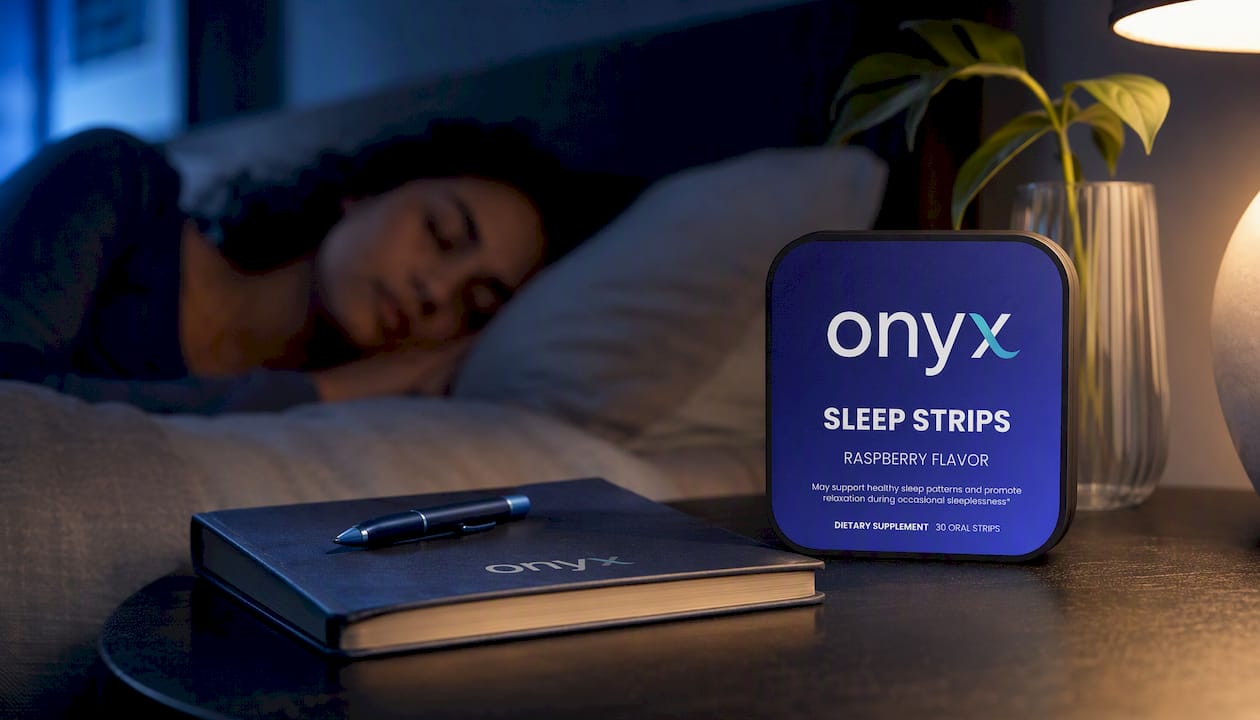
The strips are built around the same dosing principles covered throughout this guide. Check the elemental magnesium listed on the label before you use them nightly, follow the suggested use on the package, and if you’re managing a kidney condition or taking any of the medications flagged earlier, particularly anticonvulsants like lamotrigine or thyroid medication, talk to your doctor before adding them to your routine. Sleep Strips aren’t a guaranteed fix for insomnia; they’re a convenient way to get consistent, label-transparent magnesium glycinate into a nightly habit you’ll actually stick with. If you’re also interested in a broader relaxation approach, Onyxwellness’s Reishi Relax Gummies pair well with a magnesium routine for people who want extra support winding down. Browse the full product lineup to find the format that fits your night.
Sources
- Magnesium Bisglycinate Supplementation in Healthy Adults Reporting Poor Sleep: A Randomized, Placebo-Controlled Trial
- Magnesium (Harvard T.H. Chan School of Public Health Nutrition Source)
- Magnesium for sleep: What you need to know about its benefits
- Magnesium for sleep (Sleep Foundation)
- Does magnesium help you sleep better? (Cleveland Clinic)
FAQ
How much magnesium glycinate should I take for sleep?
Most clinical guidance points to roughly 200 to 350 mg of elemental magnesium nightly, matching the dose used in the 2025 clinical trial, and you should stay under the 350 mg supplemental upper limit unless a doctor advises otherwise.
What happens if you take magnesium glycinate every night?
For most healthy adults, nightly use within the recommended elemental range is well tolerated and may support gradually better sleep quality over several weeks; people with kidney disease should not take it nightly without medical supervision.
Can I take magnesium if I have colitis?
Magnesium can affect gut motility and may worsen symptoms for some people with inflammatory bowel conditions like colitis, so check with your gastroenterologist before starting, even with a gentler form like glycinate.
Is magnesium okay to take with lamotrigine?
Magnesium can interact with anticonvulsant medications including lamotrigine, so anyone taking it for seizure control or mood stabilization should consult their prescribing doctor before adding a nightly magnesium supplement.