


Why magnesium and potassium are essential for your health
Magnesium and potassium are two of the most critical minerals in your body, and they don’t work in isolation. They function as a team, each one depending on the other to keep your heart beating steadily, your muscles contracting properly, and your blood pressure in a healthy range.
Here’s what makes this pair so important:
- Heart rhythm: Both minerals regulate the electrical signals that control your heartbeat, and a deficiency in either can trigger arrhythmias.
- Muscle contraction: Potassium drives the contraction and relaxation cycle in muscle tissue; magnesium acts as the natural brake that prevents over-contraction.
- Nerve signaling: Magnesium modulates nerve excitability, while potassium maintains the electrochemical gradients that nerves depend on to fire correctly.
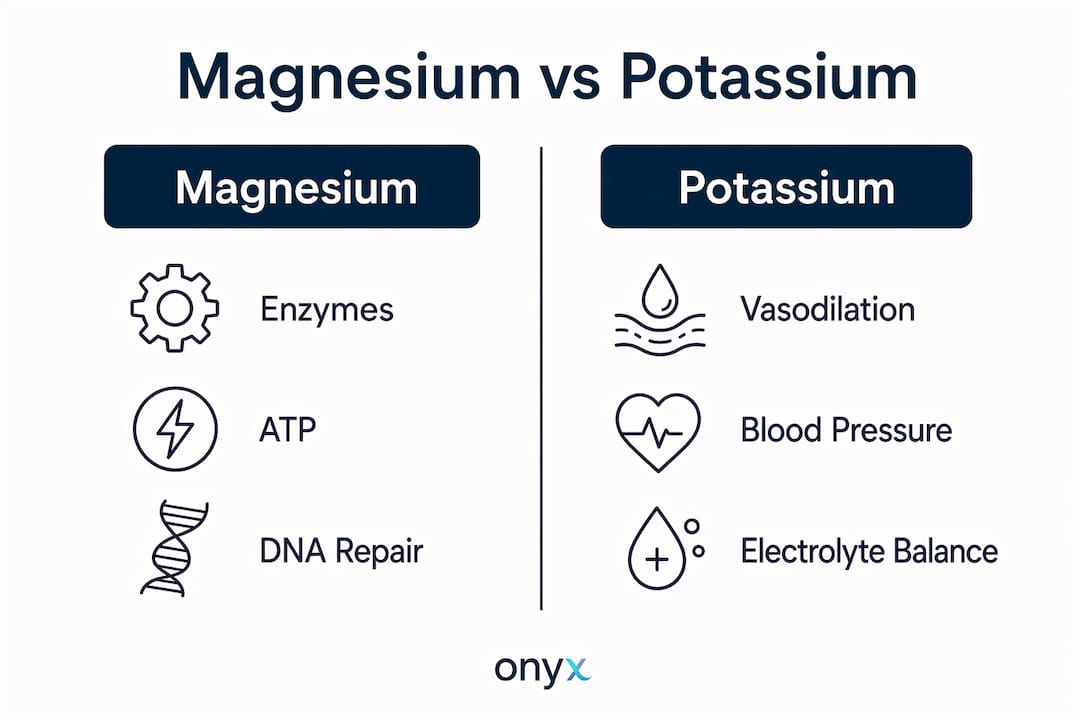
- Blood pressure: Potassium promotes vasodilation and helps your kidneys excrete excess sodium; magnesium supports vascular relaxation through a complementary pathway.
- Mineral interdependence: Magnesium is required to transport potassium across cell membranes. Without adequate magnesium, your cells cannot hold onto potassium, no matter how much you consume.
The practical takeaway is this: you can’t fully address a potassium deficiency without also looking at your magnesium status. Treating them as separate concerns is one of the most common mistakes people make with electrolyte health.
How magnesium and potassium interact at the cellular level
The relationship between these two minerals runs deeper than most people realize. Magnesium activates the sodium-potassium ATPase pump, the protein embedded in every cell membrane that physically moves potassium into cells and sodium out. When magnesium levels drop, this pump slows down, and potassium leaks out of cells and gets excreted in urine. The result is a potassium deficit that no amount of potassium supplementation can fully correct until the magnesium shortage is resolved first.

Research published in PubMed confirms that magnesium depletion causes renal potassium wasting, making magnesium repletion a prerequisite for correcting low potassium. Over 50% of hypokalemia cases are linked to concurrent magnesium deficiency, which explains why clinicians now routinely check both levels together.
Potassium’s own physiological role is equally broad:
- Maintains intracellular fluid volume and osmotic balance
- Drives the electrochemical gradients that allow nerve impulses to travel
- Regulates muscle contraction, including the cardiac muscle
- Supports kidney function by modulating sodium reabsorption in the distal tubule
- Influences bone mineral density through effects on acid-base balance
Magnesium, for its part, supports over 300 enzymatic reactions, including ATP synthesis, DNA repair, and protein production. Its role in nerve function is particularly relevant: magnesium blocks NMDA receptors at rest, preventing excessive nerve stimulation and the anxiety or muscle tension that comes with it.
The absorption picture is also worth understanding. Magnesium is absorbed primarily in the small intestine, with uptake regulated by vitamin D and parathyroid hormone. Potassium absorption is highly efficient under normal conditions, but diuretics, chronic diarrhea, and excessive alcohol use can dramatically increase urinary losses of both minerals simultaneously.
What the research says about heart health
The cardiovascular case for maintaining healthy magnesium and potassium levels is backed by solid clinical evidence. A systematic review and meta-analysis found that magnesium supplementation at doses of 360 mg per day or less, taken for more than three months, reduced systolic blood pressure by 3.03 to 4.31 mm Hg in otherwise healthy adults. Potassium at doses of 60 mmol per day or less, taken for more than one month, reduced systolic blood pressure by 2.34 to 2.80 mm Hg.
Clinical significance: A consistent reduction of just 2 mm Hg in systolic blood pressure is associated with meaningful decreases in mortality from both heart disease and stroke in the general population.
The mechanisms behind these reductions are distinct but complementary. Potassium promotes vasodilation by hyperpolarizing vascular smooth muscle cells through sodium-potassium ATPase activity. It also enhances natriuresis, meaning it helps your kidneys flush out sodium, which directly lowers blood volume and pressure. Magnesium works alongside this by relaxing arterial walls and regulating calcium entry into smooth muscle cells, preventing the excessive constriction that raises pressure.
The DASH eating pattern, which is rich in both potassium and magnesium from fruits, vegetables, and low-fat dairy, lowers systolic blood pressure by an average of 5.5 mm Hg and diastolic pressure by 3.0 mm Hg. Experts recommend addressing both deficiencies concurrently for effective heart health support, precisely because their pathways reinforce each other rather than overlap.
Signs and risks of magnesium and potassium deficiency
Deficiency in either mineral tends to announce itself through the body’s most electrically active systems: muscles, nerves, and the heart. The challenge is that early symptoms are easy to dismiss as everyday fatigue or stress.
Common signs of low magnesium:
- Muscle cramps, twitches, or spasms, particularly at night
- Fatigue and general weakness
- Irritability, anxiety, or difficulty sleeping
- Irregular heartbeat or palpitations
- Numbness or tingling in the extremities
- Headaches or migraines
Common signs of low potassium (hypokalemia):
- Muscle weakness or paralysis in severe cases
- Constipation and bloating
- Heart palpitations or arrhythmias
- Fatigue and muscle cramps
- Increased blood pressure
The populations most vulnerable to deficiency include people who take diuretics or proton pump inhibitors, those with type 2 diabetes, individuals with chronic gastrointestinal conditions like Crohn’s disease, older adults, and people who consume alcohol heavily. Athletes who sweat heavily also lose both minerals through perspiration and need to replenish them consistently.
The compounding effect is what makes dual deficiency particularly risky. Magnesium deficiency worsens potassium deficiency by increasing urinary potassium loss, and low potassium in turn raises the risk of cardiac arrhythmias. In people with ischemic heart disease, this combination can be genuinely dangerous. If you’re experiencing persistent muscle cramps, fatigue, or heart palpitations, getting both levels tested is a reasonable first step before reaching for supplements.
Foods high in magnesium and potassium
Whole foods remain the most reliable and safest way to maintain healthy levels of both minerals. The good news is that many of the best sources overlap, so a diet built around a handful of key foods covers both needs efficiently.

| Food | Serving | Magnesium | Potassium |
|---|---|---|---|
| Cooked spinach | 1 cup | ~157 mg | ~839 mg |
| White beans | ½ cup cooked | ~67 mg | ~502 mg |
| Avocado | 1 medium | ~58 mg | ~690 mg |
| Swiss chard | 1 cup cooked | ~150 mg | ~960 mg |
| Pumpkin seeds | 1 oz | ~156 mg | ~229 mg |
| Banana | 1 medium | ~32 mg | ~422 mg |
| Almonds | 1 oz | ~77 mg | ~200 mg |
Data for spinach and white beans sourced from nutrition analysis of whole foods.
Beyond the table, several other foods deserve a spot in your regular rotation:
- Dark chocolate (70%+ cacao): A surprisingly good source of magnesium, with roughly 64 mg per ounce.
- Salmon and mackerel: Provide both minerals alongside omega-3 fatty acids that further support cardiovascular health.
- Legumes (lentils, black beans, chickpeas): Versatile, affordable, and consistently high in both minerals.
- Sweet potatoes: One medium baked sweet potato delivers around 542 mg of potassium and 31 mg of magnesium.
Pairing leafy greens with a healthy fat like olive oil or avocado also improves the absorption of fat-soluble nutrients that work alongside magnesium and potassium. Cooking methods matter too: boiling vegetables leaches potassium into the water, so steaming or roasting preserves more of the mineral content.
Supplementation guidance, safety, and what to watch for
Supplements make sense when diet alone isn’t closing the gap, but the approach matters. Adults need 310–420 mg of magnesium and 2,600–3,400 mg of potassium daily, depending on age and sex. Most Americans fall short of both targets through diet alone.
For magnesium, the evidence points clearly toward moderate, sustained dosing. The meta-analysis data showing the strongest blood pressure reductions used doses at or below 360 mg per day over three or more months. Higher doses don’t produce better results and increase the risk of gastrointestinal side effects like diarrhea and nausea. The safe upper limit for supplemental magnesium is generally 360 mg per day; beyond that, adverse effects become more likely.
Potassium supplements sold over the counter in the U.S. are typically capped at 99 mg per tablet by the FDA, well below the daily requirement. This is intentional: high-dose potassium supplementation without medical supervision can cause dangerous cardiac effects, particularly in people with kidney disease or those taking ACE inhibitors, potassium-sparing diuretics, or certain blood pressure medications.
Pro Tip: Taking magnesium and potassium supplements with food improves absorption and significantly reduces the nausea and abdominal discomfort that often come with taking them on an empty stomach.
Key safety considerations before you start:
- Kidney disease: Impaired kidneys cannot excrete excess potassium efficiently, making supplementation risky without medical oversight.
- Medications: Diuretics, ACE inhibitors, antibiotics like ciprofloxacin, and proton pump inhibitors all affect magnesium and potassium levels. Check with your doctor before combining supplements with these drugs.
- Testing first: A simple blood panel can confirm whether you’re actually deficient before you spend money on supplements. Supplementing without a confirmed deficiency adds unnecessary risk.
- Form of magnesium: Magnesium glycinate and magnesium citrate tend to be better tolerated than magnesium oxide, which has lower bioavailability and a stronger laxative effect.
For a deeper look at how different magnesium forms compare in practice, the magnesium powder guide from Onyxwellness covers bioavailability and dosing in detail. If you’re also curious about combining these minerals with other electrolytes, the potassium magnesium aspartate overview explains how the aspartate form supports both absorption and energy metabolism.
Onyxwellness offers a simpler way to support mineral balance
Getting consistent magnesium and potassium intake from diet alone takes real planning. Onyxwellness was built for people who want the benefits without the complexity of managing multiple capsules, powders, and timing windows.

Onyxwellness’s dissolvable wellness strips fuse Ayurvedic herbal principles with fast-absorbing delivery technology, no water required, no sugar, and no guesswork about what’s in them. The Sleep Strips are a good example: formulated to support relaxation and recovery at night, when magnesium’s calming effect on the nervous system is most useful. For gut health that supports better mineral absorption overall, the Digestive + Gut Health Strips address the absorption side of the equation directly. Every product is built around transparency and quality, so you know exactly what you’re putting in your body.
Browse the full collection at Onyxwellness to find the format that fits your routine.
FAQ
Should potassium and magnesium be taken together?
Yes. Taking them together is generally safe and often more effective than supplementing either alone, since magnesium is required for potassium to enter and stay inside cells. Experts recommend addressing both deficiencies concurrently for optimal heart health support.
What are the signs of low magnesium?
The most common signs include muscle cramps or twitches, fatigue, irritability, difficulty sleeping, heart palpitations, and numbness or tingling in the hands and feet. Symptoms often appear gradually and are easy to attribute to other causes.
What food is high in magnesium and potassium?
Cooked spinach, Swiss chard, avocado, white beans, and pumpkin seeds are among the richest whole food sources of both minerals. Cooked spinach alone provides approximately 157 mg of magnesium and 839 mg of potassium per cup.
Do potassium and magnesium lower blood pressure?
Yes, both minerals lower systolic blood pressure through distinct but complementary mechanisms. Potassium reduces sodium reabsorption and promotes vasodilation, while magnesium relaxes arterial walls. Clinical trials show meaningful reductions at moderate doses taken consistently over several months.
Key Takeaways
Magnesium and potassium work as an interdependent pair, and correcting one deficiency without addressing the other rarely produces lasting results.
| Point | Details |
|---|---|
| Mineral interdependence | Over 50% of hypokalemia cases involve concurrent magnesium deficiency; fix magnesium first. |
| Heart health evidence | Magnesium at ≤360 mg/day for 3+ months reduces systolic blood pressure by 3.03–4.31 mm Hg. |
| Best food sources | Cooked spinach, Swiss chard, avocado, and white beans deliver meaningful amounts of both minerals per serving. |
| Safe supplementation | Stay at or below 360 mg/day for magnesium; always take supplements with food to reduce side effects. |
| Onyxwellness approach | Onyxwellness dissolvable strips offer a convenient, transparent format for supporting relaxation and mineral balance daily. |