


Lion’s mane (Hericium erinaceus) shows genuine promise for neuroprotection, mood support, and cognitive function in preclinical work and a handful of human trials, but robust evidence for broad cognitive enhancement in healthy adults is still lacking. If you’re considering adding it to your routine, talk to a clinician first, especially if you take prescription medications or have a history of mushroom or mold allergies.
Here’s where the evidence actually stands, broken down by outcome:
- Cognitive support (processing speed, memory in MCI): Small human trials positive; mixed in healthy young adults
- Mood and anxiety: Positive signals in limited RCTs; not yet replicated at scale
- Nerve repair and neuroprotection: Strong preclinical data; human evidence early-stage
- Gut health and immune modulation: Animal and limited human data; plausible gut–brain axis mechanism
- Metabolic and cardiometabolic effects: Primarily in vitro and animal models; speculative in humans
The 2025 systematic review in Frontiers puts it plainly: promising bioactive compounds, limited and heterogeneous clinical evidence. That’s the honest starting point for everything that follows.
Key Takeaways
Lion’s mane shows its clearest human evidence in adults with mild cognitive impairment or mood disturbance, not in healthy young adults seeking a general cognitive boost.
| Point | Details |
|---|---|
| Strongest human evidence | MCI and mood-disturbance populations show the most consistent positive results in small RCTs. |
| Preclinical mechanisms are solid | Hericenones and erinacines stimulate NGF/BDNF in animal models and cross the blood–brain barrier in preclinical studies. |
| Dose aligned with trials | Most positive human trials used 1.5–3 g/day of fruiting-body equivalent for 8–16 weeks. |
| Safety profile is favorable | Mild GI symptoms occur in under 10% of subjects; allergy risk is real for those sensitive to mushrooms. |
| Onyxwellness for daily use | Onyxwellness dissolvable strips offer a transparent, convenient format suited to a consistent 4–12 week trial. |
Table of Contents
- ## What lion’s mane benefits does the research actually support?
- How lion’s mane works in the body: the key biological mechanisms
- What human clinical trials actually found
- Supplement forms, doses, and how to take lion’s mane
- Lion’s mane side effects, safety, and who should avoid it
- How to choose a quality lion’s mane supplement
- What we still don’t know about lion’s mane
- A practice-minded perspective on trying lion’s mane responsibly
- Onyxwellness offers a transparent, convenient way to try lion’s mane
- Sources
- FAQ
## What lion’s mane benefits does the research actually support?
The health benefits of lion’s mane are most credibly supported in three areas: mild cognitive impairment, mood regulation, and nerve-related repair. The picture gets murkier the further you move from those populations toward healthy, cognitively intact adults.
Cognition and processing speed
The most cited human trial in this space is the Mori 2009 RCT, which used 3 g/day of fruiting-body dry powder for 16 weeks in adults with mild cognitive impairment (MCI). Participants showed meaningful improvements on the Hasegawa Dementia Scale during the treatment period. The catch: those gains largely reversed within four weeks of stopping supplementation, suggesting the effect depends on continued use rather than any lasting structural change.
A more recent 2023 randomized, double-blind pilot trial in healthy adults aged 18–45 found faster Stroop task performance 60 minutes after a single 1.8 g dose, and a trend toward reduced subjective stress after 28 days of daily use. The Stroop result reached statistical significance (p = 0.005), but the authors were careful to flag the small sample and called for larger trials before drawing firm conclusions. That kind of intellectual honesty is worth noting, because the wellness space rarely volunteers it.
Evidence tag: Small human RCTs positive in MCI; limited and mixed in cognitively healthy adults.
Mood, anxiety, and depression
A small but notable RCT in menopausal women found that lion’s mane supplementation reduced self-reported anxiety and irritability compared to placebo. Animal models consistently show antidepressant-like effects tied to NGF stimulation and hippocampal neurogenesis. Human replication at scale hasn’t happened yet, but the direction of the signal is consistent enough to take seriously.
Nerve regeneration and neuroprotection
This is where preclinical data is genuinely compelling, with complementary neuroprotective mechanisms explained in neuroprotection light therapy that can support your brain beyond nutritional approaches. Lion’s mane extracts have shown the ability to stimulate nerve growth factor (NGF) synthesis in cell cultures and animal models, and erinacines from the mycelium have demonstrated neuroprotective effects in models of Parkinson’s and Alzheimer’s disease. The Alzheimer’s Drug Discovery Foundation rates this as early, active research: the mechanisms are plausible, but translation to human clinical outcomes remains uncertain.

Evidence tag: Strong preclinical; human evidence early-stage and limited.
Gut health and immune modulation
Animal studies and a small human dataset suggest lion’s mane can shift gut microbiota composition toward short-chain fatty acid (SCFA)-producing bacteria, which matters because SCFAs influence gut barrier integrity and the gut–brain axis. A PMC review on gut microbiota changes documents these shifts in animal models and limited human data. Whether that translates to meaningful clinical gut-health outcomes in humans at typical supplement doses is still an open question.
Evidence tag: Animal and limited human data; mechanism plausible.
Metabolic and cardiometabolic hints
Some in vitro work suggests lion’s mane may support lipid metabolism and have anti-diabetic properties, but these findings are almost entirely from cell studies and animal models. Treating them as established human benefits would be a significant overreach.
The honest summary: Lion’s mane benefits are real in preclinical models and show up in some human trials, particularly in people with MCI or mood disturbances. For healthy adults hoping for a dramatic cognitive edge, the current evidence doesn’t support that expectation.
How lion’s mane works in the body: the key biological mechanisms
Understanding the “how” helps you evaluate whether a supplement’s claims are plausible or just marketing. Lion’s mane contains two families of bioactive compounds that drive most of the observed effects.
Hericenones are found primarily in the fruiting body (the mushroom cap you’d recognize). They’re lipophilic compounds that can stimulate NGF synthesis in nerve cells. Erinacines are concentrated in the mycelium (the root-like network) and are generally considered more potent NGF inducers. This chemical distinction matters practically: a product made entirely from mycelium will have a different bioactive profile than one made from the fruiting body, and a full-spectrum extract attempts to capture both.
The NGF and BDNF pathways
Nerve growth factor (NGF) and brain-derived neurotrophic factor (BDNF) are proteins that support the survival, growth, and maintenance of neurons. Low NGF is associated with cognitive decline and neurodegenerative conditions. The hypothesis behind lion’s mane’s cognitive effects is that hericenones and erinacines upregulate NGF synthesis, which in turn supports neuronal health and synaptic plasticity.
In animal studies, this pathway is well-documented. Narrative reviews confirm that erinacines can cross the blood–brain barrier in animal models and have shown anti-inflammatory and antioxidant activity in the central nervous system. The critical uncertainty is pharmacokinetic: oral supplementation in humans involves digestion, first-pass metabolism, and absorption variables that may significantly reduce the amount of active compound reaching the brain compared to what animal studies deliver.
Anti-inflammatory and antioxidant activity
Beyond neurotrophins, lion’s mane extracts show broad anti-inflammatory effects in preclinical work, including inhibition of pro-inflammatory cytokines and reduction of oxidative stress markers. Chronic neuroinflammation is increasingly recognized as a driver of cognitive decline, so these mechanisms add biological plausibility to the neuroprotection claims. Again, the gap between cell-culture concentrations and what you’d realistically achieve through oral supplementation is real and not yet well-characterized in humans.
Pro Tip: If you’re evaluating a lion’s mane product, look for one that specifies whether it’s made from the fruiting body, mycelium, or both, and what extraction method was used. That detail tells you which bioactive compounds are likely present, which is more useful than any marketing claim on the label.
What human clinical trials actually found
The clinical evidence base for lion’s mane is small but growing. Here’s an honest summary of what trials have tested and what they found.
| Trial / Source | Population | Dose | Duration | Primary Outcome | Result | Key Limitation |
|---|---|---|---|---|---|---|
| Mori 2009 RCT | Adults with MCI (n=30) | 3 g/day fruiting-body powder | 16 weeks | Cognitive screening (HDS-R) | Improved during treatment; reversed after washout | Small n; no long-term follow-up |
| 2023 Pilot RCT (PMC10675414) | Healthy adults 18–45 | 1.8 g single dose; 1.8 g/day x 28 days | Single dose + 28 days | Stroop speed; subjective stress | Faster Stroop (p=0.005); stress trend | Very small sample; self-report stress measure |
| Menopausal women RCT | Menopausal women | Varied (cookie format) | 4 weeks | Anxiety, irritability | Reduced anxiety and irritability vs. placebo | Short duration; food matrix delivery |
The 2025 Frontiers systematic review included 5 RCTs, 3 pilot clinical trials, 15 lab studies, and various cohort and case reports. Its conclusion: mixed but promising clinical signals, with side effects generally mild (stomach discomfort and headache were the most commonly reported). The review’s authors explicitly called for standardized extracts and better-powered trials.
What the pattern tells you
The most consistent human signal is in populations with some degree of cognitive vulnerability, whether MCI, aging-related decline, or mood disturbance. Healthy young adults show more modest and less consistent effects. That’s not a reason to dismiss lion’s mane, but it is a reason to calibrate your expectations based on where you’re starting from.
The reversal of cognitive gains after stopping supplementation (seen in Mori 2009) is a clinically important detail that rarely makes it into wellness content. It suggests any benefit may require ongoing use, which has implications for both cost and long-term safety monitoring.
Memorial Sloan Kettering Cancer Center notes that clinical data remains limited and advises consumers to prioritize product quality and clinician consultation, given that supplements are less strictly regulated than pharmaceuticals. That’s a reasonable frame for where the evidence sits right now.
Supplement forms, doses, and how to take lion’s mane
Not all lion’s mane products are equivalent, and the form you choose affects both the bioactive compounds present and how consistently you’ll actually take it.
Common product forms
- Fruiting-body powder or extract: Contains hericenones; used in most published clinical trials (Mori 2009 used 3 g/day dry powder). Generally considered the better-characterized form for human research.
- Mycelium extract: Concentrated source of erinacines, which are considered more potent NGF inducers. Chemical analyses confirm that erinacines and hericenones differ in their distribution between plant parts, so mycelium-only products have a distinct bioactive profile.
- Full-spectrum extract: Attempts to capture both fruiting-body and mycelium compounds. Theoretically broader coverage, but standardization varies widely across brands.
- Tinctures: Alcohol or water-based liquid extracts; bioavailability may differ from dried powders, though head-to-head comparisons in humans are lacking.
- Dissolvable oral strips: A newer delivery format that dissolves sublingually or buccally, bypassing some of the first-pass digestion that may reduce bioavailability of powders and capsules. Consistent daily dosing is easier to maintain with a format that requires no water and fits in a pocket.
What trials actually used
The Mori 2009 trial used 3 g/day of fruiting-body dry powder for 16 weeks. The 2023 pilot RCT used 1.8 g as a single dose and 1.8 g/day over 28 days in healthy adults. Most published trials fall in the 1.5–3 g/day range for fruiting-body equivalents, taken over 4–16 weeks. There is no universally agreed clinical dose, and dose–response data in humans is sparse.
Practical timing and use notes
Taking lion’s mane with food tends to reduce the mild GI discomfort some people notice. Morning or early afternoon dosing is common in trials and aligns with the cognitive-support rationale. Combining it with other nootropic supplements is popular but adds complexity to attributing any effects you notice. For a cleaner self-experiment, try lion’s mane alone for at least four weeks before adding other variables.
Pro Tip: If you’re exploring mushroom-based cognitive supplements, look for products that list the botanical part (fruiting body vs. mycelium), the extraction ratio, and a certificate of analysis. Those three details separate transparent brands from the rest of the market.
Lion’s mane side effects, safety, and who should avoid it
Lion’s mane has a generally favorable safety profile in the doses used in clinical trials, but “generally safe” doesn’t mean “safe for everyone.”
Commonly reported side effects
- Mild gastrointestinal discomfort (nausea, bloating, loose stools) is the most frequently reported issue and appears to be dose-dependent
- Headache: noted in the 2025 Frontiers systematic review as one of the more common adverse events
- Skin rash or itching: rare, but reported in case studies
Published safety data indicates that mild GI symptoms occur in under 10% of subjects in reported datasets, and severe reactions are rare. That’s a reassuring baseline, but it reflects trial populations that excluded people with known allergies and serious health conditions.
Allergy risk
People with known mushroom or mold allergies carry a meaningfully higher risk of adverse reactions, including rare but serious allergic responses. If you’ve ever reacted to mushrooms in food or other supplements, treat lion’s mane as a potential allergen and consult a clinician before trying it.
Drug interactions to be aware of
- Anticoagulants (warfarin, aspirin therapy): Lion’s mane may have mild antiplatelet activity in preclinical models; the clinical significance in humans is unclear, but the interaction is worth flagging with your prescriber.
- Immunomodulating medications: Given lion’s mane’s immune-modulating properties, combining it with immunosuppressants or immunostimulants warrants medical review.
- Diabetes medications: Some preclinical data suggests blood-glucose-lowering effects; if you’re on hypoglycemic agents, monitor accordingly.
Who should consult a clinician before starting
Pregnant or nursing individuals, people who are immunocompromised, anyone on prescription medications (especially anticoagulants or immunomodulators), and anyone with a history of mushroom or mold allergies should speak with a clinician before adding lion’s mane to their routine. This isn’t a formality; it’s genuinely relevant given the limited long-term safety data available.
For a broader look at mushroom supplement safety and smart product choices, the quality of what you buy matters as much as the compound itself.
How to choose a quality lion’s mane supplement
The mushroom supplement market has a quality problem. Products vary enormously in what they actually contain, and the label often tells you less than you’d hope. Here’s a practical checklist.
1. Confirm the botanical part used
A product should clearly state whether it uses the fruiting body, mycelium, or both. “Mushroom extract” without that specification is a red flag. Fruiting-body extracts are more directly aligned with most published clinical trials; mycelium extracts offer erinacines but may contain more grain filler if grown on grain substrate.
2. Check the extraction method and ratio
Hot-water extraction is standard for polysaccharides (beta-glucans); dual extraction (water plus alcohol) captures both water-soluble and lipophilic compounds including hericenones. An extract ratio (e.g., 8:1) tells you how concentrated the extract is relative to raw material, though this number alone doesn’t confirm bioactive content without standardization data.
3. Look for standardized marker compounds
The best products specify beta-glucan content or hericenone/erinacine levels. A product that only lists “lion’s mane extract” without any standardization data gives you no way to compare it to clinical trial doses.
4. Require a certificate of analysis (COA)
A COA from an independent third-party lab should confirm the product is free of heavy metals, microbial contamination, and mycotoxins. MSKCC’s integrative medicine guidance specifically emphasizes consumer vigilance about supplement quality given the lighter regulatory oversight supplements receive compared to pharmaceuticals. If a brand won’t publish its COA, that tells you something.
5. Match the dose to clinical trial ranges
Most positive human trials used 1.5–3 g/day of fruiting-body equivalent. A product dosed at 250 mg per serving with no extract ratio disclosed may be delivering a fraction of what trials used. Do the math before assuming the dose is meaningful.
6. Consider the delivery format for adherence
Capsules and powders work, but adherence is the silent variable in any supplement protocol. Dissolvable oral strips dissolve quickly without water, which removes the friction of a daily capsule routine. For a consistent 4–12 week trial, the format that’s easiest to take every day is the one most likely to give you a fair test of the compound.
7. Prefer brands that publish sourcing information
Where the mushroom was grown (substrate, country of origin) affects the bioactive profile. Brands that share this information are demonstrating a level of transparency that the supplement market doesn’t require but that you should expect.
For a curated overview of what separates quality mushroom supplements from the noise, the best mushroom supplement alternatives guide covers selection criteria in practical detail.
What we still don’t know about lion’s mane
The honest answer to “does lion’s mane work?” depends heavily on what you’re asking it to do, and for whom. The research gaps are significant enough to matter for practical decisions.
- No large, multicenter RCTs in cognitively healthy adults. Most positive human trials are small (under 50 participants) and conducted in populations with existing cognitive vulnerability. Extrapolating those results to healthy 30-year-olds looking for a focus boost is a stretch the data doesn’t support.
- No standardized extract across trials. Different studies use different parts, extraction methods, and doses, making it nearly impossible to compare results or establish a reliable dose–response relationship.
- No pharmacokinetic data in humans. We don’t have good data on how much hericenone or erinacine actually reaches the human brain after oral supplementation, which makes the mechanistic story compelling but incomplete.
- No long-term safety data. The longest trials run 16 weeks. What happens with daily use over one to two years is unknown.
- No head-to-head comparisons across extraction methods. Whether a fruiting-body extract, mycelium extract, or full-spectrum product produces meaningfully different outcomes in humans hasn’t been tested directly.
Future trials that would actually move the needle: multicenter RCTs with at least 100 participants, 12–24 weeks in duration, using a standardized and fully characterized extract, with clinically meaningful cognitive endpoints (not just self-report), and pharmacokinetic substudies to confirm CNS exposure. Until that data exists, the evidence base remains promising but preliminary.
A practice-minded perspective on trying lion’s mane responsibly
The gap between what lion’s mane’s preclinical story promises and what human trials have delivered so far is real, and I think it’s worth sitting with that honestly rather than papering over it with enthusiasm.
That said, “not yet proven for healthy adults” is different from “doesn’t work.” The mechanisms are biologically plausible, the safety profile is favorable at trial doses, and the populations that have shown the clearest benefit (MCI, mood disturbance, aging-related cognitive concerns) are real and meaningful. If you fall into one of those categories, the risk-benefit calculation looks different than it does for a healthy 25-year-old chasing a productivity edge.
If you decide to try it, treat it like a structured experiment rather than a passive hope. Pick a dose aligned with clinical trials (1.5–3 g/day of a quality fruiting-body or full-spectrum extract), commit to 4–12 weeks, and track something objective: sleep quality, a simple daily mood rating, a timed cognitive task you can repeat. That gives you real signal rather than placebo drift.
One thing that often gets overlooked: lion’s mane doesn’t operate in a vacuum. Sleep, exercise, and diet are the three levers with the strongest evidence base for cognitive health, and no supplement closes the gap created by chronic sleep deprivation or a sedentary lifestyle. For a broader look at natural cognitive support strategies that go beyond single supplements, the lifestyle context matters as much as the compound.
Stop and consult a clinician if you notice unusual GI symptoms, skin reactions, or any change that concerns you. The supplement is not worth pushing through a reaction.
Onyxwellness offers a transparent, convenient way to try lion’s mane
You’ve done the research. You understand the evidence, the quality checklist, and the realistic expectations. The next question is practical: where do you find a product that actually meets those standards?
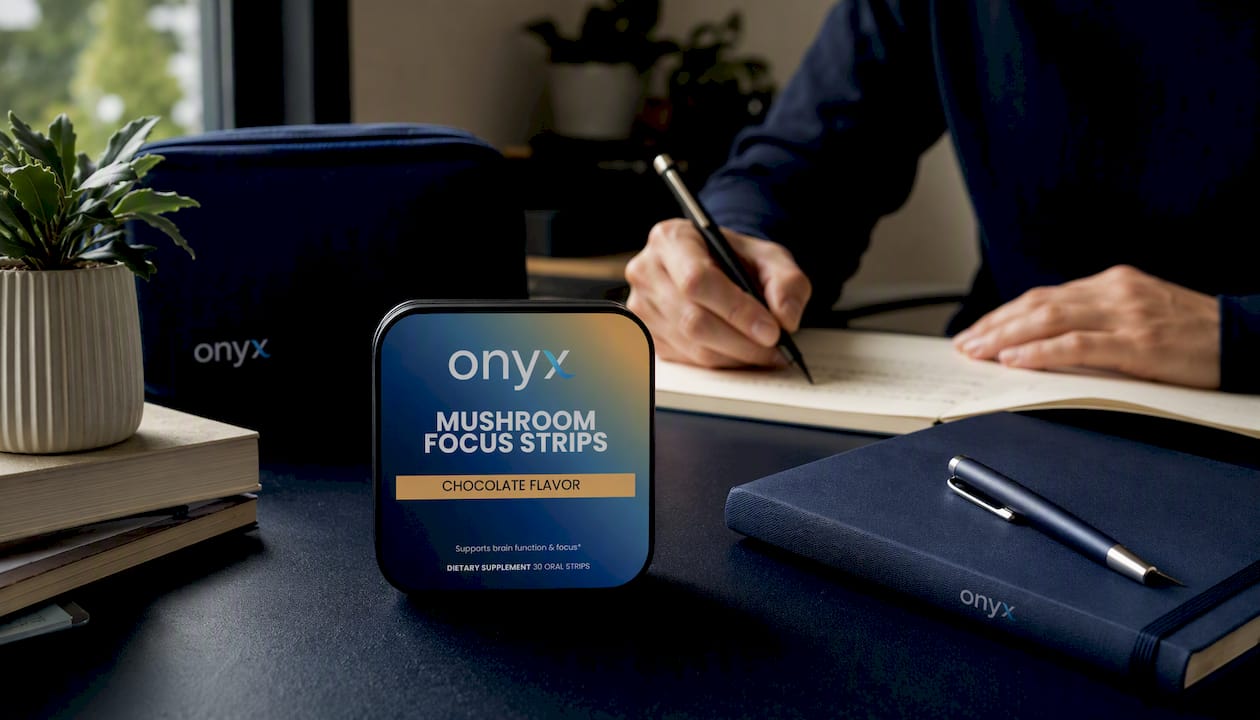
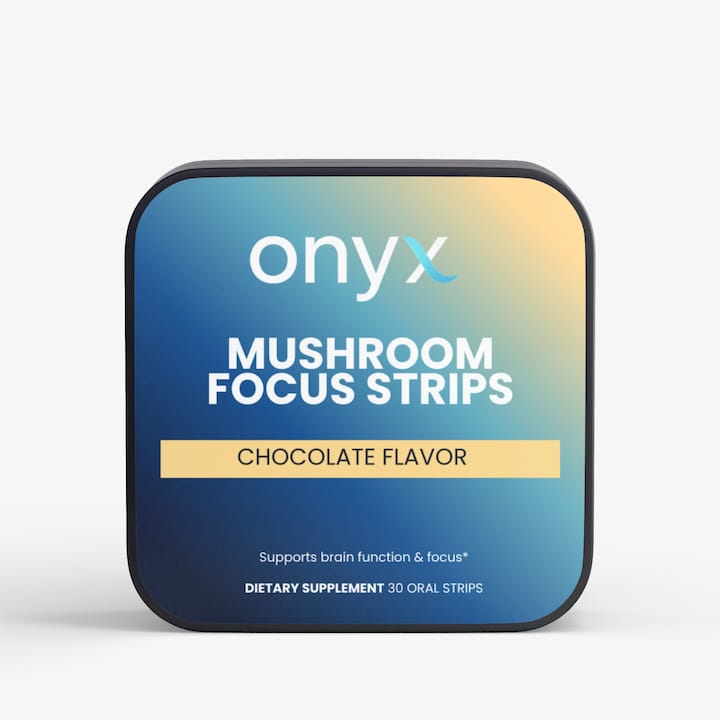
Onyxwellness formulates dissolvable oral strips that align with what the quality checklist demands: clear ingredient sourcing, transparent delivery format, and the kind of daily-use convenience that makes a consistent 4–12 week trial realistic rather than aspirational. The strip format dissolves without water, which removes the friction that turns a good intention into a forgotten capsule at the back of a cabinet.
For gut–brain axis support alongside cognitive supplementation, the Digestive + Gut Health Strips and Probiotic + Metabolism Strips offer complementary support in the same convenient format. Sleep quality is one of the strongest modulators of cognitive performance, and the Sleep Strips address that variable directly.
Browse the full Onyxwellness collection to find the combination that fits your goals. As always, consult your clinician before starting any new supplement, particularly if you’re on medication or have existing health conditions. Individual responses vary.
Sources
- Benefits, side effects, and uses of Hericium erinaceus as a supplement: a systematic review
- Lion’s Mane & Your Brain | Cognitive Vitality
- Lion’s Mane Mushroom | Memorial Sloan Kettering Cancer Center
- Dietary supplements: Safety / adverse events overview (NCBI Bookshelf entry)
This article is general information, not a substitute for advice from a qualified doctor. Consult a qualified healthcare professional about your own circumstances before acting on anything here.
FAQ
What does lion’s mane do to the body?
Lion’s mane contains bioactive compounds (hericenones and erinacines) that stimulate nerve growth factor and brain-derived neurotrophic factor synthesis, support gut microbiota diversity, and show anti-inflammatory activity in preclinical models. Human trials suggest modest cognitive and mood benefits, particularly in adults with mild cognitive impairment or mood disturbances.
What happens if you take lion’s mane every day?
Cognitive improvements seen in MCI trials tended to reverse after stopping supplementation, suggesting effects require ongoing use to be maintained.
Who should avoid lion’s mane?
People with known mushroom or mold allergies, pregnant or nursing individuals, those who are immunocompromised, and anyone taking anticoagulants or immunomodulating medications should consult a clinician before use. Rare but serious allergic reactions have been reported in susceptible individuals.
Is lion’s mane worth trying for focus?
For healthy adults seeking a significant focus boost, current evidence doesn’t firmly support that expectation. The clearest human trial data comes from populations with MCI or mood disturbances. A structured 4–12 week trial using a quality, transparently sourced product is a reasonable approach if you want to assess your own response, ideally with clinician input.
How does lion’s mane compare to ashwagandha for brain health?
They work through different mechanisms: lion’s mane targets NGF/BDNF pathways and neuroprotection, while ashwagandha primarily modulates the HPA axis and cortisol response. Neither has strong enough human evidence to be called a proven cognitive enhancer, but ashwagandha has a somewhat larger body of human stress and anxiety trial data. Combining them is common in functional wellness formulations, though head-to-head comparison trials don’t yet exist.