


Prioritize rehydration with sodium-containing fluids plus carbohydrates and protein immediately after exercise to accelerate glycogen resynthesis and muscle repair. The single most important rule: replace roughly 150% of the fluid you lost within 2–4 hours of finishing. A body-mass deficit of around 2% measurably impairs strength, power, and high-intensity capacity before your next session even begins.
Here is what that looks like in practice:
- Weigh yourself before and after every hard session (same clothing, same scale) to calculate your exact fluid loss.
- Replace ~24 oz of fluid per pound lost, per guidance from Mass General Brigham.
- Add sodium to your post-workout drink when your session exceeded 45 minutes or you were sweating heavily. Plain water alone can dilute blood sodium and raise hyponatremia risk after high-sweat efforts.
- Pair fluids with carbs and ~20–30 g of protein within the first hour to support both glycogen resynthesis and muscle protein synthesis.
- The CDC’s baseline fluid data confirms most adults already fall short of daily fluid targets, so athletes are starting from a deficit before training even begins.
Pro Tip: Step on the scale in the same shorts before and after a hard workout. Every pound of difference equals roughly 16 oz of sweat. Multiply by 1.5 to get your personal rehydration target for that session.
Key Takeaways
Hydration for muscle recovery works best when you replace fluid, sodium, carbohydrates, and protein together in the first 4 hours after exercise, starting with a target of 150% of fluid lost.
| Point | Details |
|---|---|
| Start euhydrated | Arrive at every session with pale yellow urine; a 2% deficit impairs strength and power before you begin. |
| Measure sweat loss | Weigh pre and post in consistent clothing; drink ~24 oz per pound lost, targeting 150% of total loss. |
| Sodium is non-negotiable | Use sodium-containing fluids for sessions over 45 minutes to retain fluid and prevent dilution of blood sodium. |
| Pair fluids with carbs and protein | Consume 1–1.2 g carbohydrate per kg per hour plus ~20–30 g protein in the first recovery window to restore glycogen and support repair. |
| Onyxwellness strips support recovery | Digestive + Gut Health Strips ease refueling absorption; Sleep Strips support overnight muscle repair as evidence-aligned adjuncts. |
Table of Contents
- What does the research actually say about hydration and muscle recovery?
- How much should you drink before, during, and after exercise?
- Which electrolytes and nutrients matter most for recovery?
- What are the best drinks for muscle recovery?
- A practical 24-hour rehydration plan for a hard training day
- When does hydration become a safety concern?
- How Onyxwellness products fit into an evidence-based rehydration strategy
- What most athletes get wrong about hydration timing
- Onyxwellness makes evidence-aligned recovery simpler
- Sources
- FAQ
What does the research actually say about hydration and muscle recovery?
The evidence is clearer than most gym conversations suggest. A systematic review and meta-analysis of 18 studies found that both dehydration and hyperthermia independently impair glycogen resynthesis after exercise, and that adequate fluid replacement improves the muscle glycogen-to-water ratio during early recovery. Short-term differences were measurable at the 4-hour mark, which is exactly the window when your nutrition choices matter most.
Why does water matter for glycogen? Glycogen is stored in muscle tissue alongside water, with an approximate several-fold ratio of water to glycogen. Research on muscle water homeostasis confirms that muscle water content and glycogen are tightly linked: restore one without the other and you slow both. This is the physiological reason pairing a carbohydrate source with your post-workout fluid is not optional, it is mechanistic.
Key finding: Adequate fluid ingestion can restore muscular hydration within approximately 4 hours when fluid and carbohydrate intake are both sufficient after exercise.
Blood volume also drops when you are dehydrated, which reduces the rate at which nutrients reach damaged muscle fibers and slows the clearance of metabolic waste products. The downstream effect is slower repair and more pronounced soreness. A review on muscle function and water homeostasis reinforces that a deficit of 2% of body mass produces measurable declines in endurance and meaningful drops in strength and power, not just a feeling of fatigue.
Johns Hopkins Medicine’s dietitian guidance frames recovery as a process of supporting heart-rate normalization, nutrient delivery, and muscle repair simultaneously. Fluids serve as the delivery system for nutrients involved in recovery.
How much should you drink before, during, and after exercise?
Precision here pays off. Vague advice like “drink when thirsty” consistently leads to under-replacement in hard-training athletes, according to survey data from collegiate programs.
Pre-exercise
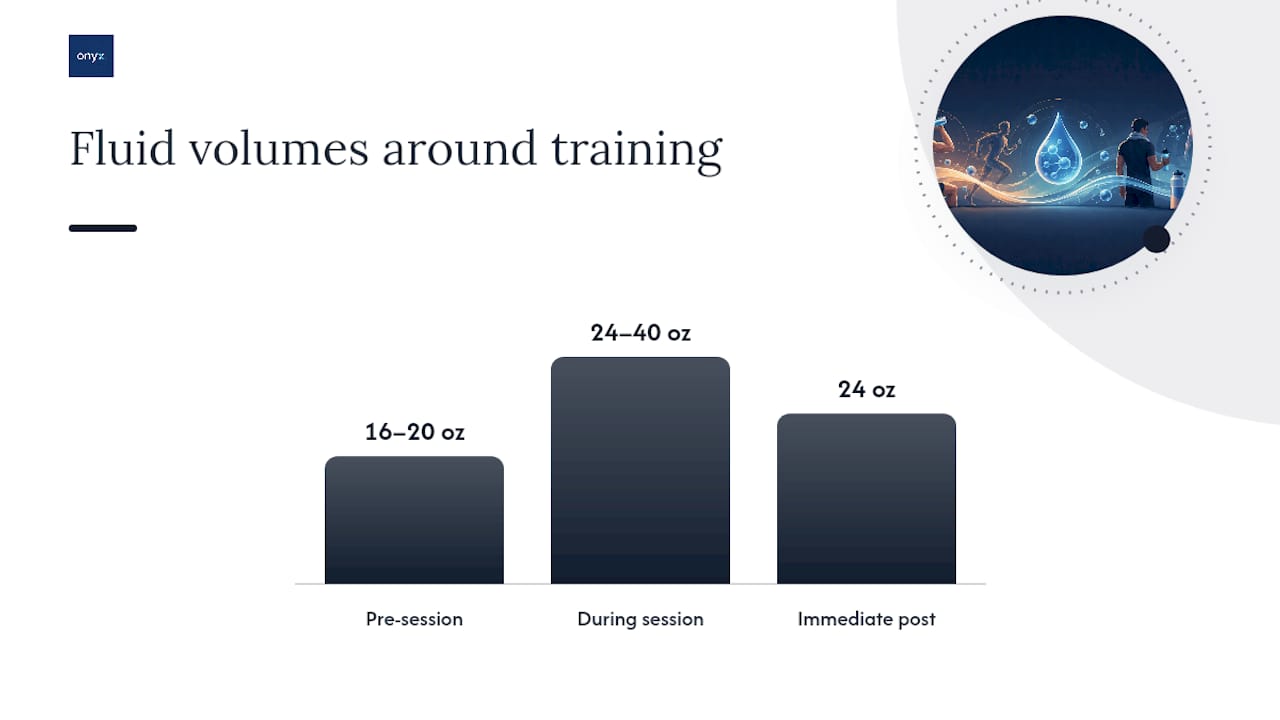
Drink 16–24 oz of water or a lightly salted fluid 2 hours before your session. Add another 8 oz in the 20–30 minutes just before you start. The goal is to arrive euhydrated, meaning your urine is pale yellow, not clear and not dark amber.
During exercise
Aim for 4–8 oz every 15–20 minutes, per both Johns Hopkins and Mass General Brigham guidance. Sessions longer than 45 minutes in heat warrant an electrolyte-containing drink rather than plain water.
Post-exercise rehydration formula
| Time window | Target | Notes |
|---|---|---|
| — | 16–24 oz with sodium | Prioritize sodium to retain fluid |
| 30–60 min | Carb + protein meal or shake | 1–1.2 g carb/kg body weight; ~20–30 g protein |
| 1–4 hours | Remaining fluid to reach 150% of loss | Spread intake; avoid large boluses |
| Overnight | Normal hydration; monitor urine color | Pale yellow = adequate |
Sweat-rate calculation example: You weigh 170 lb before a run and 168.5 lb after. You lost 1.5 lb of fluid. Multiply 1.5 × 24 oz = 36 oz minimum to replace.
- Carbohydrate timing: consume 1–1.2 g of carbohydrate per kilogram of body weight per hour in the first 4 hours post-exercise to maximize glycogen resynthesis.
- Do not rely on thirst alone. Thirst lags behind actual fluid deficit by 1–2% of body mass, which is already in the performance-impairment range.
Which electrolytes and nutrients matter most for recovery?
Not all electrolytes carry equal evidence. Here is what the research actually supports.
-
Sodium is the highest-priority electrolyte for rehydration. It drives fluid retention in the bloodstream, stimulates thirst, and helps you hold onto the water you drink rather than excreting it. For sessions longer than 45 minutes or any high-sweat effort, a sodium-containing drink outperforms plain water for net fluid retention.
-
Potassium plays a background role in muscle contraction and cellular fluid balance. Coconut water is often marketed as a complete rehydration solution, but its potassium-to-sodium ratio is poorly suited for rapid rehydration after heavy sweat losses. Add a pinch of salt to coconut water if you use it post-workout.
-
Magnesium gets significant attention for muscle cramps, but the evidence is more nuanced than supplement marketing suggests. A systematic review covering 13 trials found magnesium reduced cramp frequency in pregnancy-related cases but produced inconsistent results in other populations. Sodium-based interventions showed more context-specific benefit for exercise-related cramp susceptibility. If you are exploring magnesium for cramps, the potassium magnesium aspartate guide from Onyxwellness covers the evidence on forms and dosing.
-
Calcium and potassium lack strong supportive evidence for cramp prevention in the exercise context, per the same systematic review.
On carbs and protein: Pairing 1–1.2 g of carbohydrate per kilogram of body weight per hour with ~20–30 g of protein in the first recovery window supports both glycogen resynthesis and muscle protein synthesis. Fluids alone, without carbohydrate, leave glycogen resynthesis incomplete even when muscle water is restored.
The practical takeaway: sodium first, carbs second, protein alongside them. Magnesium is a reasonable adjunct for athletes with documented deficiency or pregnancy-related cramps, not a guaranteed cramp cure for everyone.
What are the best drinks for muscle recovery?
The right drink depends on your session length, sweat rate, and goals. Here is a ranked, use-case breakdown.
- Water with a measured pinch of salt works for sessions under 60 minutes in moderate conditions. Add 1/4 teaspoon of table salt per 16 oz to approximate a light electrolyte drink.
- Isotonic sports drinks (roughly 200–300 mg sodium per 12 oz) suit long or high-intensity sessions, multi-sport tournament days, and hot-weather training. They replace sodium at a rate closer to sweat composition than plain water.
- Chocolate milk is a legitimate dual-action recovery drink. It supplies carbohydrates, protein, and electrolytes in a single glass, and Johns Hopkins dietitian guidance recognizes it as an effective post-exercise option for glycogen and muscle repair.
- Oral rehydration solutions (ORS) are best reserved for severe dehydration, gastrointestinal illness, or ultra-endurance events where sodium losses are extreme.
- Coconut water is palatable and contains potassium, but needs added sodium to be an effective standalone rehydration fluid after heavy sweat losses.
DIY post-workout drink: Mix 16 oz of water with 1/4 teaspoon of salt and 2 tablespoons of honey or maple syrup. This delivers a simple carbohydrate source alongside sodium without any additives.
| Session type | Best drink choice | Key reason |
|---|---|---|
| Under 60 min, moderate heat | Water + light salt | Simple, adequate for short efforts |
| 60–90 min, moderate intensity | Isotonic sports drink | Replaces sodium lost in sweat |
| Long/hot/multi-session day | ORS or high-sodium sports drink | Higher sodium concentration needed |
| Post-workout recovery meal | Chocolate milk or carb + protein shake | Dual glycogen and repair support |
| On-the-go, no prep time | Dissolvable electrolyte strip or powder | Fast, precise, no mixing required |
A practical 24-hour rehydration plan for a hard training day
This plan assumes a morning session of 60–90 minutes at moderate-to-high intensity.
- 6:00 AM (90 min before): Drink 16–20 oz of water with a light sodium source. Eat a small carbohydrate-rich meal (oatmeal, banana, toast).
- 7:30 AM (during session): Sip 4–8 oz of an electrolyte drink every 15–20 minutes. For a 75-minute session, target 24–40 oz total.
- 9:00 AM (within 30 min of finishing): Weigh yourself. Drink 24 oz of a sodium-containing fluid immediately. Begin your carb + protein recovery meal within 30–45 minutes (aim for 60–80 g carbohydrate and 25 g protein).
- 9:00 AM–1:00 PM (2–4 hour window): Continue drinking to reach 150% of your estimated fluid loss. Spread this across the window rather than drinking it all at once.
- Afternoon: Monitor urine color. Pale yellow means you are on track. Dark amber means drink more. Clear and frequent urination may signal over-drinking.
- Evening meal: Include a sodium-containing food (broth, salted vegetables, lean protein) to support overnight fluid retention.
- Overnight: No need to force fluids. A glass of water before bed is sufficient for most athletes after a single session.
For multi-session competition days, prioritize quick carbohydrates (fruit, sports drink, rice cakes) between sessions over full meals, which slow gastric emptying. Return to full meals only when you have 3+ hours before the next effort.
Adjust volumes upward in high heat or humidity. If you sweat more than 1.5 lb per hour, you may need to increase your during-session intake and extend your post-session rehydration window.
When does hydration become a safety concern?
Hyponatremia, low blood sodium, is the most underappreciated risk in endurance and team-sport hydration. It happens when athletes drink large volumes of plain water after heavy, salt-depleting sweat losses, diluting blood sodium to dangerous levels. Warning signs include nausea, headache, confusion, swelling in the hands or feet, and in severe cases, seizures or loss of consciousness.
Certain medical conditions change the entire hydration equation. Heart failure, kidney disease, and liver conditions can make aggressive fluid intake dangerous. Diuretic medications increase urinary sodium loss and alter fluid balance in ways that standard athletic guidelines do not account for. If you have any of these conditions, work with a clinician before applying high-volume rehydration protocols.
On-field warning signs that warrant stopping activity and seeking care:
- Muscle cramps that do not resolve with fluid and sodium within 10–15 minutes
- Dizziness or lightheadedness that persists after sitting down
- Confusion or disorientation at any point
- Rapid heart rate that does not normalize within 10 minutes of rest
Neuromuscular fatigue is also a recognized contributor to exercise-associated muscle cramps, meaning electrolytes are not always the sole cause. Pairing your hydration strategy with smart pacing and conditioning reduces cramp risk more reliably than electrolytes alone.
This article provides general information, not medical advice. Consult a qualified healthcare professional for guidance specific to your health conditions and medications.
How Onyxwellness products fit into an evidence-based rehydration strategy
Dissolvable strips and powders solve a specific problem: getting precise electrolyte doses without mixing, carrying bottles, or guessing at concentrations. Here is how Onyxwellness products map to the recovery windows described above.
- Electrolyte strips or powders work well in the immediate post-workout window when you need a fast sodium hit before a full meal is ready. Dissolve a strip in water or add a measured scoop to your DIY recovery drink to hit your sodium target without overshooting. For a deeper look at combining electrolytes with creatine, the creatine with electrolytes guide covers the evidence on pairing both.
- Digestive + Gut Health Strips are a useful adjunct during the refueling window. Heavy training can temporarily disrupt gut motility, making it harder to absorb the carbohydrates and protein you need for glycogen resynthesis. Supporting digestive comfort in this window helps you actually absorb what you eat, not just consume it.
- Sleep Strips address overnight recovery, the phase most athletes undervalue. Sleep is when growth hormone peaks and muscle protein synthesis runs at its highest rate. A strip that supports sleep quality is a legitimate adjunct to your hydration and nutrition plan, not a replacement for fluids.
- Probiotic + Metabolism Strips fit into the broader recovery nutrition picture by supporting gut microbiome health and metabolic function, both of which influence how efficiently you process recovery nutrients over time.
One safety note: if you are using a dissolvable electrolyte product alongside a sports drink and a sodium-rich meal, track your total sodium intake. Stacking multiple concentrated electrolyte sources without accounting for dietary sodium can push daily intake above comfortable levels for some people.
What most athletes get wrong about hydration timing
The conventional wisdom says “drink when you’re thirsty.” That advice works reasonably well for sedentary adults. For anyone training hard, it is a reliable path to chronic under-replacement.
Thirst is a lagging indicator. By the time you feel it, you are already at 1–2% body-mass deficit, which is the threshold where performance starts to slip. The athletes who recover fastest are not the ones who drink the most; they are the ones who drink on schedule and pair fluids with the right nutrients at the right time.
There is also a tendency to treat hydration as a post-workout problem. The research makes clear it is a pre-workout one too. Arriving at a session already dehydrated means you are playing catch-up from the first minute, and no amount of mid-session drinking fully compensates for that starting deficit.
The other overlooked variable is temperature. Cold fluids (around 59°F/15°C) are absorbed slightly faster than warm ones and help manage core temperature during exercise, which matters for glycogen resynthesis. It is a small edge, but in multi-session competition days, small edges accumulate.
Onyxwellness makes evidence-aligned recovery simpler
Getting your post-workout sodium, gut support, and sleep recovery right does not require a sports-science degree or a bag full of powders. Onyxwellness’s dissolvable strip formats let you hit precise electrolyte targets on the go, support digestive comfort during the refueling window, and back overnight recovery without the guesswork of mixing multiple products.
Whether you are coming off a long run, a tournament day, or a heavy lifting session, the Digestive + Gut Health Strips and Sleep Strips slot naturally into the recovery windows this article covers. Match your product dosing to your sweat-rate measurement and your sodium needs from food, and you have a recovery routine that is both practical and grounded in the evidence.
Sources
- Sports and Hydration for Athletes: Q&A with a Dietitian | Johns Hopkins Medicine
- Hydration Tips for Athletes | Mass General Brigham
- The role of water homeostasis in muscle function and frailty
- The Role of Electrolytes in Muscle Pain Syndromes: A Systematic Review and Meta-Analysis With Implications for Temporomandibular Disorder
- Cdc
This article is general information, not a substitute for advice from a qualified doctor. Consult a qualified healthcare professional about your own circumstances before acting on anything here.
FAQ
How does hydration affect muscle recovery?
Dehydration impairs glycogen resynthesis and can reduce blood volume, which slows nutrient delivery to damaged muscle fibers. Restoring fluids alongside carbohydrates and protein in the first 4 hours after exercise supports parallel recovery of muscle energy stores and tissue repair.
What is the best drink to hydrate after a workout?
For sessions under 60 minutes, water with a small sodium source is sufficient. For longer or more intense sessions, an isotonic sports drink, chocolate milk, or a DIY salt-and-carbohydrate mix provides the sodium and carbohydrates needed for effective rehydration and glycogen resynthesis.
How much fluid should you replace after exercise?
Per Mass General Brigham guidance, that works out to roughly 24 oz of fluid per pound lost, spread over 2–4 hours.
Can electrolyte strips replace a sports drink for recovery?
Dissolvable electrolyte strips can deliver a precise sodium dose quickly and conveniently, making them a practical complement to water or a light carbohydrate source. They work best as part of a broader recovery plan that also includes carbohydrates and protein, not as a standalone replacement for a full recovery drink.
What are the warning signs of drinking too much plain water after exercise?
Nausea, headache, swelling in the hands or feet, and confusion after heavy fluid intake may indicate hyponatremia, a dangerous drop in blood sodium. Prioritize sodium-containing fluids after high-sweat sessions and seek emergency care if confusion or seizures occur.