


Most diets hand you a calorie target and wish you luck. They ignore the fact that your body is genuinely different from your neighbor’s, your coworker’s, and the fitness influencer whose plan you downloaded at midnight. A comparative clinical study found that Ayurveda supports long-term weight outcomes by addressing root causes rather than applying the same calorie restriction to everyone. This article walks you through how to identify your body type, adjust your diet and lifestyle accordingly, choose evidence-backed herbs, and recognize the common mistakes that stall progress.
Table of Contents
- Understand your body type: Ayurveda’s weight management foundations
- Ayurvedic dietary strategies for healthy weight
- Effective Ayurvedic herbs and therapies
- Lifestyle, exercise, and troubleshooting: How to sustain results
- Why quick fixes fail: What Ayurveda teaches about lasting weight management
- Natural support for your wellness journey
- Frequently asked questions
Key Takeaways
| Point | Details |
|---|---|
| Personalize your approach | Use Ayurveda’s dosha system to tailor your weight management strategy for lasting results. |
| Pair diet with herbs | Combining evidence-backed foods and herbs, like Triphala, boosts outcomes and helps sustain progress. |
| Sustainability beats quick fixes | Long-term success relies on root-cause solutions and mindful routines, not short-term hacks. |
| Convenient support options | Herbal products like appetite balance strips offer easy ways to complement your wellness journey. |
Understand your body type: Ayurveda’s weight management foundations
Now that we’ve previewed the power of Ayurveda, let’s start by identifying your unique body type. In Ayurveda, every person is governed by three energies called doshas: Kapha, Pitta, and Vata. Most people have one or two dominant doshas, and that combination shapes everything from how quickly you digest food to how you respond to stress. Understanding yours is genuinely the first step, not a formality.
Kapha is associated with earth and water. Kapha-dominant people tend to have a heavier build, slower metabolism, and a natural love of comfort food. They gain weight more easily than the other types and struggle to get motivated for exercise. Kapha management centers on light, warm, dry foods and tastes that are bitter, pungent, and astringent, while cutting back on heavy, sweet, and oily foods. Think steamed greens, legumes, and warming spices like ginger rather than rich dairy or fried snacks.
Pitta is governed by fire and water. Pitta types tend to have a medium, muscular frame, sharp digestion, and intense personalities. Their weight challenges often come from inflammation rather than sluggish metabolism. For Pitta, cooling foods like sweet fruits, dairy, and bitter greens are recommended, while spicy and sour foods can stoke inflammation and trigger emotional eating.
Vata is air and space. Vata types are naturally lean, but their metabolism is inconsistent. They can alternate between barely eating and overeating depending on stress levels. Vata’s irregular metabolism makes weight management unpredictable, so grounding, warm, nourishing foods and a consistent routine matter more than restriction.
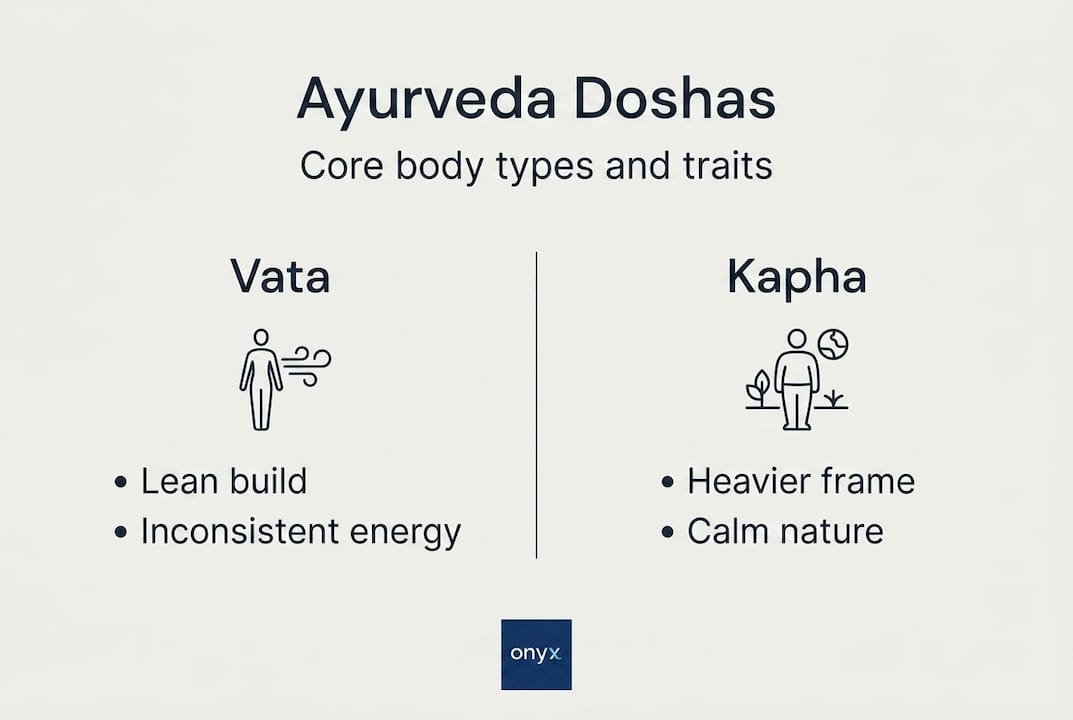
To get a feel for boost mental wellness with Ayurveda more broadly, it helps to understand that each dosha also affects your mood, energy, and cognitive patterns, not just your waistline.
| Dosha | Body tendency | Weight challenge | Key dietary focus |
|---|---|---|---|
| Kapha | Heavier, slower metabolism | Excess weight gain | Light, warm, dry foods |
| Pitta | Medium, muscular, sharp digestion | Inflammation-driven gain | Cooling, bitter, sweet foods |
| Vata | Lean, variable digestion | Irregular metabolism, anxiety eating | Warm, grounding, consistent meals |
To identify your dominant dosha, reflect on your natural body frame, digestion speed, stress response, and sleep quality. Online quizzes can be a helpful starting point, though working with an Ayurvedic practitioner gives you a more nuanced picture. What you are looking for is your prakriti, which means your natural constitution at birth, as opposed to the imbalances that have built up over time.
Pro Tip: Your dosha is not a rigid box. Many people are bi-doshic, meaning two doshas are roughly equal. If that is you, focus on the season and current imbalance rather than one fixed dosha profile.
Ayurvedic dietary strategies for healthy weight
Once you know your dosha, it’s time to tailor your diet for optimal results. Ayurvedic nutrition is not a deprivation plan. It is more like tuning an instrument: you find the foods, tastes, and rhythms that work with your body rather than demanding it perform on a different instrument’s scale.
Here are five foundational steps to structure your Ayurvedic eating approach:
- Match your tastes to your dosha. Kapha types benefit from bitter and pungent tastes to stimulate sluggish metabolism. Pitta types need sweet and bitter tastes to cool inflammation. Vata types thrive with salty, sour, and sweet tastes that ground nervous energy.
- Eat your largest meal at midday. Ayurveda considers noon the peak of your digestive fire, called Agni. A larger lunch and a lighter dinner supports better metabolic processing and reduces late-night calorie accumulation.
- Use spices strategically. Ginger, turmeric, cumin, and fenugreek are well-documented for their role in supporting metabolism and satiety. Practical satiety tips from evidence include fiber-rich foods paired with appetite-modulating spices, which Ayurveda has prescribed for centuries.
- Practice mindful eating. Sit down, eat without screens, chew thoroughly, and stop when you are 75 percent full. Ayurveda calls this mitahara, meaning moderate diet. Research consistently shows that slowing down eating reduces total caloric intake without willpower battles.
- Avoid conflicting food combinations. Milk with fruit, or fish with dairy, are classic Ayurvedic incompatibilities thought to interfere with digestion and promote toxin buildup, called Ama. Reducing Ama is central to weight management in this system.
“Food is not just fuel. It is information for your body. When you eat according to your constitution, you are giving your system exactly the data it needs to run cleanly.” — Ayurvedic wisdom, widely cited in traditional texts.
Here is a practical breakdown of dosha-based food and taste guidelines:
| Dosha | Favor these foods | Favor these tastes | Reduce these |
|---|---|---|---|
| Kapha | Legumes, leafy greens, millet, most spices | Bitter, pungent, astringent | Dairy, oils, sweets, heavy grains |
| Pitta | Cucumber, coconut, sweet fruits, dairy, bitter greens | Sweet, bitter, astringent | Spicy foods, alcohol, sour ferments |
| Vata | Root vegetables, warm soups, healthy oils, nuts | Sweet, salty, sour | Raw foods, cold beverages, dry snacks |
For readers looking to understand how greens and plant foods factor into energy, our daily greens energy guide is a useful companion. And if mental clarity is also on your agenda, our Ayurvedic mental clarity tips connect the dots between what you eat and how clearly you think.
A common mistake people make is treating Ayurvedic eating as an all-or-nothing system. You do not need to overhaul your kitchen overnight. Start with the single most important adjustment for your dosha and build from there.
Effective Ayurvedic herbs and therapies
With dietary modifications in place, let’s look at evidence-backed herbs and therapies to accelerate progress. Herbs are where Ayurveda gets genuinely exciting, because some of its most-used plants now have clinical data behind them.

Triphala is a blend of three fruits: Amalaki, Bibhitaki, and Haritaki. It is one of the most researched Ayurvedic formulas and functions as a digestive tonic, gentle laxative, and antioxidant. A meta-analysis of five clinical studies found that oral Triphala reduced body weight by an average of 2.4 kg. The same analysis noted that Ayurvedic formulations outperformed Metformin in certain metabolic syndrome markers, which is a meaningful finding. You can review the full Triphala clinical results for study specifics.
Other well-supported herbs include:
- Guggul (Commiphora mukul): Supports thyroid function and lipid metabolism. Often prescribed for Kapha imbalances with high cholesterol and sluggish digestion.
- Garcinia cambogia: Known for its hydroxycitric acid content, which may inhibit fat synthesis and reduce appetite. Widely studied, with modest but consistent results.
- Ashwagandha: Primarily an adaptogen for stress, but relevant here because cortisol-driven weight gain is a real and underappreciated factor. Lowering chronic stress lowers the hormonal pressure that pushes fat storage.
- Fenugreek: High in soluble fiber, which slows digestion and helps you feel full longer. A practical choice for Kapha and Pitta types.
- Cinnamon: Supports blood sugar stability, which directly affects hunger signals and energy crashes that lead to overeating.
For stubborn cases, particularly in Kapha-dominant individuals, Panchakarma therapy is the classical Ayurvedic detoxification protocol. It involves five cleansing procedures administered over several days under practitioner supervision. Clinical data shows Panchakarma reduces BMI, decreases fat mass, and meaningfully improves quality of life, particularly for Kapha types who have not responded to diet and lifestyle changes alone.
For context on how herbal approaches fit into a broader weight support plan, our guide on thermogenic supplements for weight loss covers the modern science side of the equation. If recovery and overall wellbeing are goals alongside weight management, our natural recovery steps article offers useful framing.
Pro Tip: Herbs work best when layered onto solid diet and lifestyle foundations. Taking Triphala while eating foods that aggravate your dosha is a bit like mopping the floor with the faucet still running. Start with your diet, then add herbal support.
Lifestyle, exercise, and troubleshooting: How to sustain results
Herbs and dietary changes work best when paired with structured daily routines and exercise. Ayurveda calls the ideal daily routine Dinacharya, and it is surprisingly practical when you strip away the ceremonial elements.
Here is a stepwise approach to building your Ayurvedic lifestyle:
- Wake up early and establish a morning rhythm. Ayurveda recommends waking before 6 a.m. to catch Vata time, which supports mental clarity and light metabolism activation. Even a brief morning routine, stretching, warm water with lemon, and a few minutes of breathing, signals your body to shift into an active state.
- Match exercise intensity to your dosha. Kapha types genuinely need vigorous exercise, such as running, cycling, or strength training, to counteract their tendency toward sluggishness. Pitta types do well with moderate, cooling activities like swimming or hiking. Vata types benefit most from grounding movement: yoga, walking, and gentle strength work.
- Prioritize sleep quality. Disrupted sleep raises cortisol and ghrelin, the hunger hormone, making every other weight management effort harder. Ayurveda recommends sleeping by 10 p.m. and waking before sunrise. This aligns closely with modern evidence on circadian rhythm and metabolism.
- Manage stress as a metabolic issue. Chronic stress is not just an emotional problem. It is a physiological one that raises fat-storing hormones. Pranayama breathing, meditation, and regular time outdoors are core Ayurvedic prescriptions for stress.
- Eat with the seasons. Ayurveda adjusts dietary recommendations seasonally. Lighter foods in summer, warming foods in winter. This kind of flexibility is what keeps the approach sustainable year after year.
When plateaus happen, and they will, the Ayurvedic lens is useful. Rather than slashing more calories, ask what has changed: sleep quality, stress load, seasonal shift, or digestive irregularity. Sustainability in weight management comes from addressing the metabolic root, specifically Agni, your digestive fire, before adding more interventions. Ayurveda addresses root-cause metabolism rather than applying quick fixes, which is why results tend to hold longer.
Common mistakes to avoid:
- Jumping straight to intense detox without first stabilizing digestion
- Skipping meals to compensate for overeating, which destabilizes Vata
- Using generic herbal products not suited to your specific dosha
- Neglecting stress management while focusing only on food and exercise
Our sustainable wellness workflow and Ayurvedic relaxation guidance both offer practical structures if you are building a routine from scratch.
Why quick fixes fail: What Ayurveda teaches about lasting weight management
Here is something the wellness industry does not say loudly enough: most weight management strategies fail not because people lack willpower, but because the strategy itself is misaligned with how the body actually works.
Crash diets and 30-day cleanses treat your body like a problem to be solved fast. Ayurveda treats it like a system to be understood slowly. That is a fundamentally different relationship. And based on what we know from comparative clinical data, the holistic, root-cause approach supports long-term outcomes in ways that calorie restriction alone cannot.
The concept of Agni, your metabolic fire, is central to why. Ayurveda says that before you can lose weight sustainably, you need to stabilize and strengthen digestion. If your digestive system is producing Ama, the metabolic waste that accumulates from poor digestion, then no amount of salads or supplements will produce lasting change. You are dealing with a systems problem, not a calorie deficit.
The uncomfortable truth is this: rapid weight loss almost always triggers the body’s survival instincts. Metabolism slows, hunger hormones spike, and the weight returns, often with extra. The sustainable wellness case study lens we apply at Onyx Wellness reinforces this: real change is gradual, personalized, and rooted in lifestyle, not in white-knuckling a restrictive plan for six weeks.
Ayurveda also asks you to work with your body’s natural tendencies rather than against them. A Kapha type forcing themselves through a raw vegan diet will feel worse, not better. A Pitta type going hard on cayenne-laced fat burners is adding fuel to an already-hot fire. Personalization is not a luxury here. It is the point.
Natural support for your wellness journey
If you are ready to move from understanding to action, Onyx Wellness has you covered with products designed to make this ancient wisdom practical for modern life.

Our appetite balance and weight support strips are formulated with Ayurveda-inspired herbal blends and dissolve directly on the tongue, no water needed. They are designed for fast absorption, making them easy to use before meals or on the go. For digestive health, which Ayurveda consistently puts first, our digestive and gut health strips support Agni and healthy digestion as a foundation for everything else. Visit Onyx Wellness to explore the full range and find the right support for your dosha and goals.
Frequently asked questions
How do I determine my Ayurvedic dosha for weight management?
You can start with a reputable online quiz or consult an Ayurvedic practitioner for a full assessment. Kapha types are most prone to weight gain, Pitta to inflammation-related gain, and Vata to irregular metabolism and inconsistent appetite.
Is there clinical evidence supporting Ayurvedic herbs for weight loss?
Yes. Meta-analyses confirm that Triphala reduces body weight by an average of 2.4 kg across five controlled studies, and Panchakarma therapy reduces BMI and fat mass, particularly in Kapha-dominant individuals.
Are Ayurvedic weight management solutions safe for long-term use?
Most Ayurvedic herbs are well-tolerated short-term and can produce modest weight loss of 2 to 7 kg over three months when combined with lifestyle changes. Long-term use should be supervised by a qualified practitioner to ensure safety and appropriateness.
Can Ayurvedic approaches be combined with conventional medicine?
Ayurveda complements allopathic medicine by focusing on root-cause metabolic balance rather than symptom management. Always consult your doctor before combining herbal therapies with prescription medications.