


Start at the Supplement Facts panel: check the serving size, the amount per serving, and any third-party verification mark. Those three checks tell you most of what you need to know before you buy. From there, scan %DV or absolute dose for safety, check “other ingredients” for fillers, and confirm allergens if you have restrictions. If you take medication or are pregnant, talk to a clinician before adding anything new.
TL;DR:
- Consumers should always verify serving size, dose, and units to accurately determine their daily intake and avoid over- or under-consumption.
- Percent Daily Values are less reliable for supplements, especially when exceeding 100%, so absolute amounts and upper limit checks are crucial.
- Proprietary blends hide individual ingredient amounts, making transparency and sourcing information valuable for dietary restrictions and ingredient trust.
- Third-party verification marks like USP or NSF indicate independent testing but are voluntary, so checking for batch-specific Certificates of Analysis strengthens credibility.
- Front-of-package claims such as “natural” or “organic” are often marketing; always confirm actual standards and avoid disease claims to ensure compliance and safety.
Table of Contents
- How Do You Read the Supplement Facts Panel?
- What Does %DV Mean on a Supplement Label?
- What Are Fillers, Binders, and Proprietary Blends?
- What Do USP and NSF Marks Actually Verify?
- Which Label Claims Are Regulated and Which Are Marketing?
- What Should You Check for Allergens and Drug Interactions?
- How Do You Compare Labels and Choose the Right Supplement?
- How Onyxwellness Approaches Label Transparency
- Why Clean Labels and Modern Delivery Formats Matter
- Transparent Options Across the Onyxwellness Catalog
- Where to Verify Label Claims Yourself
- Sources
- FAQ
How Do You Read the Supplement Facts Panel?
Every dietary supplement sold in the United States carries a Supplement Facts panel, and that panel is where your evaluation should begin. It lists three numbers you need before anything else matters: serving size, servings per container, and amount per serving. The FDA’s nutrition labeling guide requires manufacturers to disclose all three, but it doesn’t require them to standardize serving size across brands. That’s the part shoppers miss most often.
Serving size is not the same thing as dose, and dose is not the same thing as how often you take it. One brand’s “serving” might be one capsule; another’s might be three. A magnesium product might list its serving as two tablets delivering 200 mg, while a competitor lists one tablet at 100 mg. Both look similar on the shelf. Only one requires you to take double the pills to hit the same number.
Units matter too. You’ll see amounts in milligrams (mg), micrograms (mcg), and occasionally International Units (IU) for fats-soluble vitamins like D and E. A thousand micrograms equals one milligram, so a vitamin B12 label reading “1,000 mcg” is delivering the same raw amount as “1 mg” elsewhere. Confusing the two is an easy way to misjudge whether a product is strong or weak.
Here’s how the recalculation actually works when a label calls for multiple servings:
- Find the “amount per serving” for the nutrient you care about.
- Find how many units make up one serving (for example, two tablets).
- If you plan to take four tablets a day, divide 4 by the tablets-per-serving number to get how many servings that represents.
- Multiply the amount per serving by that number of servings to get your daily total.
So if a label says one serving equals two tablets and delivers 500 mg, and you take four tablets a day, you’re getting two servings, or 1,000 mg total. It sounds obvious once it’s spelled out, but plenty of shoppers assume the printed number is their daily total regardless of how many pills they swallow.
Pro Tip: Never compare two supplements’ “amount per serving” side by side unless their serving sizes match. A product listing 50 mg per capsule looks weaker than one listing 100 mg per capsule, until you realize the second one’s serving size is two capsules, and the per-capsule dose is actually identical.
What Does %DV Mean on a Supplement Label?
Percent Daily Value tells you how a nutrient amount compares to a general daily target, but it was built for food labels, not supplement labels, and that distinction matters more than most people realize.
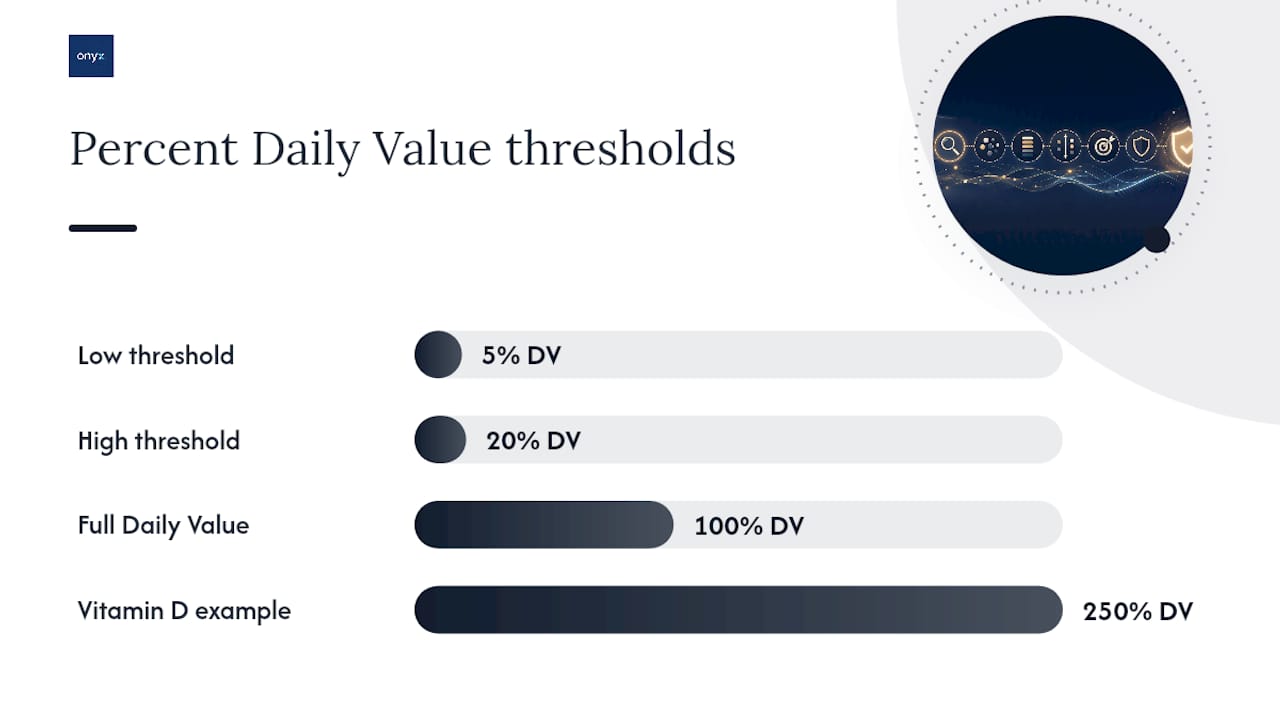
The FDA sets 5% DV as the threshold for “low” and 20% DV as the threshold for “high”, and the whole percentage system is calculated against a 2,000-calorie reference diet. That works fine for judging whether a snack is high in sodium. It works less well for a supplement, because %DV assumes you’re eating a standard diet and taking one product to fill a gap, not stacking multiple supplements or eating a diet that’s already nutrient-dense in one direction.
Under FDA guidance, 5% DV or less counts as low, and 20% DV or more counts as high, on a 2,000-calorie reference diet.
For a handful of nutrients, percentages alone won’t tell you what you need to know:
- Vitamin D often shows up at 250% DV or higher on some products, which sounds alarming until you know the tolerable upper limit and your baseline blood levels.
- Iron has a narrow safety margin, and high %DV without knowing your dietary intake elsewhere can mean overshooting.
- B12 and other water-soluble vitamins tolerate very high %DV numbers with little risk, since your body excretes the excess.
- Botanical extracts frequently carry no %DV at all, because no official daily value exists for them, which is exactly when the absolute milligram number becomes the only useful data point.
Treat any nutrient sitting above 100% DV as a cue to check the tolerable upper limit rather than a red flag by default. Some nutrients have wide safety margins. Others don’t, and that’s where absolute numbers beat percentages every time.
What Are Fillers, Binders, and Proprietary Blends?
Ingredients on a Supplement Facts panel are listed by predominance by weight, which means the first ingredient you see makes up the largest portion of the product, and the list works its way down from there. If a filler or binder shows up near the top of the “other ingredients” list, that’s a signal the product carries more nonactive bulk than active material.
Common fillers and binders include:
- Microcrystalline cellulose, a plant-derived bulking agent used to give tablets shape.
- Magnesium stearate, a lubricant that keeps powder from sticking to manufacturing equipment.
- Maltodextrin, a starch-derived filler sometimes used as a carrier for concentrated extracts.
- Silicon dioxide, an anti-caking agent that keeps powdered ingredients from clumping.
None of these are inherently dangerous in the amounts typically used, but some shoppers avoid them on principle, whether for dietary preference, sensitivity, or a simple desire for a shorter ingredient list. If that’s you, the “other ingredients” section is where you’ll find out fast whether a product matches your standard.
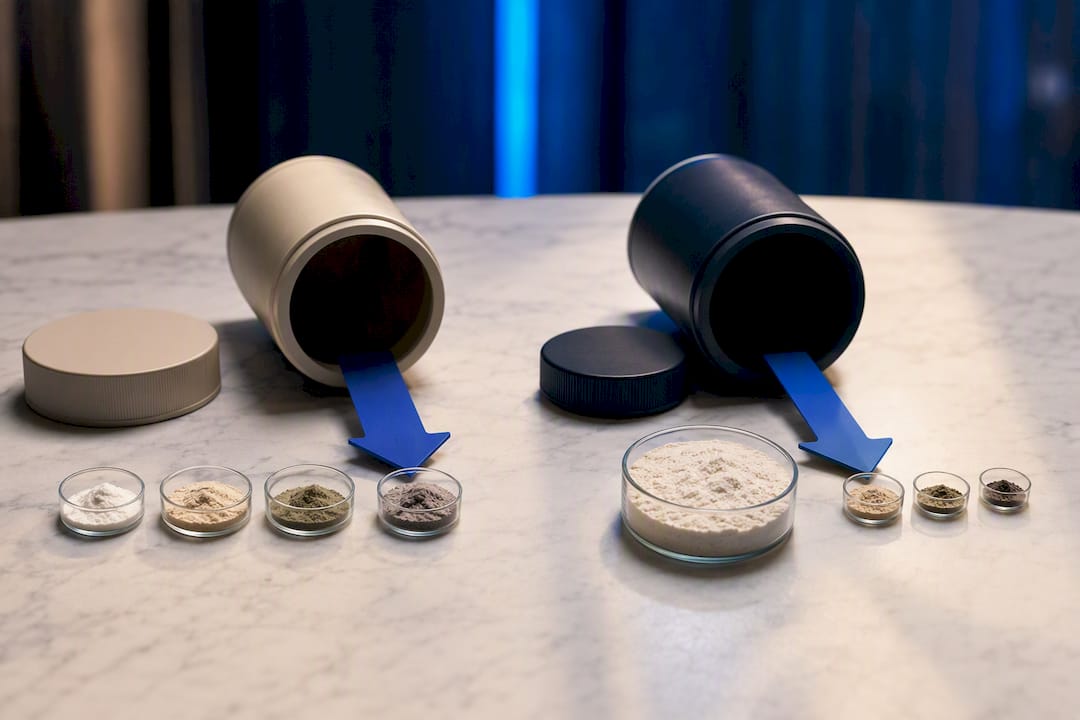
Proprietary blends deserve more scrutiny than fillers do. When a label lists a “proprietary blend” followed by a total milligram amount and a string of ingredient names with no individual breakdown, you have no way of knowing how much of any single ingredient you’re actually getting. A blend could be 95% one cheap ingredient and 5% of the one you actually wanted. That’s not a labeling violation. It’s a legal way to protect a formula, but it’s also a transparency gap you should weigh against a product that lists every amount individually.
If you follow dietary restrictions, religious guidelines, or a plant-based lifestyle, check ingredient origins too. Gelatin is typically animal-derived, and some “marine collagen” or omega-3 products source from fish, so those callouts matter if that’s a dealbreaker for you.
Pro Tip: A short “other ingredients” list isn’t automatically better, but it usually means fewer opportunities for an ingredient you’re trying to avoid to sneak in unnoticed. Reading it takes ten seconds and saves you a guessing game later.
What Do USP and NSF Marks Actually Verify?
The FDA doesn’t approve dietary supplements before they reach store shelves the way it approves prescription drugs. Manufacturers are responsible for ensuring their products are safe and accurately labeled, and the FDA’s role is largely reactive, meaning it can act after a product is found to be adulterated or mislabeled, according to NCCIH guidance on reading supplement labels. That gap is exactly why third-party testing exists, and it’s entirely voluntary.
Two marks show up most often on trustworthy labels:
- The USP Verified Mark, which confirms through independent laboratory testing that a product contains the ingredients listed, in the amounts stated, and is free from specified contaminants.
- NSF certification, a comparable third-party program that also verifies label accuracy and screens for banned substances, often used by products marketed to athletes.
A Certificate of Analysis, or COA, is the batch-level document behind these marks. It shows the actual test results for a specific production run rather than a general claim about the product line. Reputable brands post COAs on their site or make them available on request, and some go further with a QR code on the packaging that links straight to the relevant lab report. If a company won’t produce one when asked, treat that as informative on its own. Our guide to identifying third-party tested supplements walks through how to match a COA to the batch number on your actual bottle, which is the step most shoppers skip.
Current good manufacturing practices, or CGMP, are a separate baseline. The FDA requires supplement manufacturers to follow CGMP rules covering facility cleanliness, quality control, and record keeping. CGMP compliance is the floor, not the ceiling. A USP or NSF mark tells you a company went further and paid for independent verification on top of it.
Which Label Claims Are Regulated and Which Are Marketing?
Front-of-package language is where marketing and regulation blur together, and knowing the difference saves you from paying extra for a word that means less than it sounds like.
“Organic” is genuinely regulated. A product carrying the USDA organic seal has to meet National Organic Program standards for how ingredients were grown and processed. “Natural,” on the other hand, has no comparable legal definition for supplements, and the FDA has acknowledged as much in its own guidance on the term. A supplement can call itself “all-natural” while still containing synthetic processing aids, because nothing stops it from doing so.
There’s also a legal line between structure/function claims and disease claims. A label can say a nutrient “supports immune health” or “helps maintain healthy joints.” It cannot legally say a product “treats arthritis” or “cures a cold,” because that crosses into disease-claim territory reserved for drugs. If you see a supplement making a disease claim, that’s a real compliance red flag, not just aggressive marketing.
- Trust ingredient lists and %DV over words like “premium,” “clinical strength,” or “doctor formulated.”
- Treat “natural” as a marketing term, not a safety guarantee.
- Confirm organic claims against the actual USDA seal, not just the word on the front.
- Watch for disease claims as a warning sign, not a selling point.
What Should You Check for Allergens and Drug Interactions?
Allergen information doesn’t always sit inside the Supplement Facts box itself. It often appears just below it, near the “other ingredients” line or in a separate caution statement, and federal law requires the major U.S. allergens (milk, eggs, fish, shellfish, tree nuts, peanuts, wheat, soybeans, and sesame) to be disclosed somewhere on the label.
Interactions are the category where a label alone won’t protect you. Several broad categories deserve attention before you combine a supplement with anything else you take:
- Anticoagulants and blood thinners, which can interact with vitamin K, fish oil, and several herbal ingredients.
- Sedatives or sleep medications, which can compound with calming botanicals like valerian or melatonin.
- CYP450-metabolized drugs, a large category where herbs like St. John’s Wort are known to interfere with how the liver processes other medications.
Pregnancy, chronic disease, and taking multiple prescription medications (polypharmacy) are all situations where a quick label check isn’t enough, and a conversation with a pharmacist or clinician is worth the ten minutes it takes. The NCCIH’s guidance on medication and supplement interactions is a solid starting point for understanding which combinations carry real risk.
Pro Tip: Keep a running list of everything you take, supplements included, and bring it to your next pharmacy visit. Pharmacists check interaction databases as part of their job, and most are happy to run through your list for free.
How Do You Compare Labels and Choose the Right Supplement?
A label comparison doesn’t need to take longer than a couple of minutes once you know the sequence. Run through these steps on any product page or bottle:
- Check serving size and dose together. Don’t judge a product by its per-serving number until you know how many units make up that serving.
- Find the active amount per ingredient. A proprietary blend total tells you almost nothing about individual ingredient strength.
- Read %DV where it applies, and absolute amounts everywhere else. Botanicals and specialty blends rarely carry a %DV at all.
- Scan for proprietary blends and decide if that’s acceptable to you. Some shoppers don’t mind; others want full disclosure.
- Read “other ingredients” for fillers, allergens, and sourcing. This is where dietary restrictions get resolved or violated.
- Look for a verification mark or COA access. A QR code or a “view lab results” link on the product page is a good sign.
- Confirm allergen statements and check for interaction risk with anything else you take.
A good label answer looks like: “Vitamin D3, 2,000 IU (500% DV) per one softgel serving, third-party tested, COA available on request.” A questionable one looks like: “Proprietary energy blend, 800 mg,” with eight ingredient names and no individual breakdown.
Delivery format changes what to expect from the ingredient list too. Tablets often need more binders and fillers to hold their shape. Gummies need sugars or gelling agents. Dissolvable strips, by contrast, tend to use a shorter excipient list because they don’t need binding agents to hold a solid pill shape, which is worth knowing if you’re specifically trying to minimize nonactive ingredients. Our breakdown of what a wellness strip actually is covers how that format difference plays out on the label itself.
Pro Tip: Photograph the Supplement Facts panel and “other ingredients” list with your phone before you buy. It’s faster than squinting in a store aisle, and you can compare it against a competitor’s label later without buying both.
How Onyxwellness Approaches Label Transparency
This guide reflects a perspective on label clarity: serving sizes, active amounts, and “other ingredients” belong on the page, not buried behind marketing copy. Product listings are ideally built to let you run the same checklist above against them, whether you’re comparing a strip to a gummy or checking a mineral dose against your daily intake elsewhere.
Onyxwellness’s Ayurvedic-inspired formulas use dissolvable strip and gummy formats specifically to keep excipient lists short. Where batch testing information is available, it’s accessible from the product page, and readers can reach out to customer support directly for testing questions on a specific product. Apply the same seven-step checklist here that you’d apply anywhere else. That consistency is the point.
Why Clean Labels and Modern Delivery Formats Matter
Independent testing and a short, honest ingredient list matter more to me than any front-of-package claim ever could. A “natural” sticker tells you nothing; a COA tells you everything. Delivery format plays a bigger role in label cleanliness than most shoppers assume. A dissolvable strip skips the binders a tablet needs to hold its shape, which often means fewer excipients standing between you and the ingredient you actually wanted. Read the transparency practices behind any product you’re considering, not just the front of the box.
— Chris
Transparent Options Across the Onyxwellness Catalog
Every checklist in this guide works the same way on product pages as it does anywhere else. Listings include serving size, active ingredient amounts, and the full “other ingredients” list without a proprietary blend hiding the details.
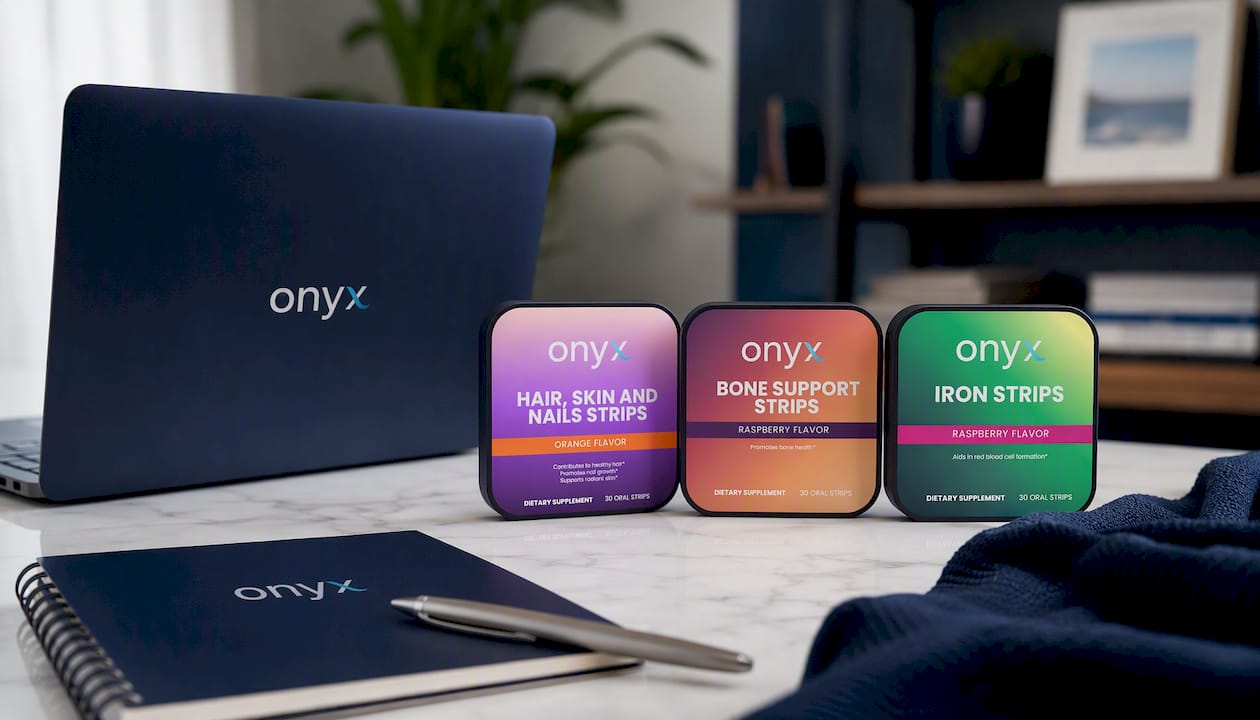
The catalog spans practical categories built around specific goals. Digestive + Gut Health Strips and Probiotic + Metabolism Strips lay out active-culture amounts clearly rather than burying them in a blend. Sleep Strips list each calming ingredient’s amount individually, so you’re not guessing how much melatonin or L-theanine you’re actually getting. If mineral dosing is your concern, Iron Strips show absolute milligram amounts front and center, which matters far more than a %DV figure for a nutrient with a narrow safety margin.
For other goals, Hangover Strips, Libido Support Strips, Hair, Skin and Nails Strips, and Beauty + Collagen Strips each carry the same fully disclosed ingredient panel. The Mushroom Extract Complex Gummies and Mushroom Focus Strips show extract ratios rather than vague “mushroom blend” language, and Reishi Relax Gummies apply that same standard to a calming formula.
Browse the full Onyxwellness collection, open any product page, and run the seven-step checklist from this guide against it. If you have questions about a specific batch or want testing documentation, reach out to customer support before you check out.
Where to Verify Label Claims Yourself
The FDA’s dietary supplement labeling guide is the primary rulebook for what a Supplement Facts panel must disclose, and its percent Daily Value explainer clarifies the 5%/20% thresholds referenced throughout this guide. The USP Verified Mark page explains exactly what independent testing that mark represents. For interaction safety and general label literacy, NCCIH’s consumer guidance is worth bookmarking, and readers tracking specific nutrient needs against food intake may also find this bone density nutrient guide useful for cross-checking dietary targets.
This article is general information, not a substitute for advice from a qualified doctor. Consult a qualified healthcare professional about your own circumstances before acting on anything here.
Sources
- Dietary Supplement Labeling Guide: Chapter IV. Nutrition Labeling
- USP Verified mark
- Tips on reading supplement labels — NCCIH
FAQ
How do you read a dietary supplement label?
Start with the Supplement Facts panel: note the serving size, servings per container, and amount per serving for each ingredient. Then check %DV or absolute amounts, scan “other ingredients” for fillers or allergens, and look for a third-party verification mark before you buy.
What does USP or NSF on a supplement label mean?
Both marks indicate a product passed independent laboratory testing confirming it contains the labeled ingredients in the stated amounts and is free from specified contaminants. Neither is required by law; both are voluntary programs manufacturers pay to join.
What are the 13 official vitamins?
The recognized vitamins include A, C, D, E, K, and the B vitamins such as thiamine, riboflavin, niacin, pantothenic acid, B6, biotin, folate, and B12. You’ll find most of these listed individually on a Supplement Facts panel with their own %DV or absolute amount.
Why doesn’t my supplement show a %DV?
Many botanical extracts and specialty ingredients have no established Daily Value, so the FDA doesn’t require a percentage for them. In those cases, focus on the absolute milligram amount and compare it against clinical research on effective dosing for that ingredient.
What’s the difference between a filler and an active ingredient?
An active ingredient is the nutrient or compound the product is meant to deliver, like vitamin D or a botanical extract. Fillers and binders, like microcrystalline cellulose or magnesium stearate, serve manufacturing purposes and appear under “other ingredients” rather than in the main Supplement Facts panel.