


For most of your day, plain water covers your hydration needs completely. Reach for an electrolyte drink when you’re sweating heavily for over an hour, working in extreme heat, or losing fluids fast through vomiting or diarrhea. The two minerals to watch are sodium and potassium, since drinking too much plain water during prolonged exertion can trigger a dangerous condition called hyponatremia. Below, you’ll find the exact thresholds, low-sugar options, and simple recipes to get this right.
TL;DR:
- Electrolyte drinks are generally necessary only after one hour of activity, in hot conditions, or during illness involving vomiting or diarrhea.
- Sodium and potassium are the key minerals for hydration, with sodium also helping water absorption and regulating blood pressure.
- Drinking excessive plain water during prolonged exertion can lead to hyponatremia, especially when sodium levels drop dangerously low.
- For most people, choosing low-sugar electrolyte options or DIY mixes with controlled sodium and carbs prevents unnecessary sugar intake.
- Older adults, children, and individuals with medical conditions should consult a healthcare professional before using electrolyte drinks regularly.
Table of Contents
- Electrolytes vs Water: The Decision Checklist
- What Electrolytes Actually Do in Your Body
- When Water Alone Becomes a Problem
- How to Replace Electrolytes Without the Sugar Crash
- Special Cases: Athletes, Keto, and Older Adults
- Where Onyxwellness Fits Into Your Hydration Plan
- Why Most Hydration Advice Oversells the Sports Drink
- Simple, Low-Sugar Options When You Need Them
- Sources
- FAQ
Electrolytes vs Water: The Decision Checklist
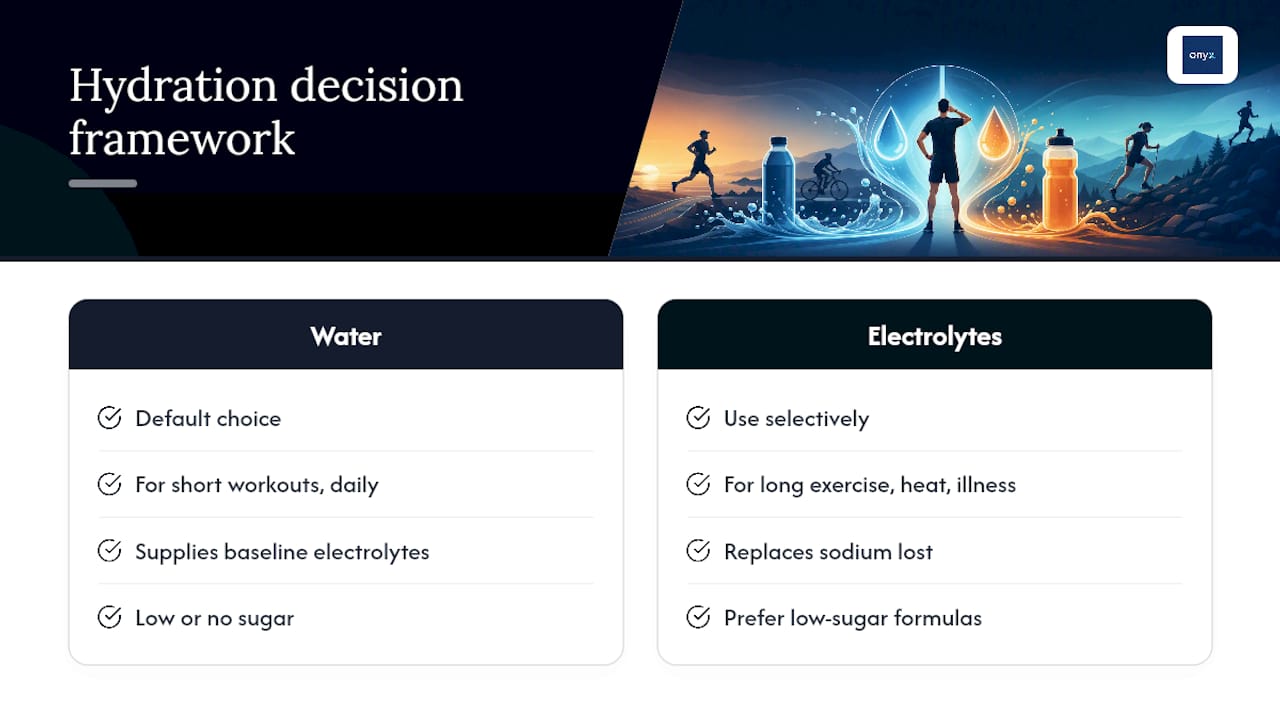
The choice mostly comes down to two questions: how long are you sweating, and what’s causing the fluid loss? Water is sufficient and optimal for daily hydration and most workouts under one hour in moderate temperatures, according to Harvard’s Nutrition Source. That covers the vast majority of gym sessions, walks, and errands.
The math changes once you cross the one-hour mark or the thermometer climbs. Electrolyte supplementation becomes worthwhile for high-intensity or extended activities lasting longer than one hour, sessions in hot or humid environments, or recovery from major fluid losses like vomiting or diarrhea, per Cedars-Sinai. Heat and humidity accelerate sweat loss even during shorter efforts, so a 45-minute run in July doesn’t behave like a 45-minute run in March.
Illness is its own category entirely. Vomiting and diarrhea drain both fluid and minerals simultaneously, which plain water can’t fully replace on its own.
Run through this before you grab a bottle:
- Under an hour, moderate temps, feeling fine? Water does the job.
- Over an hour of sustained effort, or heavy sweating in heat? Reach for an electrolyte drink.
- Vomiting, diarrhea, or a fever with sweating? Electrolytes, not just water.
- Salty sweat stains on your shirt or a headache after training? That’s a signal your sodium losses are running high.
What Electrolytes Actually Do in Your Body
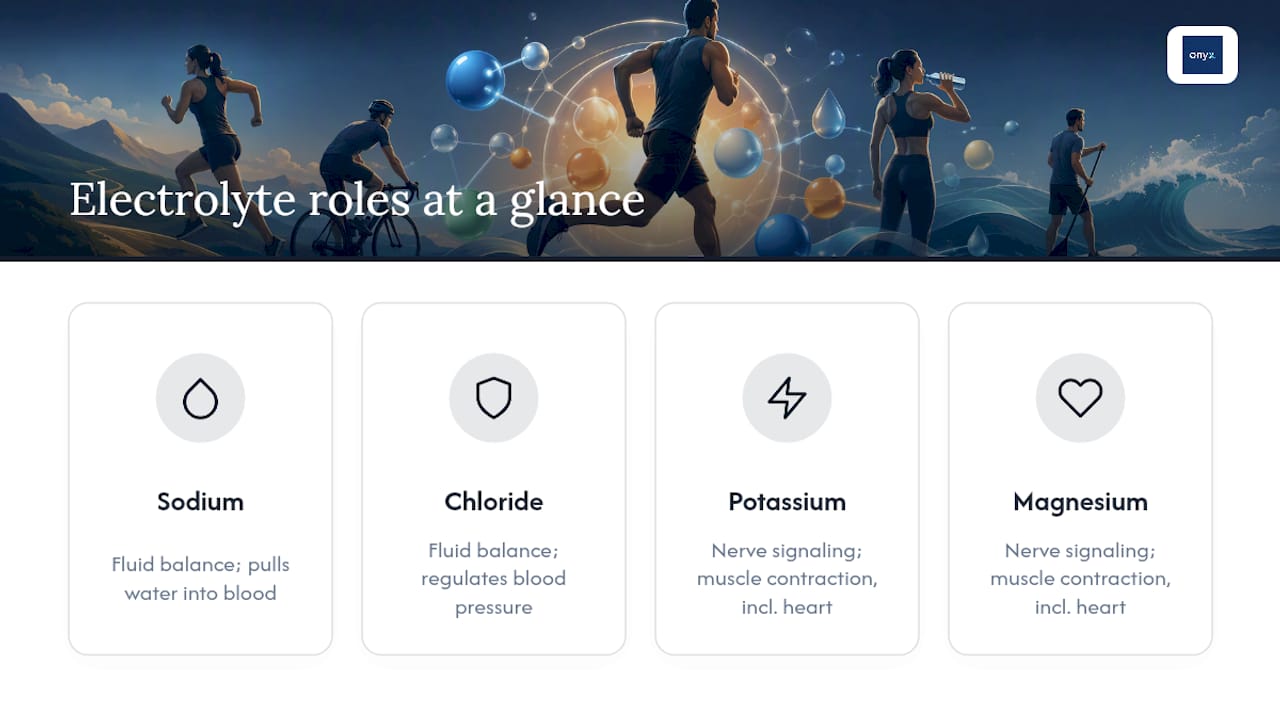
Sodium, potassium, magnesium, and chloride are the four minerals doing the heavy lifting here. Sodium and chloride manage your body’s fluid balance and blood pressure. Potassium and magnesium handle nerve signaling and muscle contraction, including the one muscle you really don’t want cramping: your heart.
Here’s the part most people miss: electrolytes don’t just replace what you lose, they help your body actually hold onto the water you drink. Sodium pulls water into your bloodstream through osmosis, which is why a plain water chug during a long race can pass through you faster than it should. That’s also why oral rehydration solutions used for illness pair sodium with a bit of sugar. It’s not about taste. It’s about absorption.
When these minerals run low, your body tells you fast. Muscle cramps, fatigue, and dizziness are the early warnings. Confusion, severe headache, or a seizure are red flags that mean stop and get medical attention, not push through with more water.
When Water Alone Becomes a Problem
Hyponatremia sounds obscure until you realize it’s what happens when someone drinks too much plain water during a marathon and their blood sodium drops to dangerous levels. It’s a documented risk in endurance sports, and clinicians specifically warn about this overhydration risk during long exertion, when sodium needs to be replaced alongside fluids. Symptoms include nausea, confusion, swelling in the hands and feet, and in severe cases, seizures.
The reverse risk matters too. If you have kidney disease, heart failure, or take medications like diuretics or ACE inhibitors, extra sodium or potassium can build up dangerously instead of getting flushed out normally. Fluid and electrolyte balance guidance from MedlinePlus makes clear this isn’t a one-size-fits-all situation, and anyone with a chronic condition should check with a doctor before loading up on electrolyte drinks regularly.
Get medical care immediately for confusion, a seizure, fainting, or vomiting that won’t stop.
How to Replace Electrolytes Without the Sugar Crash
Reading a label takes ten seconds once you know what to look for. Check sodium content in milligrams per serving, scan the carbohydrate percentage, and note total sugars. The Nutrition Source recommends a carbohydrate concentration near 4 to 8 percent when you’re fueling during exercise, but for simple illness recovery, you want lower carbs and higher sodium instead.
Here’s how to build your options from lightest to most involved:
- Low-sugar tablets or powders dissolve into plain water and let you control the concentration yourself.
- Coconut water offers natural potassium but usually falls short on sodium for serious sweat loss.
- A DIY mix works in a pinch: one quart of water, half a teaspoon of salt, two to three tablespoons of a sweetener like honey, and a squeeze of citrus for potassium and flavor.
- Diluted sports drinks, cut roughly half with water, cut the sugar load while keeping the sodium.
Pro Tip: If you’d rather skip the mixing altogether, pair a glass of plain water with a salty snack like pretzels or salted nuts. Scripps Health notes this combination works just as well as a sports drink when you’re avoiding added sugar.
Drink water steadily during activity, then focus on electrolyte replacement in the thirty minutes after you finish for the best recovery window.
Special Cases: Athletes, Keto, and Older Adults
Not everyone needs the same approach. Endurance athletes lose sodium at wildly different rates, sometimes a high amount of sodium per liter of sweat, which is why a personalized sweat-rate plan beats generic advice for serious training. Our athlete hydration guide breaks down how to build one.
People on ketogenic diets or GLP-1 medications often need electrolytes proactively rather than reactively, since both can shift how the body handles fluid and sodium. If you’re on a GLP-1 medication, GLPCare’s guide on electrolyte needs is worth a read before you build a routine. Older adults and children should stick to conservative, medically formulated solutions rather than sports drinks, and anyone with kidney disease or heart conditions needs a physician’s input before adjusting electrolyte intake.
Where Onyxwellness Fits Into Your Hydration Plan
We built our approach around a simple observation: most people don’t need more sugar, they need better absorption. Our hydration for muscle recovery guide and creatine with electrolytes breakdown both dig into the mechanics behind post-workout replenishment.
For everyday convenience, dissolvable strip formats make sense when you don’t want to carry a water bottle full of powder residue. Our creatine hydration powders are built for workout days specifically, formulated to support fluid retention alongside performance rather than as an afterthought. If sugar content is your main concern when comparing options, our guide to sugar-free supplements walks through what to check on any label, ours included. We list every ingredient on our product pages so you’re never guessing what you’re actually taking.
Why Most Hydration Advice Oversells the Sports Drink
The bigger truth in this whole conversation is that decades of marketing convinced people they need enhanced hydration for a 20-minute walk. Harvard’s Nutrition Source is blunt about this: a balanced diet already supplies most people’s baseline electrolyte needs, and sports drinks were designed for prolonged athletic exertion, not daily sipping.
Where conventional advice falls short is in treating every workout the same. A 30-minute strength session and a 90-minute trail run have completely different mineral demands, yet they get marketed the same neon bottle. The smarter approach separates the two: default to water, reach for electrolytes only when duration, heat, or illness actually calls for it, and when you do reach for them, prioritize sodium content and skip the added sugar. That’s a decision framework, not a purchase habit. Get that sequencing right and you’ll rarely second-guess which bottle to grab.
— Chris
Simple, Low-Sugar Options When You Need Them
If you’ve read this far, you already know the rule: water first, electrolytes when the situation calls for it. Onyxwellness carries a few formats worth knowing about. Our Hangover Strips dissolve without water, which makes them a practical option when you’re already dehydrated and don’t want to chug more liquid to take a supplement. For illness recovery specifically, our Digestive + Gut Health Strips support the gut side of fluid loss that plain rehydration solutions don’t address.
For workout days, pair any electrolyte strategy with recovery-focused formats. Browse the full Onyxwellness collection to see how our strips and powders compare on ingredients and sugar content. One caveat worth repeating: for moderate to severe dehydration from illness, a clinical oral rehydration solution or a doctor’s guidance should always come first. Our products are built for everyday, low-sugar support, not emergency medical rehydration. Check the Digestive + Gut Health Strips product page for full ingredient details before you buy.
This article is general information, not a substitute for advice from a qualified doctor. Consult a qualified healthcare professional about your own circumstances before acting on anything here.
Sources
- Do I need electrolyte drinks? • The Nutrition Source (Harvard T.H. Chan School of Public Health)
- Do I Need To Hydrate With Electrolytes? • Cedars-Sinai
- When to Pick Electrolyte Drinks Over Water • Scripps Health
- Fluid and electrolyte balance • MedlinePlus
FAQ
How do I know if I need electrolytes or just water?
If you’re active for under an hour in moderate temperatures and feeling normal, water is enough. Once you pass an hour of sweating, exercise in heat, or lose fluids from vomiting or diarrhea, add electrolytes.
Should I take electrolytes daily if I drink a lot of water?
Most people don’t need daily electrolyte supplementation since a normal diet already supplies sodium and potassium; reserve electrolyte drinks for heavy sweat loss, illness, or specific medical situations like GLP-1 medication use.
Does water with electrolytes count as water intake?
Yes, electrolyte water still contributes to your daily fluid intake since it’s mostly water with added minerals, though you should still check the sugar content on the label.
Is drinking water the same as drinking electrolytes?
No. Plain water rehydrates but doesn’t replace lost minerals, and drinking excessive plain water during long exertion can actually dilute your blood sodium and cause hyponatremia, while electrolyte drinks restore both fluid and minerals together.