


TL;DR:
- Not all reishi supplements provide the same benefits, and extraction method significantly impacts potency. Traditional preparation involves long simmering to unlock active compounds, while modern shortcuts may miss essential bioactives. Scientific evidence supports reishi’s role as an adaptogen and immune supporter, but benefits are modest and product quality varies widely.
Not all reishi supplements are created equal, and that gap matters more than most wellness guides admit. Dried reishi mushroom has been used in traditional East Asian medicine for over 2,000 years, yet the modern supplement market treats every format, from raw slices to gummies to powdered capsules, as if they deliver identical results. They don’t. Whether you’re drawn to reishi for relaxation support, immune health, or stress resilience, understanding what the science actually says, and what it doesn’t, is the difference between a smart wellness choice and an expensive habit that goes nowhere.
Table of Contents
- What is dried reishi mushroom? Forms and tradition
- Bioactive compounds in reishi: What’s inside, and why it matters
- What does the research say? Evidence, benefits, and limits
- Is dried reishi right for you? Safety, risks, and smart choices
- Our take: Real-world reishi wisdom for modern wellness
- Explore natural wellness the smart way
- Frequently asked questions
Key Takeaways
| Point | Details |
|---|---|
| Preparation matters | Longer simmering of dried reishi releases the most beneficial compounds. |
| Evidence is mixed | Clinical benefits are not guaranteed and claims vary by condition and preparation. |
| Safety first | Some people should avoid reishi entirely due to risks like low blood pressure or interactions. |
| Quality counts | Choose trusted, transparent supplement sources to reduce safety and efficacy concerns. |
What is dried reishi mushroom? Forms and tradition
Having established what’s at stake, let’s set the stage with the basics. Reishi mushroom, known scientifically as Ganoderma lucidum, is a hard, woody fungus with a distinctive reddish-brown, glossy cap. It grows naturally on hardwood trees and has a long history in Chinese, Japanese, and Korean herbal traditions, where it earned the nickname “mushroom of immortality.”
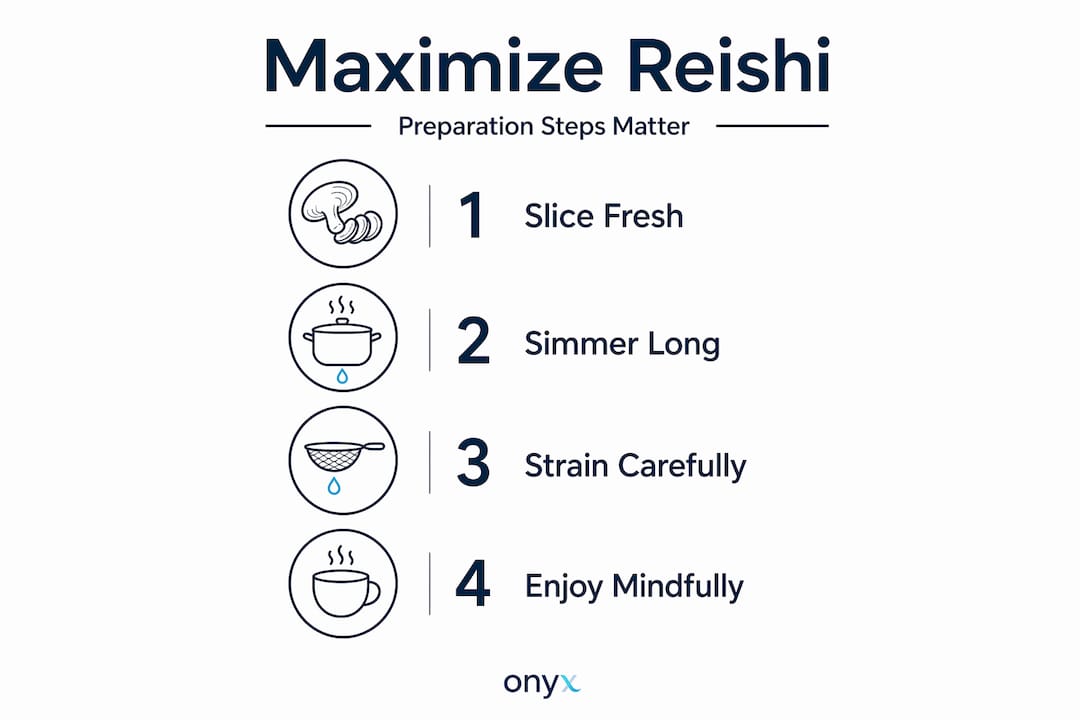
In its dried form, reishi is most commonly prepared as a tea or a slow-simmered decoction. According to the MSD Manuals, dried reishi is typically consumed as slices or chunks brewed into a tea or decoction, or rehydrated and simmered, with traditional preparation aimed at extracting water-soluble constituents. This matters because reishi’s active compounds are locked inside a tough, fibrous structure. Quick steeping barely scratches the surface. Longer simmering, often 30 to 60 minutes, draws out far more of what you’re actually after.
Common dried reishi formats include:
- Whole slices or chunks for brewing teas and decoctions at home
- Coarse ground powder that can be added to hot water, broths, or smoothies
- Fine-milled powder used in capsules or blended into supplement formulas
- Dual-extract powders that combine water and alcohol extraction for broader compound coverage
Modern formats like capsules, tinctures, and gummy mushrooms have made reishi far more accessible. But convenience doesn’t automatically equal potency. The extraction method and the part of the mushroom used (fruiting body versus mycelium) can significantly influence what bioactive compounds actually make it into your body.
“Traditional preparation methods were developed over centuries precisely because the mushroom’s tough cell walls require time and heat to break down. Modern shortcuts don’t always replicate that process faithfully.”
Bioactive compounds in reishi: What’s inside, and why it matters
Now that you understand the different forms, let’s explore what makes reishi mushroom so intriguing for wellness. Reishi isn’t a single-compound herb. It’s a complex botanical with a remarkably diverse chemical profile.
Reishi contains multiple bioactive compound classes, including polysaccharides and triterpenoids, along with proteins, sterols, and nucleosides. Researchers have identified roughly 400 distinct bioactive compounds in Ganoderma lucidum to date, which is part of why it’s so studied and so debated.
Here’s a quick breakdown of the key players:
| Compound class | Primary role | Extraction method |
|---|---|---|
| Beta-glucan polysaccharides | Immune modulation, gut health support | Water-based (hot water) |
| Triterpenoids (ganoderic acids) | Anti-inflammatory, adaptogenic effects | Alcohol-based extraction |
| Proteins and lectins | Cellular signaling support | Water-based |
| Sterols | Structural membrane support | Alcohol or dual extraction |
The distinction between water-soluble and alcohol-soluble compounds is genuinely important. If you’re buying a reishi supplement that only uses water extraction, you may be missing out on a significant portion of the triterpenoids. Dual-extract products, which use both hot water and alcohol, tend to offer the broadest compound coverage.
Pro Tip: When reading a reishi supplement label, look for “dual extract” or separate listings of polysaccharide and triterpenoid percentages. A product that only lists “polysaccharides” may be skipping the triterpenoid fraction entirely.
It’s also worth noting that mushroom gummies and safety go hand in hand when choosing a format. Not every gummy uses a true extract. Some use raw mushroom powder, which delivers far fewer active compounds per serving. Reading labels carefully is not optional; it’s essential.
What does the research say? Evidence, benefits, and limits
Knowing what’s inside the mushroom, the big question is: does science support its use? Here’s what the evidence shows.
The honest answer is: it’s complicated. Reishi has a substantial body of preclinical research (meaning lab and animal studies) showing promising effects on immune markers, inflammation, and cellular health. Human clinical trials, however, paint a more nuanced picture.
According to Memorial Sloan Kettering Cancer Center, clinical evidence for reishi benefits is mixed, with some studies showing marker-level or condition-specific improvements, but overall results varying widely depending on preparation, dose, and population studied. That’s not a dismissal of reishi. It’s a realistic framing of where the science currently stands.
Here’s a side-by-side look at where evidence is stronger versus where it’s still developing:
| Health area | Evidence level | Notes |
|---|---|---|
| Immune modulation | Moderate (preclinical + some human data) | Beta-glucans show consistent immune marker effects |
| Adaptogenic/stress support | Low to moderate | Traditional use is strong; human RCTs are limited |
| Cardiovascular markers | Mixed | Some positive effects on cholesterol in small trials |
| Relaxation and sleep | Emerging | Promising but needs larger, better-controlled studies |
| Cancer adjunct support | Preliminary | Not a treatment; may support quality of life |
Where reishi shows the most consistent promise is as an adaptogen, a substance that may help the body maintain balance under physical or psychological stress. As noted by the Merck Manual, reishi is sometimes described as an adaptogen that may help the body cope with stress, but high-quality human evidence for broad claims remains limited.
What does that mean practically? It means reishi may be a genuinely useful addition to a holistic wellness routine, particularly for relaxation and immune support, but it’s not a magic fix. The people who benefit most tend to use it consistently, choose quality products, and pair it with other healthy habits.
Some of the most promising applications for wellness-focused individuals include:
- Supporting a calm, balanced state of mind during high-stress periods
- Complementing sleep hygiene practices for better wind-down routines
- Providing immune support during seasonal changes or periods of higher physical demand
- Pairing with other botanicals like L-theanine or lemon balm for synergistic relaxation effects
If you’re curious about how reishi fits into a relaxation-focused routine, our guide on reishi gummies for relaxation goes deeper into the practical side of using reishi for calm and mental clarity.
“The gap between what traditional medicine has observed over centuries and what modern clinical trials have confirmed so far doesn’t mean reishi doesn’t work. It means the research is still catching up to a very old tradition.”
Is dried reishi right for you? Safety, risks, and smart choices
Before you brew your first cup or try a supplement, it’s crucial to weigh the safety and smart use factors. Reishi is generally considered safe for most healthy adults when used appropriately, but “generally safe” doesn’t mean “safe for everyone.”
The MSD Manuals advise that reishi is generally not recommended for people who are pregnant or breastfeeding, have low blood pressure, have certain bleeding disorders, or are preparing for surgery. These aren’t minor caveats. Reishi can have mild blood-thinning effects and may lower blood pressure, which creates real interaction risks in certain situations.
Who should be cautious or avoid reishi:
- Pregnant or breastfeeding individuals
- People taking blood-thinning medications like warfarin
- Those with low blood pressure or on blood pressure medications
- Anyone scheduled for surgery within two weeks
- People with autoimmune conditions (reishi may stimulate immune activity)
- Individuals with known mushroom allergies
Practical steps for choosing a safe, reputable reishi product:
- Look for third-party testing. A certificate of analysis (COA) from an independent lab confirms potency and screens for contaminants like heavy metals and pesticides.
- Check the source. Fruiting body extracts are generally preferred over mycelium-only products for higher active compound content.
- Verify the extraction method. Dual-extract products (water plus alcohol) cover more of the bioactive spectrum.
- Start low and go slow. Begin with a lower dose and observe how your body responds before increasing.
- Talk to your healthcare provider. Especially if you take any prescription medications or have a chronic health condition.
Pro Tip: If you’re new to functional mushrooms, starting with a well-formulated gummy or strip can make it easier to control your dose and build the habit consistently. Our resource on choosing safe mushroom gummies walks you through exactly what to look for on a label.
If dried reishi isn’t appropriate for you, or if you simply find the taste too bitter (it is genuinely very bitter), there are good alternatives. L-theanine, ashwagandha, lemon balm, and passionflower are all botanicals with solid traditional use and growing clinical support for relaxation and stress resilience. Many modern wellness formulas blend these with reishi extract to create a more rounded, synergistic effect.
Our take: Real-world reishi wisdom for modern wellness
All these details can make dried reishi seem both promising and confusing. So what actually matters most for your wellness journey?
Here’s our honest perspective: the wellness industry has a habit of taking a genuinely interesting botanical and overselling it until the marketing sounds nothing like the science. Reishi is a real, historically significant herb with legitimate uses. But it’s not a cure-all, and most of the benefits you’ll realistically experience are modest and cumulative, not dramatic and overnight.
The Merck Manual makes a point worth sitting with: while traditional and alternative medicine uses reishi widely, major medical references conclude there is currently no compelling reason for most people to use it based on high-quality confirmation of many claimed benefits. That’s a sobering statement. But it doesn’t mean reishi is useless. It means you should approach it with realistic expectations and a critical eye toward product quality.
What we’ve seen consistently is that people who benefit most from reishi are those who treat it as one piece of a larger wellness picture. They’re also sleeping well, managing stress through multiple channels, eating a varied diet, and moving their bodies regularly. Reishi, in that context, can serve as a meaningful support tool, particularly for relaxation and immune resilience. Used in isolation as a shortcut, it rarely delivers the results people hope for.
The other thing most guides won’t tell you: the format really does matter. Brewing whole dried slices at home for an hour is a very different experience, and likely a different biochemical experience, than taking a poorly formulated capsule with a negligible dose of raw mushroom powder. If you’re going to invest in reishi, invest in quality. Read about supplement transparency insights to understand what quality actually looks like on a label.
Our recommendation is simple: go in with open eyes, choose products you can verify, and give it a consistent trial period of at least four to six weeks before drawing conclusions. Wellness is a long game, and reishi, at its best, is a steady and reliable player in that game.
Explore natural wellness the smart way
If you’ve made it this far, you’re clearly someone who takes their wellness seriously. That’s exactly the kind of thoughtful approach that leads to real, lasting results.
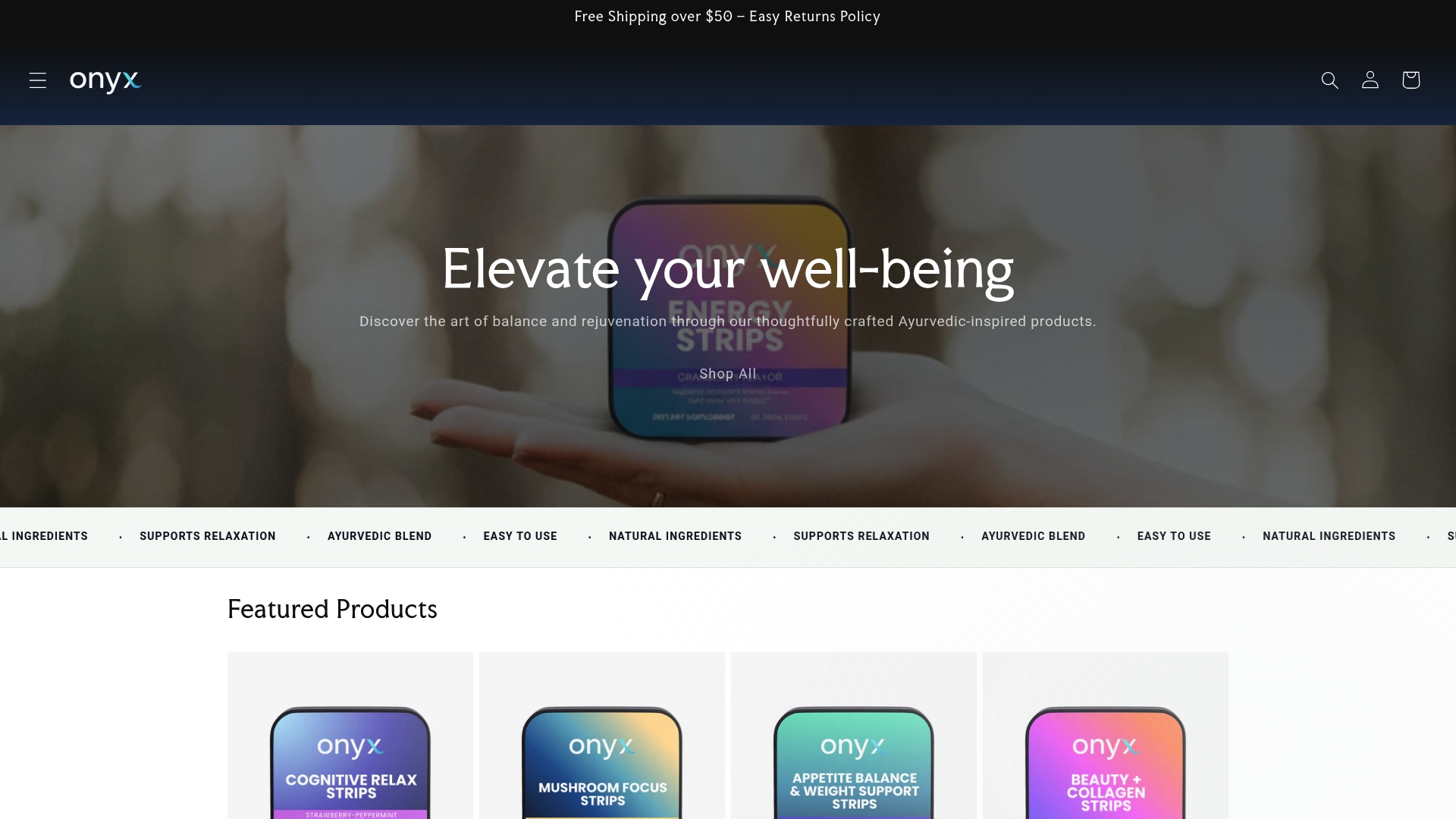
At Onyx Wellness, we believe that quality, transparency, and smart formulation are non-negotiable. Our Reishi Relax Gummies bring together reishi mushroom extract, L-theanine, lemon balm, passionflower, and valerian root in a convenient blackberry-flavored gummy that fits seamlessly into your daily routine. Whether you’re winding down after a demanding day or simply carving out a moment of calm, this formula is designed to support you without the guesswork. Browse our full wellness supplements lineup to find the right fit for where you are in your wellness journey. Every product we offer is built around the same principle: honest ingredients, honest results.
Frequently asked questions
Can you eat dried reishi mushrooms whole?
While whole dried reishi can technically be eaten, it’s usually too tough and bitter for most people; most people brew it as a tea or use extracts for better absorption, as dried reishi is typically consumed as slices brewed into a decoction rather than eaten directly.
What are the main health benefits of dried reishi mushroom?
Dried reishi is widely used for relaxation, immune support, and as an adaptogen, but evidence for these effects in humans is mixed and varies considerably depending on preparation method and product quality.
Who should avoid using dried reishi mushroom?
People who are pregnant, breastfeeding, have low blood pressure, bleeding disorders, or upcoming surgery should avoid dried reishi, as reishi is generally advised against for these groups due to meaningful safety concerns.
How does preparation method affect reishi’s effectiveness?
Simmering dried reishi longer extracts more beneficial compounds than quick steeping or eating the mushroom whole, because extraction yield depends on breaking down the mushroom’s tough cell structure using appropriate methods and sufficient time.
Does dried reishi have proven stress-relief or relaxation effects?
Reishi is considered an adaptogen that may support stress resilience and a calmer state of mind, but high-quality human evidence for broad relaxation claims remains limited and more robust clinical trials are still needed.