


The safest way to take creatine without bloating is to skip the loading phase entirely, start with 3–5 g/day of a micronized or fully soluble creatine, dissolve it completely in warm water, and take it with food while staying hydrated. Most people who follow this approach see any early fullness fade within 2–4 weeks as muscles finish saturating. Onyx Wellness builds its educational resources and product formulas around exactly this adaptation curve.
TL;DR:
- Skipping the loading phase and starting with 3–5 grams daily avoids gut flooding and reduces severity of bloating, often resolving within four weeks.
- Fully dissolving creatine in warm water and taking it with meals significantly decreases gastrointestinal discomfort and cramping.
- Micronized and highly soluble creatine formulas dissolve better, but water retention-related bloat remains due to creatine’s effect on muscle cells, not the form.
- Maintaining adequate hydration and moderating sodium intake during the first weeks helps minimize water retention and discomfort.
- Bloating usually reflects water movement into muscles, not fat gain, with weight increases of 1 to 3 pounds typical in initial weeks.
Table of Contents
- How Do You Take Creatine Without Bloating?
- Which Creatine Form Causes the Least Bloating?
- What Dosing and Timing Actually Reduce Bloat?
- Do Hydration and Diet Affect Creatine Bloating?
- Is It Normal to Feel Bloated on Creatine, and for How Long?
- When Should You Stop Creatine and See a Doctor?
- How Onyx Wellness Approaches Low-Bloat Creatine
- The Adaptation Method Most Creatine Advice Skips
- Low-Bloat Creatine Options From Onyx Wellness
- Sources
- FAQ
How Do You Take Creatine Without Bloating?
The bloating most people blame on creatine actually comes from two very different sources, and the fix depends on which one you’re dealing with. Follow these steps in order, and you’ll address both.
- Skip the loading phase. A 20 g/day loading protocol forces your muscles to saturate fast, but it also floods your gut and cells with far more creatine than they can comfortably absorb. A 28 day randomized trial found a trend toward more frequent and more severe GI symptoms in the loading group compared with a group taking a steady 5 g/day. Starting at 3–5 g/day gets you to full muscle saturation in about the same four weeks, just without the digestive punishment.
- Dissolve it completely before you drink it. Creatine monohydrate doesn’t dissolve well in cold water. Stir it into warm water for 30 to 60 seconds until the granules disappear, then drink it with a meal. Undissolved powder sitting in your gut is one of the most common, and most fixable, causes of cramping and gas.
- Split your dose if five grams at once bothers you. Try 2.5 g in the morning with breakfast and 2.5 g later with dinner. You get the same daily total with half the digestive load at any one time.
- Choose a micronized or highly soluble formula. Micronization breaks creatine particles down into a finer powder, which mixes more completely and leaves less undissolved residue in your stomach.
- Drink enough water and don’t overload on sodium. Creatine pulls water into your muscle cells, and that process works better when you’re well hydrated, not dehydrated. Keep sodium and refined carbs moderate in the first couple of weeks so you’re not stacking extra water retention on top of the adjustment period.
Pro Tip: If you’re switching from a loading protocol that’s already causing problems, don’t taper. Drop straight to 5 g/day the next morning. There’s no metabolic reason to wean off a dose that was too high to begin with.
Which Creatine Form Causes the Least Bloating?
Creatine monohydrate remains the most researched and most reliable form on the market, and reputable reviews continue to back it as both effective and safe at standard doses. The question isn’t really whether monohydrate works. It’s whether the preparation of that monohydrate is working against you.
- Micronized monohydrate dissolves more thoroughly than standard powder, which cuts down on the undissolved grit that irritates your gut lining, according to Health.
- Creatine hydrochloride and buffered creatine are marketed as gentler on digestion because they’re more water-soluble, but the water-retention bloat you feel in your face or midsection comes from creatine’s osmotic pull on muscle cells, not from the salt form attached to it. Switching forms doesn’t eliminate that effect.
- If GI symptoms persist after you’ve fixed dosing, dissolution, and timing, that’s your signal to try a more soluble formulation or to pause and reassess with a clinician, rather than assuming the ingredient itself is the problem.
What Dosing and Timing Actually Reduce Bloat?
Maintenance dosing (3–5 g/day from day one) reaches full saturation slightly slower than loading, but it does so with a fraction of the GI complaints. That trade, a few extra days to full effect in exchange for a comfortable gut, is worth it for almost everyone outside of competitive athletes on a tight deadline.
- Weight-based dosing offers a more personalized target: roughly 0.03 g per kilogram of body weight per day. A 70 kg (154 lb) adult lands right around 2.1 g, though most people round up to the standard 3–5 g range for simplicity.
- Take it with a meal, ideally one that includes some carbohydrate and protein, which may support uptake without requiring a large dose.
- Around workouts, timing matters less than consistency. Taking it post-workout with your recovery meal is a reasonable default, but a missed post-workout window doesn’t undo your gains.
- Split doses (morning and evening) work well for anyone who has already tried a single serving and found it uncomfortable.
For a deeper look at building your own schedule, our guide on when to take creatine walks through timing options in more detail, and our dosage breakdown covers how to adjust for body weight and training volume.
Do Hydration and Diet Affect Creatine Bloating?
Your daily habits outside the supplement itself matter almost as much as the dose. Creatine draws water into muscle tissue, and that shift is easier on your body when you’re already well hydrated rather than playing catch up.
- Drink water consistently through the day, not just around your dose, to help your body manage the fluid shift instead of hoarding it.
- Watch sodium and carb spikes in your first couple of weeks. A high sodium meal on top of new creatine intake can compound water retention and make the adjustment period feel worse than it needs to.
- Skip carbonated drinks when mixing or chasing your dose, since added gas is the last thing an already sensitive gut needs.
- Try a probiotic if mild GI sensitivity lingers after two weeks of clean dosing and dissolution.
Is It Normal to Feel Bloated on Creatine, and for How Long?
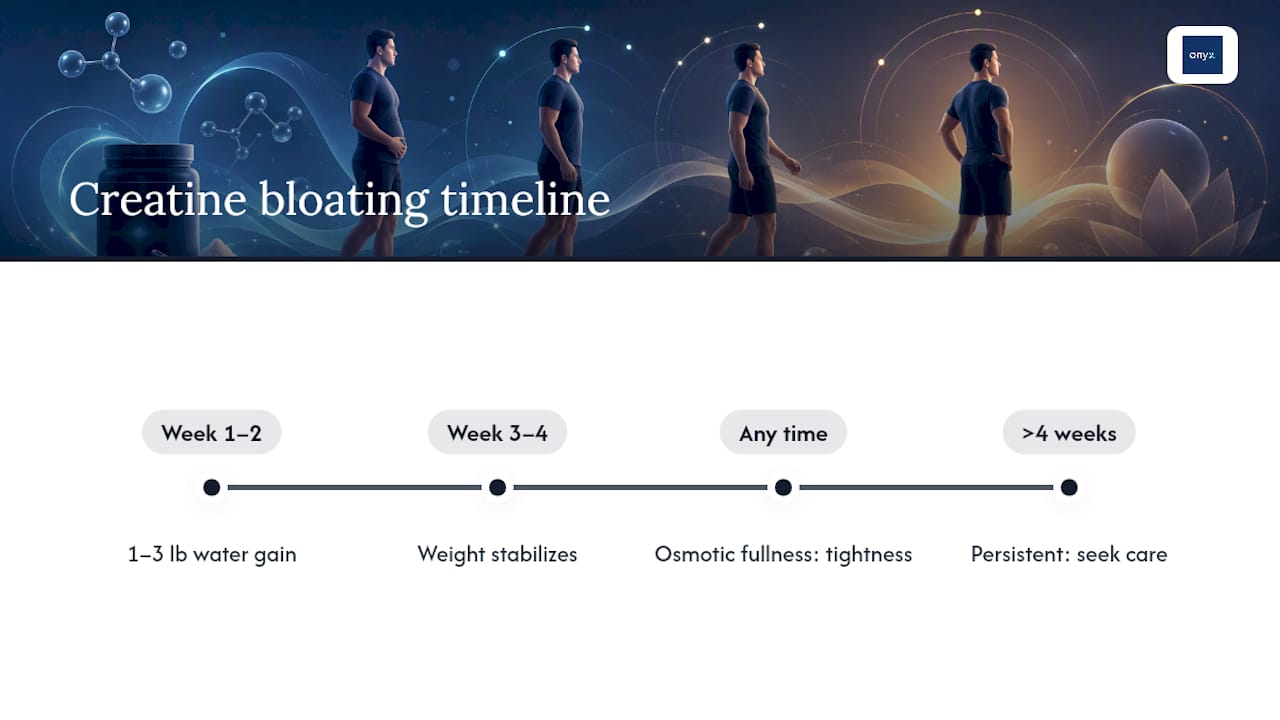
Gaining 1 to 3 pounds in your first week or two is common, and it usually reflects water moving into your muscle tissue, not fat gain. That weight typically stabilizes by the three to four week mark as your muscles finish saturating.
There’s a real difference between this osmotic fullness, which feels like tightness or slight puffiness, and true GI bloating, which shows up as gas, cramping, or stomach pain. The first is a sign creatine is working as intended. The second is almost always tied to how you’re taking it, not what you’re taking. If symptoms stretch past a month or feel severe at any point, stop and get it checked out rather than pushing through; for insights on creatine’s broader uses and safety considerations, see Creatine for Bone Health: Use It With Osteogenic Loading.
When Should You Stop Creatine and See a Doctor?
Stop taking creatine and seek medical care if you experience severe abdominal pain, persistent vomiting or diarrhea, sudden swelling, or any signs of an allergic reaction. Bring the supplement label, a timeline of your symptoms, and your current medication list to the appointment. Severe reactions are rare in healthy adults using recommended doses, but they warrant a real evaluation, not guesswork.
How Onyx Wellness Approaches Low-Bloat Creatine
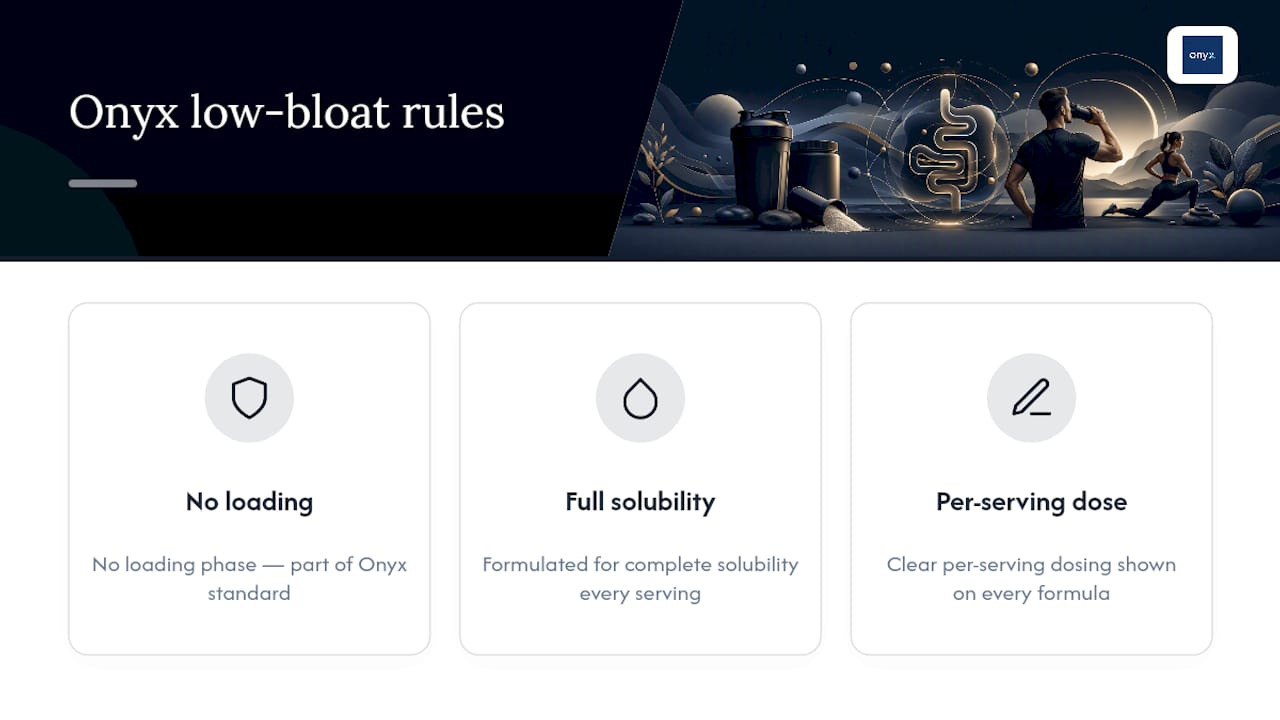
Chris, Onyx Wellness’s editorial lead, built our creatine guidance around the same adaptation principles covered here: no loading, full solubility, and clear per-serving dosing. Every formula reflects that standard, not a marketing shortcut.
The Adaptation Method Most Creatine Advice Skips
Most creatine content still treats bloating as an unavoidable cost of the supplement, something you white-knuckle through for a few weeks and hope it passes. That framing gets the sequence backward. The research on loading versus maintenance dosing makes it clear that bloating isn’t a fixed price of admission. It’s largely a dosing and preparation problem, and it responds to specific fixes.
The advice that gets buried is the dissolution step. Everyone talks about dosage and timing, almost nobody talks about whether the powder actually dissolved before you drank it. That single habit, stirring for an extra thirty seconds in warm water, probably prevents more discomfort than any product switch.
If you’re starting creatine for the first time, prioritize in this order: dose (3–5 g, no loading), dissolution (fully, in warm water), then timing (with food, split if needed). Chase the formulation upgrades only after you’ve nailed those three. Most people never need to.
— Chris
Low-Bloat Creatine Options From Onyx Wellness
If you want the adaptation method above without guessing at measurements or fighting chalky powder, Onyx Wellness formulates specifically for that gap. The Creatine Hydration Powder is built for full dissolution and pairs creatine with hydration support, so you’re not choosing between saturation and comfort. The CoreCharge Ritual delivers creatine monohydrate in clearly measured servings, making it easy to start at 3–5 g/day without eyeballing a scoop.
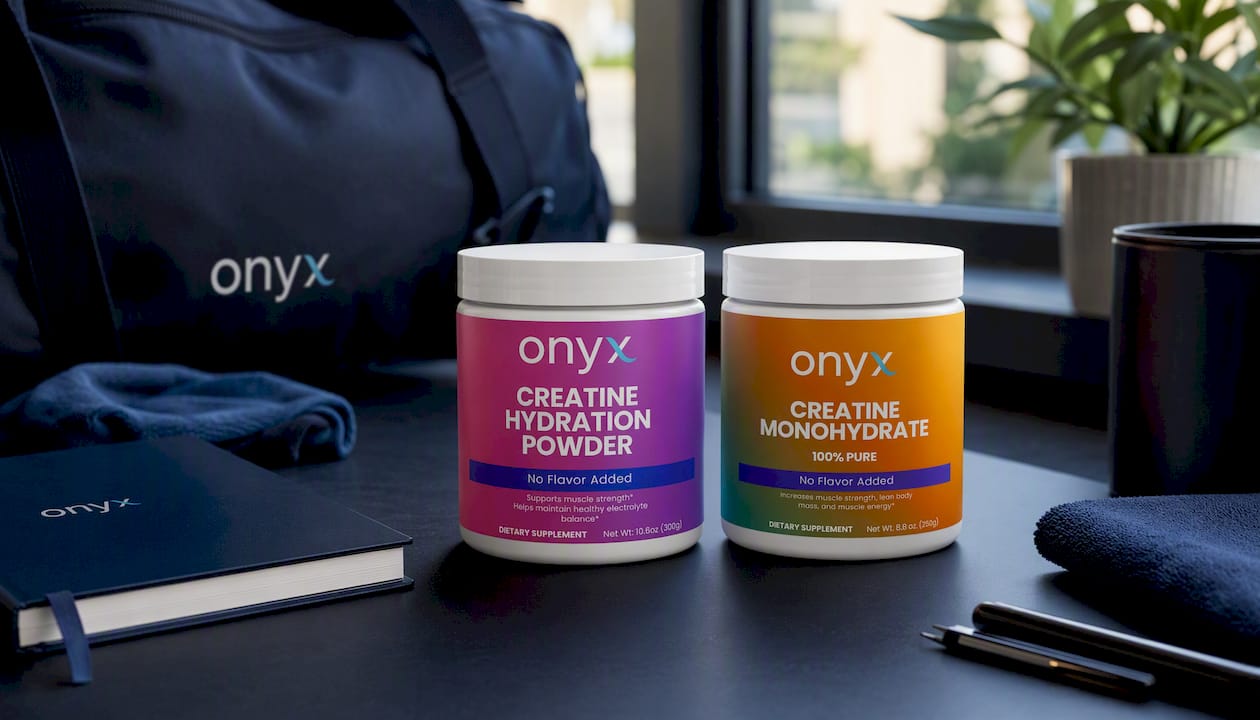
Both products are designed around the same principle this article walks through: skip the loading, dissolve completely, and give your body a predictable daily dose it can actually use. Browse the full Onyx Wellness collection to find the format, powder or strip, that fits how you actually take supplements, and start your first order at a dose your gut will thank you for.
Sources
- Gastrointestinal and fluid retention symptoms associated with creatine monohydrate with and without loading dose over 28 days — medRxiv
- Creatine bloating: What it is and how to avoid it — Healthline
- Does creatine cause bloating? — Medical News Today
This article is general information, not a substitute for advice from a qualified doctor. Consult a qualified healthcare professional about your own circumstances before acting on anything here.
FAQ
Is There a Creatine That Doesn’t Cause Bloating?
No form eliminates the osmotic water shift creatine causes in muscle tissue, but micronized monohydrate and highly soluble formulas like creatine hydrochloride tend to cause less GI-related bloating because they dissolve more completely.
Why Do Some Doctors Advise Caution With Creatine?
Most healthy adults tolerate creatine well at recommended doses, but doctors may advise caution for people with existing kidney conditions or those taking high loading doses without medical supervision, since that’s where GI and fluid-retention symptoms tend to spike.
How Can You Prevent a Bloated or Puffy Face From Creatine?
Facial puffiness usually reflects the same water retention happening throughout your body, so skipping the loading phase, staying hydrated, and moderating sodium intake in your first two weeks typically reduces it.
Why Did I Gain 10 Pounds After Starting Creatine?
A gain that large is unusual for creatine alone, which typically causes 1 to 3 pounds of water weight; a bigger jump is worth reviewing with a doctor to rule out excessive sodium intake, a loading protocol, or an unrelated cause.