


Yes, combining creatine with electrolytes is worth it for most athletes. The pairing supports both muscle performance and hydration in ways that creatine alone cannot fully address, with scientific evidence indicating likely benefit.
Here are three things you can do immediately:
- Start with a 3–5 g daily maintenance dose of creatine monohydrate. Loading is optional; consistency matters far more than timing.
- Prioritize sodium, potassium, and magnesium in your electrolyte source. These three drive fluid balance, cellular osmosis, and muscle contractility, and they each play a distinct role in how creatine moves into muscle tissue.
- Check with a clinician first if you have kidney disease, heart failure, uncontrolled high blood pressure, or take medications that affect fluid balance, including ACE inhibitors, diuretics, or NSAIDs.
Key Takeaways
Combining creatine with electrolytes supports muscle performance and hydration through complementary mechanisms, with peer-reviewed evidence pointing toward benefit for strength and anaerobic power in healthy, active adults.
| Point | Details |
|---|---|
| Verdict: yes for most athletes | The combination is safe for healthy adults and peer-reviewed trials show strength and power gains. |
| Daily dose: 3–5 g creatine | Maintenance dosing is sufficient; loading is optional and increases early GI risk. |
| Prioritize three electrolytes | Sodium, potassium, and magnesium each play distinct roles in transport, fluid balance, and contractility. |
| Safety check required | People with kidney disease, heart failure, hypertension, or on ACE inhibitors or diuretics should consult a clinician first. |
| Onyxwellness HydraCore Creatine | Micronized creatine monohydrate plus a balanced electrolyte profile, sugar-free, US-available. |
Table of Contents
- What does the science say about creatine with electrolytes?
- Why do electrolytes help creatine work better?
- Who should check with a clinician before combining creatine and electrolytes?
- How to dose and mix creatine with electrolytes
- What should you look for on a creatine and electrolyte label?
- Where to buy combined creatine and electrolyte products in the US
- Practical habits and troubleshooting from Onyxwellness
- Why Onyxwellness recommends the combined approach
- Onyxwellness HydraCore Creatine: a straightforward next step
- Sources
- FAQ
What does the science say about creatine with electrolytes?
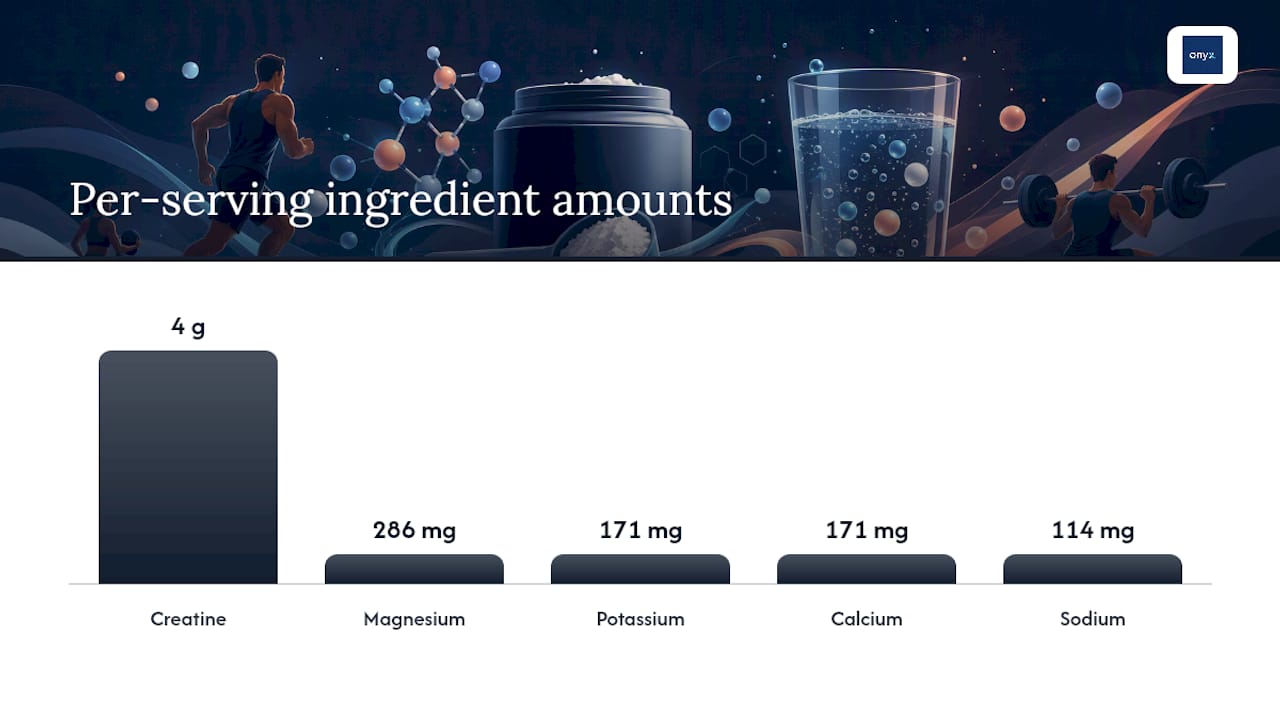
The strongest direct evidence comes from a randomized, double-blind trial published in PMC that tested a multi-ingredient performance supplement (MIPS) containing 4 g creatine alongside 114 mg sodium, 171 mg potassium, 286 mg magnesium, 171 mg calcium, and phosphorus per serving. After a supplementation period, recreationally trained subjects showed increases in 1-rep-max back squat and bench press compared to placebo, along with improvements in power-related outputs.
Study snapshot: The MIPS group in the trial posted gains in 1RM back squat and bench press, plus improvements in anaerobic power measures, versus placebo. The formulation included creatine and key electrolytes per serving.
The honest caveat: the sample size was small. That is small. The study cannot tell you whether the creatine, the electrolytes, or the combination drove the results. Separate review-level evidence confirms creatine increases intracellular water in muscle and that pairing it with other nutrients has shown additive performance benefits in some trials, but direct head-to-head comparisons of creatine-alone versus creatine-plus-electrolytes remain limited.
What the evidence does support, clearly, is that the combination is not harmful for healthy adults and that the direction of effects points toward benefit. Consumer-health reporting from Verywell Health summarizes the expert consensus: the pairing is generally safe and can support hydration and exercise performance, especially during intense or high-sweat training.
| Outcome measured | Direction of effect | Study quality |
|---|---|---|
| 1RM back squat | Significant increase vs. placebo | Small RCT, six weeks |
| 1RM bench press | Significant increase vs. placebo | Small RCT, six weeks |
| Anaerobic power output | Improvement in power measures | Small RCT, six weeks |
| Intracellular water retention | Increase in muscle tissue | Multiple reviews |
| Hydration and performance (healthy adults) | Supported in high-sweat conditions | Consumer-health synthesis |
Why do electrolytes help creatine work better?
Creatine does not slip into muscle cells on its own. It travels via a specialized transporter called CreaT1, which is sodium-dependent. CreaT1 requires sodium (Na+) and chloride (Cl-) ions to function; without adequate extracellular concentrations of these ions, the transporter slows down. One laboratory study found that removing calcium and magnesium from the extracellular environment reduced creatine uptake by about 47%, while increasing sodium and chloride concentrations enhanced uptake even when creatine levels stayed constant. That is a meaningful mechanistic signal, even if it comes from cell models rather than human trials.
Here is how each key electrolyte contributes:
- Sodium supports fluid retention and plasma volume, maintains the electrochemical gradient that drives CreaT1, and helps you hold onto the water creatine pulls into muscle.
- Potassium governs cellular osmotic balance. It keeps the intracellular environment stable so that the water creatine draws in stays where it belongs, inside the muscle cell.
- Magnesium supports muscle contractility and neuromuscular signaling. It also participates in ATP synthesis, which is the energy currency creatine phosphate replenishes during high-intensity effort.
The water creatine pulls into muscle is intracellular, not the subcutaneous puffiness people sometimes worry about. That distinction matters for how you interpret any weight gain you notice in the first week or two.
Pro Tip: If you notice a 1–3 lb weight increase when you start creatine, that is intracellular water in muscle tissue, not fat or subcutaneous bloating. Onyxwellness has a full breakdown of creatine hydration myths worth reading before you second-guess the scale.
Who should check with a clinician before combining creatine and electrolytes?
Most healthy adults tolerate this combination without issue. The concern arises when either creatine or added electrolytes could stress systems that are already under pressure.
The National Kidney Foundation specifically advises people with kidney disease to speak with their care team before using electrolyte-enhanced supplements, since the kidneys regulate both creatine clearance and electrolyte excretion.
Conditions and medications to mention to your clinician:
- Chronic kidney disease or a single functioning kidney
- Heart failure or a history of cardiac arrhythmia
- Uncontrolled hypertension
- ACE inhibitors or ARBs (lisinopril, losartan)
- Thiazide or loop diuretics (hydrochlorothiazide, furosemide)
- NSAIDs used regularly (ibuprofen, naproxen)
- Any condition requiring a sodium-restricted diet
When you do see a clinician, expect questions about your current sodium intake, kidney function labs (creatinine, eGFR), blood pressure readings, and any symptoms of fluid retention. They may want a baseline metabolic panel before you start and a follow-up check after four to six weeks. That is a reasonable ask, not an obstacle.
How to dose and mix creatine with electrolytes
Getting the dose right is straightforward. The complexity people add around timing and loading is mostly unnecessary.
- Set your daily creatine dose. The standard maintenance dose is 3–5 g per day. You do not need to cycle off it; consistent daily use is what builds and maintains muscle saturation.
- Decide on loading (optional). A loading phase of 20 g per day divided into four 5 g doses over five to seven days reaches saturation faster, but it also increases the chance of transient GI discomfort and the “water weight” effect. Skip it if you prefer a slower, smoother ramp-up.
- Mix in an adequate volume of water. This volume helps creatine dissolve fully and gives your body enough fluid to support the hydration effect.
- Add your electrolyte source. If you use a combined powder, you are done. If you mix separately, add your electrolyte drink or powder to the same glass.
- Drink it promptly. Creatine degrades into creatinine when left in liquid, especially in warm or acidic conditions. Mix fresh and drink within a few minutes.
- Time it to your session when possible, but do not stress it. Pre-workout, intra-workout, or post-workout all work. Daily consistency outperforms perfect timing every time.
Electrolytes are most useful on days when you genuinely need them: hot environments, sessions lasting longer than 60–75 minutes, high-sweat training, or if you follow a low-carb or ketogenic diet that already depletes minerals faster. On easy rest days or short indoor sessions, a plain creatine dose in water is usually sufficient.
Pro Tip: Use a shaker bottle with a whisk ball. Dissolve your creatine in a small amount of room-temperature water first, then top up with cold water or ice. This reduces grit, improves palatability, and slows degradation without needing hot water, which accelerates breakdown.

What should you look for on a creatine and electrolyte label?
Not all combined products are equal. A short label checklist saves you from buying something that looks the part but underdelivers.
- Micronized creatine monohydrate as the creatine form. It is the most studied form, dissolves better than standard creatine, and has the longest safety record.
- Sodium, potassium, and magnesium all present. A product with only sodium is not a balanced electrolyte formula. Look for meaningful amounts, not token inclusions.
- No added sugar or artificial sweeteners if you are managing carb intake or prefer a clean formula. Sugar-free options are widely available and work just as well.
- Transparent serving size. You want to know exactly how many grams of creatine and milligrams of each electrolyte you are getting per scoop, not a proprietary blend that hides amounts.
- Third-party testing or ingredient transparency. Certifications from NSF International or Informed Sport indicate the product has been tested for label accuracy and banned substances.
Onyxwellness’s HydraCore Creatine checks these boxes. It uses micronized creatine monohydrate, includes a balanced electrolyte profile with sodium, potassium, and magnesium, and is formulated without added sugar, which makes it compatible with keto and low-carb approaches. It ships across the United States and is available directly through the Onyxwellness site.
Pro Tip: Check the “per serving” column on the supplement facts panel, not the “per 100g” column. Some brands make their electrolyte numbers look impressive by reporting per 100g when a serving is only 5–7g.
Where to buy combined creatine and electrolyte products in the US
Prices for combined creatine and electrolyte powders in the United States vary widely, with economy options generally less expensive and premium or specialty formulas costing more for a similar serving count.
Where you buy matters as much as what you buy:
- Direct from the brand site (like Onyxwellness.co) gives you access to first-order discounts, bundle options, and direct customer support if something is wrong with your order.
- Amazon offers fast shipping and easy returns, but read the seller carefully. Third-party sellers occasionally stock older inventory.
- Specialty supplement or health food stores let you read the label in person, though selection for combined creatine-electrolyte products is narrower than online.
When comparing options, calculate the per-serving cost rather than the sticker price. A $50 tub with 60 servings beats a $30 tub with 20 servings every time. Also check the return policy before you buy a new formula. A brand confident in its product usually offers at least a 30-day satisfaction window.
For a deeper look at why the 2-in-1 format often saves money versus buying creatine and electrolytes separately, Onyxwellness has a cost breakdown worth reading before you decide.
Practical habits and troubleshooting from Onyxwellness
A few habits separate people who get results from those who give up after two weeks:
- Consistency beats timing. Missing a dose by a few hours is irrelevant. Missing days is not. Set a daily reminder and treat it like a non-negotiable.
- Adjust electrolytes by sweat rate, not by habit. If you train indoors in air conditioning, you do not need the same sodium load as someone doing two-a-days in July heat. Tailor your electrolyte dose to your actual conditions.
- Protein and creatine stack well together. There is no conflict between creatine supplementation and a collagen protein or whey protocol. Caffeine is also compatible; the old concern about caffeine blunting creatine has not held up in more recent research.
- The “water weight” is a feature, not a bug. Intracellular water in muscle tissue means better-hydrated, more resilient muscle fibers. If the scale goes up 1–3 lbs in week one, that is the mechanism working.
- GI upset is usually a mixing or dose issue. If you experience stomach discomfort, try splitting your daily dose into two smaller servings, use more water, and avoid taking creatine on an empty stomach.
Pro Tip: Avoid mixing creatine into citrus juice, coffee, or any hot liquid. Acidic and warm environments accelerate conversion of creatine into creatinine, the inactive byproduct. Room-temperature or cold water is always the right call.
For taste complaints, a small amount of natural flavoring or a sugar-free electrolyte powder with light flavoring makes the daily habit much easier to stick with. Palatability is a real compliance factor, not a vanity concern.
Why Onyxwellness recommends the combined approach
The case for combining creatine and electrolytes is not just about the science. It is about what actually works in practice for people who train hard and want a supplement routine they can sustain.
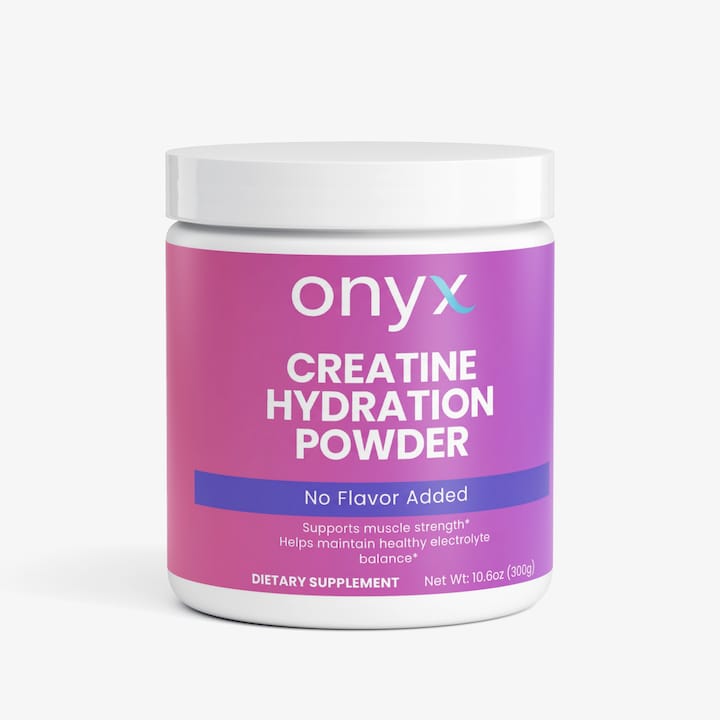
At Onyxwellness, the combined approach fits naturally with the brand’s commitment to ingredient transparency and convenience. A single, well-formulated product removes the guesswork of matching separate creatine and electrolyte products, and it reduces the daily friction that causes most people to fall off their supplement routine.
What makes the Onyxwellness approach worth considering:
- Micronized creatine monohydrate for better solubility and the strongest evidence base
- Balanced electrolyte profile (sodium, potassium, magnesium) rather than a single-mineral formula
- Sugar-free formulation compatible with a range of dietary approaches
- US-based shipping and direct-to-consumer availability with transparent ingredient labeling
- Designed for athletes and active adults who want results without unnecessary additives
Onyxwellness HydraCore Creatine: a straightforward next step
If you have read this far, you already know what a good creatine and electrolyte formula looks like. Onyxwellness’s HydraCore Creatine is built to that standard: micronized creatine monohydrate, a complete electrolyte profile, no added sugar, and full ingredient transparency on the label.

For athletes who want to support recovery across multiple systems, Onyxwellness also offers complementary products including Sleep Strips for overnight recovery support. If a first-order discount is available at checkout, it applies automatically. Visit the Onyxwellness creatine and muscle-building collection to see current options and pricing.
Sources
- Creatine electrolyte supplement improves anaerobic power and strength: a randomized double-blind control study - PMC
- Can You Mix Creatine With Electrolytes? Experts Explain
- National Kidney Foundation
- Ncbi
FAQ
Is it good to take creatine with electrolytes?
Yes. For healthy adults, combining creatine with electrolytes is safe and can support hydration and exercise performance, particularly during intense or high-sweat training sessions. A six-week randomized trial found significant strength and power improvements with a creatine-plus-electrolyte formula versus placebo.
Can I take creatine if I take lisinopril?
You should check with your prescribing clinician first. Lisinopril is an ACE inhibitor that affects kidney function and fluid balance, and both creatine and electrolytes also influence those systems, so a clinician needs to assess your specific situation before you start.
What should you not mix with creatine?
Avoid mixing creatine into hot liquids, citrus juice, or other acidic beverages, since heat and acidity accelerate its breakdown into creatinine, the inactive form. Plain room-temperature or cold water is the most reliable mixer.
Why do some doctors advise against creatine?
The concern is usually kidney-related. Creatine metabolism produces creatinine, which kidneys filter out, and in people with existing kidney disease or reduced kidney function, that added load can be problematic. For healthy adults with normal kidney function, the evidence does not support avoiding creatine.
Does the form of creatine matter when combining it with electrolytes?
Micronized creatine monohydrate is the recommended form. It dissolves more readily than standard creatine, has the most extensive research backing, and pairs cleanly with electrolyte powders without clumping or settling.
This article provides general information about supplementation and is not a substitute for professional medical advice. Confirm current guidance with a qualified healthcare provider before starting any new supplement, especially if you have an existing health condition or take prescription medications.