


TL;DR:
- Creatine draws water into muscle cells, supporting muscle function and promoting growth through cellular hydration. It increases total body water without causing dehydration or cramping when paired with proper hydration and electrolytes. Athletes should increase water intake and consider electrolyte support to maximize creatine’s benefits and prevent side effects.
Creatine hydration is defined as creatine’s ability to draw water into muscle cells through osmosis, increasing intracellular water content that directly supports muscle function, anabolic signaling, and recovery. This process is not a side effect of supplementation. It is the mechanism that makes creatine one of the most studied and effective performance supplements available. If you have ever wondered why your muscles feel fuller and stronger after a few weeks on creatine, intracellular hydration is the answer. Understanding how this works, and how to support it with proper water intake, separates athletes who get real results from those who spin their wheels.
How does creatine hydration work inside muscle cells?
Creatine acts as an osmolyte inside muscle tissue. When creatine accumulates in muscle cells, it creates osmotic pressure that pulls water from surrounding fluid into the cell itself. This process is called cell volumization, and it is the foundation of creatine’s performance benefits.

The increase in cell volume does more than make muscles look full. Cell swelling triggers anabolic pathways like mTOR and MAPK, which promote muscle protein synthesis and reduce protein breakdown. This means the water inside your muscle cells is doing real physiological work, not just sitting there. It also increases glycogen storage capacity, giving you more fuel for high-intensity efforts.
One distinction matters here: intracellular water retention is not the same as subcutaneous water retention. Subcutaneous water sits between the skin and muscle, giving a soft or bloated appearance. Intracellular water sits inside the muscle cell, contributing to muscle density and function. The table below clarifies the difference.
| Feature | Intracellular hydration | Subcutaneous retention |
|---|---|---|
| Location | Inside muscle cells | Between skin and muscle |
| Effect on appearance | Fuller, denser muscles | Soft, puffy look |
| Performance impact | Positive (anabolic signaling) | Neutral to negative |
| Cause | Creatine osmolyte effect | Excess sodium, hormonal shifts |
| Desirability | High for athletes | Generally unwanted |
Pro Tip: If you notice a 1–2 kg weight increase in the first week of creatine use, that is intracellular water, not fat. It signals that creatine is saturating your muscle cells and activating the anabolic pathways you want.
Does creatine cause dehydration or muscle cramps?
The short answer is no. Systematic reviews and meta-analyses confirm that creatine does not cause dehydration or increase the risk of heat illness. Creatine actually increases total body water, which means it supports rather than undermines your hydration status.
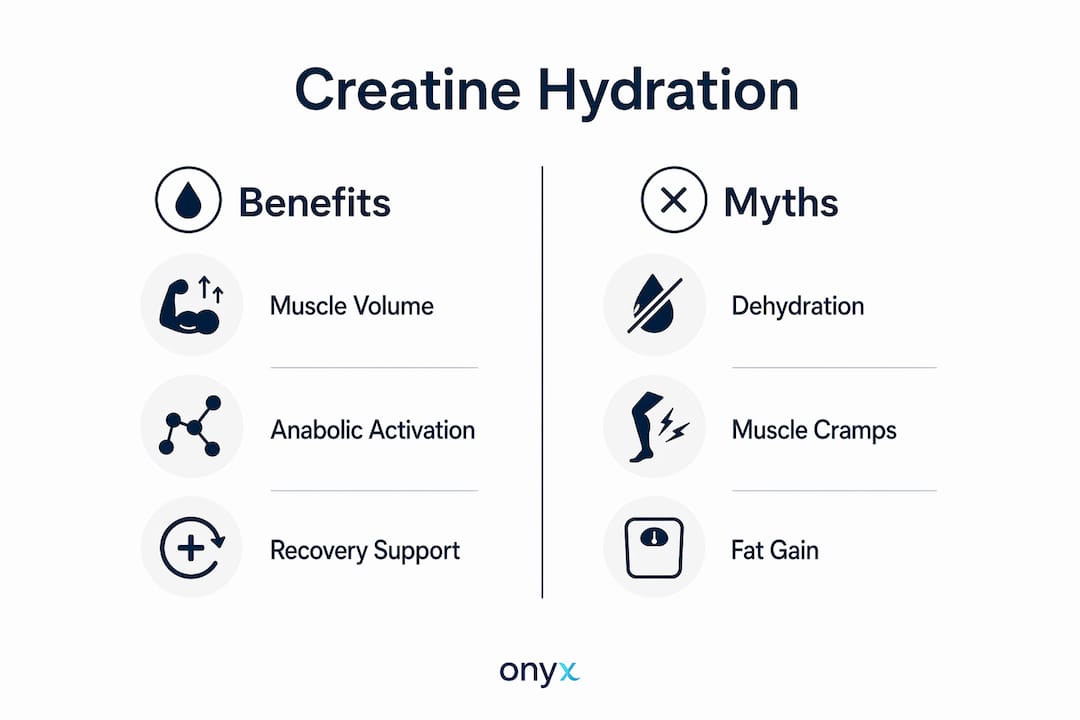
The cramping myth persists because athletes often start creatine during periods of intense training, when dehydration and electrolyte imbalances are already more likely. Muscle cramps linked to creatine use are caused by underhydration and electrolyte imbalances, not by creatine itself. When hydration and electrolytes are adequate, studies find no increased cramping frequency in creatine users.
Here is what actually causes cramps during training:
- Inadequate daily water intake relative to sweat loss
- Low sodium, potassium, or magnesium levels
- Sudden increases in training volume without adjusting fluid intake
- Skipping electrolytes during long or hot workouts
Correcting the myth that creatine causes dehydration is one of the most important steps in sports nutrition education. Research consistently shows creatine increases total body water and poses no dehydration risk when paired with adequate fluid intake. Athletes who avoid creatine over this fear are leaving a proven performance tool on the table.
How much water should you drink with creatine?
Water intake is the variable most athletes underestimate when starting creatine. The general recommendation is an additional 500ml to 1 liter of water daily on top of your baseline intake, bringing total daily water consumption to roughly 3–4 liters for active individuals. During the loading phase, when you take 20g per day to rapidly saturate muscle creatine stores, that demand increases further.
Follow these steps to stay ahead of your hydration needs:
- Set a daily water target. Aim for 3–4 liters total on training days, adjusting upward for heat, humidity, or extended sessions.
- Spread your intake throughout the day. Staggered water intake is more effective than drinking large amounts at once. It supports kidney function and prevents digestive discomfort.
- Check your urine color. Pale yellow means you are well hydrated. Dark yellow or amber means you need more water immediately.
- Increase intake during loading. If you are taking 20g of creatine daily for the first 5–7 days, add at least 1 extra liter to your usual intake to support the rapid osmotic changes in muscle tissue.
- Track your intake with a marked water bottle. A 1-liter bottle with time markers removes the guesswork and keeps you consistent across the day.
Pro Tip: Take each creatine dose with a full glass of water, at least 250ml, and then continue drinking regularly through the day. Pairing your dose with water is not enough on its own. Consistent intake across the full day is what drives results.
Why should you combine creatine with electrolytes?
Creatine and electrolytes work together to maintain the osmotic balance that keeps muscle cells properly hydrated. Electrolytes like sodium, potassium, and magnesium regulate fluid movement across cell membranes, which directly supports the cell volumization that creatine drives. Without adequate electrolytes, the hydration benefits of creatine are harder to sustain, especially during intense or prolonged exercise.
The practical case for combining them is strong. You can read more about creatine and electrolyte synergy and why pairing them in one formula can simplify your supplement routine without sacrificing results. Here is what each electrolyte contributes:
- Sodium regulates fluid balance and supports nerve function during high-output efforts.
- Potassium helps maintain cell membrane potential and reduces cramping risk.
- Magnesium supports muscle relaxation, energy production, and sleep quality for recovery.
- Combined with creatine, these minerals sustain the osmotic environment that keeps muscle cells volumized and functioning at a high level.
Athletes training in hot climates or doing endurance work face higher electrolyte losses through sweat. For these athletes, a creatine and electrolyte combination is not optional. It is the difference between maintaining performance and hitting a wall. You can also explore potassium and magnesium benefits to understand how these minerals support muscle function beyond hydration alone.
How to manage side effects and get the most from creatine
The most common complaint with creatine is bloating or digestive discomfort, and both are avoidable. Avoiding single large doses reduces gut osmotic discomfort significantly. Splitting your daily dose into two or three smaller servings, or skipping the loading phase entirely and going straight to a 3–5g maintenance dose, eliminates most of the bloating athletes report.
Here is a practical checklist for managing your supplementation:
- Skip the loading phase if bloating is a concern. A daily maintenance dose of 3–5g still saturates muscle creatine stores within 3–4 weeks. The loading phase just speeds up the timeline.
- Spread doses across the day. Two doses of 2.5g are easier on your gut than one dose of 5g, especially in the early weeks.
- Stay hydrated in hot climates. Heat increases sweat rate and electrolyte loss, which amplifies the hydration demand that creatine creates. Increase water and electrolyte intake accordingly.
- Support kidney health with consistent hydration. Creatine increases creatinine production, and adequate water intake supports kidney clearance, particularly on heavy training days.
- Treat the initial weight gain as a positive signal. The 1–2 kg increase in the first week reflects water entering muscle cells, not fat accumulation. It confirms that creatine is working.
Recovery benefits also depend on consistent hydration habits between sessions. Muscle cells that stay well hydrated between workouts repair faster and are better primed for the next training stimulus. Hydration is not just a training day concern. It is a daily discipline that compounds over time. For a deeper look at creatine’s role in recovery, the connection between intracellular water and tissue repair is worth understanding fully.
Key Takeaways
Creatine hydration works by pulling water into muscle cells, triggering anabolic pathways like mTOR and MAPK that drive muscle growth, strength, and recovery.
| Point | Details |
|---|---|
| Creatine drives cell volumization | Creatine acts as an osmolyte, drawing water into muscle cells to support anabolic signaling. |
| Dehydration myth is false | Systematic reviews confirm creatine increases total body water and does not cause cramping or heat illness. |
| Water intake must increase | Active individuals need an additional 500ml to 1 liter of water daily during creatine supplementation. |
| Electrolytes amplify results | Sodium, potassium, and magnesium maintain osmotic balance and sustain the hydration benefits creatine creates. |
| Dose management prevents bloating | Splitting doses or skipping the loading phase eliminates most digestive discomfort without reducing effectiveness. |
What I have learned from years of watching athletes use creatine
The most consistent pattern I see is this: athletes who struggle with creatine are almost always under-hydrated, not over-supplemented. They take the creatine, skip the extra water, and then blame the supplement when they feel heavy or crampy. The supplement is not the problem.
What changed my thinking on creatine was seeing the research on mTOR and MAPK activation from cell volumization. Most people think of creatine as an energy supplement. The water it pulls into muscle cells is actually doing anabolic work at the cellular level. That reframe matters, because it changes how seriously you take your hydration habits.
My honest advice: treat your water intake as part of your creatine protocol, not an afterthought. If you are not tracking it, you are probably not drinking enough. A marked water bottle and a consistent daily target are more valuable than any fancy supplement stack. Get the basics right first.
The electrolyte piece is where I see the most room for improvement in everyday athletes. Most people drink water but ignore sodium, potassium, and magnesium. Pairing a quality creatine product with a solid electrolyte formula is one of the simplest upgrades you can make to your training nutrition. The research backs it, and the practical results speak for themselves.
— Chris
Onyxwellness creatine products built for real performance
Onyxwellness has put together a range of creatine products designed with both performance and hydration in mind. If you are ready to put the science into practice, the HydraCore Creatine powder is formulated to support muscle water retention and recovery, making it a practical fit for the hydration strategies covered here.
For athletes who want a clean, well-studied foundation, the CoreCharge Ritual delivers pure creatine monohydrate with the purity and consistency that serious training demands. Both products are part of the Onyxwellness muscle-building range, which pairs naturally with the electrolyte and hydration strategies outlined in this article. If you want results that match the effort you put in, the right supplement foundation makes that possible.
FAQ
What is creatine hydration?
Creatine hydration refers to creatine’s ability to pull water into muscle cells through osmosis, increasing intracellular water content that supports muscle function, anabolic signaling, and recovery.
Does creatine make you dehydrated?
No. Systematic reviews confirm that creatine increases total body water and does not cause dehydration or heat illness when paired with adequate fluid intake.
How much water should I drink when taking creatine?
Active individuals should drink an additional 500ml to 1 liter of water daily, bringing total intake to roughly 3–4 liters on training days. During the loading phase, increase that by at least 1 extra liter.
Why do I gain weight when I start taking creatine?
The initial 1–2 kg weight gain reflects water entering muscle cells, not fat. This intracellular water activates anabolic pathways like mTOR and MAPK, which support muscle growth and protein synthesis.
Should I take electrolytes with creatine?
Yes. Electrolytes like sodium, potassium, and magnesium maintain the osmotic balance that sustains creatine’s cell volumization effect, particularly during intense or prolonged exercise.