


If you’re doing intervals, hill repeats, or racing anything from a 5K to a half marathon, creatine monohydrate is one of the few supplements with real evidence behind it. The typical benefit lands in the 1–3% range for interval and repeated-sprint performance, not your steady 8-minute training pace. If you’re a pure Zone-2 aerobic runner logging slow miles with no surges, don’t expect creatine to move your splits much.
Here’s the practical starting point most runners should use:
- Skip the loading phase if you’re weight-conscious. Take 3–5 grams per day, every day, and let saturation happen gradually over about four weeks.
- Load only if you want faster results. Take 20 grams per day split into four doses for 5–7 days, then drop to 3–5 grams daily for maintenance.
- Pick creatine monohydrate, ideally a tested form like Creapure, over blends with unnecessary additives.
- Track your interval times and RPE, not just your bathroom scale, to judge whether it’s working.
The rest of this guide breaks down why creatine works the way it does, who it helps most, and how to dose it without wrecking your gut mid-training block.
Key Takeaways
Creatine improves repeated-sprint and end-spurt running performance by roughly 1 to 3 percent, with negligible effect on steady-state pace.
| Point | Details |
|---|---|
| Best for surge-based running | Intervals, hill repeats, and finishing kicks benefit most; steady aerobic pace shows little change. |
| Two valid dosing paths | Load at 20 g/day for 5–7 days or use 3–5 g/day maintenance from day one; both reach saturation. |
| Expect temporary water weight | A 1–2 kg gain in the first two weeks reflects intracellular water, not fat. |
| Safety is well established | Healthy adults face low risk; check with a clinician if you have kidney disease, are pregnant, or are under 18. |
| Onyxwellness offers a runner-friendly format | HydraCore Creatine combines monohydrate with hydration support in a dose that matches standard maintenance protocols. |
Table of Contents
- What the Research Says About Creatine and Running Performance
- How Creatine and Phosphocreatine Affect Your Running
- Which Runners Actually Benefit From Creatine?
- How Should Runners Dose Creatine?
- Is Creatine Safe for Runners? Side Effects to Know
- Building Creatine Into Your Training Plan
- Choosing the Right Creatine Format for Running
- An Honest Take on Creatine for Runners
- Where Onyx Wellness Fits Into Your Creatine Routine
- Sources
- FAQ
What the Research Says About Creatine and Running Performance
The strongest evidence on creatine has nothing to do with distance running as a straight line. It’s about what happens when your pace changes suddenly: a surge up a hill, a kick at the end of a 5K, a set of 400-meter repeats where you’re trying to hold form on the last rep.
A narrative review by Forbes and colleagues concluded that creatine supplementation raises phosphocreatine stores and consistently improves repeated-sprint and end-spurt performance in endurance protocols where those bursts matter. That’s a meaningfully different claim than “creatine makes you run faster.” It makes you better at repeating hard efforts and finishing strong, which is exactly the physiology that decides races.
Meta-analyses pooling multiple trials back this up with numbers. Across interval and repeated-sprint outcomes, creatine produces a roughly 1–3% average improvement, while steady-state aerobic performance barely moves. That gap is the entire story for runners deciding whether this supplement is worth the money.
A 2026 scoping review mapping 38 trials across endurance and mixed-sport contexts found the same pattern: creatine most often benefits repeated-sprint and high-intensity power outputs. Most of the protocols studied used a 5–7 day loading phase at 20 grams daily, followed by 2–5 grams per day for maintenance, and reported small increases in total body mass alongside the performance gains.
The International Society of Sports Nutrition has reviewed this evidence base longer than almost anyone, and its position stand doesn’t hedge:
Creatine monohydrate is the most effective ergogenic nutritional supplement currently available to athletes for increasing high-intensity exercise capacity and lean body mass during training, and it has an established safety record in healthy populations.
A 2026 narrative review covering decades of creatine research reaches a similar conclusion: consistent improvements in high-intensity performance and training adaptation, paired with a strong safety profile across different populations. That consistency across independent reviews, spanning nearly three decades of research, is rare in sports nutrition. Most supplements don’t survive this much scrutiny with their claims intact.
Where the evidence is strongest:
- Repeated 30 to 90 second efforts with short recovery (classic interval sessions)
- End-of-race surges and finishing kicks
- Recovery between hard training sessions, especially in high-volume blocks
Where the evidence is weak or absent:
- Continuous steady-state pace over long distances
- Pure aerobic economy at conversational effort
If your weeks include interval sessions, tempo surges, or hill repeats, the evidence points a different direction.
How Creatine and Phosphocreatine Affect Your Running
Your muscles run on ATP (adenosine triphosphate) for immediate energy, but you only store enough for a few seconds of maximum effort. Phosphocreatine is the backup system: it rapidly regenerates ATP so you can keep pushing during short, hard bursts. This is why creatine’s effects show up in surges and intervals, not in the eighteenth mile of an easy long run.
Supplementing with creatine increases the phosphocreatine pool available in muscle tissue. More phosphocreatine means faster ATP resynthesis between hard efforts, which translates to less drop-off across repeated intervals. That’s the mechanism behind the repeated-sprint benefit Forbes and colleagues documented: it’s not that any single sprint gets dramatically faster, it’s that the fifth and sixth repeats hold up better than they would without supplementation.
There’s a recovery angle too. Some trial evidence suggests creatine can reduce markers of muscle damage and inflammation, including creatine kinase and certain inflammatory markers, following prolonged or eccentric-heavy exercise. For runners stacking hard sessions during a marathon block or hill-repeat cycle, that matters more than a single race-day number.
On the water weight question: creatine draws water into muscle cells, which is why the scale ticks up in the first week or two. This intracellular water gain is a functional hydration effect, not fat gain, and it typically stabilizes within about two weeks. The outdated “endurance taboo” that creatine turns runners into waterlogged bodybuilders doesn’t hold up against what the research actually shows.
- Phosphocreatine regenerates ATP faster during repeated high-intensity bouts
- More available phosphocreatine means less performance drop-off across interval repeats
- Intracellular water increases reflect muscle hydration, not fat accumulation
- Reduced markers of exercise-induced muscle damage may support recovery between sessions
Pro Tip: Take your creatine dose with a small carb source, like a banana or a slice of toast, on days you can. Insulin response modestly improves creatine uptake into muscle, and pairing it with a meal you’re already eating removes one more thing to remember.
Which Runners Actually Benefit From Creatine?
Not every runner needs creatine, and pretending otherwise does you no favors. The honest answer depends heavily on what your training actually looks like week to week.
Short-distance racers (5K and 10K). These events live and die on your ability to hold near-threshold pace and still have something left for the final 800 meters. The repeated-sprint and end-spurt benefits creatine provides map directly onto this demand. A 2026 scoping review noted that for weight-bearing endurance sports, the trade-off between a small increase in body mass and enhanced sprint capacity tends to favor supplementation for shorter distances up through the half marathon.
Hybrid athletes. If you run and lift, or you’re training for a Hyrox event or an obstacle course race, creatine is close to a no-brainer. It supports both the strength training side and the running-specific high-intensity work, and the safety data on combined training populations is extensive.
Interval-heavy training blocks. Even marathoners doing a structured VO2 max phase or tempo-interval cycle will likely see more from creatine during those weeks than during a pure base-building block. Think of it less as a permanent supplement and more as something you can cycle in around your training emphasis.
Injured or rehabbing runners. Cross-training on a bike or in the pool while recovering still benefits from creatine’s support for high-intensity capacity and its potential role in limiting exercise-induced muscle damage. It won’t fix an injury, but it can help you hold onto fitness during the return-to-run process.
Who probably won’t notice much: if your training is dominated by easy aerobic mileage with minimal speed work, don’t expect creatine to change your steady-state pace. The near-zero effect on continuous aerobic performance is one of the most consistent findings across the research.
Who should think twice or delay: ultramarathoners and mountain racers where every extra pound matters over 50 or 100 miles should weigh the small body-mass increase against the more modest benefit in continuous, non-surge-heavy efforts. Runners with pre-existing kidney disease, anyone pregnant, and adolescents should talk to a clinician before starting, since the safety data in those specific populations is thinner than in healthy adult athletes.
A useful way to think about it: a 5K runner chasing a finishing kick has a lot to gain and little to lose. A mountain ultra runner counting grams in a vest has a much thinner margin, and the calculus shifts accordingly.
How Should Runners Dose Creatine?
You have two legitimate paths to the same destination: saturated muscle phosphocreatine stores. The question is how fast you want to get there and how much GI discomfort you’re willing to tolerate along the way.
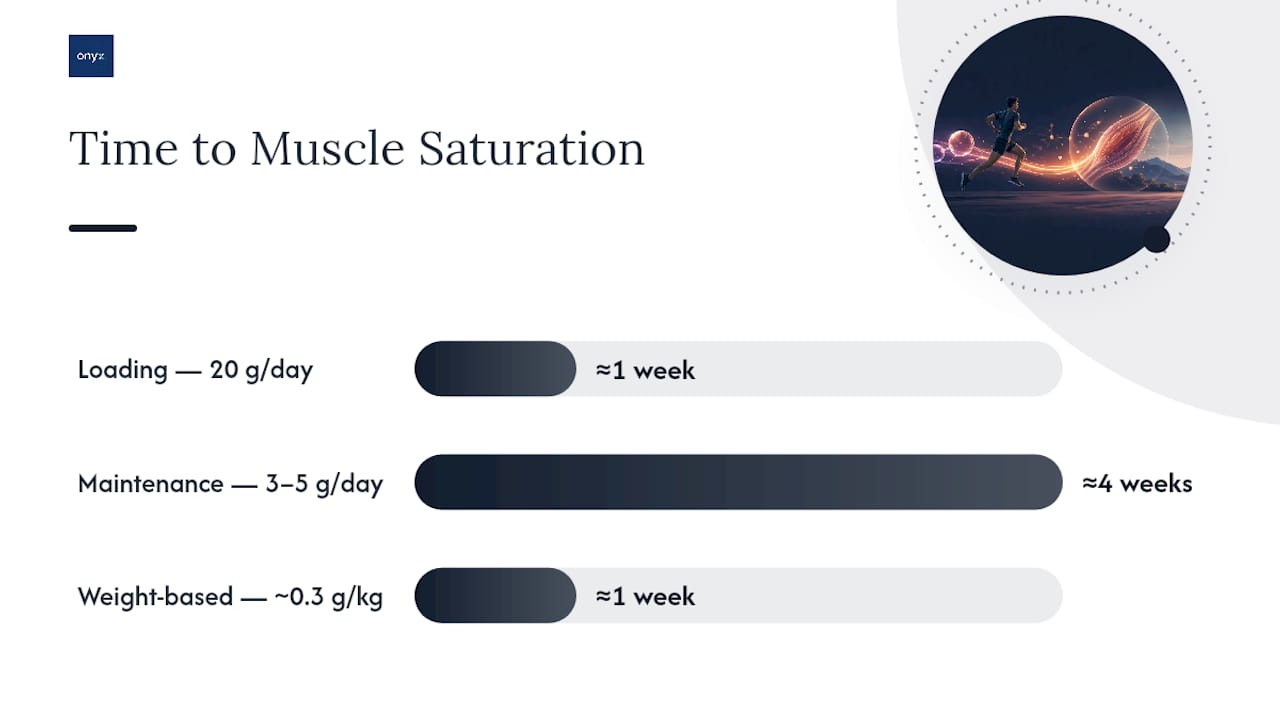
- Loading protocol: Take 20 grams per day, split into four 5-gram doses, for 5–7 days. Then drop to 3–5 grams per day indefinitely for maintenance. This reaches full muscle saturation in about a week.
- Maintenance-only protocol: Skip loading entirely and take 3–5 grams per day from day one. You’ll reach a similar saturation level in about four weeks, just more gradually.
- Weight-based alternative: If you prefer to dose relative to body weight, use approximately 0.3 grams per kilogram during a loading phase, then scale down to a standard maintenance dose.
Many runners, especially those managing weight for racing, prefer the maintenance-only route specifically to avoid the faster water gain and occasional GI upset that comes with loading doses.
| Protocol | Dose | Time to Saturation | Best For |
|---|---|---|---|
| Loading | 20 g/day (split into 4 doses) for 5–7 days, then 3–5 g/day | About 1 week | Runners who want faster results and don’t mind more water retention up front |
| Maintenance-only | 3–5 g/day from day one | About 4 weeks | Weight-conscious runners, or anyone easing in during a race-prep cycle |
| Weight-based loading | ~0.3 g/kg/day, then standard maintenance | About 1 week | Runners who prefer dosing scaled to body weight |
Timing matters far less than people assume. Consistency is the variable that actually determines whether you reach saturation, not whether you take it before or after your run. That said, there’s a small, practical edge to taking creatine alongside a meal containing carbohydrates and some protein, since insulin release modestly supports uptake into muscle tissue.
If you’re sensitive to GI distress, mix your dose into a larger volume of water or a smoothie rather than a small shot glass of liquid, and split loading doses evenly across the day instead of taking them all at once. Test any new protocol during a lower-stakes training week, not the week before a goal race.
Pro Tip: If you’ve never taken creatine before, start your trial four to six weeks out from a big race, never in race week. That gives you enough time to see the water-weight settle and judge whether your interval splits actually improved, without introducing a new variable right before it counts.
For more on getting the timing right without overthinking it, Onyxwellness’s guide to creatine timing breaks down the day-to-day mechanics in more detail.
Is Creatine Safe for Runners? Side Effects to Know
The safety data on creatine monohydrate in healthy adults is about as reassuring as sports supplement research gets. The ISSN position stand describes an established safety record built on years of trials and long-term monitoring, and it remains one of the most heavily studied supplements in existence.
That said, “safe for healthy people” comes with real caveats, and runners tend to have some training-specific concerns worth addressing directly.
Kidney function. In people with normal kidney function, creatine does not appear to cause kidney damage even at higher doses over extended periods. If you have pre-existing kidney disease, however, you should talk to a doctor before supplementing, since the research in that specific population is far more limited.
Weight gain. Expect roughly 1–2 kilograms of weight gain in the first one to two weeks, driven almost entirely by intracellular water rather than fat. This typically levels off once your muscle stores saturate. If you’ve gained noticeably more than that, or the gain hasn’t stabilized after three weeks, it’s worth reassessing your dose and overall diet rather than assuming creatine is the sole cause.

GI distress. This shows up mostly during loading, when you’re taking 20 grams in a single day. Splitting doses and mixing with more water usually resolves it. Maintenance-only dosing largely sidesteps this issue.
Cramping in hot weather. There’s no strong evidence that creatine causes cramping on its own, but dehydration combined with creatine’s water-shifting effects can compound cramp risk during hot-weather or high-altitude training. Prioritize your regular hydration and electrolyte routine on top of your creatine dose, not instead of it.
Talk to a clinician before starting creatine if you’re pregnant, under 18, managing a chronic kidney or liver condition, or taking medications that affect kidney function (certain NSAIDs and some blood pressure medications, for example). For everyone else, the research consistently points toward a favorable safety profile at standard doses.
Building Creatine Into Your Training Plan
Creatine works best when it’s layered into a training block deliberately, not tossed into your routine alongside three other changes at once. Here’s a six-week framework built around an interval-focused phase.
- Weeks 1–2: Start maintenance dosing (3–5 g/day) alongside your normal interval sessions. Log baseline interval splits, RPE per rep, and morning body weight.
- Weeks 3–4: Continue daily dosing without interruption. Track whether your later reps in a session (rep 5, 6, 7 of an interval set) hold pace better than your baseline log.
- Weeks 5–6: Compare full training logs against your baseline. Look specifically at repeated-effort quality, not single best-effort times, and note recovery quality between hard sessions.
What to actually measure along the way:
- Interval splits, especially in the back half of a session
- Perceived effort (RPE) at a fixed pace
- Morning body weight trend, not just day-to-day fluctuation
- Muscle soreness and recovery time between hard sessions
- Overall session quality: are you finishing workouts as prescribed, or fading early?
Pair your supplementation window with a training block that actually creates the stimulus creatine is built for. Hill repeats, VO2 max intervals, and tempo-to-threshold surge work all give creatine something to work with. A hill-repeat session like the ones outlined in this guide to high-intensity sprint training, is a reasonable template for the kind of session where repeated-effort benefits show up first.
Pro Tip: Change one variable at a time. If you start creatine the same week you switch shoes or spike your weekly mileage, you won’t know what actually caused any improvement (or setback) you see. Isolate the variable, then trust your log.
Choosing the Right Creatine Format for Running
Not all creatine products are built the same way, and the format you choose should match how you train.
Straight creatine monohydrate powder is the simplest, most studied option. It’s flavorless, cheap per dose, and easy to mix into anything. The tradeoff is that you’re managing your own hydration and electrolytes separately, which matters more on long, sweaty runs.
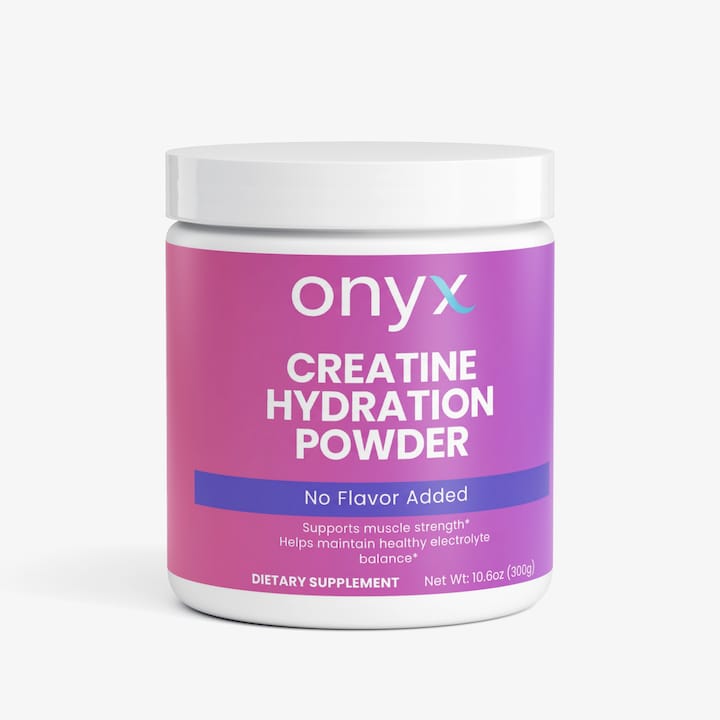
Creatine combined with electrolyte or hydration blends solves a real problem for runners: you’re already worried about sodium and fluid loss on long runs, so a formula that handles both in one scoop cuts down on what you have to carry and remember. This format tends to suit hybrid and interval-heavy runners who are already thinking about hydration strategy anyway.
Quality signals worth checking before you buy:
- Creatine monohydrate as the primary listed ingredient, not a proprietary blend that hides the actual dose
- Creapure or a similarly recognized manufacturing standard, which signals purity and consistent dosing
- Third-party testing certifications like NSF Certified for Sport or Informed-Sport, especially if you compete under anti-doping rules
- No unnecessary stimulants added to a recovery-focused product
Skip products padded with proprietary blends that won’t disclose exact creatine content, or anything stacking in stimulants you didn’t ask for in a post-run recovery formula.
Pro Tip: If you’re weight-sensitive and running steady-state distance, a plain monohydrate powder gives you the most control over dose. If you’re doing intervals and hot-weather long runs, a combined creatine and electrolyte format saves you a second supplement and a second thing to forget in your gym bag.
An Honest Take on Creatine for Runners
The evidence doesn’t support treating creatine as a magic bullet for every runner, and it doesn’t support dismissing it as a lifter’s supplement that has no business in a running vest. Both extremes miss what the research actually shows: a modest, consistent benefit concentrated in exactly the moments that decide races, the surges, the last interval rep, the finishing kick.
My honest read is that maintenance-only dosing deserves more credit than it gets. Runners chasing fast saturation load hard, gain water fast, and sometimes quit after a rough GI week without ever seeing whether the slower approach would have worked better for them. Four weeks to saturation isn’t a real cost when you’re planning a training block months out.
If you try it, watch your interval splits and how you feel on rep five or six, not the scale. Give it four to six weeks before judging. If nothing changes and you’re purely an aerobic base-mileage runner, that’s a legitimate outcome, not a failure on your part. This lines up with what the ISSN position stand and recent endurance-focused reviews consistently report: creatine helps the surges, not the cruise.
Where Onyx Wellness Fits Into Your Creatine Routine
If you’ve read this far, you already know the two things that make creatine hard to stick with: remembering a plain powder mixes into everything, and separately managing your electrolyte and hydration needs on long runs. Onyxwellness built its HydraCore Creatine hydration powder specifically to solve both problems in one scoop.
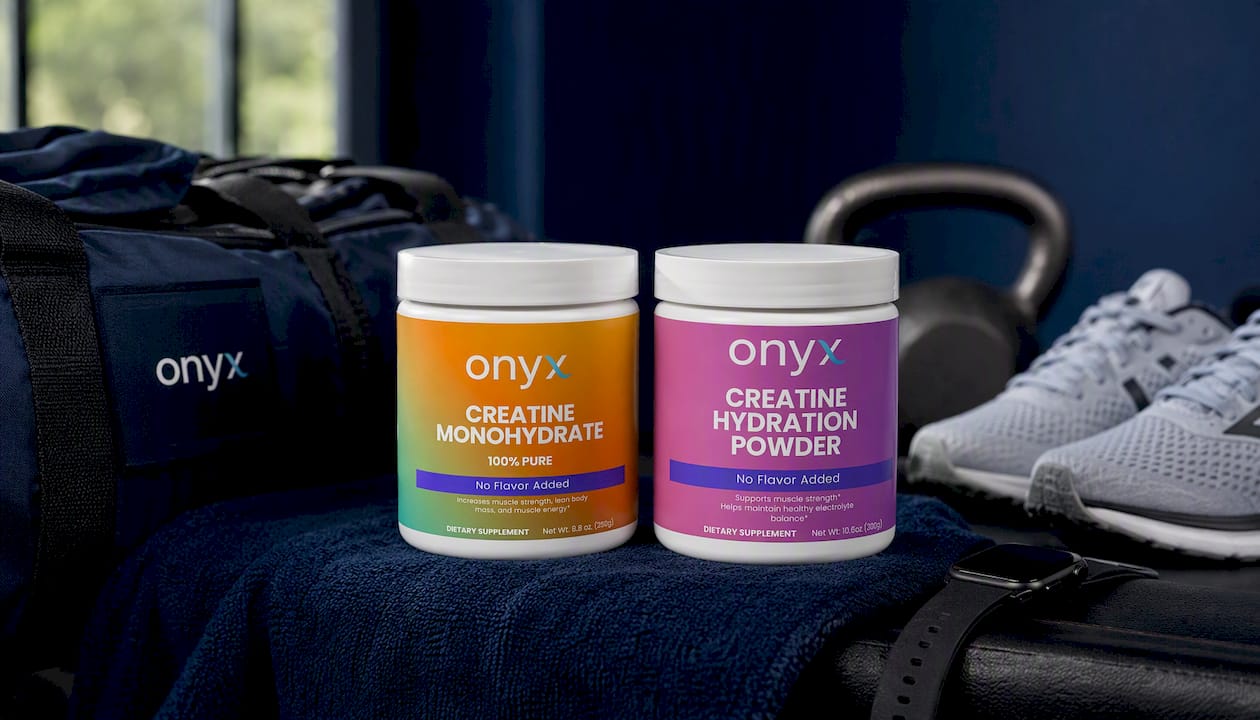
Each serving is formulated with creatine monohydrate dosed to match the maintenance protocols covered above, so mapping your dose is straightforward: check the label, match it to the 3–5 gram range, and adjust servings if you’re following a loading phase. Because it’s built as a hydration powder, it also addresses the mixability and gut-comfort complaints that push a lot of runners away from plain monohydrate mid-training block. If you’re weight-sensitive and prefer the leaner option, Onyxwellness’s broader lineup in the creatine and muscle-building collection includes straight monohydrate formats too.
Recovery doesn’t stop at creatine, either. If sleep quality is limiting how well you’re absorbing your training load, Onyxwellness’s sleep strips are worth a look as a complementary piece of your recovery routine. Start with a single tub of HydraCore Creatine, log your next four weeks of intervals, and see what the data tells you.
Sources
- PubMed - Creatine supplementation studies (selected meta-analyses)
- Creatine supplementation and endurance performance: surges and sprints to win the race
- International Society of Sports Nutrition position stand: creatine
- The emerging and evolving evidence supporting creatine as an ergogenic aid: history and applications
- Scoping review of creatine in endurance and mixed-sport contexts
This article is general information, not a substitute for advice from a qualified doctor. Consult a qualified healthcare professional about your own circumstances before acting on anything here.
FAQ
Should a runner take creatine?
Runners doing intervals, hill repeats, or racing distances up to a half marathon are likely to see a modest benefit in repeated-effort performance, while pure steady-state aerobic runners probably won’t notice much change.
Why do some doctors caution against creatine?
Some clinicians remain cautious mainly for patients with pre-existing kidney disease, since long-term safety data in that specific population is limited, not because creatine is broadly unsafe for healthy adults.
Why did I gain weight after starting creatine?
The typical 1–2 kilogram gain in the first couple of weeks comes from water pulled into muscle cells, not fat, and it usually stabilizes once your muscle stores saturate.
Will creatine improve my 5K time?
Creatine is more likely to help you hold pace on the final surge or interval repeats within a 5K rather than lower your overall steady-state cruising speed, so the benefit shows up most in your finishing kick.
How much creatine should a runner take per day?
Most runners do well with 3–5 grams per day for maintenance, or a short loading phase of 20 grams daily for 5–7 days followed by the same maintenance dose.