


For most adults, the right creatine dosage is a moderate daily dose of creatine monohydrate, taken consistently. That’s it. You don’t need a complicated cycle, a loading week, or a spreadsheet to track it.
You do have a choice to make upfront: start with a loading phase of a high dose split into multiple smaller doses throughout the day, for a few days to saturate your muscles faster, or skip straight to a steady daily dose of 3 to 5 grams and reach the same saturation point in about three to four weeks. Neither path is wrong. Loading gets you there quicker but costs more and tends to cause more stomach upset. Steady dosing is cheaper, gentler, and just as effective once your muscle stores fill up.
One caveat before you start: if you have kidney disease, are pregnant or breastfeeding, or take medications that affect kidney function, talk to a doctor before adding creatine to your routine. Harvard Health’s guidance on creatine is explicit on this point, and it’s the one exception to an otherwise very simple recommendation.
Here’s the quick version if you want to start today:
- No loading: a moderate daily dose, any time, every day, over several weeks to reach saturation
- Loading: ~20 grams daily (4 doses of 5 grams) for 5 to 7 days, then drop to a moderate daily dose for maintenance
- Bigger bodies or higher goals: up to 5 to 10 grams daily, but only with guidance
Key Takeaways
Most adults get the best results from creatine by taking a moderate daily dose consistently for several weeks before judging its effects.
| Point | Details |
|---|---|
| Standard dose | Take 3 to 5 grams of creatine monohydrate daily as an ongoing maintenance dose. |
| Loading is optional | A higher daily dose split into smaller portions for several days speeds up saturation but may increase risk of stomach discomfort. |
| Consistency beats timing | Daily use matters far more than the specific hour you take it. |
| Check with a doctor first | Anyone with kidney disease, pregnancy, or interacting medications should consult a clinician before starting. |
| Onyxwellness supports the routine | HydraCore Creatine Hydration Powder combines a standard dose with electrolytes for easier daily hydration. |
This article is general information, not a substitute for advice from a qualified doctor. Consult a qualified healthcare professional about your own circumstances before acting on anything here.
Table of Contents
- Creatine Dosage Basics: Loading vs. Steady Dosing
- How Much Creatine Should You Take Based on Your Body Size?
- When Is the Best Time to Take Creatine Each Day?
- Is Creatine Safe? What the Research Says About Side Effects
- Why Creatine Monohydrate Beats Other Forms
- How to Measure and Mix Your Daily Creatine Dose
- Applying This Guidance With Onyxwellness Products
- What I’d Tell a Friend Starting Creatine
- A Simple Way to Round Out Your Creatine Routine
- Sources
- FAQ
Creatine Dosage Basics: Loading vs. Steady Dosing
The single biggest decision in creatine dosage isn’t the daily amount. It’s whether you load first. Both paths land you in the same place, muscle creatine stores filled to capacity, but they get there on very different timelines.
The loading protocol, step by step
Loading means front loading your intake to saturate muscle creatine stores fast, typically within a week. The standard protocol, backed by the International Society of Sports Nutrition’s position stand, works like this:
- Take approximately 0.3 grams per kilogram of body weight per day, which works out to roughly 20 grams for a typical adult
- Split that into four doses of about 5 grams each, spaced throughout the day
- Continue for 5 to 7 days
- Drop down to a maintenance dose of 3 to 5 grams per day and stay there indefinitely
Splitting the loading dose matters more than people realize. Taking 20 grams in one sitting is a rough way to introduce your gut to a new supplement. Research reviewed in PMC’s analysis of supplement timing and dosing points to divided dosing as the better approach for both comfort and consistent plasma creatine levels, which helps muscle tissue absorb it more evenly across the day.
The steady dosing alternative
Skip loading entirely, and you can still get to full muscle saturation. You just take longer to get there.
- 3 grams per day saturates muscle creatine stores in about 28 days
- 5 grams per day gets you there slightly faster, generally within three weeks
- Either dose maintains saturation indefinitely once you’ve reached it
This is the route we’d point most beginners toward. It sidesteps the GI discomfort that loading sometimes causes, costs less over the first month, and requires zero math beyond scooping the same amount every day. If you’re not training for a competition next week, there’s rarely a compelling reason to rush.
Weighing the trade-offs honestly
Loading has one real advantage: speed. If you’re three weeks out from a strength meet or a season opener and want creatine’s benefits online as fast as possible, loading gets you to saturation in days instead of weeks.
But that speed comes with costs worth naming plainly:
- More product used upfront. You’ll burn through roughly four times your normal daily dose during the loading week, which matters if you’re watching a supplement budget.
- Higher odds of GI upset. Bloating, mild cramping, and loose stools show up more often during loading than during steady dosing, mostly because you’re pushing more creatine through your digestive system at once.
- Water weight shows up faster. Creatine pulls water into muscle cells, and a rapid load means that shift happens over days instead of weeks. It’s not fat gain, but it can be surprising on a bathroom scale if you don’t expect it.
- No lasting performance edge over steady dosing. Once both groups reach saturation, strength and power outcomes tend to even out. Loading buys you time, not a better ceiling.
If you’re a beginner without a hard deadline, steady dosing at 3 to 5 grams a day is the more forgiving entry point. If you’ve used creatine before, know your gut tolerates it fine, and want results before an event, loading is a reasonable, well-supported choice.
How Much Creatine Should You Take Based on Your Body Size?
Dosage recommendations aren’t one-size-fits-all, even though 3 to 5 grams covers most people well. Body weight, diet, and your reason for supplementing all nudge the right number up or down slightly.
Start here if you’re not sure
For the average adult, 3 grams a day is a perfectly effective, cost-efficient baseline. It reaches full saturation in about four weeks and maintains it for as long as you keep taking it. There’s no meaningful performance gap between 3 grams and higher doses once you’re saturated, so if budget or simplicity matters to you, this is where to land.
5 grams a day is the more commonly recommended dose across clinical guidance, including University of Rochester Medical Center’s patient-facing guidance, largely because it saturates muscle stores a bit faster and gives you a slightly larger buffer if your diet is lower in creatine to begin with (think plant-forward eaters, who start with lower baseline muscle creatine and, according to the ISSN’s position stand, may notice more noticeable benefits at standard maintenance doses).
When body size changes the math
Weight is the main variable that pushes the dose higher. URMC’s guidance notes that adults weighing significantly more than average, roughly 200 pounds or more, may do better on a slightly higher maintenance dose, sometimes up to 10 grams a day. The logic tracks: creatine dosing scales loosely with muscle mass, and a larger frame simply has more tissue to saturate.
- Under 150 lb: 3 grams a day is typically sufficient
- 150 to 200 lb: 3 to 5 grams a day covers most people well
- 200+ lb, or high training volume: 5 to 10 grams a day may be more appropriate, ideally with guidance
That upper range, 5 to 10 grams, isn’t a default. It’s a consideration for specific situations: larger athletes, higher training loads, or clinical contexts where a professional has recommended it. Jumping straight to 10 grams a day because “more is better” isn’t supported by the evidence and just increases your odds of GI discomfort without adding benefit.
Pro Tip: If you’re unsure which number fits you, start at 5 grams a day. It works for the vast majority of adults regardless of body size, and you can always adjust after a month of consistent use once you know how your body responds.
Your goal matters too. Someone using creatine primarily for cognitive support or general wellness, rather than strength training, generally does fine at the lower end of the range. Someone training heavily four or five times a week benefits from staying at the higher end, closer to 5 grams, to keep pace with what their muscles are using.
When Is the Best Time to Take Creatine Each Day?
Here’s something that surprises a lot of beginners: timing barely matters. What matters is that you take it every single day, without gaps.
Creatine works by saturating muscle stores over time, not by delivering an acute hit the way caffeine does. A practitioner summary on creatine timing backs this up: consistent daily intake, not the precise hour you take it, is what drives results. Morning, evening, with breakfast, after your workout: pick whichever slot you’ll actually stick to for months, because adherence beats precision here every time.
That said, a couple of small tweaks can help.
- Pair it with a carbohydrate or protein source. Research summarized in PMC’s clinical review of creatine intake found that taking creatine alongside carbs, or a carb-and-protein combination, more consistently promotes greater creatine retention than taking it alone. The mechanism is straightforward: carbohydrates trigger an insulin response, and insulin helps shuttle creatine into muscle cells more efficiently.
- Build it into a meal you already eat daily. Stirring your dose into oatmeal, a post-workout shake, or a morning smoothie removes the “did I take it today” guesswork entirely.
- Don’t overthink pre- versus post-workout. The difference between the two is negligible for long-term saturation. Choose whichever fits your schedule.
Mixing is simple. Creatine monohydrate dissolves reasonably well in water, though it can leave a slight grit if the liquid is cold. Warm water, coffee, or a protein shake tends to dissolve it more completely. If you’re using capsules instead of powder, timing relative to food matters less, though pairing with a meal that includes carbohydrate still supports absorption.
For a deeper look at building a repeatable routine, Onyxwellness’s guide to creatine timing walks through simple daily habits that make consistency close to automatic.
Is Creatine Safe? What the Research Says About Side Effects
Creatine is one of the most studied supplements in sports nutrition, and the safety data for healthy adults at recommended doses is reassuring. The ISSN’s position stand on creatine safety and efficacy reviewed decades of research and found no compelling evidence that creatine harms kidney function in healthy people taking standard doses.
That doesn’t mean it’s risk-free for everyone, or that side effects never happen. Here’s what actually shows up in the research and in real-world use.
Common, mild effects
- Weight increase. Creatine pulls water into muscle cells, so a scale bump of a pound or two in the first couple of weeks is expected and isn’t fat gain.
- GI discomfort, especially during loading. Bloating, mild cramping, and loose stools appear more often when taking large single doses, which is why splitting a loading dose into smaller portions throughout the day, as covered in PMC’s review of supplement dosing protocols, tends to reduce these complaints.
- Occasional muscle cramping reports, though the connection to creatine specifically is inconsistent across studies.
None of these are dangerous, and most resolve on their own within a week or two, especially if you switch from loading to a steady maintenance dose.
Who should check with a clinician first
Safety here isn’t absolute for every population, and it’s worth being direct about that. Harvard Health’s guidance specifically flags people with existing kidney disease as needing a doctor’s input before starting creatine, since the kidneys process the byproducts of creatine metabolism. The same caution reasonably extends to:
- People with any form of diagnosed kidney impairment or a history of kidney disease
- Pregnant or breastfeeding people, given the lack of dedicated safety research in this group
- Anyone on medications that affect kidney function or that carry their own renal monitoring requirements
- People with a chronic health condition they’re actively managing with a physician
If none of that applies to you, and you’re a generally healthy adult, the evidence supports creatine monohydrate as one of the better-studied, safer supplements available. A basic baseline check, like knowing your kidney function numbers from a recent physical, is a reasonable step before starting, particularly if you plan to use a higher maintenance dose in the 5 to 10 gram range.
Why Creatine Monohydrate Beats Other Forms
Walk down a supplement aisle and you’ll see creatine hydrochloride, creatine ethyl ester, buffered creatine, and half a dozen other variations, each marketed as an “improved” version. The evidence doesn’t back that framing up. Creatine monohydrate remains the most extensively studied form, and it’s the one referenced across nearly every major dosing guideline, including the ISSN’s position stand and Harvard Health’s consumer guidance.
Monohydrate wins on three fronts that actually matter: it’s the cheapest form per effective gram, it has the deepest base of safety and efficacy research behind it, and it performs at least as well as pricier alternatives in head-to-head outcomes. Newer forms haven’t demonstrated a meaningful edge in absorption or results that justifies their markup.
When you’re reading a label, a few signals separate a well-made product from a weak one:
- Clear serving size in grams, not vague scoop descriptions
- Third-party testing certifications, such as NSF Certified for Sport or USP verification, which confirm the product contains what the label claims
- No proprietary blends. Creatine dosing needs to be exact, so a product hiding its creatine content inside a “recovery blend” is one to skip
- Simple ingredient lists without unnecessary fillers
Format is mostly a matter of convenience. Powder gives you the most control over your exact dose and mixes into liquids easily, which is why it’s the format most dosing research is built around. Capsules are easier to travel with but usually require several capsules to hit a full 5-gram dose, so check the per-capsule amount before assuming one pill covers you.
Convenient formats, including fast-dissolving strips, have carved out a niche for people who want their supplement routine to fit into a busier day without water or measuring involved. They work well as a complement to a core creatine dose rather than a replacement for it, especially for the hydration and recovery side of a training routine.
How to Measure and Mix Your Daily Creatine Dose
Getting the number right on a label is one thing. Actually measuring it out consistently, day after day, is where most people either nail their routine or slowly let it slide.
Getting your measurements right
- Use the scoop that comes with your product, since creatine powders vary slightly in density and a generic teaspoon won’t always match the labeled dose
- Know the rough conversion if you’re using teaspoons, a standard teaspoon holds close to 5 grams of creatine monohydrate, though this varies slightly by brand, so weighing on a kitchen scale once to calibrate your scoop is worth the two minutes
- Split doses if you’re loading, dividing 20 grams into four 5-gram servings across breakfast, lunch, a workout, and dinner keeps GI discomfort down
- Stick to one measuring method daily so you’re not accidentally under or overdosing week to week
Mixing without the grit
Creatine monohydrate dissolves better in warm liquids than cold ones. A splash of warm water stirred first, then topped with cold water or juice, cuts down on the gritty texture that puts some people off. Coffee works too, and contrary to old myths, caffeine doesn’t meaningfully interfere with creatine’s effectiveness. Protein shakes are a popular pairing since the carbohydrate and protein combination supports uptake, echoing the retention benefit noted in PMC’s review on creatine co-ingestion.
Pro Tip: If GI upset is your main hesitation, mix your dose into a full glass of liquid rather than a small shot glass amount. Diluting creatine further reduces stomach irritation without changing how much your muscles absorb.
Where electrolytes fit in
Creatine draws water into muscle cells, which is part of how it supports performance, but that same water shift means hydration habits matter more once you start supplementing. Pairing your daily dose with electrolytes, particularly on high-sweat training days, helps offset that intracellular water pull and can make the transition period smoother. Onyxwellness’s breakdown of combining creatine with electrolytes covers this pairing in more depth if you’re building a routine around both.
For a deeper look at practical mixing habits, CP-1’s guide to the creatine loading phase offers another useful walkthrough of splitting doses and troubleshooting the first week.
Applying This Guidance With Onyxwellness Products
None of this dosing advice changes based on what brand you buy. What changes is how easy the routine is to stick with, and that’s where product format actually matters.
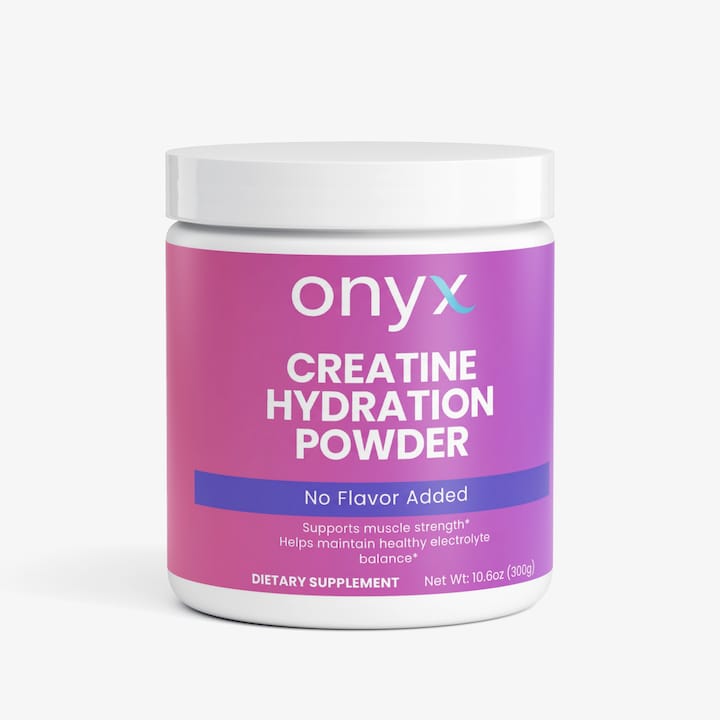
Onyxwellness’s own coverage of what creatine does for muscle, recovery, and hydration and its practical guide to creatine hydration both walk through the same evidence base covered here: 3 to 5 grams daily, consistency over precision timing, and hydration as a genuine complement rather than an afterthought. If you’re training for endurance specifically, the guide to creatine for runners covers use cases beyond straight strength training.
Because creatine shifts water into muscle cells, a routine that pairs your daily dose with steady hydration tends to feel smoother, especially in the first few weeks. That’s the gap Onyxwellness’s creatine and muscle building collection is built to fill, alongside strip-based formats designed for people who want supplementation to require less friction, not more planning.
A few ways this guidance connects to specific product formats:
- Daily consistency is easier when a product doesn’t require water or prep, which is the whole premise behind Onyxwellness’s dissolvable strip formats
- Hydration support matters more once you’re supplementing regularly, since creatine’s water shift is real, even if mild
- Recovery-focused pairing, like winding down after a training session, is a natural moment to build a habit around
The core takeaway carries through every product decision: pick a dose you’ll actually take every day, and build your routine around consistency first.
What I’d Tell a Friend Starting Creatine
If a friend asked me for one piece of advice on creatine dosage, it wouldn’t be about grams. It would be about the calendar.
The research is remarkably consistent on this point: 3 to 5 grams a day, taken every day for months, outperforms a perfectly optimized dose taken sporadically. People get hung up on whether they should load, whether 3 grams is “enough,” or whether they’re a few minutes off the ideal post-workout window. Meanwhile, the study data behind the ISSN’s position stand shows loading and steady dosing arrive at the same saturated end state. The variable that actually predicts results isn’t the protocol. It’s whether you kept taking it.
My honest take on loading: skip it unless you have a specific deadline. It’s not dangerous, but it’s more supplement, more cost, and more stomach upset for a benefit, faster saturation, that most people don’t actually need. Beginners overestimate how much the first week matters and underestimate how much month three matters.
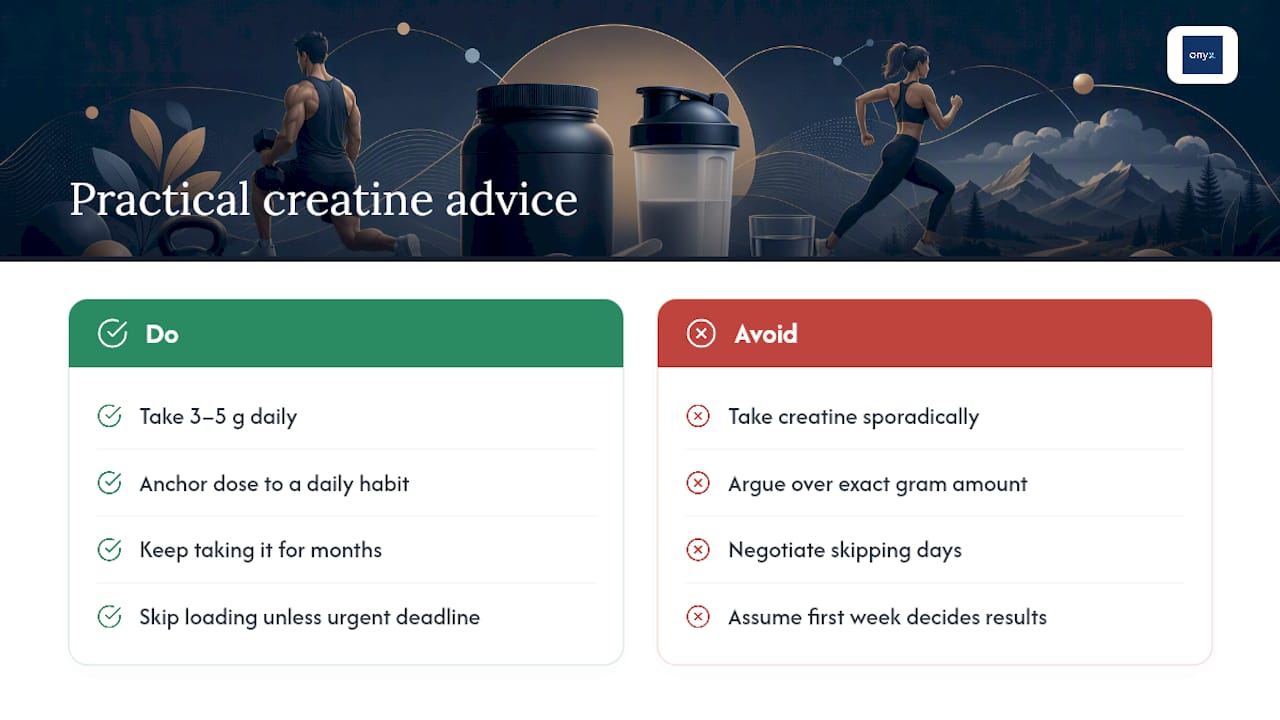
The one habit I’d suggest building immediately is anchoring your dose to something you already do daily without fail. Breakfast works well for most people. A post-workout shake works for others. The specific anchor matters less than picking one and never negotiating with yourself about it. That’s the difference between someone who’s still taking creatine consistently at the six-month mark and someone who quietly stopped in week three because they kept forgetting.
If you want to go deeper on the hydration side of this, which tends to be the part beginners think about least, Onyxwellness’s guide on creatine and hydration is worth the ten minutes.
— Chris
A Simple Way to Round Out Your Creatine Routine
Getting your creatine dosage right solves one piece of a training routine. The rest, hydration, recovery, and the everyday habits that make consistency actually possible, is where a lot of people quietly fall short.
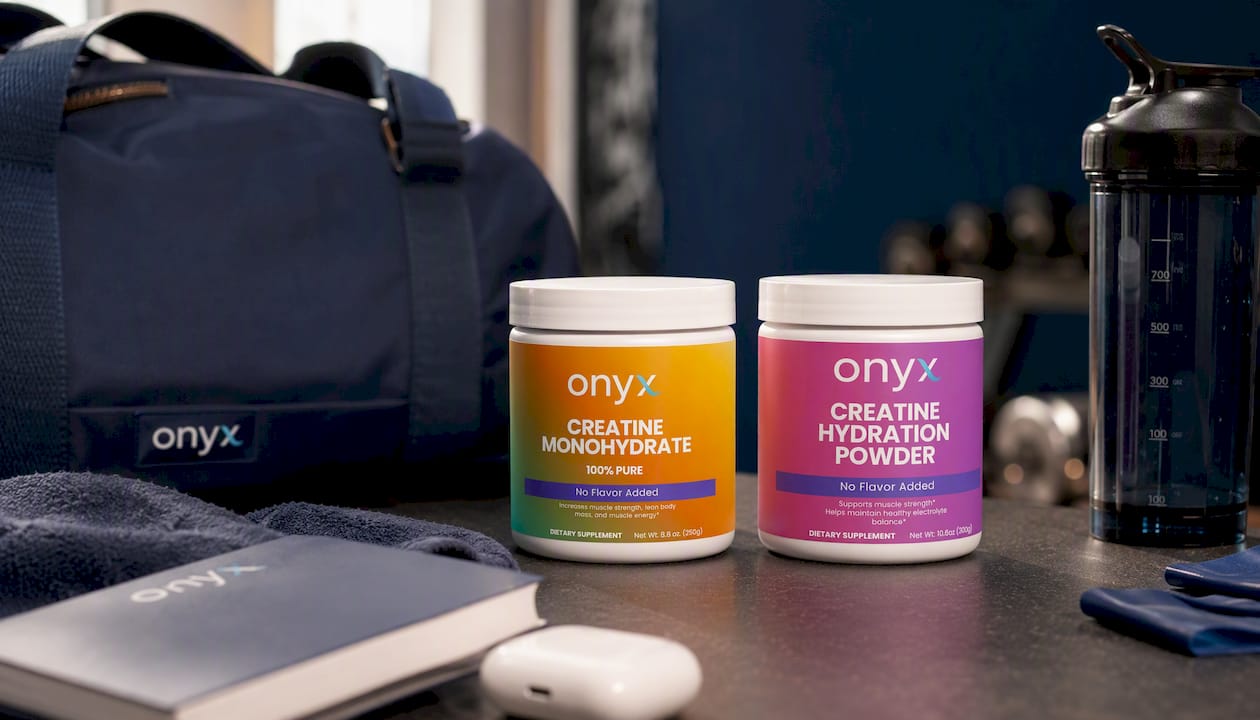
Onyxwellness built its creatine and muscle building collection around exactly that gap. The HydraCore Creatine Hydration Powder pairs a standard monohydrate dose with electrolytes in one scoop, so you’re not juggling two separate products to cover both saturation and the water shift creatine causes. For the days when a full shake isn’t practical, Onyxwellness’s dissolvable strip formats, including the Energy Strips for training days and Sleep Strips for recovery nights, let you support the rest of your routine without water, mixing, or a gym bag full of tubs.
If you’re starting your creatine routine this week, take a look at the HydraCore Creatine Hydration Powder and build your daily dose around a format that handles hydration at the same time.
Sources
- Timing, optimal dose and intake duration of dietary supplements with evidence-based use in sports nutrition
- What is creatine? Potential benefits and risks of this popular supplement
- International Society of Sports Nutrition position stand: safety and efficacy of creatine supplementation in exercise, sport, and medicine
- Creatine for Beginners: Should You Take It?
FAQ
How much creatine should I take per day?
Most adults do well on 3 to 5 grams of creatine monohydrate daily, taken consistently, according to guidance from Harvard Health and the ISSN.
Is 3 grams or 5 grams of creatine better?
Both work equally well long term; 3 grams saturates muscle stores in about 28 days, while 5 grams gets there slightly faster and may suit heavier adults or lower-creatine diets better.
Do I need to do a creatine loading phase?
No, loading is optional. It speeds up saturation to about a week using divided doses of roughly 20 grams a day, but steady 3 to 5 gram dosing reaches the same result within a month.
What is the best time of day to take creatine?
Any consistent time works, since daily adherence matters more than exact timing; pairing your dose with a carbohydrate or protein source, like a shake, may modestly improve retention.
Can I take too much creatine?
Doses above 10 grams daily aren’t well supported by evidence for most people and mainly raise the odds of GI discomfort without added benefit; larger adults may reasonably use up to 10 grams under guidance.