


TL;DR:
- Cognitive support involves multiple strategies, including lifestyle habits, supplements, and traditional practices. Natural tools like Ayurvedic herbs can aid stress reduction and brain health when tailored to individual needs. Long-term, consistent habits combined with targeted natural interventions offer the most sustainable cognitive benefits.
You’ve probably heard that a certain herb or supplement can sharpen your mind overnight. Maybe you’ve even tried one, hoping it would flip a switch. The truth is a bit more complicated, and honestly, more interesting. Real cognitive support isn’t a single pill or powder. It’s a layered approach that blends evidence, tradition, and daily habits into something that actually sticks. This guide breaks down what cognitive support really means, how natural and Ayurvedic tools fit into the picture, and what you can realistically expect when you start making smarter choices for your mind.
Table of Contents
- Defining cognitive support: What does it really mean?
- How do natural products and Ayurveda support the brain?
- Evidence check: What works, what doesn’t in real life?
- Optimizing your approach: Practical tips for daily clarity
- Expert perspective: Why real-life cognitive support looks different than most expect
- Find the right solutions for your cognitive support journey
- Frequently asked questions
Key Takeaways
| Point | Details |
|---|---|
| Cognitive support explained | True cognitive support is more than just supplements—it’s a blend of strategies for brain health and mental clarity. |
| Natural aids’ mechanisms | Ayurvedic herbs and adaptogens work by supporting stress response, signaling, and protection for the brain. |
| Results vary by person | Supplements show the most benefit for those with stress or mild memory concerns and interact with your unique needs. |
| Lifestyle synergy matters | Best results come from combining natural products with daily habits like good sleep, movement, and stress management. |
| Personalize for success | Track your responses and adjust your approach for safest and most effective brain support. |
Defining cognitive support: What does it really mean?
Most people think of cognitive support as anything that makes you think faster or remember more. But the real definition is broader and, in some ways, more useful. Cognitive support includes every strategy that helps your brain process information, maintain focus, store memories, and adapt to mental demands. That covers supplements, yes, but also brain training, compensatory tactics like using reminders or structured routines, sleep, nutrition, and stress management.
Here’s where the evidence gets humbling. Cognitive interventions show small to moderate near-transfer effects, meaning you get better at the specific skill you’re practicing, but the benefits don’t always spill into everyday life the way you’d hope. Compensatory strategies, such as external aids and structured systems, actually have stronger evidence for real-world impact than most “brain-boosting” exercises.
What does that mean for you? It means that “support” isn’t the same as dramatic improvement. Sometimes the goal is to protect what you already have, reduce mental fatigue, or just help your brain run more smoothly under stress. That’s a worthwhile goal, even if it doesn’t make for a flashy headline.
What cognitive support actually looks like in practice:
- Taking an herbal supplement like Bacopa to reduce stress-related mental fog
- Using a written checklist to manage cognitive load during busy periods
- Following an Ayurvedic mental clarity routine that includes specific foods, timing, and herbs
- Prioritizing deep sleep to allow memory consolidation
- Building movement into your day to support blood flow and neuroplasticity
The key insight here is that no single tool carries all the weight. Cognitive support is a toolbox, not a magic wand. And the best results come from people who combine tools thoughtfully, not from those chasing the one perfect supplement. Exploring ways to boost mental wellness naturally can be a great starting point for building that toolbox.
How do natural products and Ayurveda support the brain?
Once you know the spectrum of cognitive supports, it helps to understand how natural solutions, especially from Ayurveda, work under the hood. Ayurveda isn’t folk magic. It’s a 5,000-year-old system of medicine with a detailed theory of how the mind and body interact, and modern science has started catching up to some of its core ideas.
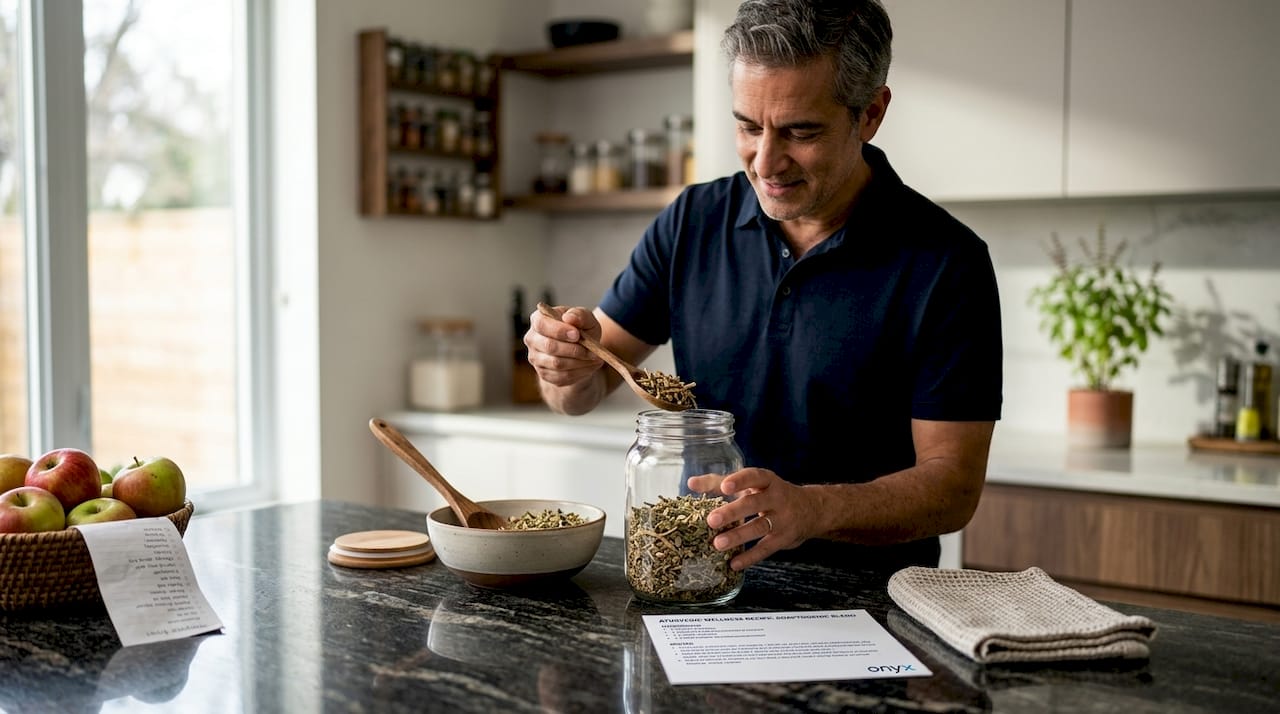
The herbs most commonly used for cognitive support in Ayurveda work through several biological pathways. Bacopa monnieri, also called Brahmi, is one of the most studied. It supports neuroplasticity, reduces oxidative stress in brain tissue, and appears to modulate acetylcholine, a neurotransmitter tied to memory and learning. Shankhpushpi (Convolvulus prostratus) is another traditional herb where mechanisms include adaptogenic stress reduction, antioxidant protection, cholinergic enhancement, improved synaptic plasticity, and modulation of neurotransmitters. That’s a broad set of actions for a single plant.
| Herb | Primary mechanism | Best used for |
|---|---|---|
| Bacopa (Brahmi) | Neuroplasticity, acetylcholine | Memory, stress-related fog |
| Shankhpushpi | Antioxidant, cholinergic | Focus, anxiety-driven distraction |
| Ashwagandha | Cortisol reduction, adaptogen | Chronic stress, mental fatigue |
| Lion’s Mane mushroom | Nerve growth factor support | Long-term brain health |
| Reishi mushroom | Immune and stress modulation | Calm focus, resilience |
Adaptogens deserve a special mention. These are plants that help your body resist physical and psychological stress. When stress goes down, cognitive function often goes up, simply because your brain isn’t burning energy fighting cortisol all day. Ashwagandha is the gold standard here, but Reishi mushroom also plays an interesting supporting role. You can read more about how Reishi supports cognitive and relaxation outcomes if that pathway interests you.
One thing Ayurveda gets right that Western supplement culture often misses is individualization. Your dosha, a term for your unique mind-body constitution, determines which herbs and practices are most likely to benefit you. A Vata-dominant person dealing with scattered thinking needs a different approach than a Pitta-dominant person struggling with mental overheating and irritability. Following a personalized Ayurvedic home routine for clarity can help you figure out which tools match your constitution.
Pro Tip: When choosing a herbal supplement, look for standardized extracts with clear dosage information. The source and preparation matter enormously. A low-grade Bacopa product and a high-quality standardized extract can produce very different results, even at the same nominal dose.
Evidence check: What works, what doesn’t in real life?
Still, how do these herbal and natural approaches fare when tested in real-world studies and comparisons? The honest answer is: it depends a lot on who’s taking them and why.
Clinical trials on herbal cognitive supplements generally run 8 to 12 weeks and show improvements of 10 to 30 percent in memory scores, but there’s an important caveat. Those results show up most reliably in people who are stressed, experiencing mild cognitive impairment, or older adults with some memory concerns. In healthy young adults with no particular deficits, the effects are often much more modest.
A recent well-controlled trial found that Bacopa monnieri at 300mg/day for 12 weeks reduced stress and fatigue but showed no significant cognitive improvements versus placebo in healthy adults. That’s not a failure. Stress reduction is genuinely valuable for cognitive performance. But it does challenge the idea that these herbs are universal brain boosters.
“Cognitive support works best when it’s matched to the real challenge. If your brain is struggling because of chronic stress, an adaptogen is a smart choice. If you’re healthy, rested, and well-nourished but still looking for an edge, the data suggests you’ll find more gains in habits than in pills.”
Additionally, research comparing Bacopa to pharmaceutical options reveals nuance. Efficacy varies by dosha and prakriti in Ayurveda, and benefits are more consistent in people with mild cognitive issues than in completely healthy populations. Against pharmaceuticals like donepezil, Bacopa shows comparable results in some populations, with a far gentler side effect profile.
What the evidence actually supports:
- Herbal adaptogens consistently reduce stress biomarkers, which indirectly benefits cognition.
- Memory improvements from herbs like Bacopa tend to be meaningful in people with stress-related or mild impairment.
- Diet, sleep quality, and regular exercise produce measurable cognitive benefits that are often equal to or greater than those from supplements.
- Ayurvedic individualization (dosha-based recommendations) may explain why results vary so much between users.
- Combining lifestyle habits with targeted supplements appears to outperform either approach used alone.
If you want to support cognitive clarity with a cleaner lifestyle foundation, exploring the role of an Ayurvedic relaxation guide or adding daily greens for clarity to your routine are practical next steps backed by both tradition and research.
Optimizing your approach: Practical tips for daily clarity
Now, with a sense of what works and how, let’s get practical. What should you actually do for the best results? The good news is that the most effective approach is also the most flexible one, because it’s built around your life, not a rigid protocol.
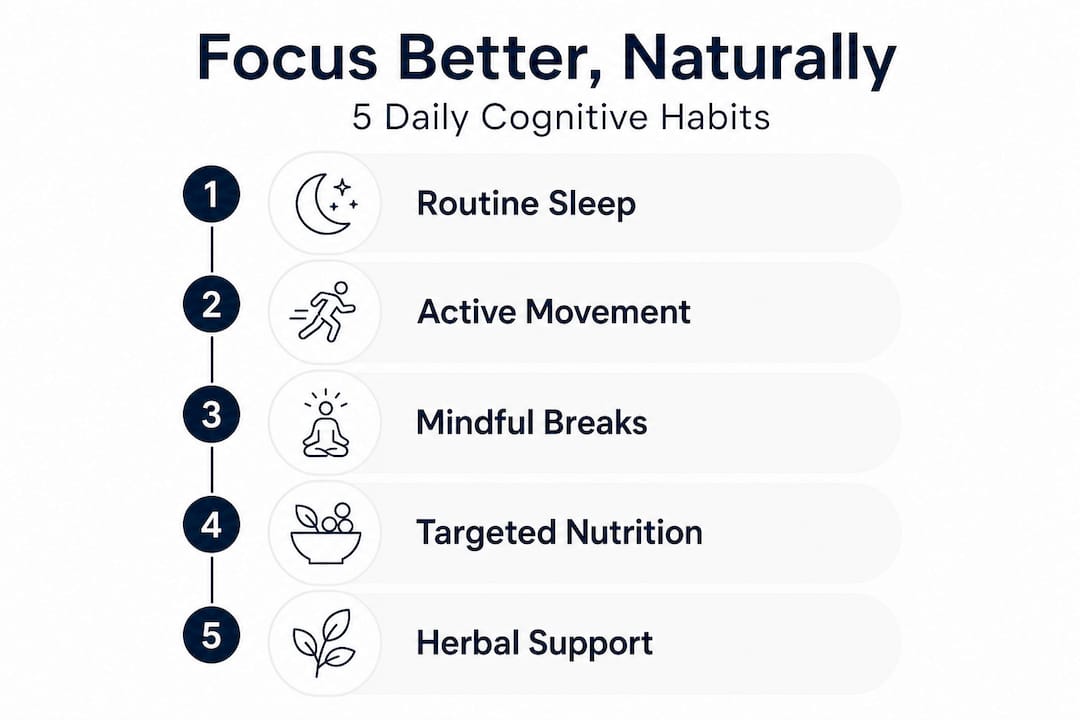
Research confirms that RCTs show memory benefits in stress and MCI contexts when supplements are combined with healthy habits. That’s an important signal: supplements are amplifiers, not foundations. Your daily habits set the stage, and natural tools help you get more out of what you’re already doing.
Practical steps to build a personalized clarity routine:
- Track your baseline. Before adding anything new, spend one week noting when your focus is sharpest and when it falls apart. Patterns reveal your real cognitive challenges.
- Match herbs to your stress profile. If you’re in a high-cortisol season, lean on adaptogens. If mental fog is your main complaint, try herbs that support acetylcholine like Brahmi.
- Prioritize sleep above everything. Memory consolidation happens during deep sleep. No supplement fully compensates for chronic sleep deprivation.
- Build movement into your day, not just your schedule. Even a 20-minute walk has documented benefits for attention and working memory.
- Eat in a way that supports stable blood sugar. Cognitive crashes after meals are often blood sugar crashes. Mindful eating, a core Ayurvedic principle, helps maintain steady mental energy.
- Start any new supplement at a low dose. GI sensitivity is the most common side effect with herbs like Bacopa. Gradual dose increases reduce discomfort significantly.
Pro Tip: Keep a simple weekly log of how you feel mentally on days you use your supplement versus days you don’t. After four weeks, patterns emerge that tell you more than any clinical study can about what works for your brain. You can also explore Ayurveda relaxation tips to round out your daily routine with habits that support both calm and clarity.
One thing worth repeating: cognitive support is personal. What works brilliantly for your friend might do little for you, not because the herb is ineffective, but because your stress profile, dosha, and baseline health are different. Honor that. Experiment deliberately. And adjust without judgment.
Expert perspective: Why real-life cognitive support looks different than most expect
Here’s something that rarely makes it into supplement marketing: most meaningful progress in cognitive support comes not from a breakthrough product, but from small, sustainable changes stacked consistently over months. That’s not a satisfying story for a landing page, but it’s what the data actually shows.
There’s a tendency in the wellness space to chase the “one thing” that will flip the switch on focus, memory, and mental energy. Some people cycle through dozens of supplements looking for that feeling. But prioritizing lifestyle alongside naturals is what the research consistently favors, especially for long-term, real-world gains. Broad cognitive training and single supplements, used alone, show only modest transfer to daily functioning.
What does work, and what experts in both Western cognitive science and Ayurvedic medicine agree on, is a compensatory and integrative approach. That means using your environment and external tools, structured reminders, clear schedules, focus aids, as skillfully as you use internal ones. It also means recognizing that herbs support, but do not replace, the core brain basics: deep sleep, regular movement, reduced chronic stress, and genuine human connection.
The uncomfortable truth? Many people who feel sharper after starting a new supplement are partly experiencing the benefits of paying attention to their health for the first time in a while. Better sleep, reduced alcohol, a calmer evening routine. The herb gets the credit, but the lifestyle shift did a lot of the work. That doesn’t make the herb useless. It means you’re getting a compounding benefit, and that’s the best possible outcome.
Our take at Onyx Wellness is that evidence-based Ayurvedic strategies are most powerful when they’re woven into a life that already values rest, nourishment, and intentional living. The herbs are in your corner. So is the science. But you’re the one who shows up every day.
Find the right solutions for your cognitive support journey
Ready to turn these ideas into routine and results? Here’s how you can take the next step toward clarity and focused living.
At Onyx Wellness, we’ve built our product line around exactly this kind of integrated, evidence-inspired approach. Our Mushroom Focus Strips deliver functional mushroom extracts in a fast-absorbing, sugar-free dissolvable strip, no water needed, no guesswork on dosing. They’re designed for the real moments when you need clarity: before a long meeting, during a creative work session, or when mental fatigue starts creeping in.
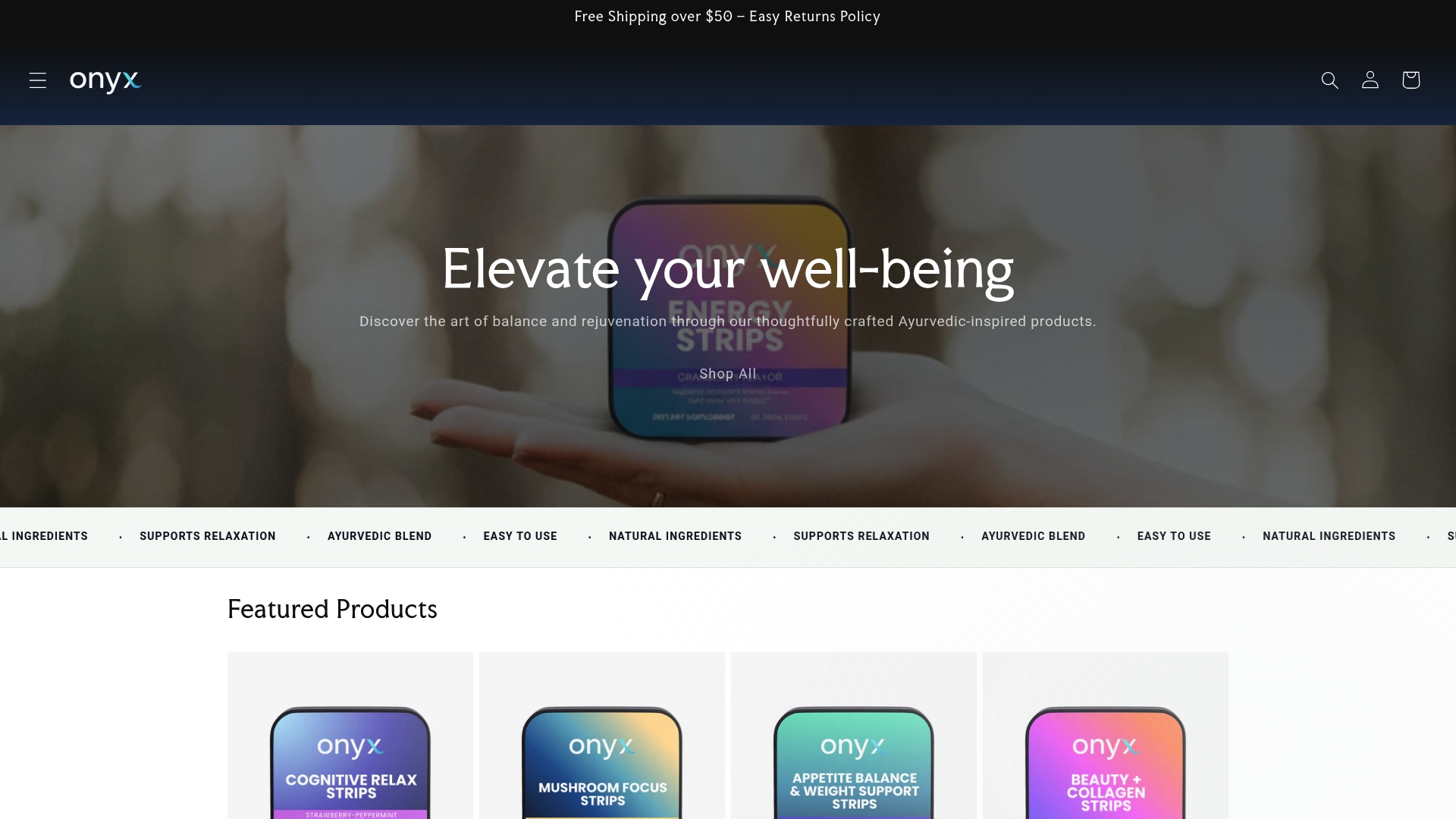
We also offer products like Iron Strips for those who want to address the nutritional foundations of energy and mental clarity. Pair any of our products with the Ayurvedic content library on our site, and you’ll have both the tools and the understanding to build a daily clarity practice that actually works for your life.
Frequently asked questions
What is the difference between cognitive support and nootropics?
Cognitive support includes a broad range of strategies, from supplements to lifestyle habits, while nootropics are specific substances believed to enhance mental functioning. Nootropics, like those with cholinergic and adaptogenic mechanisms, are one tool within the wider cognitive support category.
How long does it take for cognitive support supplements to work?
Most herbal supplements show their best results after 8 to 12 weeks of consistent use. Clinical trials show improvements in memory scores of 10 to 30 percent are typical in that timeframe, particularly for those dealing with stress or mild cognitive concerns.
Can healthy adults benefit from cognitive support products?
Yes, but the benefits often look different than expected. Bacopa at 300mg/day for 12 weeks reduced stress and fatigue in healthy adults but didn’t significantly improve memory versus placebo, so the greatest value tends to be stress reduction and mental resilience rather than raw performance gains.
Are there risks or side effects with natural cognitive supplements?
Most natural cognitive supplements are well-tolerated, but some people experience mild GI discomfort, especially with Bacopa. Starting at a low dose and increasing gradually minimizes this, and monitoring for GI side effects while combining supplements with healthy habits is the safest approach.
What daily habits help cognitive support work better?
Sleep, regular exercise, balanced nutrition, and stress management form the foundation that makes any supplement more effective. As research consistently shows, prioritizing lifestyle alongside naturals produces better long-term results than relying on supplements alone.