


Cinnamon can nudge fasting blood sugar and HbA1c down by a modest, measurable amount, according to pooled trial data, but it works as a supporting habit, not a substitute for prescribed diabetes care. Meta-analyses show consistent, small improvements. The catch is safety: Cassia cinnamon, the type in most grocery store spice jars, carries a coumarin compound that can stress the liver at high or chronic doses. Talk to your clinician before adding it, especially if you take insulin or other glucose-lowering medication.
TL;DR:
- Doses of 1 to 2 grams per day of cinnamon capsules provide the most consistent glycemic benefits, with effects largest on postprandial glucose.
- Cassia cinnamon contains higher levels of coumarin, which poses a liver toxicity risk with long-term, high-dose use, making Ceylon cinnamon a safer option for extended use.
- Cinnamon’s modest HbA1c reduction of around 0.56% occurs over at least 8 to 12 weeks, with fasting glucose drops typically in the 10 to 15 mg/dL range.
- Its mechanisms suggest mild insulin-sensitizing effects, but most evidence is from animal and cell studies; human outcomes remain modest and variable.
- Always consult a healthcare provider before adding cinnamon, especially if on glucose-lowering medications, to monitor for hypoglycemia or liver concerns.
Table of Contents
- Cinnamon for Blood Sugar: What Clinical Trials and Meta-Analyses Found
- How Cinnamon Might Influence Insulin and Glucose Uptake
- Cinnamon Dosage for Blood Sugar: Species, Doses, and Drug Interactions to Know
- A Practical Way to Try Cinnamon Without Overdoing It
- Where Onyxwellness Fits Into This Conversation
- How Cinnamon Compares to Other Natural Approaches for Blood Sugar
- What Actually Matters Here
- A Convenient Way to Support Your Routine
- Sources
- FAQ
Cinnamon for Blood Sugar: What Clinical Trials and Meta-Analyses Found
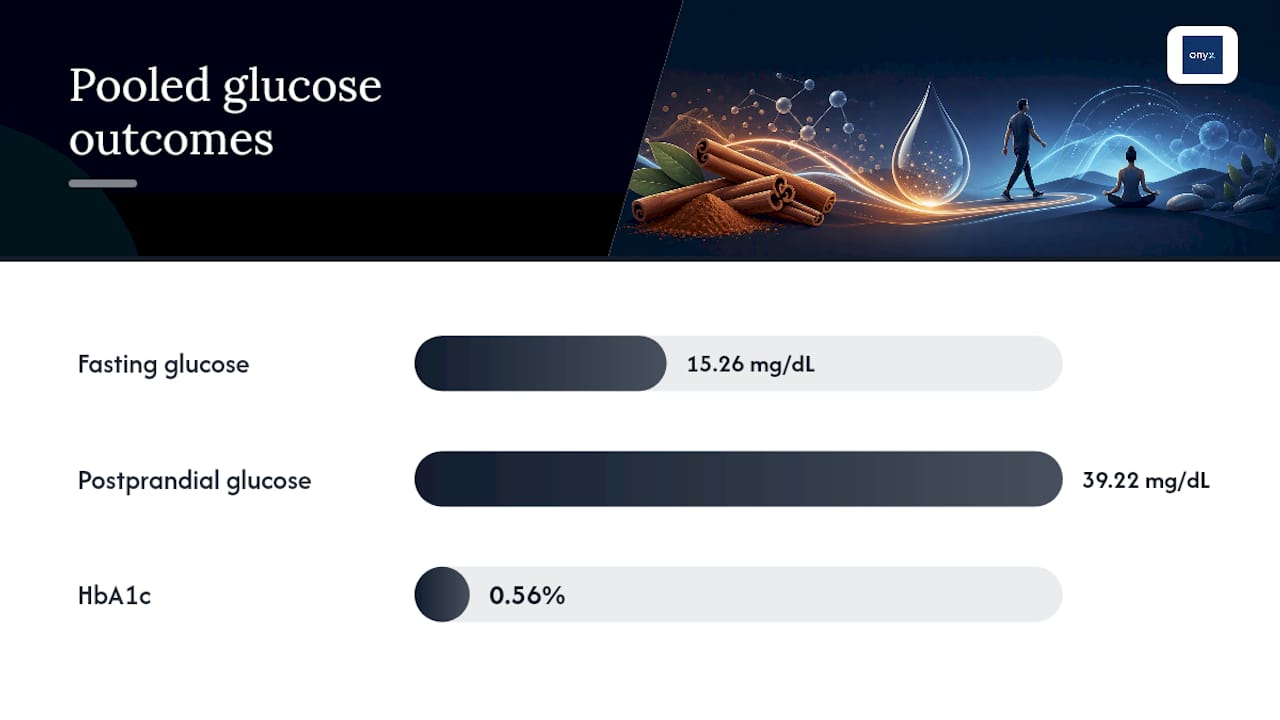
The strongest evidence comes from a 2022 systematic review that pooled 28 randomized controlled trials covering more than 3,000 participants. Cinnamon supplementation lowered fasting blood glucose by a weighted mean difference of 15.26 mg/dL, cut postprandial glucose by 39.22 mg/dL, and reduced HbA1c by 0.56 percentage points compared with control groups, according to the systematic review and meta-analysis. Those numbers sound impressive on paper. In context, a 0.56% HbA1c drop is roughly what you’d expect from adding a second-line oral medication at a low dose, not a dramatic overhaul of glycemic control.
The same analysis found something worth paying attention to if you’re deciding how to actually use cinnamon: capsule forms and doses at or below 2 grams per day tended to produce stronger, more consistent effects than higher doses or culinary sprinkling. That’s counterintuitive. More isn’t better here, and the delivery method matters as much as the amount.
Earlier research laid the groundwork for this pattern. A widely cited 2003 trial published in Diabetes Care reported improved glucose and lipid markers in people with type 2 diabetes taking cinnamon, and it’s been followed by a mix of confirming and null results ever since, as summarized in RCT reviews on cinnamon and metabolic markers. Some trials replicated the benefit. Others found no significant difference from placebo. That split isn’t a sign the early research was wrong. It reflects how much trial design, population, and cinnamon form can shift outcomes.
More recent data adds a useful wrinkle for anyone with prediabetes specifically. A 2024 randomized, double-blind crossover trial gave adults with obesity-related prediabetes 4 grams of cinnamon spice daily for four weeks and tracked their glucose continuously. The results were notable: 24-hour glucose concentrations dropped significantly compared with placebo, glucose peaks were lower, and triglycerides also decreased, per the 4-week crossover trial. This is one of the few studies to use continuous glucose monitoring rather than single blood draws, which makes its glucose peak findings more convincing than older single-time point trials.
Not every dose or population responds the same way. A smaller trial in healthy adults testing 1 to 6 grams per day over 40 days found statistically significant but modest declines in some postprandial measures, generally in the 8% to 12% range at higher doses, according to dose-response research in healthy adults. Healthy adults without insulin resistance have less room to improve, so even a real effect shows up smaller in that population than it would in someone with diabetes or prediabetes.
Here’s what the pooled data actually breaks down to across the outcomes researchers track most closely:
- Fasting blood glucose: down by a modest but measurable amount on average across pooled trials.
- Postprandial glucose: shows a notable reduction, being the outcome with the largest effect.
- HbA1c: modestly reduced, reflecting changes that accumulate over months of glycemia.
- HOMA-IR (insulin resistance marker): improved in several pooled analyses, though less consistently than the glucose measures.
Pooled trial data across 28 studies (n=3,054) show cinnamon lowering fasting glucose by 15.26 mg/dL and HbA1c by 0.56%, with capsule forms at 2 grams per day or less producing the most reliable results.
The main limitation running through all of this is heterogeneity. Trials vary in cinnamon species, dose, form, trial length, and baseline health of participants, and umbrella reviews flag high statistical heterogeneity across many of these pooled outcomes, per an umbrella meta-analysis on cinnamon and glycemic control. That variability is why you’ll see headlines claiming cinnamon “doesn’t work” right next to others claiming it’s a breakthrough. Both are cherry-picking from a genuinely mixed evidence base. The honest read: the average effect across dozens of trials is real but small, and your individual result depends on which cinnamon, which dose, and which starting point you bring to it.
One more nuance matters if you’re watching HbA1c specifically. That marker reflects roughly three months of average blood glucose, so trials shorter than 8 to 12 weeks can’t reliably capture a true HbA1c change. Many of the positive HbA1c findings in the literature come from trials that ran long enough to matter, but shorter studies showing fasting glucose improvements don’t necessarily predict an HbA1c shift yet.
How Cinnamon Might Influence Insulin and Glucose Uptake
Cinnamon’s proposed mechanism centers on compounds called cinnamaldehyde and various polyphenols, including one specific molecule called MHCP (methylhydroxychalcone polymer) that researchers isolated specifically for its insulin-like activity in lab studies.
In cell and animal research, these compounds appear to activate insulin receptor pathways, including IRS-1 signaling and PI3-kinase activation, both of which are steps your body normally uses when insulin tells a cell to pull glucose out of the bloodstream. That activation seems to encourage GLUT4 transporters, the proteins that shuttle glucose into muscle and fat cells, to move to the cell surface and start working even when insulin signaling is sluggish, which is the core problem in insulin resistance.
This is where a critical caveat belongs: most of that mechanistic detail comes from in vitro (cell dish) and animal studies, not human trials. Human research hasn’t confirmed cinnamon activates the exact same pathways at the doses people actually take. It’s plausible. It’s not proven at the cellular level in living people.
What’s reassuring is that the scale of the clinical effect lines up with what you’d expect from a mild insulin sensitizer rather than a potent drug. A 0.56% HbA1c reduction and modest fasting glucose declines are consistent with a compound that gently supports existing insulin signaling rather than one that dramatically rewires glucose metabolism. If cinnamon worked as powerfully in humans as MHCP appears to work in a petri dish, trial results would look far more dramatic than they do. The mismatch between striking cell-study findings and modest human results is common in nutrition science, and it’s a useful filter whenever a supplement claims mechanisms are borrowed almost entirely from animal or lab data.
Cinnamon Dosage for Blood Sugar: Species, Doses, and Drug Interactions to Know
Not all cinnamon on your spice rack is the same plant, and that distinction matters more than most people realize when blood sugar and liver health are both on the table.
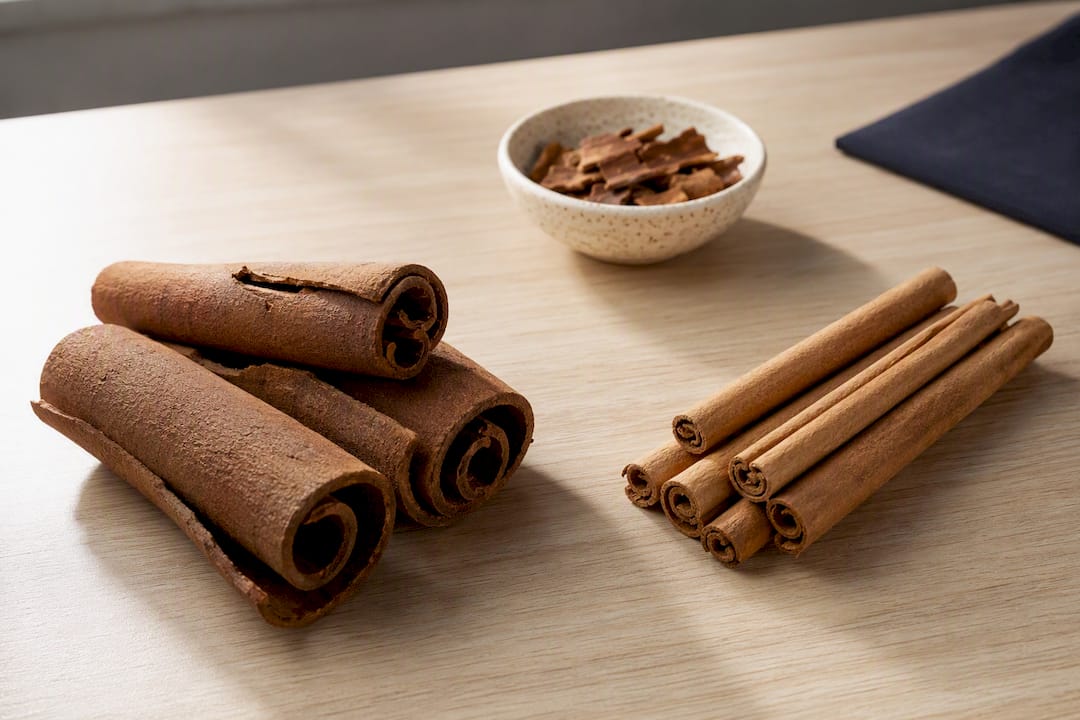
Cassia cinnamon is what you’ll find in most grocery store containers and many supplements. It’s cheaper to produce and has a stronger, more pungent flavor. It also contains meaningfully higher levels of coumarin, a naturally occurring compound linked to liver toxicity risk with chronic, high-dose exposure, according to an umbrella review of cinnamon and metabolic disease.
Ceylon cinnamon (Cinnamomum verum), sometimes labeled “true cinnamon,” has a milder flavor and substantially lower coumarin content. Clinicians generally consider it the safer choice for anyone planning regular, long-term use rather than occasional culinary sprinkling.
Most of the clinical trials showing glucose benefits used Cassia, simply because it’s more available and cheaper to source for research. That creates an awkward gap: the species with the most safety concern is also the species with the most trial data behind it.
Dose ranges that showed up across the research:
- 0.5 to 1 gram per day — the low end used in several trials, generally well tolerated.
- 1 to 2 grams per day — the range associated with the most consistent glucose benefits in pooled capsule-form analyses.
- 4 grams per day — the dose used in the 2024 prediabetes crossover trial, which showed meaningful 24-hour glucose improvements.
- Up to 6 grams per day — tested in some healthy-adult trials, but higher doses raise coumarin exposure without clearly outperforming lower doses.
Pooled analyses across 28 trials found the strongest, most consistent glycemic benefits at doses of 2 grams per day or less in capsule form, which is worth remembering the next time you see a product marketed on the idea that more cinnamon means more benefit.
Drug interactions deserve real attention here. If you’re on metformin, a sulfonylurea, or insulin, adding a substance that independently lowers blood glucose raises the theoretical risk of hypoglycemia, particularly if you increase your dose or combine it with other glucose-lowering habits at the same time. This isn’t a reason to avoid cinnamon outright. It’s a reason to monitor your blood glucose more closely for the first few weeks and flag the change to whoever manages your diabetes medication.
Mayo Clinic’s own patient guidance is blunt about the uncertainty here: evidence on cinnamon supplements remains mixed, and people should talk with their health care provider before starting supplements, especially if they have liver disease or take diabetes medication, according to Mayo Clinic’s diabetes treatment guidance. That’s a fair summary of where the science actually stands, not an overstatement in either direction.
Pro Tip: If you want to try cinnamon, ask your pharmacist to check it against your current medication list before you start. Pharmacists catch interaction risks that get missed in a quick doctor’s visit, and it takes about five minutes.
Red flags that mean stop and call your clinician: unusual fatigue, yellowing skin or eyes, dark urine, or repeated low blood sugar readings after starting cinnamon. Any of those warrants an immediate conversation, not a wait-and-see approach. If you have existing liver disease, high-dose or long-term Cassia cinnamon likely isn’t worth the risk regardless of glucose benefit.
For readers who want a deeper breakdown of cinnamon-based formulations and how to think about safe dosing, Onyxwellness has a longer explainer on cinnamon chromium safety and use.
A Practical Way to Try Cinnamon Without Overdoing It
If you and your clinician decide a trial makes sense, the form you choose matters almost as much as the dose.
Culinary cinnamon sprinkled on oatmeal or coffee is the lowest-risk, lowest-cost option, but it’s nearly impossible to dose consistently. A teaspoon from one jar might contain a meaningfully different coumarin and cinnamaldehyde content than a teaspoon from another, since spice quality and sourcing vary widely between brands.
Standardized capsules or extracts solve that inconsistency problem. Because they’re measured to a specific milligram amount per dose, they’re more likely to replicate what actually happened in the clinical trials, and subgroup data suggests they produce more reliable results than diet-based intake, per the same pooled metabolic biomarker analysis.
Fast-absorption formats, like dissolvable oral strips, offer a third path: consistent dosing without needing to swallow a capsule or measure a spice. For people who struggle with pill fatigue or want something that fits into a morning routine without water, the format itself removes a real-world compliance barrier that trials don’t usually measure.
Here’s a simple framework for structuring a personal trial, built around what the research actually supports:
- Talk to your clinician first, especially if you take glucose-lowering medication, and confirm cinnamon won’t conflict with your current treatment plan.
- Choose Ceylon over Cassia if you plan to use it daily for more than a few weeks, given the coumarin difference.
- Start at the low end (0.5 to 1 gram per day) for the first week to check tolerance, then consider moving toward the 1 to 2 gram range shown to be most effective in trials.
- Monitor fasting blood glucose two to three times a week for the first month, watching for a downward trend rather than day-to-day noise.
- Give it at least 8 to 12 weeks before evaluating HbA1c, since that marker needs roughly three months of data to reflect a real change.
- Set realistic expectations: a fasting glucose drop in the 10 to 15 mg/dL range, or an HbA1c change under 0.6 percentage points, is consistent with what trials found. Anything dramatically larger deserves a second look at what else changed.
Pro Tip: Keep a simple log, not a spreadsheet. Three numbers a week (fasting glucose, dose taken, anything unusual) is enough to spot a real trend without turning this into another chore on your plate.
Stop and escalate to your care team if fasting glucose readings climb instead of falling, if you notice repeated hypoglycemia symptoms, or if eight to twelve weeks pass with no measurable change at all. Cinnamon isn’t a wait-it-out supplement. If it’s going to help, you should see early signals within that window.
Where Onyxwellness Fits Into This Conversation
Onyxwellness offers Ayurvedic-inspired botanical blends delivered through fast-absorption formats, so supporting a routine doesn’t require water, pills, or extra planning. That approach sits naturally next to a conversation about blood sugar support, since consistency, not intensity, is what the cinnamon research keeps pointing to.
Onyxwellness also provides educational content beyond product pages, including a look at cinnamon chromium formulations and guidance on reducing sugar cravings, aimed at giving readers context before purchase.
Key aspects of this approach include:
- Ayurvedic-inspired blends adapted for convenient delivery formats.
- Sugar-free, quick-dissolve strips designed for consistent use without pills.
- Transparent product labeling to show contents clearly.
- Emphasis on lifestyle support without medical treatment claims.
The Appetite Balance & Weight Support Strips are marketed as lifestyle-support products. They are not intended or evidenced as glycemic treatments.
How Cinnamon Compares to Other Natural Approaches for Blood Sugar
Cinnamon isn’t the only supplement with glucose research behind it, and it’s rarely the strongest option on its own. Berberine, for instance, has trial data suggesting effects closer in magnitude to some oral diabetes medications, though it carries its own gastrointestinal side effects and interaction profile. Chromium picolinate shows a smaller, less consistent signal than cinnamon in most reviews. Alpha-lipoic acid has more evidence for nerve-related diabetes complications than for glucose control itself.
Lifestyle levers still outperform any single supplement in the research. Losing 5% to 7% of body weight, walking for 20 to 30 minutes after meals, and cutting refined carbohydrate intake each tend to move fasting glucose and HbA1c more than cinnamon does in isolation. That’s not a knock against cinnamon. It’s a reminder that supplements work best layered onto habits that are already doing the heavier lifting, not as a replacement for them.
If you’re building a personal blood sugar strategy, cinnamon belongs somewhere in the middle of that stack: reasonable evidence, low risk at sensible doses, and a role best understood as one supporting piece among several, not the centerpiece.
What Actually Matters Here
The honest takeaway is that cinnamon works, modestly, for some people, and the trial data backs a small but real effect on fasting glucose and HbA1c. It’s not a replacement for metformin, insulin, or the diet and exercise changes your care team has already recommended. Treat it as one small lever among several, not the lever.
If you’re curious, the reasonable next steps are straightforward: bring it up with your clinician, consider a standardized Ceylon-based supplement over high-dose Cassia if you’re using it long-term, and track your fasting glucose for a few weeks to see if it’s doing anything measurable for you specifically. The biggest research gap right now is long-term data. Most trials run 8 to 12 weeks, and almost none follow people for a year or more, so we genuinely don’t know what happens with sustained daily use over time.
— Chris
A Convenient Way to Support Your Routine
Onyxwellness offers Appetite Balance & Weight Support Strips that are designed to dissolve without water, fitting easily into a morning or midday routine.
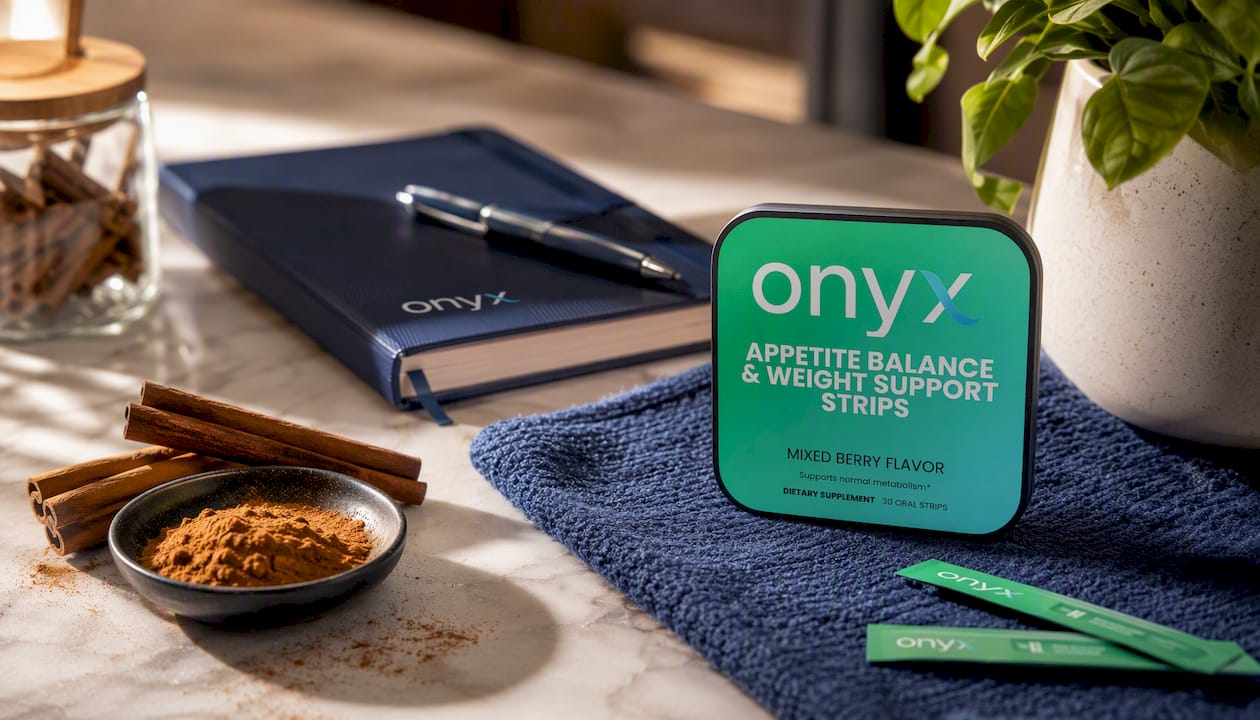
These strips feature transparent labeling to clarify their contents and are intended as adjuncts to diet, exercise, and prescribed medical treatments—not as replacements. If you are taking diabetes medication, consult your clinician before adding any new supplement. The strips collection includes various blends beyond appetite support, including formulations for focus and recovery. The Appetite Balance & Weight Support Strips product page provides detailed ingredient and usage information to help you decide if they suit your routine.
Sources
- Effects of cinnamon supplementation on metabolic biomarkers in individuals with type 2 diabetes: a systematic review and meta-analysis
- Effect of cinnamon spice on continuously monitored glycemic response in adults with prediabetes: a 4-week randomized controlled crossover trial
FAQ
Which is better for diabetes, turmeric or cinnamon?
Neither has strong enough human evidence to call it clearly superior. Cinnamon has more robust meta-analytic data behind it, showing measurable reductions in fasting glucose and HbA1c, while turmeric’s glucose research relies more heavily on smaller or animal studies. Most clinicians treat both as modest add-ons, not alternatives to each other or to prescribed medication.
What are the side effects of taking cinnamon for diabetes?
The main concern is coumarin exposure from Cassia cinnamon, which can stress the liver with chronic high-dose use, according to umbrella review data. Combined with diabetes medication, cinnamon can also theoretically increase hypoglycemia risk, so monitoring blood glucose after starting it is a reasonable precaution.
Is cinnamon as good as metformin?
No. Metformin’s glucose-lowering effect is substantially larger and better established than cinnamon’s, which produces a modest average HbA1c reduction of about 0.56 percentage points in pooled trials. Cinnamon may work as a supportive add-on alongside prescribed medication, never as a replacement for it.
What is the “cinnamon trick” for type 2 diabetes?
There’s no verified single trick. Various dosing routines have circulated online, but the actual trial evidence points to standardized capsules at 1 to 2 grams per day producing the most consistent results, not a specific ritual or timing method. Any online shortcut promising dramatic results with a specific “trick” is overstating what the research supports.
How long does it take to see results from cinnamon for blood sugar?
Fasting glucose changes can show up within a few weeks in some trials, but HbA1c needs roughly 8 to 12 weeks to reflect a meaningful shift, since it measures average blood sugar over about three months. Realistic expectations, based on pooled trial data, are a fasting glucose drop in the 10 to 15 mg/dL range over that period.