


TL;DR:
- Taking calcium, magnesium, and vitamin D together supports effective bone health and proper mineral regulation. Magnesium enables vitamin D activation and guides calcium into bones, making the combination essential for optimal absorption and use. Most adults benefit from balanced doses, with personalized guidance recommended for those at higher risk of deficiency or with specific health conditions.
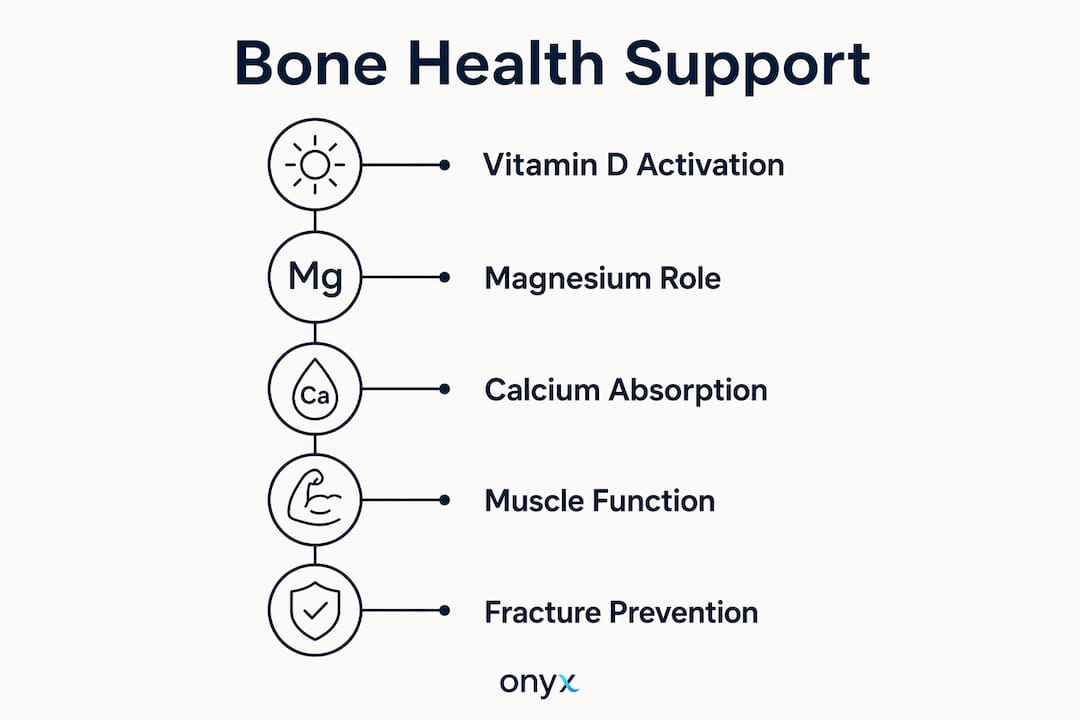
Yes, you should take calcium, magnesium, and vitamin D together. These three nutrients form a tightly linked system: vitamin D increases intestinal calcium absorption, and magnesium is required to convert vitamin D into its biologically active form and to regulate where calcium actually goes once it’s in your bloodstream. Without adequate magnesium, vitamin D stays largely inactive. Without vitamin D, calcium absorption drops sharply. The NIH Office of Dietary Supplements describes magnesium as a cofactor in over 300 enzyme systems, including those governing bone structure and parathyroid hormone activity.
Most adults should aim for a total elemental calcium intake of roughly 1,000–1,200 mg per day from food and supplements combined, per StatPearls/NCBI clinical guidance. Going well above that ceiling hasn’t shown added bone benefit and may introduce risks. Food first, always. Supplements fill the gap.
Quick next steps:
- Check how much calcium you’re actually getting from dairy, leafy greens, and fortified foods before buying anything
- Ask your clinician about a 25(OH)D blood test if you have fatigue, bone pain, or limited sun exposure
- Look for a combined supplement listing elemental milligrams, not just compound weight
- Consider Onyxwellness Bone Support Strips if you want a convenient, pill-free format that pairs these nutrients in one daily dose
Table of Contents
- How does vitamin D work with magnesium to get calcium into your bones?
- What are the real benefits of taking calcium, magnesium, and vitamin D?
- Who actually needs combined supplementation?
- What are the right doses, and when should you take them?
- What side effects and drug interactions should you know about?
- How do you choose the right calcium, magnesium, and vitamin D supplement?
- What do common combined formulations actually look like?
- Key Takeaways
- Onyxwellness Bone Support Strips make daily bone nutrition simpler
- Useful sources and further reading
- FAQ
How does vitamin D work with magnesium to get calcium into your bones?
Calcium is the primary structural mineral in bone, but it can’t do its job alone. Think of vitamin D and magnesium as the logistics team that gets calcium to the right address.

Here’s the chain: Vitamin D you get from sunlight or supplements starts as cholecalciferol (D3). Your liver converts it to 25-hydroxyvitamin D, and then your kidneys convert that into calcitriol, the active form that actually signals your intestines to absorb calcium. Magnesium is the cofactor that makes both conversion steps possible. When magnesium is low, vitamin D activation stalls and calcium absorption drops, even if you’re taking a calcium supplement every day.
Once calcium is absorbed, magnesium continues to regulate its transport and deposition. Adequate magnesium helps direct calcium into bone rather than into soft tissue or arterial walls, which is where excess, poorly regulated calcium can cause problems.
Beyond bone, this trio supports:
- Muscle function: Calcium triggers contraction; magnesium enables relaxation. An imbalance shows up as cramps or spasms.
- Nerve signaling: Both minerals are essential for proper electrical transmission across nerve membranes.
- Heart rhythm: Magnesium helps maintain stable cardiac rhythm, a benefit well-documented in NIH/ODS guidance.
- Immune support: Active vitamin D modulates immune cell function.
What are the real benefits of taking calcium, magnesium, and vitamin D?
The strongest evidence points to bone outcomes. Combined calcium and vitamin D supplementation improves bone mineral density in older adults and is clinically recommended when dietary intake falls short. Fracture risk reduction is modest but meaningful, particularly for postmenopausal women and adults over 65 who are most vulnerable to bone loss.
Magnesium adds a layer of benefit that many people overlook. Per NIH/ODS, it supports muscle contraction and relaxation, reduces occasional leg cramps, calms the nervous system, and contributes to healthy heart rhythm. If you’ve ever woken up with a charley horse and reached for a banana, magnesium is actually the more targeted fix.
Evidence strength at a glance:
- Strong evidence: Bone mineral density improvement with combined calcium + vitamin D; magnesium for muscle cramp relief and cardiac rhythm support
- Moderate evidence: Vitamin D for immune modulation; magnesium for sleep quality and nervous system calm
- Associative/weaker evidence: Cardiovascular calcification risk reduction from optimized calcium/magnesium ratios; cognitive benefits of vitamin D
The distinction matters. You can feel confident about the bone and muscle benefits. The cardiovascular and cognitive links are promising but not yet at the level where clinicians make specific dosing recommendations based on them alone.
Who actually needs combined supplementation?
Most people get some calcium from their diet, but many fall short of the full recommended amount, especially as they age. The groups most likely to benefit from a combined calcium, magnesium, and vitamin D supplement include:
- Postmenopausal women: Estrogen loss accelerates bone resorption; supplemental calcium and vitamin D are widely recommended by clinicians for this group
- Adults over 65: Reduced skin synthesis of vitamin D, lower dietary intake, and decreased kidney efficiency all converge
- People with malabsorption conditions: Celiac disease, Crohn’s, or a history of gastric bypass surgery all impair nutrient absorption significantly
- Strict vegans with low dairy intake: Plant-based calcium sources are less bioavailable; fortified foods help but often don’t close the gap
- People with limited sun exposure: Office workers, people in northern latitudes, and those who consistently use sunscreen are at higher risk for low vitamin D
Deficiency signs to watch for:
- Low vitamin D: Persistent fatigue, bone or back pain, frequent illness, low mood
- Low magnesium: Muscle cramps, tremors, irregular heartbeat, poor sleep, anxiety
- Low calcium (severe): Numbness or tingling in extremities, dental problems, brittle nails
Pro Tip: Ask your clinician for a 25(OH)D blood test if you have any of the above symptoms or belong to a high-risk group. Serum magnesium testing is less sensitive (most magnesium is intracellular), but it’s worth requesting if you have persistent cramps or arrhythmia. A dietary calcium assessment, which your doctor or a registered dietitian can walk you through, is often more useful than a blood test for calcium status.
Postmenopausal women and older adults generally have higher supplemental calcium needs than younger adults, according to clinical guidance. Age and gender influence individual requirements, so dosing should be personalized.
What are the right doses, and when should you take them?
Follow established RDAs and stay below tolerable upper intake levels. Food comes first; supplements bridge the gap.

Recommended intakes and upper limits for key adult groups
| Nutrient | Adult men | Adult women | Adults over 65 / Postmenopausal | Tolerable Upper Limit |
|---|---|---|---|---|
| Elemental calcium | 1,000 mg/day | 1,000 mg/day | 1,000–1,200 mg/day | 2,000 mg/day |
| Vitamin D | 600 IU/day | 600 IU/day | 800 IU/day | — |
| Magnesium (supplemental) | — | — | Same ranges; upper limit for supplements alone: 350 mg/day | 350 mg/day from supplements |
Sources: NIH/ODS and StatPearls/NCBI
Practical dosing rules:
- Split calcium doses to optimize absorption; smaller doses taken multiple times daily may be more effective than one large dose.
- Standard vitamin D maintenance is 600–800 IU daily from diet and supplements combined. Clinicians often recommend 1,000–2,000 IU for people with confirmed insufficiency, but that’s a personalized call.
- For magnesium supplements, the upper limit of 350 mg/day from supplements (not total dietary intake) is the safety ceiling for most adults. Exceeding it risks GI upset and, at extreme doses, more serious effects.
- Combined multinutrient products at typical doses are generally fine to take together. If you’re taking a high-dose magnesium supplement separately, spacing it 2+ hours from a large calcium dose can reduce any competition for absorption.
Pro Tip: When you read a Supplement Facts panel, always look for the “elemental” amount in parentheses next to the compound name. “Calcium carbonate 1,250 mg” delivers only about 500 mg of elemental calcium. If the label doesn’t break this out, that’s a red flag. Learn more about reading supplement labels before you buy.
What side effects and drug interactions should you know about?
Combined supplements are safe for most people at appropriate doses, but specific interactions and toxicity risks are real and worth knowing before you start.
Common side effects by nutrient:
- Calcium: Constipation and bloating are the most frequent complaints, especially with calcium carbonate. At excessive intakes, kidney stones and, in some research, vascular calcification are concerns.
- Magnesium: Loose stools or diarrhea, particularly with magnesium oxide. Hypotension at very high doses.
- Vitamin D: Toxicity from food or sunlight alone is essentially impossible, but high-dose supplements can cause hypercalcemia, with symptoms including nausea, weakness, and frequent urination.
Drug interactions to flag with your clinician:
- Antibiotics (tetracyclines, fluoroquinolones): Calcium and magnesium bind to these drugs and reduce their absorption. Space supplements at least 2 hours apart.
- Bisphosphonates (alendronate, risedronate): Take on an empty stomach, well before any calcium supplement.
- Thyroid hormone (levothyroxine): Calcium can impair absorption; take thyroid medication 4 hours away from calcium.
- Certain diuretics: Thiazides increase calcium retention (potentially raising blood calcium); loop diuretics increase magnesium loss.
- Cardiac medications and diabetes drugs: Some interact with magnesium or vitamin D; always disclose your supplement list to your prescriber.
Magnesium’s cardiovascular and electrolyte roles make it particularly important to flag if you’re on heart or blood pressure medications. The interaction isn’t always obvious, but it matters.
How do you choose the right calcium, magnesium, and vitamin D supplement?
Pick based on elemental content, bioavailable forms, and independent verification. Not all labels tell the same story.
Selection checklist:
- Elemental calcium per serving: Look for the parenthetical elemental amount, not just the compound weight. Target ≤500 mg elemental per dose for best absorption.
- Magnesium form: Citrate and glycinate absorb better and cause less GI upset than oxide. Oxide is cheaper but delivers less usable magnesium per milligram.
- Vitamin D form: D3 (cholecalciferol) raises blood levels more effectively than D2 (ergocalciferol). Prefer D3.
- Third-party testing: Look for USP Verified, NSF Certified for Sport, or ConsumerLab approval. These seals confirm the product contains what the label claims and is free of harmful contaminants.
- Serving size and pill burden: A product requiring 3–6 tablets per dose is harder to stick with. Format matters for adherence.
- Transparent labeling: Every active ingredient should list its elemental or active amount clearly, per supplement labeling best practices.
Red flags to avoid:
- Proprietary blends that list ingredients without individual amounts
- Single-dose calcium exceeding 500 mg elemental
- No third-party testing seal or certification
- Labels that list only compound weight (e.g., “calcium carbonate 1,000 mg”) without the elemental breakdown
Format comparison:
- Tablets/capsules: Most common, widest range of doses, easiest to find third-party tested options
- Chewables: Good for people who struggle with large pills; watch for added sugars and lower elemental doses
- Dissolvable strips: Fast absorption, no water needed, lower pill burden, good for adherence; check that elemental amounts are clearly listed
Pro Tip: Calculate price-per-dose, not price-per-bottle. A 90-count bottle at $25 with a 3-tablet serving is $0.83 per day. A 60-count bottle at $18 with a 1-strip serving is $0.30 per day. Third-party testing is worth paying for, but you don’t need the most expensive option on the shelf to get a quality product.
What do common combined formulations actually look like?
Most combined supplements fall into a few recognizable patterns. Knowing the pattern helps you match the product to your actual needs.
| Formulation type | Elemental calcium per serving | Magnesium type / mg | Vitamin D form / IU | Serving size | Best for | Format | Third-party testing |
|---|---|---|---|---|---|---|---|
| High-calcium combo tablet (e.g., Nature’s Way Calcium Magnesium & Vitamin D Complex) | — | Oxide / — | D3 / — | 3 tablets | General maintenance, dietary gap-filling | Tablet | Check brand site |
| Balanced combo (e.g., Country Life Calcium Magnesium with Vitamin D Complex) | ~500 mg | Citrate / — | D3 / — | 3–4 tablets | Adults seeking citrate form for better tolerance | Tablet | Check brand site |
| Multi-mineral blend (e.g., Nature Made Calcium, Magnesium & Zinc with Vitamin D3) | — | Oxide / — | D3 / — | 2–3 tablets | Broad micronutrient support, maintenance | Tablet | USP Verified |
| Onyxwellness Bone Support Strips | Check Supplement Facts | Check Supplement Facts | D3 / check label | 1 strip | Adherence-focused, pill-averse adults, daily convenience | Dissolvable strip | See product page |
A few notes on real-world use:
- High-calcium single-dose tablets work for maintenance but require splitting across meals to hit the 500 mg elemental absorption ceiling
- Citrate-form combos are the better pick if you take a proton pump inhibitor (PPI) or have low stomach acid, since citrate doesn’t require acid for absorption the way carbonate does
- Multi-mineral blends tend to deliver lower per-nutrient doses, which suits people who get most of their calcium from food and just want insurance
- Onyxwellness Bone Support Strips stand out for format: one strip replaces a handful of tablets, which makes daily consistency much easier to maintain
Always verify the Supplement Facts panel on the actual product before purchasing. Formulations change, and the elemental amounts are what matter, not the marketing copy on the front label. For a deeper look at how elemental amounts appear on labels, compare a few products side by side before committing.
Why magnesium is the most underappreciated piece of this trio
Magnesium rarely gets top billing, but the research makes a strong case that it should. Magnesium deficiency is directly associated with weaker bone mineral density and higher osteoporosis risk, not because magnesium builds bone the way calcium does, but because without it, vitamin D can’t activate and calcium can’t be properly directed.
Clinicians who work in bone health increasingly flag magnesium as the missing variable in patients who supplement calcium and vitamin D faithfully but still show poor outcomes. When magnesium deficiency is present, testing 25(OH)D levels may look normal on paper while active vitamin D function remains impaired. That’s a gap worth closing before assuming more calcium is the answer.
Key Takeaways
Calcium, magnesium, and vitamin D work as a functional trio: magnesium activates vitamin D, which drives calcium absorption, making all three necessary for effective bone support and broader wellness.
| Point | Details |
|---|---|
| Take all three together | Vitamin D activates calcium absorption; magnesium activates vitamin D. Missing one weakens the whole system. |
| Dose elemental calcium correctly | Split doses to ≤500 mg elemental per serving; total daily target is 1,000–1,200 mg from all sources. |
| Choose magnesium citrate or glycinate | These forms absorb better and cause less GI upset than magnesium oxide. |
| Stay within upper limits | The tolerable upper limit for supplemental magnesium is 350 mg/day; for total calcium, 2,000 mg/day depending on age. |
| Onyxwellness Bone Support Strips | A dissolvable strip format that reduces pill burden and supports daily adherence for bone-focused supplementation. |
A practical take on recommending combined supplementation
The conversation I have most often with people asking about these three nutrients goes something like this: they’re already taking a calcium supplement, they’ve heard vitamin D is important, and magnesium is an afterthought, if it comes up at all. That’s backwards from how the physiology actually works.
My honest recommendation is to start with diet. A cup of plain yogurt delivers roughly 300 mg of calcium. Fatty fish, egg yolks, and fortified foods contribute meaningful vitamin D. Pumpkin seeds, almonds, and dark leafy greens are solid magnesium sources. If you’re consistently hitting your targets from food, a combined supplement is optional. But most people aren’t, and that’s where a well-formulated combined product earns its place.
When I do recommend supplementation, I favor combined products over three separate bottles for most people, because adherence is the real variable. A product you’ll actually take every day beats a theoretically perfect regimen you abandon by week three. For anyone who dislikes swallowing multiple tablets, a dissolvable strip format like the Onyxwellness Bone Support Strips is worth a serious look. And for anyone with joint concerns alongside bone health goals, the broader musculoskeletal picture is worth exploring with a specialist in non-surgical joint strategies.
Onyxwellness Bone Support Strips make daily bone nutrition simpler
Swallowing three or four large tablets every day is the kind of friction that quietly kills a supplement habit. Onyxwellness Bone Support Strips are built around a different premise: one dissolvable strip, no water, fast absorption, and a format that fits into your morning routine without negotiation.

The strips deliver targeted bone-support nutrients in Onyxwellness’s signature dissolvable format, which the brand developed to improve both bioavailability and consistency. They’re a practical fit for adults who want daily calcium, magnesium, and vitamin D support without the pill burden, and for anyone who’s tried and abandoned tablet-based regimens before. Check the Supplement Facts panel on the product page for elemental amounts and serving details.
If magnesium’s sleep and relaxation benefits are part of what you’re after, Onyxwellness also offers Sleep Strips designed specifically for that purpose. Both products reflect the brand’s commitment to ingredient transparency and convenient delivery.
Ready to make bone support a daily habit? Visit the Bone Support Strips product page to review the full Supplement Facts and find the right fit for your routine.
This content is for general informational purposes only and is not a substitute for clinical advice. If you have a medical condition or take prescription medications, consult your healthcare provider before starting any new supplement.
Useful sources and further reading
The claims in this article draw from the following authoritative sources. Consult a clinician for individualized dosing, lab testing, and guidance specific to your health history.
- NIH Office of Dietary Supplements: Magnesium Fact Sheet
- StatPearls/NCBI: Dietary Calcium and Supplementation
- Prevention: Calcium vs. Magnesium for Bone Health
- Verywell Health: What Happens When You Take Calcium and Magnesium Together
- USP Verified Supplement Directory
- Onyxwellness: Calcium Magnesium Supplements Guide
FAQ
What are the benefits of taking calcium, magnesium, and vitamin D together?
The combination supports bone mineral density, reduces fracture risk in older adults, aids muscle relaxation, and helps maintain healthy nerve signaling and heart rhythm. Magnesium activates vitamin D, which in turn drives calcium absorption, making all three more effective together than any one taken alone.
What are the side effects of calcium, magnesium, and vitamin D3?
Calcium can cause constipation and bloating, especially as carbonate; magnesium oxide commonly causes loose stools; excessive vitamin D can lead to hypercalcemia. Most side effects occur at doses above recommended levels or with poorly tolerated forms like magnesium oxide.
Can calcium and magnesium be taken at the same time?
Yes, at the doses found in most combined supplements. At very high single doses, calcium and magnesium can compete for absorption, so spacing a large standalone magnesium supplement 2+ hours from a high-dose calcium supplement is a reasonable precaution.
What are common signs of vitamin D deficiency?
Persistent fatigue, bone or back pain, frequent illness, and low mood are the most common signals. A 25(OH)D blood test is the definitive way to confirm deficiency, and it’s worth requesting if you have limited sun exposure or belong to a high-risk group.
Should I take magnesium if I’m already taking calcium and vitamin D?
Likely yes, especially if your diet is low in magnesium-rich foods like nuts, seeds, and leafy greens. Magnesium is required to activate vitamin D, so a deficiency can undermine the effectiveness of both your calcium and vitamin D supplements.