


Caffeine pills are concentrated oral caffeine supplements, typically delivering 100–200 mg per tablet, that produce fast, short-term alertness. For wellness-oriented adults, they can serve a purpose, but only when used within safe daily limits, with full awareness of other caffeine sources, and after checking any interactions with your care team. If you prefer a more holistic path, fast-absorbing, nutrient-blended formats like dissolvable energy strips are worth knowing about before you reach for a pill bottle.
Three things to keep in mind before you start:
- Most caffeine tablets contain 100–200 mg per tablet, roughly equivalent to one cup of coffee.
- The FDA does not evaluate dietary supplements for medical efficacy, so label accuracy and ingredient transparency are entirely on the manufacturer.
- Count every caffeine source, coffee, tea, pre-workout, and soda, toward your daily total.
For a wellness-first approach, Onyxwellness Energy Strips offer a fast-absorbing, Ayurvedic-inspired alternative worth considering alongside or instead of conventional pills.
Table of Contents
- What caffeine pills are and how they’re formulated
- Why people use caffeine pills: practical use cases
- Risks, common side effects, and overdose signs to watch for
- Safe dosing: daily limits, per-dose guidance, and a practical mg chart
- Drug interactions and who should avoid caffeine pills
- How to choose safer caffeine pills: a quality checklist
- Practical how-to: timing, spacing doses, and combining with other sources
- Wellness-oriented alternatives to caffeine pills
- What to do in a suspected caffeine overdose
- Final recommendation for wellness-oriented adults
- Key Takeaways
- A wellness-first perspective worth considering
- Onyxwellness Energy Strips: a smarter way to get your lift
- Authoritative sources and further reading
- FAQ
What caffeine pills are and how they’re formulated
Caffeine pills are oral supplements that deliver a measured dose of caffeine in tablet, caplet, or capsule form. Unlike sipping a latte, you get the full dose in seconds with no ritual, no hydration, and no antioxidants from the brew.
Common formulations you’ll encounter:
- Standard tablets: 100 mg or 200 mg per tablet, sold over the counter at pharmacies and online.
- Capsules: Same dose range, sometimes with added fillers or coatings for slower release.
- Caffeine gum and lozenges: Faster buccal absorption than swallowed tablets.
- Dissolvable oral strips: A newer, wellness-forward format that dissolves on the tongue for rapid absorption without water, often blended with B-vitamins or adaptogens.
Caffeine in supplements may be synthetic or derived from natural sources like green tea or guarana. Either way, the molecule is identical. What differs is the surrounding ingredient profile. A natural supplement ingredient guide can help you decode what else is in the formula beyond the caffeine itself.
Why people use caffeine pills: practical use cases
Caffeine is a central nervous system stimulant with well-documented short-term benefits. Evidence supports improved alertness, sharper focus, and modest athletic performance gains when dosed correctly.
Where pills make practical sense:
- Travel or no-coffee access: A tablet fits in any pocket and needs no brewing equipment.
- Controlled workout dosing: Knowing the exact milligrams helps you time pre-exercise intake precisely.
- Shift work or late study sessions: A single 100 mg tablet can extend alertness without the volume of a large beverage.
- Acute headache relief: Caffeine is an active ingredient in some OTC headache formulas.
The tradeoff versus coffee or tea is real. You lose hydration, antioxidants, and the natural pacing that comes from sipping a hot drink. Pills are convenient, but convenience cuts both ways when it comes to overconsumption.
Risks, common side effects, and overdose signs to watch for
Most side effects from caffeine pills are dose-dependent and familiar: jitteriness, anxiousness, rapid heartbeat, GI upset, tremor, and disrupted sleep. Push past your tolerance and the picture gets more serious.
The FDA has warned that pure and highly concentrated caffeine products can be lethal. Even small measurement errors with powdered caffeine can deliver a fatal dose. Stick to clearly labeled, pre-measured tablets and avoid bulk caffeine powder entirely.
Overdose warning signs that require immediate attention:
- Irregular or racing heartbeat (arrhythmia)
- Seizures or muscle twitching
- Severe or persistent vomiting
- Disorientation or confusion
- Loss of consciousness
Pills raise accidental overdose risk because they bypass the sensory cues of drinking coffee. There’s no warmth, no volume, no gradual intake. You can swallow a second tablet before the first one fully kicks in, especially if you’re also drinking coffee or an energy drink.
Clinician safety note: Always disclose supplement use to your care team. Caffeine interacts with several medications, and your provider cannot flag those interactions if they don’t know what you’re taking.
Safe dosing: daily limits, per-dose guidance, and a practical mg chart
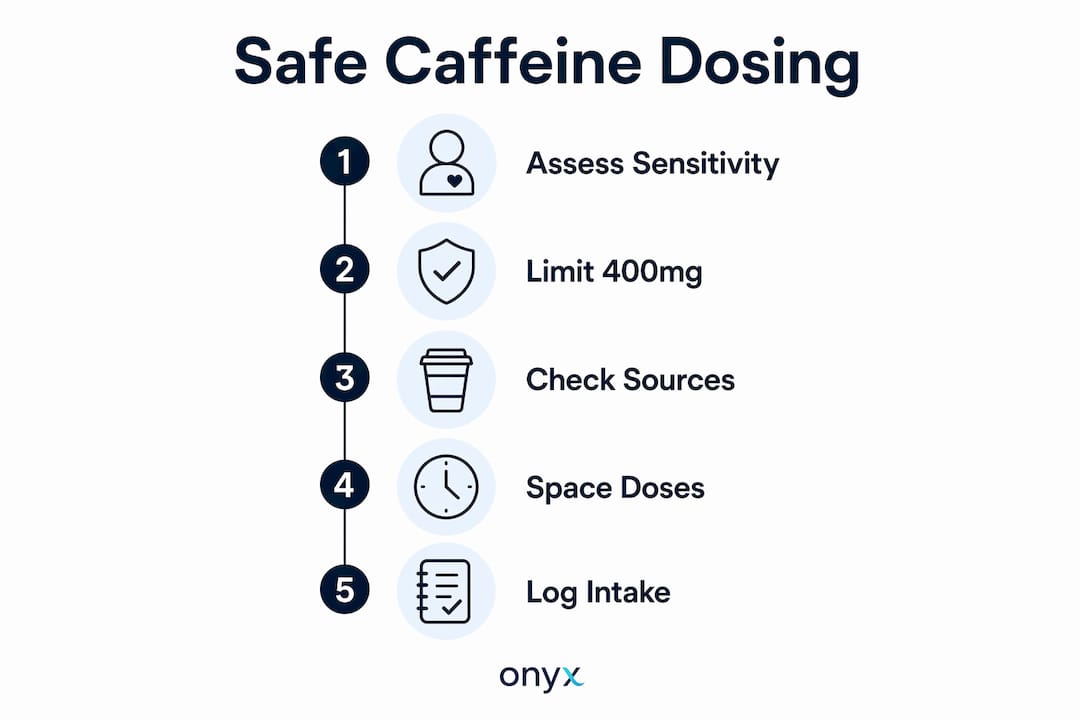
Most healthy adults can tolerate up to about 400 mg of caffeine per day, but sensitivity varies widely. Starting at 50–100 mg and assessing your response before moving to a standard 200 mg dose is the smarter approach.
| Source | Approximate Caffeine |
|---|---|
| 1 caffeine tablet (standard) | 100–200 mg |
| 8 oz brewed coffee | 100 mg |
Caffeine’s half-life in adults is typically 4–6 hours, meaning half the dose is still active that long after you take it. A 200 mg tablet at 2 PM leaves roughly 100 mg circulating at 8 PM, which can push back sleep onset significantly.
Timing rules of thumb:
- Take your last dose no later than early afternoon, ideally by 1–2 PM for most people.
- Space repeat doses at least 3–4 hours apart per Mayo Clinic dosing guidance.
- Never exceed the labeled daily serving without clinician guidance.
Pro Tip: Log every caffeine source for 48 hours, pills, coffee, tea, pre-workout, chocolate, and add them up. Most people are surprised how close they already sit to 400 mg before they open a pill bottle.
Drug interactions and who should avoid caffeine pills
Caffeine is pharmacologically active, and that matters when other substances are in the picture. The Cleveland Clinic recommends discussing supplement use with your care team before adding caffeine pills to your routine.
Groups who should consult a clinician first:
- Pregnant or breastfeeding people (lower limits apply)
- Those with heart disease, arrhythmia, or high blood pressure
- People with anxiety disorders or panic disorder
- Adolescents under 18
- Anyone taking stimulant medications, certain psychiatric drugs, or blood pressure medications
Caffeine can amplify the cardiovascular effects of stimulant medications and interact with drugs that affect heart rate or blood pressure. If you take any prescription medication, a five-minute conversation with your pharmacist or physician before starting caffeine supplements is worth it.
How to choose safer caffeine pills: a quality checklist
Not all caffeine supplements are created equal. Because the FDA doesn’t pre-evaluate them, the burden of quality falls on you as the buyer.
What to look for:
- Clear mg-per-serving labeling with no vague “proprietary blend” language hiding the dose
- Manufacturer contact information and a physical address on the label
- Third-party lab testing or a Certificate of Analysis (COA) available on the product page
- Batch and lot tracking so you can check for recalls
- No bulk pure caffeine powder in any form
Red flags to walk away from:
- Per-tablet amounts approaching or exceeding 400 mg (a single tablet at that level leaves zero margin)
- No COA or third-party verification link
- Ingredient lists with multiple stimulants stacked alongside caffeine
Pro Tip: Before buying, search the brand name plus “COA” or “third-party testing.” Reputable brands make this easy to find. If you can’t locate it in two minutes, that’s your answer.
Practical how-to: timing, spacing doses, and combining with other sources
Getting the timing right matters as much as the dose itself.
Step-by-step usage guidance:
- Take your first dose in the morning, ideally with food if your stomach is sensitive.
- Wait at least 3–4 hours before considering a second dose.
- Stop all caffeine intake by early afternoon to protect sleep.
- Total all caffeine sources before deciding whether a pill is even needed that day.
- For athletic performance, take your dose roughly 30–60 minutes before activity.
Combining with beverages and other supplements:
- If you’ve already had two cups of coffee (~190 mg), a 200 mg tablet puts you near the 400 mg daily ceiling before noon.
- Pre-workout powders often contain 150–300 mg of caffeine. Adding a pill on top is a common and risky mistake.
- Hydrate consistently. Caffeine has a mild diuretic effect, and pills give you none of the water a beverage would.
Wellness-oriented alternatives to caffeine pills
If you’re reading this as someone who cares about what goes into your body, isolated high-dose caffeine tablets may not be the best fit. There are formats that deliver energy support with a more holistic profile.
Alternatives worth knowing:
- Dissolvable energy strips: Dissolve on the tongue for fast absorption, often blended with B-vitamins and adaptogens. Onyxwellness Energy Strips are an Ayurvedic-inspired example of this format.
- B-vitamin plus mild stimulant blends: Support cellular energy metabolism alongside caffeine, reducing the spike-and-crash pattern.
- Adaptogen blends: Herbs like ashwagandha or tulsi, drawn from Ayurvedic tradition, support stress resilience and sustained focus without direct stimulation.
- Lifestyle measures: Consistent sleep, morning hydration, and short movement breaks often address the root cause of afternoon fatigue better than any supplement.
Wellness-forward supplement formats favor nutrient-supported, fast-absorbing delivery to reduce abrupt energy spikes. Understanding how supplement absorption works can help you choose a format that actually delivers what’s on the label.
| Format | Onset | Portability | Wellness Profile |
|---|---|---|---|
| Standard caffeine tablet | 30–60 min | High | Isolated stimulant |
| Dissolvable energy strip | 5–15 min | Very high | Blended, nutrient-supported |
| Adaptogen blend capsule | — | High | Holistic, non-stimulant |
| Brewed coffee | — | Low | Antioxidants + hydration |

Pro Tip: For sustained focus across a long workday, a blended strip with B-vitamins and adaptogens tends to deliver smoother energy than an isolated caffeine tablet. You get the lift without the hard landing.
What to do in a suspected caffeine overdose
If you or someone near you shows serious symptoms after taking caffeine supplements, act immediately.
Immediate steps:
- Stop all caffeine intake right away.
- Check that the person is breathing and responsive.
- Call 911 for any life-threatening signs: seizure, unconsciousness, erratic heartbeat, or severe disorientation.
- Call Poison Control at 1-800-222-1222 for guidance on less severe but concerning symptoms.
Symptoms that require emergency care now:
- Seizure or uncontrolled muscle twitching
- Loss of consciousness
- Irregular or racing heartbeat that won’t slow
- Persistent vomiting with no relief
- Severe confusion or inability to communicate
Do not wait to see if symptoms improve on their own when these signs are present.
Final recommendation for wellness-oriented adults
Caffeine pills have a legitimate place in a wellness toolkit, but they work best as a precise, occasional tool rather than a daily default. If you choose them, pick products with clear mg labeling, third-party COAs, and no stacked stimulants. Cap your total daily caffeine at around 400 mg from all sources, time your last dose well before afternoon, and loop in your care team if you have any health conditions or take prescription medications.
When pills make sense:
- You need a precise, portable dose for travel or a workout.
- You’ve checked your total daily caffeine and have room.
- You’ve chosen a third-party tested product with transparent labeling.
When to choose an alternative instead:
- You’re sensitive to caffeine spikes or crashes.
- You want a holistic, nutrient-supported energy lift.
- You prefer a format aligned with Ayurvedic or natural wellness principles.
- You’re pregnant, have a heart condition, or take medications that interact with stimulants.
For the wellness-minded reader, Ayurvedic mental clarity strategies and blended supplement formats often offer a more sustainable path than isolated caffeine tablets.
This article is general information, not medical advice. Confirm current guidance with your healthcare provider or a qualified professional for your specific situation.
Key Takeaways
Caffeine pills can be used safely within a ~400 mg daily limit, but wellness-oriented adults often get better results from blended, fast-absorbing formats like dissolvable energy strips.
| Point | Details |
|---|---|
| Daily caffeine ceiling | Most healthy adults should stay at or under ~400 mg per day from all sources combined. |
| Per-tablet dose range | Standard caffeine tablets contain 100–200 mg; start at the lower end to assess tolerance. |
| Half-life timing rule | Caffeine’s 4–6 hour half-life means a 2 PM dose still affects sleep at 8 PM. |
| Quality checklist | Choose products with clear mg labeling, third-party COAs, and no bulk caffeine powder. |
| Onyxwellness Energy Strips | A fast-absorbing, Ayurvedic-inspired alternative to isolated caffeine pills with a blended, nutrient-supported formula. |
A wellness-first perspective worth considering
The conversation around caffeine pills tends to split into two camps: people who treat them like candy and people who avoid them entirely out of fear. Neither extreme serves you well. What actually matters is context. A 100 mg tablet taken intentionally, with full awareness of your total daily intake, is a reasonable tool. The same tablet taken on top of two espressos and a pre-workout is a different story entirely.
What I find underappreciated in most caffeine discussions is the delivery format question. The pill-versus-coffee debate misses the more interesting comparison: isolated caffeine versus blended, nutrient-supported formats that draw on centuries of Ayurvedic wisdom. Herbs like ashwagandha and tulsi weren’t paired with stimulants by accident. Traditional formulations understood that sustainable energy comes from supporting the nervous system, not just jolting it. Modern dissolvable strips that combine fast absorption with adaptogens and B-vitamins are, in a real sense, a contemporary expression of that same principle. If you’re already drawn to holistic wellness, that framing should resonate. The goal isn’t to avoid caffeine. It’s to use it in a way that works with your body rather than against it.
Onyxwellness Energy Strips: a smarter way to get your lift
If you’ve read this far, you already know that isolated caffeine tablets carry real tradeoffs: no sensory pacing, no nutrient support, and a higher risk of overshooting your daily limit without realizing it. Onyxwellness Energy Strips were designed with exactly that problem in mind.
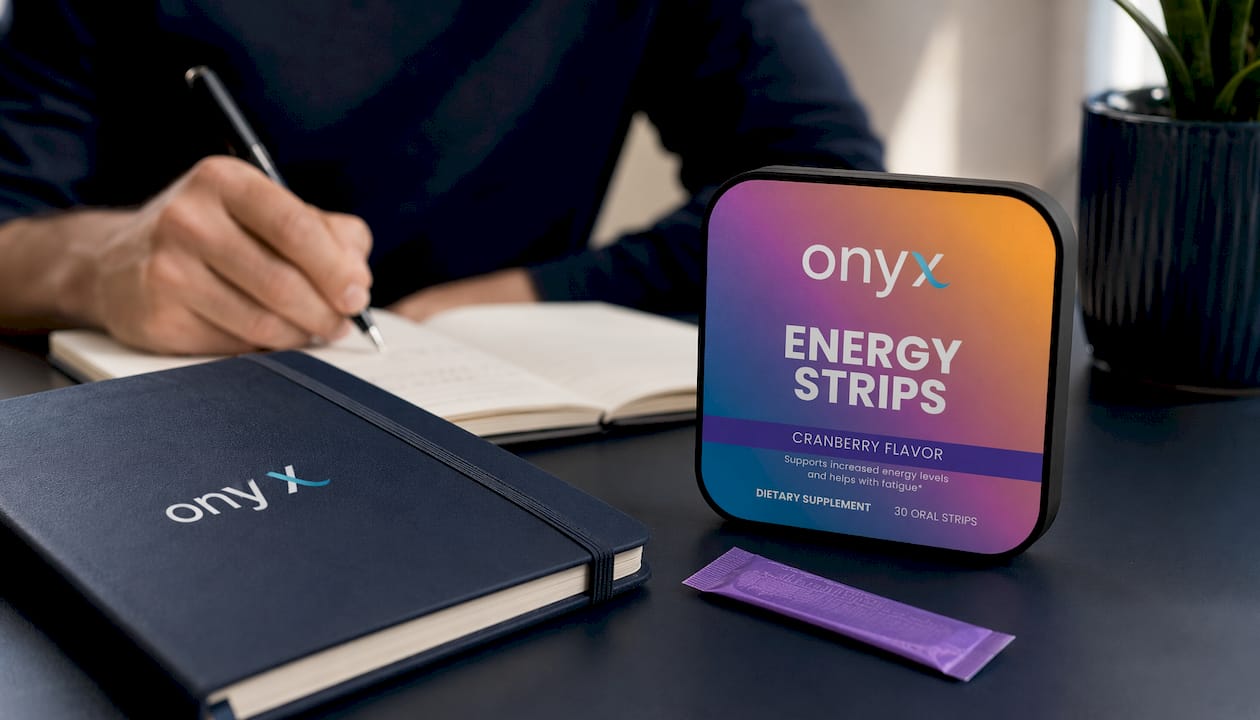
Each strip dissolves directly on your tongue for fast absorption without water, delivering caffeine alongside a blend of B-vitamins and Ayurvedic-inspired ingredients. The format gives you the precision of a measured dose with a smoother energy curve than a standard tablet. No bulk powder, no vague proprietary blends. Transparency is built into the product.
Ready to try a format that fits your wellness values? Visit the Onyxwellness Energy Strips page to check the full ingredient profile and place your first order.
Authoritative sources and further reading
- FDA: Pure and Highly Concentrated Caffeine — Regulatory warnings on concentrated caffeine products and enforcement actions.
- Mayo Clinic: Caffeine (Oral Route) — Clinical dosing guidance and precaution language for oral caffeine.
- Cleveland Clinic: Caffeine Tablets or Caplets — Clinical caution on supplement disclosure and overconsumption risk.
- Medical News Today: Caffeine Pills — Overview of uses, side effects, dosing, and the 400 mg daily guidance.
- WebMD: Caffeine Pills — What to Know — Evidence summary on alertness and performance benefits.
- Examine: Caffeine Supplement Review — Research-backed analysis of caffeine formulations and wellness-forward alternatives.
- Onyxwellness Energy Strips — Product details, ingredient transparency, and purchase for a fast-absorbing, blended alternative.
FAQ
What are caffeine pills and how much caffeine do they contain?
Caffeine pills are oral supplements that deliver a concentrated dose of caffeine, typically 100–200 mg per tablet, roughly equivalent to one cup of brewed coffee.
Are caffeine pills safe for most adults?
Most healthy adults can use caffeine tablets safely when staying under approximately 400 mg of total daily caffeine from all sources, but people who are pregnant, have heart conditions, or take certain medications should consult a clinician first.
How long do caffeine pills take to work?
Swallowed tablets generally take 30–60 minutes to reach peak effect, while faster-absorbing formats like dissolvable strips can begin working in as little as 5–15 minutes.
What should I do if I think I’ve taken too much caffeine?
Stop all caffeine intake immediately, call Poison Control at 1-800-222-1222 for guidance, and call 911 if you experience seizure, unconsciousness, or an irregular heartbeat.
Are there wellness-friendly alternatives to standard caffeine pills?
Yes. Dissolvable energy strips like Onyxwellness Energy Strips combine fast absorption with B-vitamins and Ayurvedic-inspired ingredients, offering a more balanced energy lift than isolated caffeine tablets.