


The strongest caffeine free nootropics right now are L-theanine (best acute attention boost, no jitters), Ashwagandha (best clinical evidence for memory and processing speed), Bacopa monnieri (best for long-term memory support), Lion’s Mane mushroom (best for neurotrophic support and daily use), and Citicoline (best for sustained attention without stimulants). If you want a fast-absorbing, sleep-friendly format, Onyxwellness Mushroom Focus Strips deliver Lion’s Mane and complementary adaptogens in a dissolvable strip you can take any time of day, including evenings.
- L-theanine — acute attention benefit confirmed in a 31-trial meta-analysis; effective standalone, no caffeine required
- Ashwagandha — meta-analysis data shows memory improvement (SMD 0.52) and faster processing speed at 300–600 mg/day
- Bacopa monnieri — memory gains require chronic dosing over weeks; worth the wait for students and knowledge workers
- Lion’s Mane — early human trials suggest neurotrophic benefits; pairs well with other adaptogens in mushroom-blend formats
- Citicoline — randomized trial support for attention and memory at 250–500 mg/day; a reliable daily anchor
Key Takeaways
The strongest caffeine-free nootropics combine clinical evidence, transparent dosing, and a format that fits your lifestyle, and the best options work on timelines ranging from 30 minutes to 8 weeks depending on the ingredient.
| Point | Details |
|---|---|
| L-theanine for acute focus | A single 200 mg dose improves choice reaction time within 30–60 minutes, with no stimulant side effects. |
| Ashwagandha for memory | Meta-analysis data shows memory improvement (SMD 0.52) at 300–600 mg/day; allow 2–4 weeks minimum. |
| Bacopa requires patience | Memory benefits emerge after 4–8 weeks of daily use at 300 mg; taking it with food reduces GI side effects. |
| Check standardization markers | Look for withanolide %, bacoside %, or ginsenoside profiles on the label before buying any botanical. |
| Onyxwellness strip format | Mushroom Focus Strips and Sleep Strips offer transparent dosing, fast mucosal absorption, and no caffeine. |
Table of Contents
- What are the best caffeine free nootropics to compare?
- How do caffeine-free nootropic ingredients actually work?
- How do you choose and use a caffeine-free nootropic safely?
- How we vetted these picks
- What real users say about caffeine-free nootropics
- What side effects should you watch for?
- What to buy right now: a focused shortlist
- The case for going caffeine-free: an editorial perspective
- Onyxwellness has caffeine-free cognitive strips worth trying
- Sources
- FAQ
What are the best caffeine free nootropics to compare?
Choosing between formats matters as much as choosing between ingredients. A capsule taken at breakfast behaves differently from a dissolvable strip taken mid-afternoon, and the price-per-serving gap between formats can be significant.
L-theanine in strip or capsule form is the easiest entry point: onset is roughly 30–60 minutes, effects last 3–5 hours, and it stacks cleanly with any other ingredient on this list. Ashwagandha takes 2–4 weeks of daily use before memory benefits become noticeable, but the clinical signal is among the strongest of any caffeine-free option. Bacopa is similar: patience is the price of admission, and fat-soluble absorption means taking it with a meal matters. Citicoline sits in the middle, showing some acute effects with accrued benefit over weeks of consistent use.
For format, dissolvable strips offer faster mucosal absorption than capsules that must dissolve in the stomach, which is why Onyxwellness built its Mushroom Focus Strips around that delivery model. No water, no wait, and the format is genuinely convenient for people who skip morning supplements because they are rushing out the door.
Trust signals to check per option: transparent milligram dosages on the label, a third-party Certificate of Analysis (COA), GMP-certified manufacturing, and customer reviews that mention specific effects rather than vague “felt great” language. Quality-control reviews confirm that supplement potency varies widely without these safeguards.
Pro Tip: *When comparing products, look for the standardization marker on the label, not just the herb name.
How do caffeine-free nootropic ingredients actually work?
Understanding what each ingredient does, and how long it takes, saves you from abandoning something that was working on a six-week timeline or doubling up on mechanisms you do not need.
L-theanine
L-theanine is an amino acid found naturally in green tea. It raises alpha-wave activity in the brain, which correlates with a relaxed-but-alert mental state, and modulates GABA and glutamate pathways without sedation. A systematic review and meta-analysis of 31 randomized trials found that a single 200 mg dose significantly improved choice reaction time (SMD = 0.51), a reliable marker of acute attention. Anxiety and fatigue outcomes were more variable across studies. Onset: 30–60 minutes. Duration: 3–5 hours. Evidence strength: strong for acute attention; moderate for anxiety reduction.
Crucially, L-theanine does not need caffeine to work. Most people encounter it as a caffeine-smoothing agent, but recent clinical research confirms its independent attention benefit, making it one of the most practical standalone options for caffeine-avoiders.
Ashwagandha (Withania somnifera)
Ashwagandha is an adaptogen that reduces cortisol and modulates the HPA axis, which is the body’s stress-response system. Lower chronic stress load tends to free up working memory capacity. A 2026 meta-analysis found supplementation improved memory (SMD = 0.52) and attention/processing speed (SMD = 0.29) across multiple RCTs, with common trial doses of 300–600 mg/day of a standardized extract. Onset for cognitive benefits: 2–4 weeks. Evidence strength: moderate to strong.
Bacopa monnieri
Bacopa works primarily by supporting synaptic communication and reducing oxidative stress in the hippocampus, the brain region most associated with memory encoding. Clinical trials and reviews consistently show that measurable memory benefits require chronic dosing, typically several weeks of daily use at around 300 mg of a standardized extract. This is not a “feel it today” ingredient. Onset: 4–8 weeks. Evidence strength: moderate for memory; weaker for attention.
Lion’s Mane (Hericium erinaceus)
Lion’s Mane stimulates nerve growth factor (NGF) synthesis, a protein that supports the growth and maintenance of neurons. Human evidence is smaller than for L-theanine or Ashwagandha, but pilot studies and small RCTs suggest possible memory improvement, particularly with fruiting body extracts at higher purity. Onset: variable, often 4+ weeks. Evidence strength: promising but limited; more high-quality trials are needed. For a deeper look at why mushroom-based options are gaining traction, this guide on mushroom focus covers the neurotrophic rationale clearly.
Citicoline (CDP-choline)
Citicoline is a precursor to acetylcholine, the neurotransmitter most directly linked to attention and memory consolidation. Randomized trials report cognitive improvements at 250–500 mg/day. Unlike Bacopa, citicoline shows some acute effects alongside cumulative gains, making it a useful daily anchor in a caffeine-free stack. Onset: partial acute effect; full benefit at 4–8 weeks. Evidence strength: moderate.
Rhodiola rosea
Rhodiola is an adaptogen that reduces subjective mental fatigue and modestly improves attention under stress. Short-term trials report these benefits, but extract standardization matters: look for rosavins and salidroside percentages on the label. Unstandardized Rhodiola extracts frequently fail to replicate trial results. Onset: acute for fatigue reduction; 1–2 weeks for sustained benefit. Evidence strength: moderate for fatigue; weaker for memory.
L-tyrosine
L-tyrosine is a precursor to dopamine and norepinephrine, neurotransmitters that support focus and working memory under pressure. Acute trials show benefits for stress-related cognitive tasks at 500–2,000 mg taken before a demanding event. This is a situational ingredient, not a daily supplement. Onset: 30–60 minutes. Duration: 2–4 hours. Evidence strength: moderate for acute stress conditions; limited for everyday use.
What the evidence reliably supports:
- L-theanine for acute attention (single dose, 200 mg)
- Ashwagandha for memory and processing speed (chronic, 300–600 mg/day)
- Bacopa for long-term memory (chronic, 300 mg/day, 4–8 weeks)
- Citicoline for sustained attention (daily, 250–500 mg)
- Rhodiola for fatigue reduction under stress (standardized extract)
What needs more study:
- Lion’s Mane in large, well-controlled human trials
- Optimal stacking combinations and interaction effects
- Long-term safety data beyond 12 weeks for most botanicals
How do you choose and use a caffeine-free nootropic safely?
The selection process is straightforward when you know what to look for, and the safety profile of most caffeine-free nootropics is favorable, though not unconditional.
Choosing the right option
Start with your primary goal. Acute focus before a presentation? L-theanine or L-tyrosine. Daily memory support over months? Bacopa or Ashwagandha. General cognitive maintenance without stimulants? Citicoline or a mushroom blend. Stress and fatigue resilience? Rhodiola. You can read more about natural cognitive support strategies to map your goal to the right ingredient combination.
Next, check the label for three things: the milligram dose of each active ingredient, the standardization marker (withanolide %, bacoside %, ginsenoside profile), and a COA from a third-party lab. A systematic review on supplement quality confirms that products without these safeguards vary widely in actual potency. GMP-certified manufacturing is the minimum manufacturing standard worth accepting.
For Panax ginseng, the ginsenoside profile is particularly important: studies that fail to specify it frequently report null results, while standardized extracts show more consistent acute cognitive benefits. The same logic applies across all botanicals on this list.
Dosing and timing
| Ingredient | Starting dose | Escalation | Best timing |
|---|---|---|---|
| L-theanine | 300 mg/day | Up to 200 mg | 30–60 min before focus task |
| Ashwagandha | 300 mg/day | Up to 600 mg/day | Morning or evening with food |
| Bacopa monnieri | 300 mg/day | Maintain; do not rush | With a fat-containing meal |
| Citicoline | 250 mg/day | Up to 500 mg/day | Morning |
| Rhodiola rosea | 200 mg/day | 300–600 mg/day | Morning (may disrupt sleep if taken late) |
| L-tyrosine | 500 mg pre-task | Up to 2,000 mg situationally | 30–60 min before demand |
| Lion’s Mane | 500 mg/day | Up to 1,000 mg/day | Morning or midday |
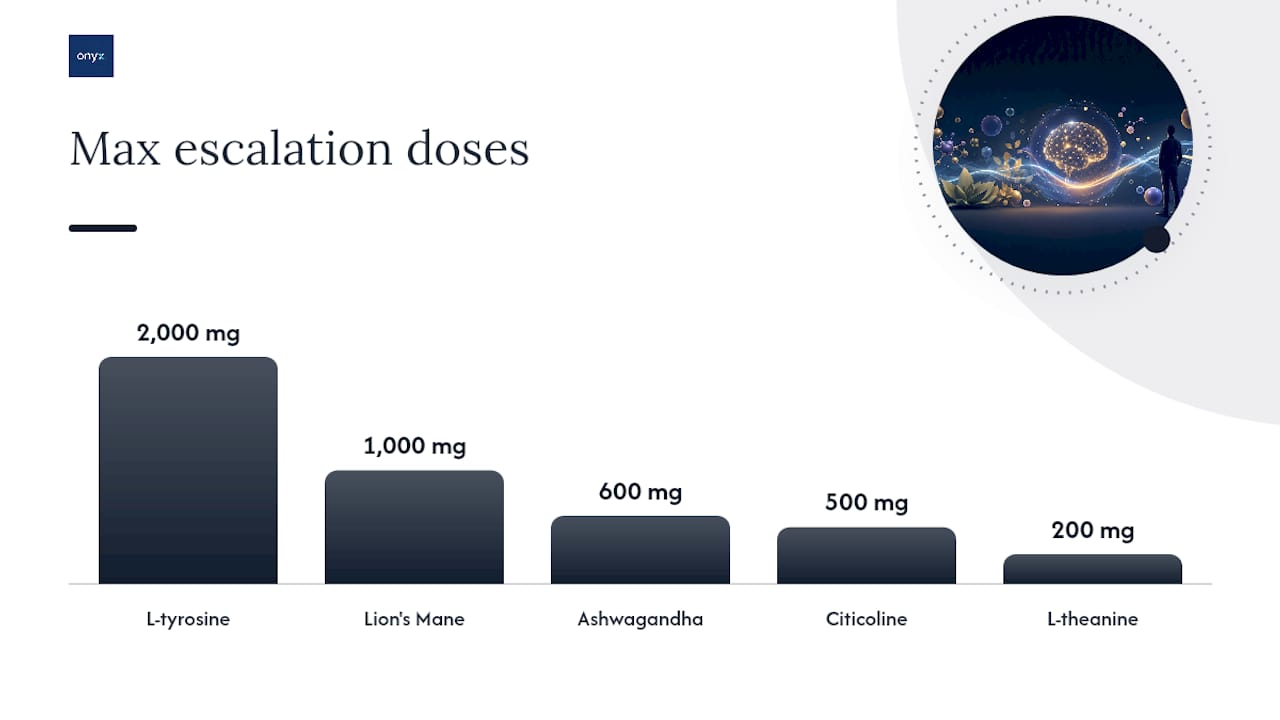
A pooled review of nootropic trials notes that some ingredients show acute-on-chronic benefits: you get a partial effect immediately and a fuller effect after weeks of consistent use. Citicoline and Bacopa both follow this pattern.
Interactions and contraindications
People taking MAOIs, thyroid medications, or sedatives should consult a clinician before adding any botanical nootropic. Clinical guidance specifically flags these drug classes because botanical adaptogens can affect neurotransmitter metabolism and thyroid hormone levels. Ashwagandha, in particular, has documented thyroid-stimulating activity. Rhodiola may potentiate sedatives. Pregnancy and breastfeeding are periods when all botanical supplements warrant medical review before use.
A four-step starting protocol:
- Read the full label and confirm milligram doses match studied amounts.
- Request or download the product’s COA and verify the active content.
- Start at the lower end of the dose range for the first two weeks.
- Track your response in a simple notes app: energy, focus, sleep quality, and any GI symptoms.
Pro Tip: Take Bacopa and Ashwagandha with your fattiest meal of the day. Both are fat-soluble, and absorption can drop significantly without dietary fat present, which is why some people report no effect from what is actually a well-dosed product.
How we vetted these picks
Every ingredient and product type on this list passed four checks before making the shortlist.
- Clinical evidence for core ingredients. Each ingredient needed at least one systematic review or meta-analysis of human RCTs, not just animal data or in vitro studies. L-theanine, Ashwagandha, Bacopa, Citicoline, and Rhodiola all cleared this bar. Lion’s Mane is included with an explicit caveat about smaller human evidence.
- Dose transparency. Products that list only a “proprietary blend” weight without individual ingredient milligrams were excluded. Consumer-facing formulas that disclose studied doses, such as L-theanine 200 mg or Bacopa 300 mg, align most closely with the clinical literature and give you the best chance of replicating trial conditions.
- Third-party COA and GMP manufacturing. A COA from an independent lab confirms that what is on the label is in the bottle at the stated potency. GMP certification means the facility follows standardized manufacturing controls. Both reduce the risk of mislabeled potency or contamination, which quality-control reviews identify as common problems in the supplement category.
- Customer review signals. Reviews mentioning specific, plausible effects (better focus during work sessions, calmer mornings, improved sleep) carry more weight than volume alone. A product with 500 reviews saying “feels great” tells you less than 50 reviews describing a consistent, specific experience.
Rating axes used:
| Axis | What “strong” looks like |
|---|---|
| Evidence | Meta-analysis or multiple RCTs in humans |
| Dose transparency | Individual mg per ingredient listed |
| Third-party testing | COA from accredited lab, publicly available |
| Value | Price per serving within studied dose range |
No percentage means no guarantee the active fraction is present at a meaningful level.*
One honest limitation: individual responses to nootropics vary considerably. Even well-studied ingredients like L-theanine produce stronger effects in some people than others, likely due to genetic differences in neurotransmitter metabolism. The evidence shows what works on average, not necessarily what will work for you specifically. Tracking your own response over 4–8 weeks is the only reliable way to know.
What real users say about caffeine-free nootropics
User feedback on caffeine-free cognitive supplements tends to cluster around a few consistent themes, and they align closely with what the clinical literature predicts.
L-theanine users most often describe a “quiet focus” effect: less mental noise, easier to stay on task, without the edginess that comes with caffeine. The 30–60 minute onset matches what people report noticing. Users who switch from caffeine-based pre-workouts to L-theanine-only options frequently mention that the absence of a crash is the most noticeable difference.
Ashwagandha reviews tend to emphasize stress reduction before cognitive improvement. Most people notice they feel less reactive to daily stressors within the first two weeks, and the memory and processing-speed benefits become apparent later, which matches the meta-analysis timeline. A common frustration in reviews is impatience: people stop at week three, just before the cognitive benefits typically emerge.
Bacopa generates the most polarized feedback. Users who stick with it for 6–8 weeks often report meaningful memory improvements. Users who try it for two weeks and quit call it ineffective. The clinical evidence is clear that this is a timeline problem, not a product problem.
Mushroom-based formats, including Lion’s Mane strips and blends, attract users who want a daily ritual rather than a targeted dose. The feedback is generally positive for mood and focus, though the effects are described as subtle rather than dramatic, which is consistent with the early-stage human evidence.
What side effects should you watch for?
Caffeine-free nootropics have a favorable safety profile compared to stimulant-based options, but “caffeine-free” does not mean “side-effect-free.”
L-theanine is well-tolerated at studied doses. Rare reports include mild headache or drowsiness at higher doses. No serious adverse events appear in the clinical literature at 200 mg.
Ashwagandha can cause GI discomfort, particularly on an empty stomach. More importantly, it has documented thyroid-stimulating activity, so people with thyroid conditions or on thyroid medication need medical clearance before use. Rare cases of liver injury have been reported in the literature, though causality is not firmly established.
Bacopa commonly causes GI side effects, including nausea and loose stools, especially when taken without food. Taking it with a fat-containing meal reduces this significantly.
Rhodiola is generally well-tolerated but can be mildly activating. Taking it late in the day may interfere with sleep for some people, which is why morning dosing is recommended.
Citicoline is among the best-tolerated options on this list. Occasional reports of mild insomnia exist at higher doses, which is why morning use is preferred.
L-tyrosine at higher doses (above 1,000 mg) can cause restlessness or mild anxiety in sensitive individuals. It is not recommended for people with hyperthyroidism.
Unlike caffeine, none of these ingredients produce physical dependence or withdrawal symptoms when you stop using them. There is no caffeine-withdrawal equivalent, no rebound headaches, and no tolerance buildup that requires escalating doses. That is one of the most practical advantages of caffeine-free cognitive support for people who want to use supplements long-term without managing dependency.
What to buy right now: a focused shortlist
If you want to act on this article without reading every section, here are the picks worth your money.
For acute focus and calm attention: L-theanine at 200 mg, taken 30–60 minutes before a focus session. This is the lowest-risk, fastest-acting option on the list with the strongest single-dose evidence.
Give this combination 6–8 weeks before evaluating.
For daily cognitive maintenance without stimulants: Citicoline at 250–500 mg/day, taken in the morning. It works well as a standalone or as the base of a broader stack.
For a convenient, sleep-friendly mushroom format: Onyxwellness Mushroom Focus Strips deliver Lion’s Mane and complementary adaptogens in a dissolvable strip format, no capsules, no water, and no stimulants. They fit the shortlist criteria for format convenience, ingredient transparency, and evening-safe use.
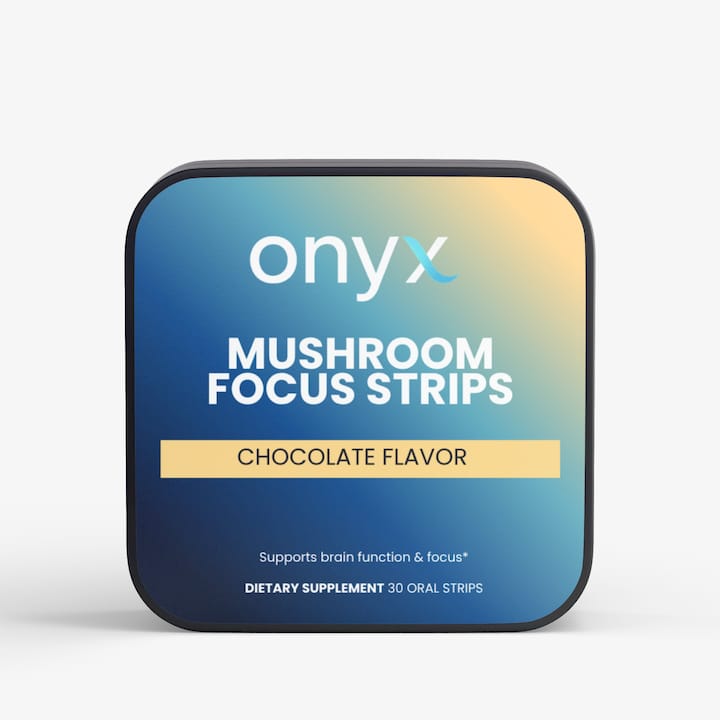
If sleep quality is part of your cognitive picture (and for most people it is the biggest lever), Onyxwellness also offers Sleep Strips designed for nighttime recovery, which pairs logically with a daytime nootropic routine.
The case for going caffeine-free: an editorial perspective
The conventional advice on cognitive enhancement still defaults to caffeine as the baseline, with everything else treated as an add-on. That framing is worth questioning.
Caffeine works, but it works by blocking adenosine receptors, which means it borrows against your fatigue rather than reducing it. The debt comes due in the afternoon. Tolerance builds within days. And for a meaningful portion of the population, caffeine disrupts sleep architecture even when consumed before noon, which is the single biggest cognitive liability most people are ignoring.
The ingredients on this list work differently. L-theanine supports attention through alpha-wave modulation. Ashwagandha improves memory by reducing the cortisol load that degrades hippocampal function. Bacopa supports synaptic communication over weeks. None of them borrow against tomorrow.
What the conventional advice also misses is that the evidence for some caffeine-free options is genuinely strong. A 31-trial meta-analysis for L-theanine and a 20-trial meta-analysis for Ashwagandha are not fringe findings. They are the kind of evidence base that most pharmaceutical-adjacent supplements cannot match.
The honest caveat is that caffeine-free nootropics require more patience. You will not feel Bacopa working on day one. Ashwagandha’s memory benefits take weeks to emerge. If you are used to the immediate, unmistakable effect of caffeine, the subtler experience of adaptogens can feel like nothing is happening. It is not. The timeline is just longer, and the mechanism is fundamentally different.
For health-conscious buyers who want cognitive support that does not compromise sleep, create dependency, or produce afternoon crashes, the caffeine-free route is not the consolation prize. It is the better long-term strategy.
Onyxwellness has caffeine-free cognitive strips worth trying
Faster absorption without the stimulant side effects is a real advantage, and that is exactly what Onyxwellness delivers with its dissolvable strip format. The Mushroom Focus Strips bring Lion’s Mane and adaptogenic support in a sugar-free, water-free strip that absorbs through the oral mucosa, meaning you skip the capsule dissolution delay entirely.
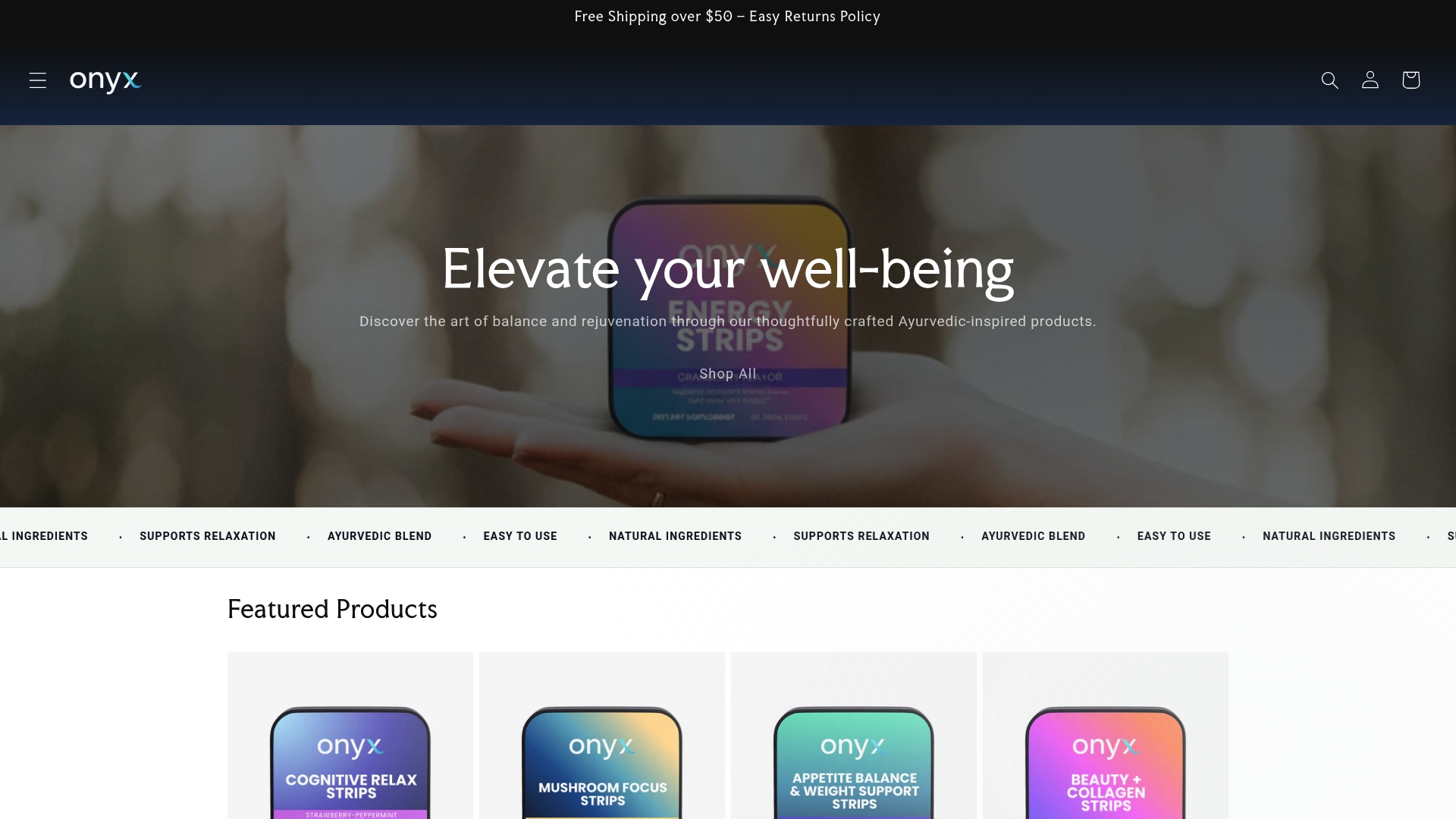
The product range extends beyond cognitive focus. Onyxwellness Sleep Strips support nighttime recovery, a logical complement to any daytime nootropic routine since sleep quality is where most cognitive gains are actually consolidated. The Hangover Strips and Digestive + Gut Health Strips demonstrate the same commitment to ingredient transparency and fast-absorbing delivery across the full wellness lineup.
Every Onyxwellness product lists individual ingredient milligrams, not proprietary blend totals, which means you can verify that doses align with the clinical literature covered in this article. Browse the full range and check the product pages for COA details at Onyxwellness.
Sources
- Cognitive and affective effects of L-Theanine: a systematic review and meta-analysis of 31 randomized trials | Molecular Psychiatry
- Effects of Withania somnifera (Ashwagandha) on cognitive and physical function in adults: a systematic review and meta-analysis | Frontiers in Pharmacology
- Effects of Panax ginseng and Panax quinquefolius on Cognitive Function: A Systematic Review | Journal of Cognitive Enhancement
- PMC8708375
- PMC6576271
FAQ
Do nootropics have caffeine?
Most commercial nootropic blends do include caffeine, but a growing number of products are formulated without it. Caffeine-free options like L-theanine, Ashwagandha, Bacopa, and Citicoline have independent clinical support for attention and memory.
Are caffeine-free nootropic strips safe?
Dissolvable strips using ingredients like Lion’s Mane, L-theanine, and adaptogens are generally well-tolerated, but you should check for third-party COA verification and GMP manufacturing. People on MAOIs, thyroid medications, or sedatives should consult a clinician before use.
What is the best natural nootropic for focus without caffeine?
L-theanine at 200 mg has the strongest single-dose evidence for acute attention, confirmed in a 31-trial meta-analysis. For daily cognitive support, Citicoline at 250–500 mg/day is a reliable caffeine-free option.
Are there nootropic pouches or strips that don’t contain caffeine?
Yes. Onyxwellness Mushroom Focus Strips are a caffeine-free dissolvable strip format that delivers Lion’s Mane and adaptogenic support without stimulants, making them suitable for evening use and sleep-sensitive individuals.
How long before caffeine-free nootropics start working?
It depends on the ingredient. L-theanine and L-tyrosine produce effects within 30–60 minutes of a single dose. Ashwagandha typically requires 2–4 weeks of daily use, and Bacopa often takes 4–8 weeks before memory benefits become measurable.
This article is for general informational purposes only and is not a substitute for professional medical advice. Consult a qualified healthcare provider before starting any new supplement, especially if you take prescription medications or have an existing health condition.