


The most reliable path to caffeine free energy combines consistent sleep, proper hydration, balanced meals timed every few hours, short bursts of movement or a power nap, and, when needed, caffeine-free supplements like adaptogens or fast-absorb strips. Habits do the heavy lifting; supplements are there to smooth out the gaps. Some ingredients act within minutes, while others, like adaptogens, need weeks of consistent use to show up in how you feel. If fatigue lingers despite these changes, or you take medication, talk to a clinician before adding anything new — and if you want a quick, caffeine-free option to try today, Energy Strips are built for exactly that.
TL;DR:
- Consistent sleep, proper hydration, and regular balanced meals are more effective for sustaining energy than quick fixes like supplements or stimulants.
- Adaptogens like ashwagandha and rhodiola require several weeks of steady use to show benefits, unlike caffeine which acts within 20 minutes.
- Fast-absorbing delivery formats such as dissolvable strips provide quick effects without water and are practical for on-the-go uses.
- Caffeine-free energy options, such as products with paraxanthine, are emerging but call for cautious use as long-term safety data is limited.
- Before choosing any supplement, verify ingredient transparency, third-party testing, and consider your health conditions and medication interactions.
Table of Contents
- What Daily Habits Actually Boost Energy Without Coffee?
- Do Adaptogens and Vitamins Really Work for Energy?
- Which Delivery Format Works Best: Drinks, Powders, or Strips?
- How Do You Choose the Right Caffeine-Free Energy Solution?
- The Onyx Wellness Take on Sustainable Energy
- Try Energy Strips for On-the-Go Focus
- Sources
- FAQ
What Daily Habits Actually Boost Energy Without Coffee?
Before you reach for any supplement, the Mayo Clinic points to five things that move the needle more than anything in a bottle: sleep, hydration, movement, stress management, and steady nutrition. None of this is glamorous. All of it works.
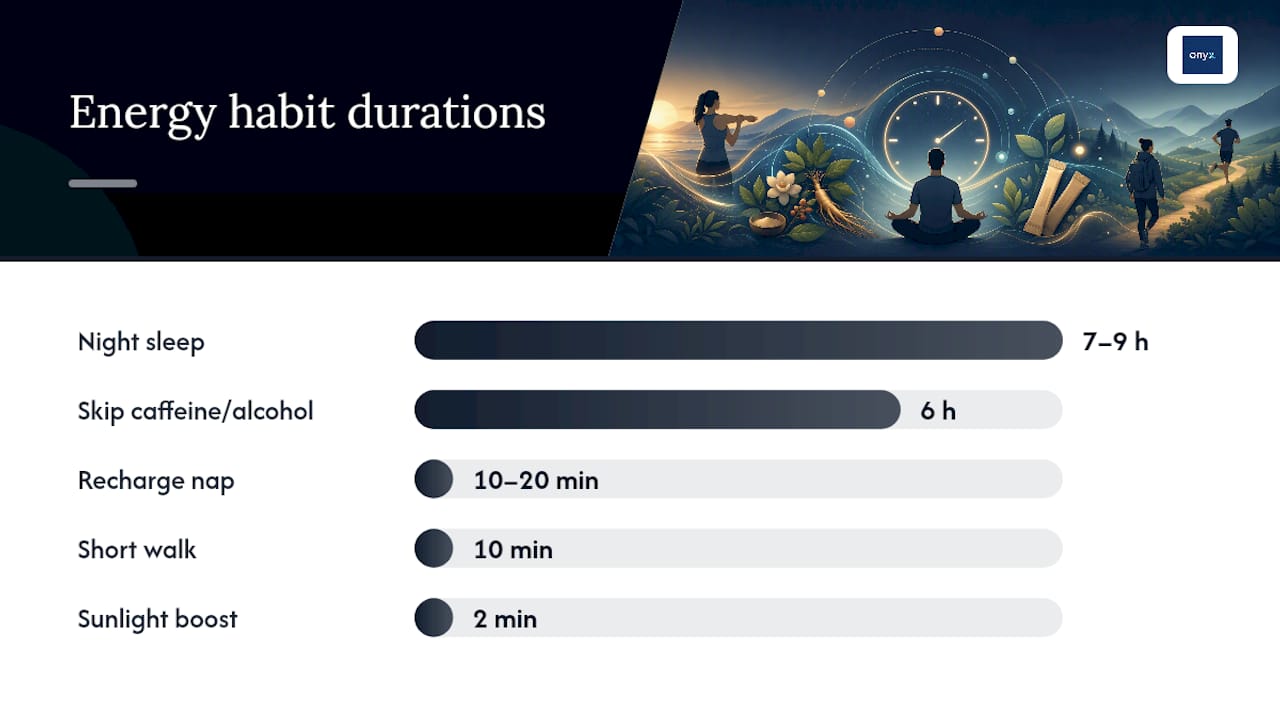
Sleep comes first for a reason. Aim for 7 to 9 hours with a consistent bed and wake time, even on weekends. Skip caffeine and alcohol within six hours of bedtime. A body clock that resets at the same hour every day produces more stable energy than any stimulant can fake.
Hydration matters more than most people assume. Mild dehydration alone can cause the foggy, sluggish feeling people mistake for needing caffeine. Plain water covers most days, but if you’re sweating heavily or dealing with heat, electrolytes support cognitive function and reduce fatigue in ways water alone doesn’t.
Nutrition works best on a schedule. Eating meals and snacks regularly throughout the day and pairing protein with produce helps keep blood sugar steady rather than spiking and crashing. Think Greek yogurt with berries, or an apple with almond butter. A big lunch heavy on refined carbs and light on protein is practically an invitation for the 2 p.m. slump.
For a quick energy reset, try this sequence of short bursts of movement:
- Step outside for two minutes of direct sunlight within an hour of waking.
- Take a 10 minute walk, or run through a short bodyweight circuit if you’re stuck indoors.
- Reset your posture: shoulders back, chin level, deep breath.
- Try Bellows Breath (a rapid, forceful inhale/exhale pattern) for 30 seconds when you need alertness fast.
- If you’re past the point of pushing through, take a 10 to 20 minute nap before 3 p.m.
Naps longer than 20 minutes risk sleep inertia, a groggy feeling that’s worse than the fatigue you started with. Time it with a timer, not a hope.
Pro Tip: Stack two habits at once. Drink a glass of water while you’re outside getting sunlight. You’ll rehydrate and reset your circadian rhythm in the same two minutes.
For a longer-term plan around structuring your day without stimulants, see how to focus without caffeine.
Do Adaptogens and Vitamins Really Work for Energy?
The evidence here is real, but it comes with a timeline attached. Adaptogenic herbs like ashwagandha, rhodiola, and cordyceps work by modulating the HPA axis, the system that governs your stress response, and clinical research links them to reduced fatigue markers and improved endurance.
A few specifics worth knowing:
- Standardized ashwagandha extracts have shown measurable drops in serum cortisol and improved endurance in placebo-controlled trials, but the benefit built over several weeks of consistent use, not overnight.
- Rhodiola is more commonly associated with reduced mental fatigue during sustained cognitive load.
- Cordyceps shows up most often in endurance and cardiorespiratory research.
Adaptogens generally take weeks of steady dosing to register an effect — the opposite of caffeine’s 20 minute jolt, according to the Cleveland Clinic. Set that expectation up front and you’ll avoid the disappointment of quitting after three days.
B vitamins are a different story. They’re cofactors in cellular energy production, meaning they help your cells convert food into usable energy, but supplementing them mostly helps if you’re actually deficient. If your diet already covers your B12 and folate, more won’t make you more awake.
A newer entrant, paraxanthine, is a caffeine metabolite showing up in some caffeine-free energy drinks marketed for smoother focus with fewer jitters than caffeine itself. It’s an interesting development, but long-term comparative safety data against caffeine is still limited, so treat product claims with some skepticism until more independent research catches up. Whatever ingredient you choose, favor brands that publish third-party testing results and clear ingredient amounts. Small trial sizes and inconsistent formulations are common enough in this category that label transparency isn’t optional.
For a deeper look at how these compounds compare, caffeine-free nootropics breaks down the mechanisms further, and the role of adaptogens in recovery covers realistic timelines in more detail.
Which Delivery Format Works Best: Drinks, Powders, or Strips?
The ingredient matters, but so does how your body absorbs it. A review of adaptogen research notes that modern delivery formats can improve bioavailability for botanical compounds that don’t dissolve or absorb well on their own, which changes how effective a product actually feels even when the underlying ingredient is identical.
Here’s how the common formats stack up:
- RTD drinks are convenient and fast-acting but often come with added sugar or artificial flavoring you’ll want to check on the label.
- Powders offer flexible dosing but require water and a shaker, which isn’t always practical mid-commute.
- Gummies are easy to dose but slower to absorb since they pass through digestion first.
- Capsules are stable and precise but can take 30 minutes or more to kick in.
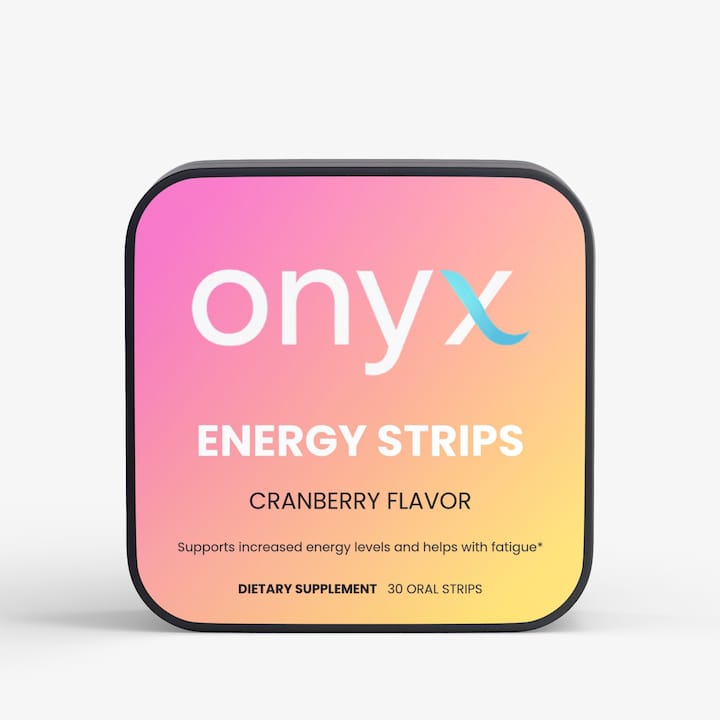
- Dissolvable strips absorb through the mouth, skipping the digestive delay entirely and needing no water, which makes them a practical pick for a desk, a car, or a plane seat.
Whatever format you choose, check the serving size, sugar content, and total active ingredient amounts on the label before assuming two products are equivalent. For more on why absorption speed varies so much between formats, what quick absorption means walks through the mechanics.
How Do You Choose the Right Caffeine-Free Energy Solution?
Match the solution to the actual problem. If you need alertness in the next 15 minutes, movement, cold water on your face, or a strip designed for fast absorption will outperform anything that takes weeks to build up. If you’re chasing long-term resilience against stress and fatigue, adaptogens and consistent sleep habits are the better investment.
Run through this checklist before buying anything:
- Identify whether your fatigue is acute (today) or chronic (weeks or longer), since that determines whether you need a fast tactic or a slow-building supplement.
- Check for medication interactions or conditions like pregnancy, breastfeeding, or uncontrolled blood pressure where certain adaptogens aren’t appropriate.
- Look for GMP manufacturing and third-party testing on the label, not just marketing language.
- Confirm ingredient amounts are listed specifically, not hidden inside a vague “proprietary blend.”
- Set a realistic timeline: immediate tactics work today, adaptogens typically need two to four weeks of consistent use.
Pro Tip: If a product promises an instant energy jolt “just like caffeine” but contains an adaptogen as its main ingredient, that’s a mismatch between the ingredient’s actual mechanism and the marketing claim. Adaptogens build resilience over time; they don’t spike energy in the moment.
Also worth remembering: the FDA advises most adults stay under 400 mg of caffeine daily, and part of why people search for caffeine-free options in the first place is to sidestep that ceiling entirely, along with the jitters and crash that come with pushing past it.
The Onyx Wellness Take on Sustainable Energy
Ayurvedic botanicals have supported energy and resilience for centuries. What’s changed is delivery. A dissolvable strip absorbs faster than a capsule, works without water, and fits a schedule that doesn’t pause for a blender or a glass. Onyxwellness builds around that principle: real ingredients, formulated for how people actually live now. Energy Strips aren’t a substitute for sleep or a fix for a genuinely exhausted body. They’re a tool for the moments habits alone can’t cover, which is most days, for most of us.
— Chris
Try Energy Strips for On-the-Go Focus
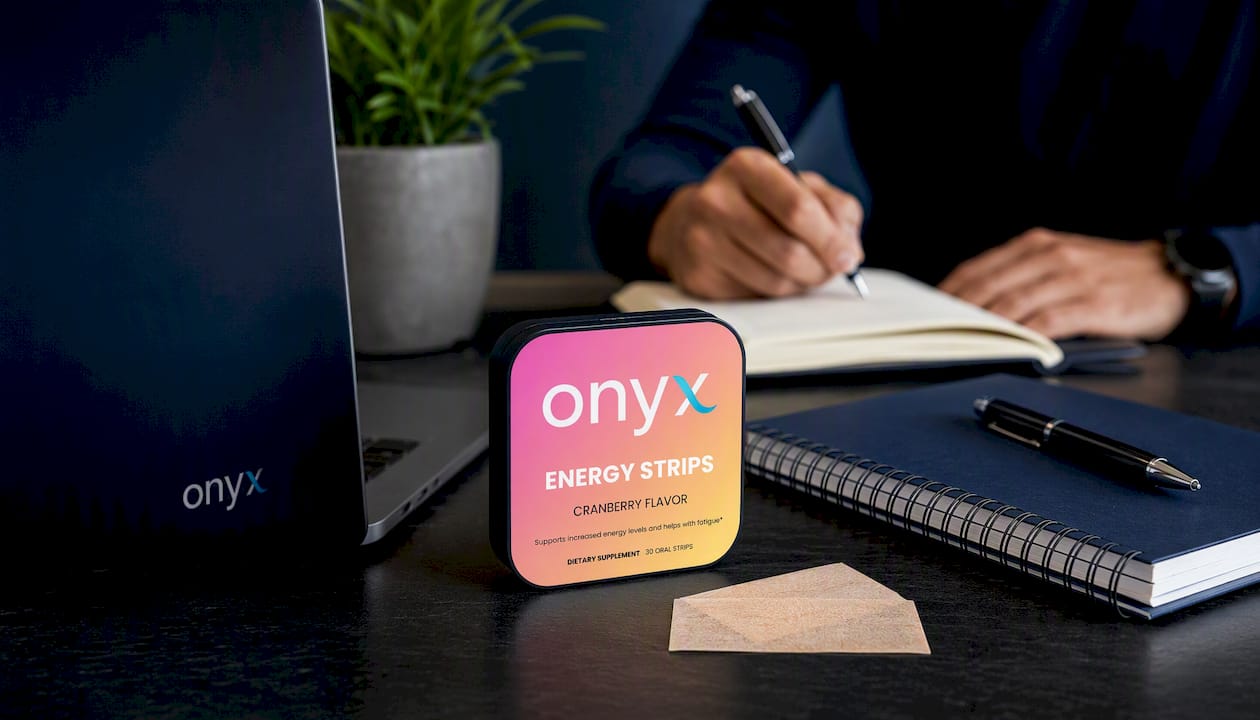
Onyxwellness built Energy Strips for the exact moments this article covers: the mid-afternoon commute slump, a deadline that needs sharper focus, or a flight where brewing coffee isn’t an option. They dissolve on the tongue quickly, need no water, and fit in a pocket or laptop bag without a second thought.
If you’re pregnant, breastfeeding, or taking medication, check the label ingredients against your prescriptions or ask your doctor first, the same caution that applies to any new supplement. Start with a single strip to see how your body responds before making it part of your daily routine. Browse the full supplement collection if you want to pair Energy Strips with something for sleep or stress support, and pick up your first pack whenever you’re ready to test it against your own afternoon slump.
Sources
- Adaptogens | Cleveland Clinic
- Natural ways to boost energy without caffeine - Mayo Clinic Press
- Spilling beans: How much caffeine is too much? — FDA
This article is general information, not a substitute for advice from a qualified doctor. Consult a qualified healthcare professional about your own circumstances before acting on anything here.
FAQ
What can give you energy without caffeine?
Consistent sleep, hydration, protein-and-produce snacks, short movement breaks, and power naps form the foundation. Adaptogens like ashwagandha and rhodiola, plus fast-absorb formats like Energy Strips, can support that base once the habits are in place.
Is there an energy drink with no caffeine?
Yes. Several caffeine-free drinks now use ingredients like adaptogens or paraxanthine, a caffeine metabolite marketed for smoother focus, though long-term safety comparisons against caffeine are still limited.
How do people with ADHD get energy without caffeine?
The same foundational habits apply: regular sleep timing, frequent protein-forward meals, and movement breaks tend to support focus most reliably. Anyone managing ADHD should talk with their prescribing clinician before adding adaptogens or new supplements, since interactions with stimulant medications are possible.
What is the point of a caffeine-free energy drink?
It gives people who are sensitive to caffeine, managing a health condition, or simply trying to stay under the FDA’s suggested daily caffeine limit a way to feel more alert without the jitters, crash, or sleep disruption that caffeine can cause.