


You wake up already behind. The notifications start before your feet hit the floor, and by midday, you’re running on caffeine and tension, not intention. Real relaxation, the kind that actually restores you, feels like a luxury for people with more time. But what if a structured, science-backed approach could fold directly into your daily life at home? Dinacharya, the Ayurvedic daily rhythm, is exactly that. It aligns your habits with natural circadian rhythms to reduce stress, balance your dosha type, and build genuine mental clarity over time.
Table of Contents
- Understand the Ayurvedic foundation for relaxation
- Set up your home for Ayurvedic relaxation
- Step-by-step relaxation workflow: Morning to night
- Troubleshooting, adjustments, and advanced tips
- A fresh perspective: Why Ayurvedic home routines outperform modern stress hacks
- Your next step: Products and support for home relaxation
- Frequently asked questions
Key Takeaways
| Point | Details |
|---|---|
| Small steps matter | Layering one or two Ayurvedic practices daily is the easiest way to start and maintain a home relaxation routine. |
| Customize by dosha | Choosing the right oils and modifications makes routines more effective for your body-mind type. |
| Consistency drives results | Regular practice aligned with circadian rhythms significantly reduces stress and boosts sleep and mental clarity. |
| Science-backed benefits | Empirical data shows these practices decrease cortisol, outperforming standard care for chronic stress. |
Understand the Ayurvedic foundation for relaxation
Ayurveda, the traditional Indian system of medicine, doesn’t treat relaxation as a luxury add-on. It treats it as maintenance. The way a car needs regular oil changes to run cleanly, your nervous system needs consistent, intentional care to stay balanced. That’s the whole premise behind Dinacharya, which translates roughly to “daily conduct.” It’s a structured morning-to-evening self-care routine that aligns with circadian rhythms to balance your doshas, reduce Vata-induced stress, and promote mental clarity.
What are doshas? In Ayurveda, every person has a dominant energy type, called a dosha, that shapes both their physiology and their stress response:
- Vata (air and ether): When out of balance, Vata types tend toward anxiety, racing thoughts, and restlessness.
- Pitta (fire and water): Imbalanced Pitta shows up as irritability, inflammation, and over-competitiveness.
- Kapha (earth and water): When Kapha is excessive, you may feel sluggish, unmotivated, or emotionally heavy.
Most modern stress shows up as Vata imbalance. That’s no surprise, given that disconnected schedules, poor sleep, and constant stimulation are all deeply “Vata-aggravating” in Ayurvedic terms.
Here’s what makes Dinacharya more than folklore. Research in chronobiology, the science of how biological processes align with time cycles, confirms that consistency in daily routines reduces mood disorders more effectively than sporadic, intense self-care attempts. In other words, a 15-minute grounding routine done every single day beats a two-hour spa session done once a month.
| Dosha type | Primary stress pattern | Key relaxation approach |
|---|---|---|
| Vata | Anxiety, insomnia, overthinking | Warm oils, grounding, early bedtime |
| Pitta | Irritability, burnout, headaches | Cooling herbs, slow breathing, meditation |
| Kapha | Lethargy, low motivation, heaviness | Stimulating oils, dynamic movement, light meals |
The practical takeaway here is that you don’t need to overhaul your life. You need to find your pattern, understand why you feel off-balance, and apply the right tools. An Ayurvedic relaxation guide can help you identify your dosha and map out a starting point.
“The goal of Dinacharya is not perfection, it is alignment. Small, consistent steps create the neurological grooves that make calm your default state, not a destination.”
Building sustainable wellness routines is the whole game. The foundation matters more than any single practice.
With an understanding of why this matters, let’s prepare the tools and environment you’ll need.
Set up your home for Ayurvedic relaxation
You don’t need a spa. You need a small, dedicated space and a few key supplies. The beauty of Ayurvedic home practice is that it was always designed for everyday people living everyday lives. The setup doesn’t need to be elaborate. It needs to be accessible enough that you’ll actually use it.
Essential supplies to gather:
- A copper tongue scraper (removes Ama, the Ayurvedic term for toxins, from the tongue each morning)
- A dropper bottle for nasal oil (used in Nasya, the nasal care practice)
- A glass or ceramic bowl for warm oil
- A yoga mat or soft rug for Abhyanga (self-massage)
- A warm, unscented towel for post-massage rest
Choosing the right oil is where dosha knowledge becomes immediately useful. Home-adapted Ayurvedic treatments like Abhyanga (self-oil massage) and Nasya can provide real detox and calming effects without leaving your house.
| Dosha type | Recommended oil | Why it works |
|---|---|---|
| Vata | Sesame oil (warm) | Heavy, warming, deeply grounding |
| Pitta | Coconut oil (room temp) | Cooling, anti-inflammatory, soothing |
| Kapha | Mustard or sunflower oil | Stimulating, warming, invigorating |
The dosha-specific oil selections matter because applying the wrong oil for your type can actually aggravate your imbalance. Vata types using cooling coconut oil in winter, for example, may feel more anxious, not less.
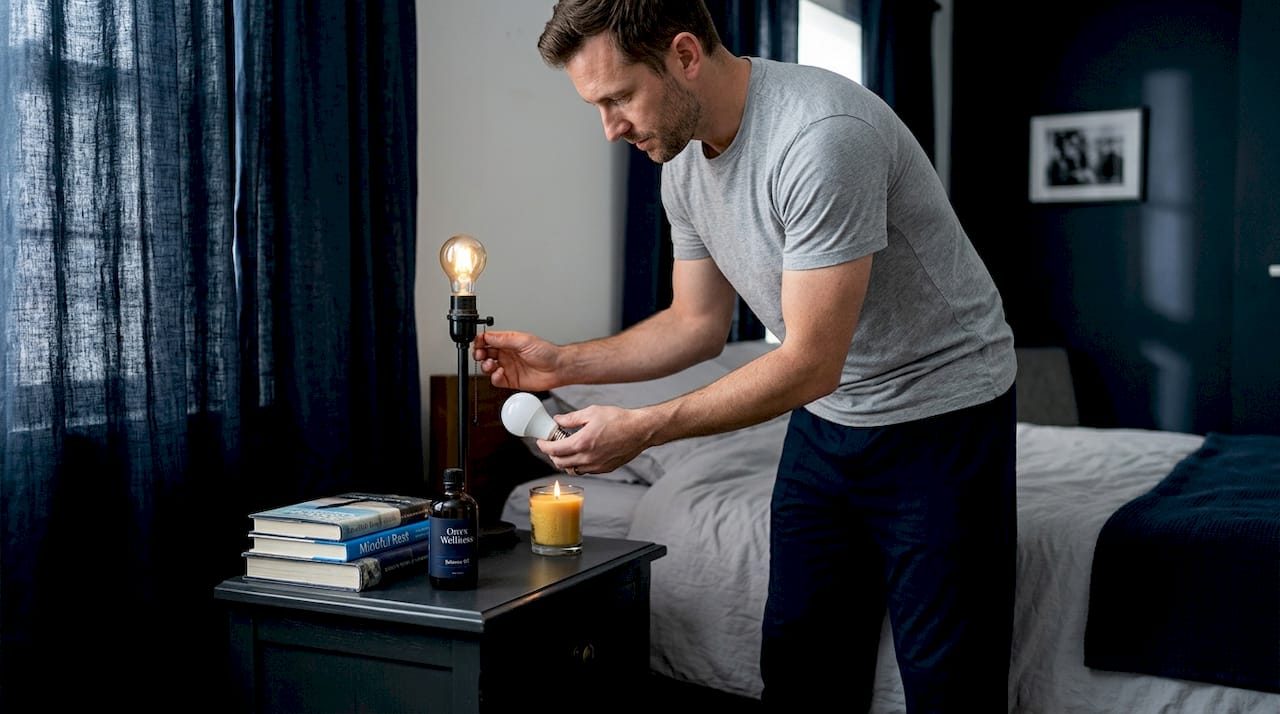
For your room setup, keep things simple. Warm lighting is ideal, so swap out bright overheads for a lamp or candle. A clutter-free corner feels instantly calmer than a crowded one. Temperature matters too: Ayurvedic practice recommends warmth during massage and breathwork, so if your home runs cold, have a small space heater nearby.
Pro Tip: If pulling together the full supply list feels overwhelming, start with just a tongue scraper and a bottle of sesame oil. Those two items alone support two of the most impactful morning practices.
Making your tools for natural recovery easy to grab is the real secret to consistency. Keep your oils on your bathroom counter. Put the tongue scraper next to your toothbrush. Reduce friction between intention and action.
Once your home is ready, you’re set to begin the core daily routine.
Step-by-step relaxation workflow: Morning to night
Here’s where the rubber meets the road. The Dinacharya workflow isn’t meant to be rigid, but sequence and timing genuinely matter. Think of it like a recipe: the ingredients are important, but so is the order you add them in.
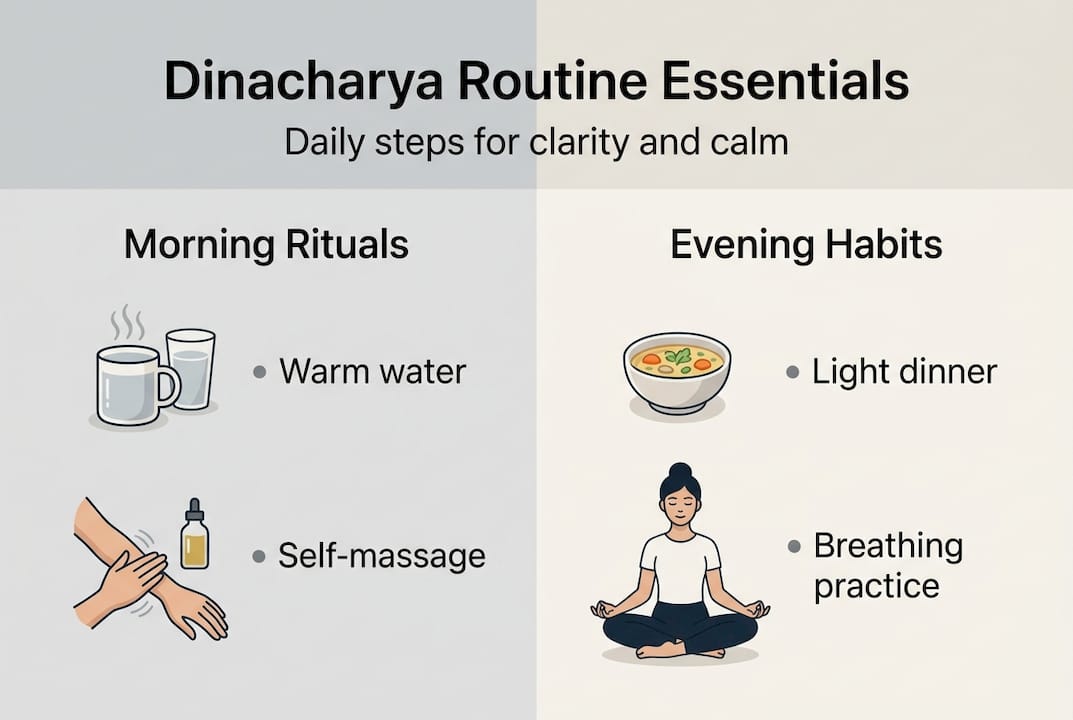
Morning sequence (6:00 to 9:00 a.m.):
- Wake with the sun (or close to it). Rising before 6 a.m. supports Vata balance and sets your cortisol rhythm on the right track.
- Eliminate naturally. Drink a glass of warm water to stimulate digestion before eating anything.
- Tongue scraping. Use your copper scraper 5 to 7 times from the back of the tongue forward to clear overnight buildup.
- Oil pulling. Swish a tablespoon of sesame or coconut oil for 5 to 10 minutes while you shower or prepare your space.
- Nasya. After tilting your head back, apply 2 to 3 drops of warm sesame oil or a medicated nasal oil to each nostril. This clears the mind channels and supports mental clarity throughout the day.
- Abhyanga. Self-oil massage pacifies Vata, reduces cortisol, and improves circulation. Use long strokes on limbs and circular motions on joints for 10 to 15 minutes. Rest for at least 5 minutes before bathing.
- Warm bath or shower. The heat enhances absorption of the oil and deepens the calming effect.
- Gentle movement. 10 to 20 minutes of yoga, walking, or stretching. This is not a workout. It’s activation.
Statistic: Regular pranayama and meditation practice, even just 5 to 15 minutes daily, has been shown to balance brain hemispheres, lower anxiety, and significantly improve focus throughout the day.
Mid-day practices (12:00 to 2:00 p.m.):
Eat your largest meal at noon when digestive fire (Agni) is strongest. Take a 10-minute walk after eating. Avoid eating at your desk if you can, because mindless eating is one of the fastest ways to elevate Pitta stress.
Pro Tip: Set a 2-minute breathing timer at your desk at 1:00 p.m. Inhale for 4 counts, hold for 4, exhale for 6. This one small practice starts reshaping your afternoon energy patterns within two weeks.
Evening wind-down (7:00 to 10:00 p.m.):
Following a step-by-step natural wellness approach means your evening is as structured as your morning. Eat a light dinner before 7:00 p.m. Avoid screens an hour before bed. Apply warm oil to the soles of your feet, which Ayurveda calls Padabhyanga, and spend 5 minutes writing three things you’re grateful for. These two small acts signal your nervous system to shift from doing mode to resting mode.
This Ayurvedic relaxation routine works because it treats your entire day as a wellness practice, not just isolated moments.
You’re equipped with tools. Now let’s look at how to troubleshoot and adapt as real life gets in the way.
Troubleshooting, adjustments, and advanced tips
Let’s be honest: life doesn’t always cooperate. Kids get sick. Deadlines move. Travel happens. The most common reason people drop wellness routines isn’t lack of motivation. It’s that the routine wasn’t flexible enough to survive real life.
Most common barriers and how to handle them:
- “I don’t have time.” Start with just one or two practices, like warm water in the morning and five minutes of pranayama. Even a stripped-down Dinacharya has measurable benefits.
- “I don’t have a private space.” Abhyanga can be done in under 10 minutes in a bathroom. Nasya takes two minutes. Tongue scraping is invisible to your household.
- “I’m skeptical about oils and breathwork.” Fair enough. Try one practice for two weeks and track your sleep quality and midday energy. The data you collect on yourself will be more convincing than anything we say here.
When to skip or modify:
Avoid Abhyanga and Nasya during fever, active infection, or menstruation. During these times, your body is already doing intensive internal work, and adding stimulating external practices can be counterproductive. Rest is the practice in those windows.
For mental wellness with Ayurveda, knowing when not to push is just as important as knowing what to do.
Dosha-specific adjustments:
- Vata types should prioritize consistency above all else. Irregular practice makes Vata worse.
- Pitta types benefit from adding a 5-minute cooling pranayama (like left-nostril breathing) before bed.
- Kapha types may need to shorten their evening wind-down and move it earlier to avoid oversleeping.
“The most common mistake is skipping the rest period after Abhyanga. That quiet five minutes is when the nervous system downregulates, not during the massage itself.”
Advanced tips for when you’re ready:
Once the basics feel automatic, usually after four to six weeks, you can layer in Shirodhara-inspired scalp oiling, herbal teas timed to your dosha, or guided visualization before sleep. But none of that matters if the core sequence isn’t yet consistent. Nail the basics first.
Pro Tip: On high-stress days, skip the full routine and do just Abhyanga and gratitude journaling. These two practices alone target the nervous system and mood centers most directly.
A fresh perspective: Why Ayurvedic home routines outperform modern stress hacks
Here’s an opinion worth sitting with: most modern stress advice is reactive. Take a cold plunge when anxiety spikes. Download a meditation app when burnout hits. Pop a supplement when you can’t sleep. These aren’t bad ideas, but they’re symptoms management at best.
Ayurveda excels at chronic disease prevention where modern medicine shines in acute crisis. That’s not a knock on either. It’s a recognition that you need different tools for different jobs.
What makes the Ayurvedic home workflow genuinely superior for day-to-day wellness is that it builds biological resilience, not just momentary relief. Clinical research confirms that yoga and Ayurvedic practice outperform standard care in both insomnia and cortisol reduction outcomes. That’s not anecdote. That’s randomized trial data.
The real insight is this: boosting mental wellness is less about finding the perfect intervention and more about building the right container. A consistent daily rhythm is that container. Everything else, the oils, the breathwork, the herbs, becomes more effective when the rhythm is already in place.
Your next step: Products and support for home relaxation
Ready to begin, or deepen, your home relaxation workflow? A solid routine deserves equally solid support.

At Onyx Wellness, we’ve built a curated line of Ayurvedic-inspired supplements designed to complement exactly the kind of daily practice described in this article. If your gut health needs grounding, our digestive health strips offer fast-absorbing support without the need for water or preparation. And for those evenings when your mind just won’t quiet down, our cognitive relax strips dissolve instantly and work with your wind-down routine, not against it. Explore the full range and find what fits your rhythm.
Frequently asked questions
What if I don’t have time to do the full Ayurvedic routine each day?
Start with just one or two practices, like warm water upon waking and five minutes of pranayama. Consistency over time matters far more than completing every step every day.
Are there any safety considerations with self-Abhyanga or Nasya?
Yes. Avoid both practices during fever or menstruation, and always use the oil that matches your dosha type to avoid aggravating your imbalance.
Can these Ayurvedic routines help with sleep and stress?
Absolutely. Yoga and Ayurveda together have demonstrated superior outcomes for both cortisol reduction and sleep quality compared to standard care in clinical trials.
How can I make this routine part of a busy family or work life?
Prepare your oils and supplies the night before, and focus on two anchor practices: warm water in the morning and foot oil before bed. Evening wind-down rituals are short, effective, and easy to work into even the most packed schedules.