


Ayurveda can safely complement modern training by improving recovery, managing inflammation, and optimizing energy availability, but only when the practices are personalized to your dosha and your digestive strength, or Agni. The main benefits worth expecting are faster recovery between sessions, better nutrient assimilation, and steadier energy through a training cycle. The evidence is promising but still developing, so treat herbs and therapies as an adjunct to your training plan, not a replacement for it, and check with a practitioner if you take medication or compete under anti-doping rules.
TL;DR:
- Personalized dosage of Ayurvedic practices based on your dominant dosha can improve recovery and energy management without replacing conventional sports medicine.
- Digestive fire, or Agni, plays a crucial role in nutrient absorption, making gut health and appropriate meal timing vital for optimal athletic performance.
- Specific dietary and recovery strategies should align with your dosha, such as warm foods for Vata, cooling meals for Pitta, and variety for Kapha athletes.
- Herbs like ashwagandha show some evidence for strength and stress support but should be verified for safety and banned substances if necessary.
- Fast-absorbing supplement formats like dissolvable strips and gummies can help maintain consistency in short, busy training or recovery routines.
Table of Contents
- What Is Ayurveda for Athletes, and How Do Doshas Shape Your Training?
- How Agni (Digestive Fire) Determines Whether Your Nutrition Actually Works
- Recovery Practices: Self-Massage, Nasal Breathing, and Sleep Timing
- Herbs and Supplements: What the Evidence Actually Supports
- Two Sample Daily Protocols You Can Actually Test
- The Research Behind This, and a Safety Checklist Before You Start
- Why Onyx Wellness Builds for Fast Absorption First
- Which Onyx Wellness Products Fit Your Training and Recovery Needs
- Sources
- FAQ
What Is Ayurveda for Athletes, and How Do Doshas Shape Your Training?
Ayurveda organizes the body into three functional patterns, called doshas: Vata, Pitta, and Kapha. Every person carries a blend of all three, but one or two usually dominate, and that blend shapes how you respond to training load, heat, and recovery. A peer-reviewed review on Ayurveda’s contribution to sports medicine describes dosha-based personalization as one of the system’s most practical contributions, though it stresses the evidence quality varies and works best alongside conventional sports medicine rather than instead of it.
Vata governs movement and nervous-system activity. Vata-dominant athletes tend to be quick, light-framed, and excellent at explosive or agility-based sports like sprinting, gymnastics, or racket sports. The tradeoff is joint instability, inconsistent hunger, and a nervous system that runs hot under stress. Overtraining shows up fast here, usually as insomnia, anxiety, or nagging tendon issues rather than dramatic injury.
Pitta governs metabolism and heat production. Pitta athletes usually have strong drive, sharp focus, and a competitive streak that serves them well in high-intensity or combat sports. The vulnerability is inflammation and overheating. Pitta athletes are the ones who push through a hot tempo run and end up with a flare-up of tendinitis or gut irritation a few days later.
Kapha governs structure and endurance. Kapha-dominant athletes tend to have strong stamina, dense muscle, and steady joints, which suits ultra-distance events and strength sports well. The risk is sluggish recovery and a tendency toward lower motivation on rest days, which can quietly turn into detraining if routines get too comfortable.
Here is how that plays out in practical training and recovery choices:
- Vata athletes do best with consistent schedules, warm foods, grounding warmups, and shorter, more frequent recovery breaks rather than one long rest day.
- Pitta athletes benefit from training in cooler parts of the day, cooling foods post-session, and deliberate anger or frustration management before competition.
- Kapha athletes need built-in variety and intensity spikes to avoid stagnation, plus lighter, warming meals that don’t weigh down an already slower metabolism.
None of this replaces sport-specific programming. It is a lens for spotting your own early warning signs before they become an actual setback.
How Agni (Digestive Fire) Determines Whether Your Nutrition Actually Works
You can eat a technically perfect diet and still underperform if your digestion can’t keep up with it. Ayurveda calls this digestive capacity Agni, and a 2025 review in the Journal of Ayurveda and Integrative Medical Sciences identifies Agni as a central factor in whether athletes actually assimilate the nutrients they eat, not just how many grams they consume. Integrative sports-nutrition specialists back this up from a different angle: a health-feeds-performance framework argues that gut function should be addressed before athletes chase higher protein targets or add more supplements, since poor assimilation undermines an otherwise well-designed plan. Gut health specifically affects how well nutrients get absorbed in the first place, which is exactly why Ayurveda treats digestion as the foundation rather than an afterthought.
Timing and food choice around training should follow the same logic:
- Pre-workout (60 to 90 minutes out): Vata athletes do well with warm, semi-liquid meals like oatmeal with ghee. Pitta athletes should favor cooling, moderate meals such as rice with cucumber or coconut water. Kapha athletes benefit from lighter, spiced options, think warm lentils with black pepper or ginger, to avoid feeling sluggish.
- During exercise: Sip warm or room-temperature fluids rather than ice-cold ones, which Ayurveda considers taxing on Agni mid-effort. Electrolyte balance still matters here, and pairing Ayurvedic timing with a solid hydration strategy covers both bases.
- Post-workout (within 45 minutes): Prioritize easily digestible protein and carbohydrate combinations. A warm smoothie with a protein source and cooked fruit tends to sit better than a cold, dense recovery shake, especially for Vata and Kapha types.
If bloating, sluggish digestion, or irregular hunger are getting in the way of consistent fueling, that is usually a sign Agni needs support before you tinker with macros further. This is where a fast-dissolving option like Digestive + Gut Health Strips fits, particularly around travel days or competition when routine meals aren’t an option.
Pro Tip: Test any new pre-workout meal or digestive strip on a low-stakes training day, never for the first time before a race or meet. Your gut’s response to timing changes is individual, and race day is the wrong place to find out.
Recovery Practices: Self-Massage, Nasal Breathing, and Sleep Timing
Ayurvedic recovery therapies were built for a slower world, but several adapt cleanly to a modern training schedule. Traditional treatments like abhyanga (oil massage), pizhichil (warm oil pouring), nasya (nasal oil application), and shirodhara (a continuous oil stream on the forehead) are described in practitioner-oriented reporting as supportive for recovery, mood, and sleep quality, while the same source is clear that modern sports medicine remains the first line of care for acute injuries.
Most athletes won’t have regular access to a trained Ayurvedic practitioner, so self-abhyanga is the practical entry point. A short daily version takes five to seven minutes: warm sesame or Mahanarayan oil in your hands, applied to major joints and long muscle groups after a shower, using firm strokes toward the heart. If oil feels like too much mess for a locker room, a warming lotion applied the same way gets you most of the circulation benefit. Pair this with grounding practices in a broader recovery routine and it becomes a five-minute habit rather than a spa ritual.

Nasal breathing during exertion is one of the more underrated tools here. Practicing nasal-only breathing during easy runs or warmups conditions your body to tolerate higher carbon dioxide levels, which practitioner-level sources link to better oxygen efficiency and a calmer nervous system under load. It costs nothing and can be trained progressively, starting with easy efforts and working up to moderate intensity as your tolerance improves.
Sleep timing should shift with your dosha and training phase:
- Vata athletes benefit from an earlier, more consistent bedtime and a wind-down routine that avoids screens, since an overstimulated nervous system disrupts sleep onset first.
- Pitta athletes should watch bedtime temperature and avoid training too close to bed, since their internal heat delays sleep onset when the body is still warm.
- Kapha athletes do better waking earlier rather than sleeping in, since excess sleep can leave this dosha feeling heavier rather than more rested.
Schedule the heavier restorative work, longer massage, extended breathwork sessions, on lighter training days or the day after a hard effort, not the morning of a key session.
Pro Tip: If a full abhyanga routine feels unrealistic on a training day, do it only on rest days and use two minutes of nasal breathing daily instead. Consistency with the small habit beats sporadic effort with the bigger one.
Herbs and Supplements: What the Evidence Actually Supports
Not every Ayurvedic herb marketed to athletes has the same evidence behind it, and knowing the difference matters more than knowing the full list.
Ashwagandha has the strongest research base of the group. Small randomized trials indexed on PubMed show benefits for strength gains and perceived recovery in resistance-trained men, though sample sizes are limited and results aren’t uniform across studies. It’s a reasonable herb to trial for stress resilience and strength support, not a guaranteed strength multiplier.
Turmeric and curcumin show up consistently in the Ayurvedic sports literature for their anti-inflammatory role, useful for athletes managing chronic joint irritation or recovering from a hard training block. Shilajit is traditionally used for energy and stamina, though the research base is thinner than ashwagandha’s. Triphala, a three-fruit blend, is used mainly for digestive regularity, tying back directly to the Agni principle covered earlier.
Adaptogenic mushroom blends, cordyceps and reishi in particular, are gaining traction among endurance and recovery-focused athletes for their role in stress adaptation and calming the nervous system post-exertion. A Mushroom Extract Complex in gummy form offers a straightforward way to work these into a routine without brewing tea or measuring powder.
Format matters more than people expect here. Fast-absorbing delivery formats, dissolvable strips in particular, can provide consistent dosing without water, which is genuinely useful during travel or competition when swallowing a handful of capsules on schedule isn’t realistic.
A few safety points apply across the board:
- Herbal supplements are not uniformly regulated for potency or purity, so contamination risk is real, favor products with third-party testing and published batch certificates.
- Competitive athletes under drug-testing programs should verify any herb or blend against their sport’s banned-substances list before use, not after.
- Ashwagandha and other adaptogens can interact with thyroid medication, blood pressure medication, and sedatives, so a quick check with a pharmacist or physician is worth the five minutes.
None of these herbs replace a periodized training plan or medical care for an actual injury. They are adjuncts, and the PMC review on Ayurveda’s role in sports medicine makes that integration point directly: the strongest results come from combining these tools with, not instead of, conventional sports medicine.
Two Sample Daily Protocols You Can Actually Test
Theory is only useful once it turns into a schedule. Here is a simple framework built around a morning checklist, then two dosha-aware versions for endurance and strength athletes.
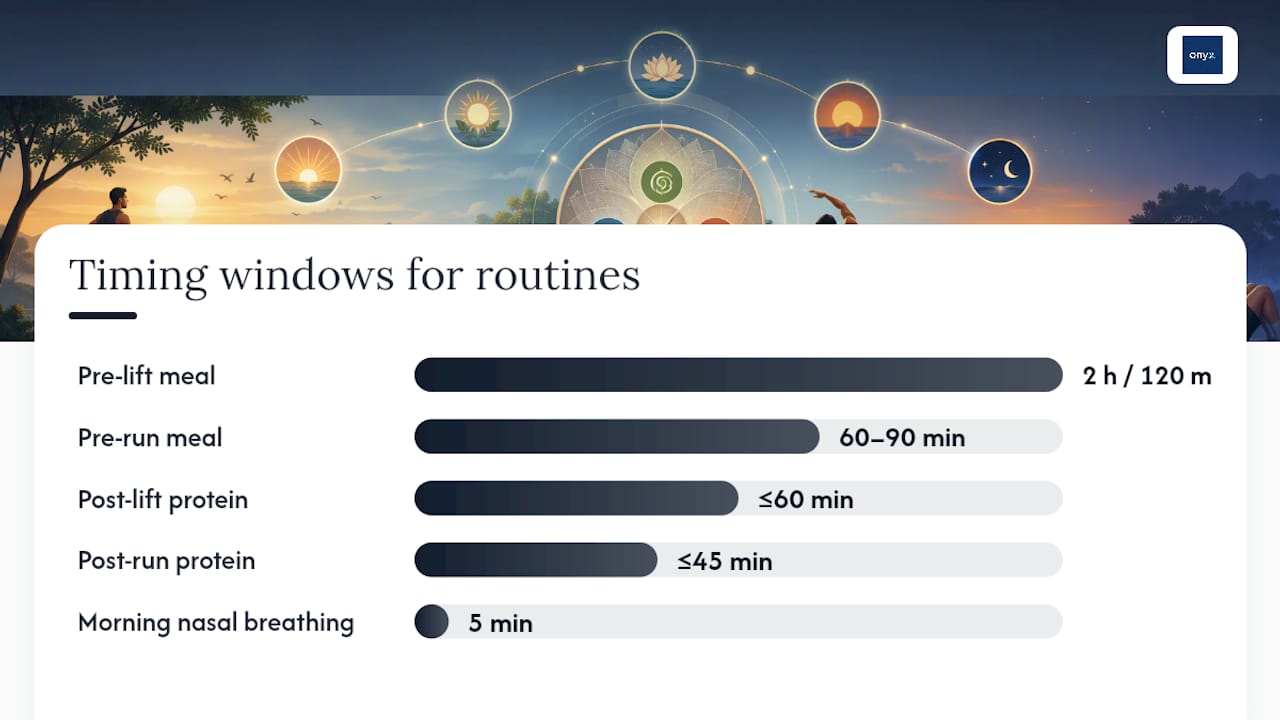
Morning checklist (any dosha): warm water on waking, five minutes of nasal breathing, five minutes of joint mobility before anything else touches your phone.
Endurance protocol:
- Wake, warm water, ten nasal-breathing cycles, light mobility.
- Pre-run meal 60 to 90 minutes out, warm and moderate, oatmeal with ghee for Vata types, rice and cucumber for Pitta types.
- During the run, sip room-temperature electrolyte fluid rather than ice water.
- Post-run, a warm protein and carbohydrate combination within 45 minutes, then five minutes of self-abhyanga on calves and hips if training was long.
- Evening wind-down an hour before bed, no screens, warm shower, consistent bedtime.
Strength protocol:
- Wake, warm water, brief nasal breathing, dynamic mobility targeting the day’s lift.
- Pre-lift meal two hours out, protein-forward with easily digestible carbohydrate, warming spices for Kapha types to avoid sluggishness.
- Post-lift, prioritize protein within the first hour. A recovery-focused protein approach that pairs digestibility with dosing timing tends to outperform simply hitting a gram target.
- Full self-abhyanga two to three evenings per week, focused on the joints under the heaviest load.
- Sleep by a consistent time, earlier for Vata and Pitta types, standard for Kapha types who don’t need extra hours.
Track results the same way you’d track any training variable: sleep quality, resting heart rate or HRV if you have a tracker, soreness on a simple one-to-ten scale, and whether performance markers (pace, load, reps) trend upward over two to three weeks. If nothing moves, the variable to change first is usually Agni support, not the supplement stack.
The Research Behind This, and a Safety Checklist Before You Start
The strongest support for Ayurveda in athletics comes from a PMC review that credits dosha-based personalization, targeted herbs, and manual therapies as genuinely useful tools, while explicitly cautioning that evidence quality is uneven and these practices work best paired with modern sports medicine. The 2025 JAIMS review adds detail on Agni and herb selection specifically for athletic populations, and integrative nutrition literature backs the idea that gut health should come before macronutrient fine-tuning.
The consistent thread across the research is not that Ayurveda replaces anything. It is that digestive health, individualized nutrition, and targeted recovery practices work as a layer underneath conventional training and medical care, not a substitute for it.
Before adding any herb or therapy to your routine:
- Choose supplements with third-party testing and published certificates of analysis.
- Cross-check any herb against your sport’s banned-substances list if you compete under drug testing.
- Screen for interactions with prescription medication, especially thyroid, blood pressure, and sedative drugs.
- Loop in a practitioner or physician if you have an existing condition, not just a general trainer.
Onyx Wellness builds its athlete-relevant lineup, from Digestive + Gut Health Strips to adaptogenic gummies, around these same evidence and safety principles.
Why Onyx Wellness Builds for Fast Absorption First
We built Onyx Wellness around a simple observation: athletes don’t skip good habits because they don’t believe in them, they skip them because capsules and powders don’t fit a bag already full of gear. Dissolvable strips and gummies solve the adherence problem that derails most supplement routines. Our formulations lean on the same principles this article covers: dosha-aware support, digestive health first, and fast absorption for people who train around a real schedule, not a lab schedule.
— Chris
Which Onyx Wellness Products Fit Your Training and Recovery Needs
Once you know which part of your routine needs support, matching it to a product gets simple. 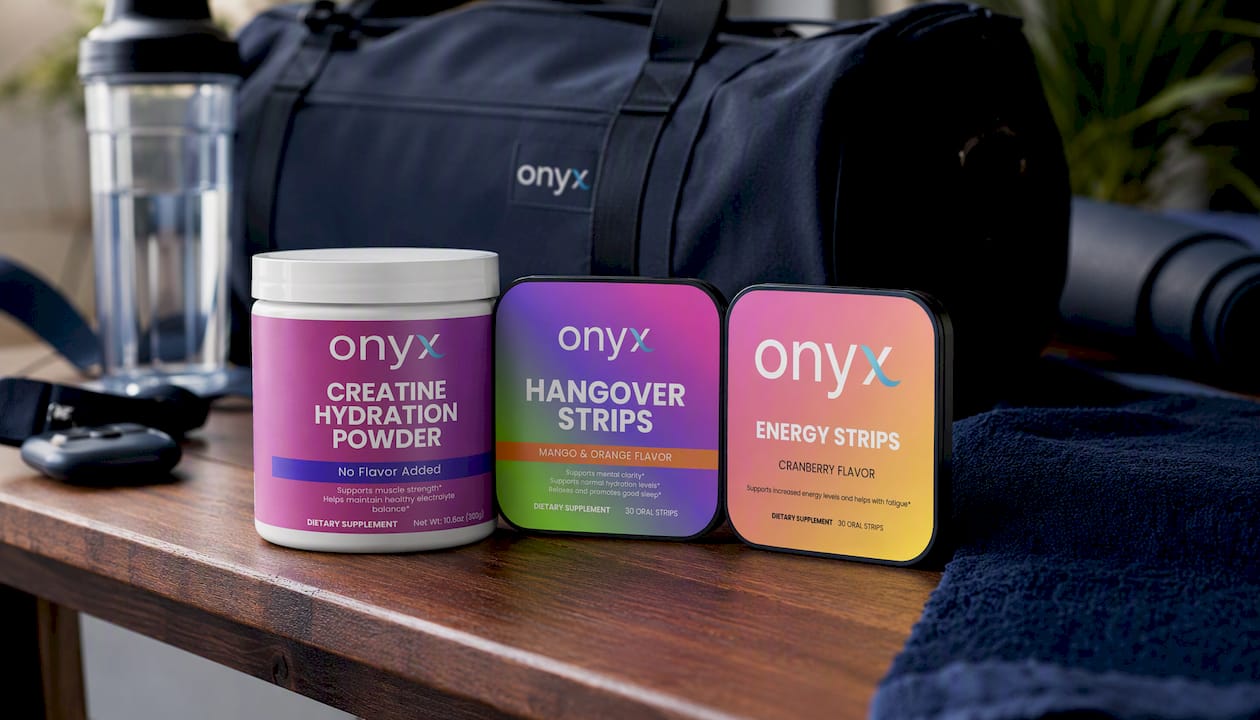
Onyx Wellness makes it easy to act on the exact gaps this article covers, without switching your whole routine overnight. If sleep is your weak link after hard sessions, Sleep Strips dissolve in seconds with no water needed, useful on a hotel nightstand the night before a race. If digestion is limiting your nutrient uptake, the Digestive + Gut Health Strips target the Agni-first approach covered above. Athletes managing low iron under a clinician’s guidance can consider Iron Strips as part of that plan. For pre-competition focus or post-event mental unwinding, Cognitive Relax Strips fit either end of the day. Stress and sleep recovery pair well with Reishi Relax Gummies, while longer-term connective tissue support shows up in the Hair, Skin and Nails Strips and Beauty + Collagen Strips. Travel days after a tough event are exactly what Hangover Strips were built for.
These products support recovery and convenience. They are adjuncts to training and medical care, never a replacement for either. Browse the full lineup on the Onyx Wellness collection page and pick the one or two that match the gap you actually have, not the one with the flashiest label.
Sources
- AYUVEDA’S CONTRIBUTION TO SPORTS MEDICINE - PMC
- Ayurveda in Sports: Unveiling the Ancient Wisdom for Modern Athletic Excellence
- Integrative Sport and Exercise Nutrition: A Health-Feeds-Performance Perspective
- How Ayurveda Helps Athletes Heal & Recover Naturally | Outlook India
FAQ
What is the 4-2-1 rule for athletes?
The 4-2-1 rule generally refers to a hydration guideline, roughly 4 milliliters per kilogram of body weight per hour for children and 2 for adolescents in some pediatric sports guidance, though definitions vary by source. It is not an Ayurvedic principle, so if you encounter it in a training context, confirm which framework the source is actually using.
What does Ayurveda say about the gym?
Ayurveda does not discourage gym training. It frames exercise intensity and timing around your dosha, recommending explosive or agility work for Vata types, moderate-intensity strength work for Pitta types with attention to overheating, and higher-volume, varied training for Kapha types to avoid stagnation.
Can athletes use ashwagandha?
Yes, small clinical trials show ashwagandha can support strength gains and recovery perception in resistance-trained individuals, though sample sizes remain limited. Competitive athletes should still verify it against their sport’s banned-substances list and check for interactions with thyroid or blood pressure medication first.
Which is the best ayurvedic approach for stamina?
Rather than one single herb, sustained stamina in Ayurveda relies on strong Agni, dosha-matched nutrition timing, and herbs like shilajit or ashwagandha used as adjuncts, not standalone fixes. Addressing digestive assimilation first, as integrative sports-nutrition literature recommends, tends to produce more consistent stamina gains than adding another supplement to an already strained digestive system.