


Yes, ashwagandha can help with stress and anxiety. Multiple clinical trials and pooled analyses link it to measurable drops in perceived stress, anxiety scores, and cortisol compared with placebo. The catch: evidence certainty is still rated low to moderate because trials vary in size and extract type, benefits build over weeks rather than hours, and anyone with thyroid, autoimmune, or pregnancy concerns should check with a clinician first. The evidence breakdown below explains exactly how strong that support is.
TL;DR:
- Lower doses of 500 mg or less of standardized ashwagandha extracts sometimes perform as well as higher doses, making large doses unnecessary for stress relief.
- Most trials enroll healthy adults with moderate to high stress and last six to eight weeks, indicating long-term, consistent use is essential for noticeable effects.
- Shorter trial durations and small sample sizes create uncertain and low-confidence evidence, suggesting the need for larger, longer studies for conclusive results.
- Ashwagandha’s primary mechanism involves modulating the hypothalamic-pituitary-adrenal axis to reduce cortisol, with effects on sleep and mood being secondary and gradual.
- It is safest for people with thyroid, autoimmune, or liver concerns to consult a healthcare professional before use, as it may influence hormone levels and immune activity.
Table of Contents
- How Strong Is the Evidence for Ashwagandha Stress Relief?
- How Does Ashwagandha Work to Reduce Stress?
- Ashwagandha Dosage for Relaxation: What Trials Actually Used
- Is Ashwagandha Safe? Side Effects and Who Should Avoid It
- How to Build Ashwagandha Into a Stress Management Routine
- What Onyx Wellness Looks for in Ashwagandha Products
- What Ashwagandha Actually Does to Sleep and Cortisol
- Chris’s Take: What the Evidence Actually Supports
- Simple Ways to Add Ashwagandha to Your Day
- Sources
- FAQ
How Strong Is the Evidence for Ashwagandha Stress Relief?
The best available evidence comes from randomized controlled trials and the pooled analyses that combine them, and the pattern is consistent even if the certainty isn’t rock solid. A systematic review and meta-analysis found statistically significant reductions in perceived stress, anxiety scale scores, and cortisol levels versus placebo across the pooled data. That’s a meaningful signal. It’s also, by the authors’ own admission, a signal clouded by heterogeneity. Trials differ in the extract used, the population studied, and how stress was measured.
Most of the supporting trials share a similar shape. They run for six to eight weeks, enroll adults reporting moderate to high baseline stress, and use standardized root extracts rather than raw powder. A review published on PMC covering multiple randomized trials found ashwagandha likely lowers cortisol and perceived stress, with participants generally tolerating doses up to 600 mg per day for the full study window. Individual trials tracked in PubMed show reductions on the Perceived Stress Scale (PSS) and the Hamilton Anxiety Rating Scale (HAM-A), the two instruments researchers rely on most for this kind of work.
What stands out in the newer dose comparison data is a bit counterintuitive: lower trial doses of 500 mg per day or less sometimes performed as well as, or better than, higher doses in subgroup breakdowns, according to a dose-response meta-analysis. More milligrams isn’t automatically more relief. Baseline severity and trial length seem to matter just as much as the number on the label.
None of this means the case is closed. Here’s where the evidence still falls short:
- Small sample sizes. Many individual trials enroll fewer than 100 participants, which limits how confidently results generalize.
- Extract inconsistency. Some studies use root extract, others use leaf or a mixed formulation, and withanolide concentration (the class of active compounds) isn’t always reported.
- Short follow-up. Almost no trials track participants beyond eight to twelve weeks, so long-term effects and durability of benefit remain largely unstudied.
- Population narrowness. Most trials recruit generally healthy adults with self-reported stress, not people with diagnosed anxiety disorders or complex medical histories.
The bottom line from the pooled data: ashwagandha shows a real, repeatable effect on stress and cortisol markers across multiple trials, but researchers still classify the certainty of that evidence as low, meaning future, larger trials could shift the estimated effect size in either direction.
How Does Ashwagandha Work to Reduce Stress?
Ashwagandha belongs to a category herbalists call adaptogens, botanicals believed to help the body’s stress response recalibrate rather than simply sedating it. That distinction matters for what you should expect. A sedative dampens the nervous system on contact. An adaptogen, according to Harvard Health, is thought to modulate the stress response pathways themselves, essentially helping the body’s defensive systems turn up or down more appropriately depending on what’s actually happening around it.
Mechanistically, most of the attention centers on the hypothalamic-pituitary-adrenal (HPA) axis, the signaling loop that governs cortisol release. Ashwagandha appears to blunt excessive HPA axis activation, which is the likely reason trials consistently show lower cortisol alongside lower perceived stress. Researchers have also proposed effects on GABA and serotonin signaling, two neurotransmitter systems tied to calm and mood regulation, though this pathway is less firmly established than the cortisol data.
A few practical notes worth keeping in mind:
- Extraction method and withanolide concentration change how much active compound you actually get, even at the same milligram dose.
- Whole-root powder and standardized extracts are not interchangeable in potency.
- Onset is gradual. Nobody should expect a same-day calming effect the way they might from a sedative.
Pro Tip: Give any ashwagandha routine a full six to eight weeks before judging whether it’s working. Trials measuring real change almost never see it sooner, and stopping early is the most common reason people write it off too fast.
Ashwagandha Dosage for Relaxation: What Trials Actually Used
Trial doses cluster in a fairly narrow band, which makes dosing guidance more concrete than it is for most herbal supplements. Extract doses in clinical research typically range from 125 mg to 600 mg per day, and the NIH Office of Dietary Supplements notes that benefits often look more pronounced at the higher end, around 500 to 600 mg daily. A joint task force from the World Federation of Societies of Biological Psychiatry and the Canadian Network for Mood and Anxiety Treatments has provisionally recommended 300 to 600 mg per day of root extract standardized to roughly 5% withanolides for generalized anxiety, while stressing that more research is still needed before that becomes a firm clinical guideline.
Timing follows a predictable pattern:
- Weeks 1 to 2: Little to no noticeable change for most people; this is normal, not a sign the product isn’t working.
- Weeks 3 to 5: Subtle shifts in stress tolerance or sleep quality often start to emerge.
- Weeks 6 to 8: Most trials measure their primary outcome here, which is where the strongest PSS and cortisol reductions show up.
Product form affects dosing accuracy more than most people realize:
- Standardized extracts (capsules or tablets) give the most reliable milligram-to-withanolide ratio, which is why most trials use them.
- Whole-root powder varies more in potency batch to batch, since it isn’t concentrated or standardized the same way.
- Dissolvable strips and gummies offer convenience and consistent adherence, particularly for people who struggle to remember daily capsules, though effectiveness still depends on the milligram dose and extract quality behind the product.
Start at a studied dose, stay consistent for six to eight weeks, and track how you feel before adjusting. Anyone managing a chronic condition alongside this should loop in a clinician before starting. For a deeper breakdown of extract standardization and label reading, Onyxwellness’s guide to ashwagandha dosage covers the specifics.
Is Ashwagandha Safe? Side Effects and Who Should Avoid It
Ashwagandha is generally well tolerated at studied doses over six to eight weeks, but “generally well tolerated” isn’t the same as “risk-free for everyone.” The PMC review of clinical trials flags thyroid modulation and autoimmune activity as the two safety issues worth taking seriously, alongside rare but documented liver concerns.
Common, usually mild side effects include:
- Upset stomach, nausea, or diarrhea, especially at higher doses
- Drowsiness or mild sedation in some users
- Headache
Less common but more serious concerns:
- Thyroid effects. Ashwagandha can increase thyroid hormone levels, which is a problem for anyone with hyperthyroidism or on thyroid medication.
- Liver stress. Rare case reports link ashwagandha to liver injury, which is why anyone with existing liver disease should avoid it without medical guidance.
- Autoimmune activation. Because it may stimulate immune activity, people with autoimmune conditions like lupus, rheumatoid arthritis, or multiple sclerosis should use caution.
Who should skip it or check with a doctor first: pregnant or breastfeeding individuals, anyone with a thyroid disorder, people with autoimmune disease, those with a history of hormone-sensitive prostate concerns, and anyone scheduled for surgery, since it may affect blood sugar and sedation levels during anesthesia.
What the pooled trial data actually shows on tolerability: across the studies reviewed in the Cambridge meta-analysis, reported side effects were mostly mild and gastrointestinal, but the review’s authors were clear that safety data beyond eight to twelve weeks simply doesn’t exist yet in adequate quantity.
Medication interactions worth flagging: ashwagandha may amplify the effects of sedatives, thyroid medication, and immunosuppressants, and it can lower blood sugar, which matters for anyone on diabetes medication. Stop use and seek care promptly if you notice yellowing skin or eyes, unusual fatigue paired with abdominal pain, or a racing heartbeat that wasn’t there before.
How to Build Ashwagandha Into a Stress Management Routine
Ashwagandha performs best as one piece of a routine, not the whole plan. Mayo Clinic’s guidance on this point is blunt: it may improve stress scores and cortisol, but it works best folded into a broader self-care strategy rather than treated as a standalone fix. Sleep hygiene, regular movement, and some form of mindfulness practice all interact with the same stress pathways ashwagandha targets, and combining them tends to outperform any single intervention alone.
Timing depends on your goal. If sleep is the priority, take it in the evening, roughly 30 to 60 minutes before bed. If daytime stress resilience is the goal, morning dosing with food tends to work better and avoids any mild drowsiness interfering with your day.
A simple eight-week structure to actually evaluate whether it’s working:
- Week 0: Record a baseline using a simple 1 to 10 stress scale or a short sleep diary.
- Weeks 1 to 4: Take your chosen dose consistently, same time each day.
- Week 4: Check in on early changes, even subtle ones.
- Week 8: Compare against your baseline using the same scale.
Pro Tip: Pair your ashwagandha routine with one lifestyle change, not five. Adding daily outdoor time or ten minutes of evening wind-down is easier to sustain than overhauling your entire routine at once, and it makes the eight-week comparison cleaner. Green space exposure specifically has a documented stress-reducing effect, and resources like this local green space guide offer a practical starting point for building that into a routine. For more on stacking adaptogens with lifestyle habits, Onyxwellness’s guide to adaptogens for stress goes deeper.
What Onyx Wellness Looks for in Ashwagandha Products
Not all ashwagandha products are created equal, and that gap explains a lot of the mixed reviews you’ll see online. Two products labeled “600 mg” can deliver very different amounts of active withanolides depending on extraction method and standardization, which is why Some companies prioritize formulations with transparent labeling and consistent sourcing rather than just a big number on the front of the bottle.
Delivery format matters for a different reason: adherence. A capsule you forget to take delivers zero benefit regardless of how well it was formulated. Fast-absorbing formats like dissolvable strips and gummies remove some of that friction, which can make them popular entry points for people newer to supplementation. For readers who want the trial-dosing detail behind these choices, our ashwagandha dosage breakdown and our research on ashwagandha and sleep both go further into the specifics than a product label ever will.
This article was researched and written by Chris, drawing on peer-reviewed trial data and clinical commentary from the sources cited throughout.
What Ashwagandha Actually Does to Sleep and Cortisol
Cortisol is where the strongest, most consistent ashwagandha data lives, and it’s worth separating from the sleep conversation because they’re related but not identical. Across the trials pooled in the Cambridge meta-analysis, cortisol reductions showed up reliably enough that researchers consider it one of the more replicated findings in this body of research, even accounting for the low certainty rating tied to trial heterogeneity.
Sleep improvements tend to follow indirectly rather than as a separate mechanism. Lower cortisol, particularly in the evening, is associated with easier sleep onset and fewer middle-of-the-night wake-ups, since cortisol naturally spikes stress hormones that interfere with the body’s wind-down process. People taking ashwagandha for stress often report better sleep as a secondary benefit rather than the primary reason they started.
That said, most users describe the change in subjective, moderate terms. The NIH fact sheet notes that people commonly report feeling their stress becomes more “manageable” rather than disappearing entirely, and tracking a validated scale like the PSS gives a more honest read on progress than relying on how you feel on any single day. If sleep is your main target rather than daytime stress, timing the dose in the evening and pairing it with consistent sleep hygiene will likely get you further than dose alone.
Chris’s Take: What the Evidence Actually Supports
The conventional pitch around ashwagandha oversells the timeline. Marketing copy implies calm within days; the trial data says weeks. That gap is where most people give up right before the evidence suggests they’d start noticing something.
What’s underrated is the dose-response nuance: lower doses sometimes matched or beat higher ones in subgroup analysis. That should reshape how people shop. Chasing the highest milligram count on a label isn’t the smart move the supplement aisle wants you to think it is. Extract standardization and consistent daily use matter more than raw dose.
My honest read: treat ashwagandha as a slow-acting support tool, not a rescue remedy for an anxious afternoon. Pair it with sleep and movement changes, give it the full eight weeks, and pick a product with transparent extract labeling over one with the biggest number on the front.
— Chris
Simple Ways to Add Ashwagandha to Your Day
If capsules and powders have never fit your routine, that’s usually a delivery problem, not a motivation problem. Some wellness companies carry options built around trial-informed dosing principles, in formats designed to make daily consistency easier rather than harder.
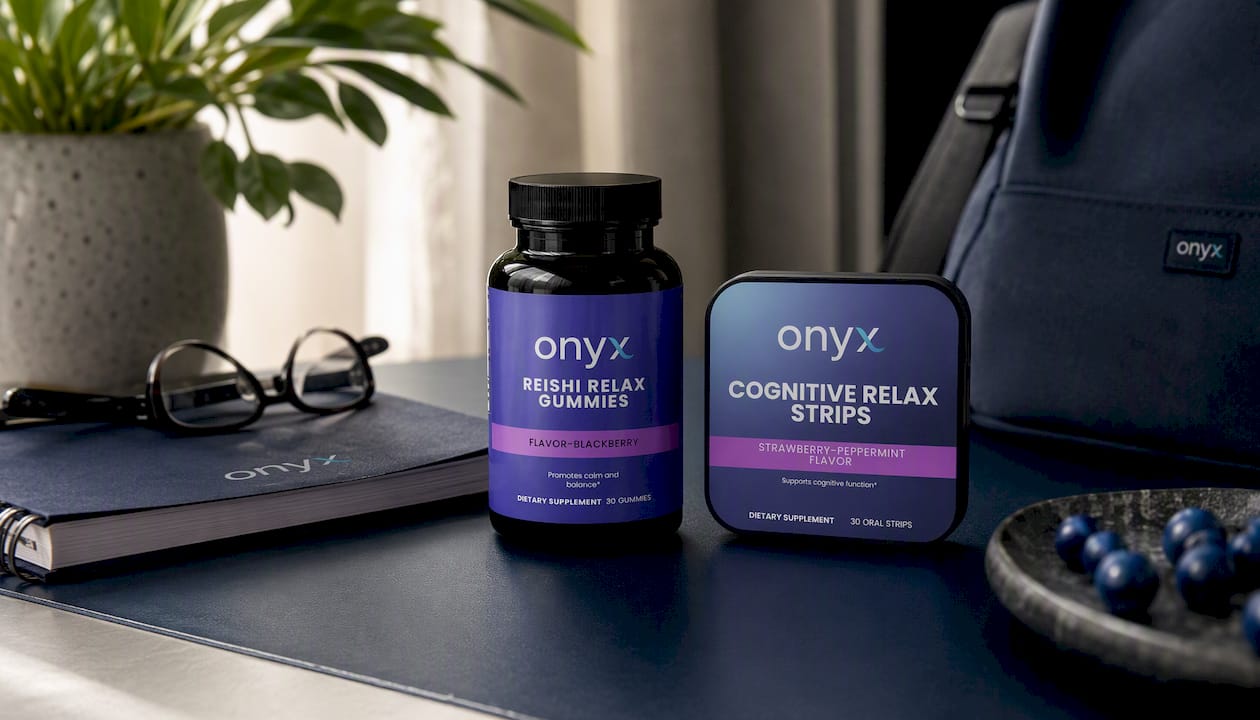
The Reishi Relax Gummies work well for anyone building a daily maintenance habit, something you take at the same time each morning or evening as part of the eight-week routine described earlier. The Cognitive Relax Strips dissolve without water, which makes them a better fit for on-the-go moments, mid-day stress spikes, or anyone who simply forgets to take capsules with meals. Neither product is a substitute for therapy, medical treatment, or a diagnosed anxiety condition; they’re built to complement a broader stress management routine, not replace one. Browse the full wellness collection to see how these fit alongside other Onyxwellness formats, and check either product page directly for current ingredient transparency details before you buy.
This article is general information, not a substitute for advice from a qualified doctor. Consult a qualified healthcare professional about your own circumstances before acting on anything here.
Sources
- Ashwagandha: Is it helpful for stress, anxiety, or sleep? (NIH Office of Dietary Supplements)
- Effects of Ashwagandha Supplements on Cortisol, Stress, and Anxiety Levels in Adults: A Systematic Review and Meta-Analysis
- Ashwagandha: Benefits, side effects, and safety concerns - Harvard Health
- Mayo Clinic Q and A: Can ashwagandha supplements help with stress and anxiety relief?
- Review article on ashwagandha (PMC)
FAQ
Why Do I Need to Be Careful With Ashwagandha?
Ashwagandha can affect thyroid hormone levels, may stimulate immune activity in people with autoimmune conditions, and carries rare reports of liver stress, so anyone with those conditions, or who is pregnant or breastfeeding, should talk to a clinician before starting.
Is Magnesium or Ashwagandha Better for Anxiety?
They work differently rather than competing directly. Magnesium supports nervous system relaxation broadly, while ashwagandha’s evidence base centers specifically on lowering cortisol and perceived stress over weeks of consistent use, and some people find combining both, under medical guidance, more effective than either alone.
Can Ashwagandha Stop Overthinking?
There’s no trial evidence that ashwagandha eliminates overthinking directly, but by lowering cortisol and perceived stress over six to eight weeks, many users report their racing thoughts feel more manageable rather than fully resolved.
How Long Does Ashwagandha Take to Kick In for Stress?
Most clinical trials measure meaningful reductions in stress and cortisol at six to eight weeks of consistent daily use, not within days, so patience and consistency matter more than the specific dose chosen.